Vocabulary development Addition Worksheets for Ages 3-9
5 filtered results
-
From - To
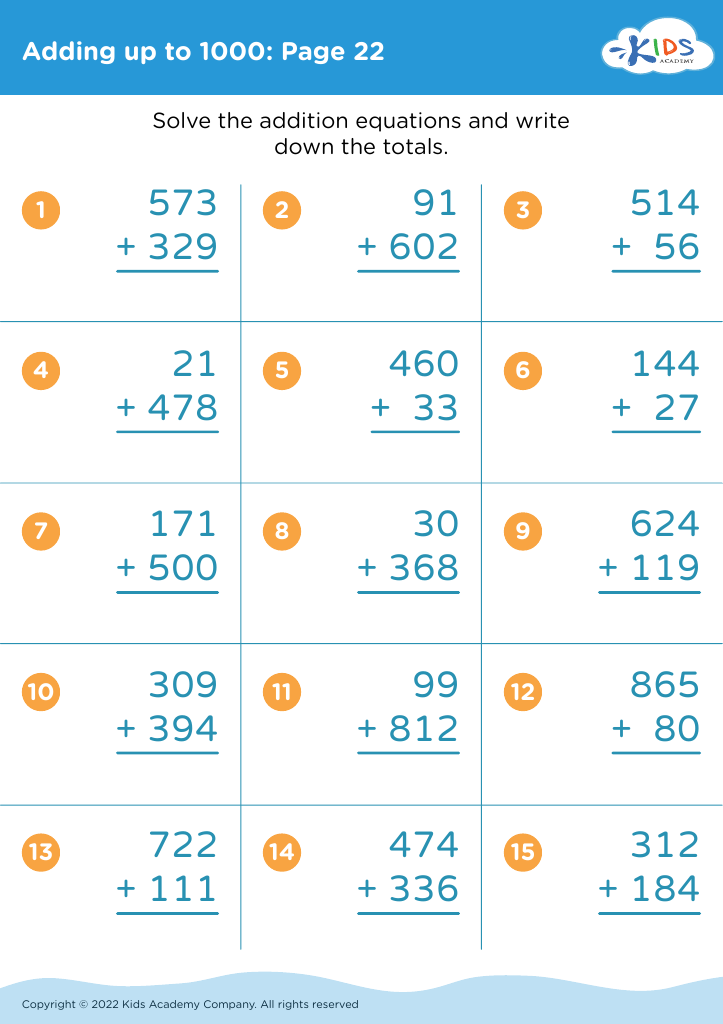
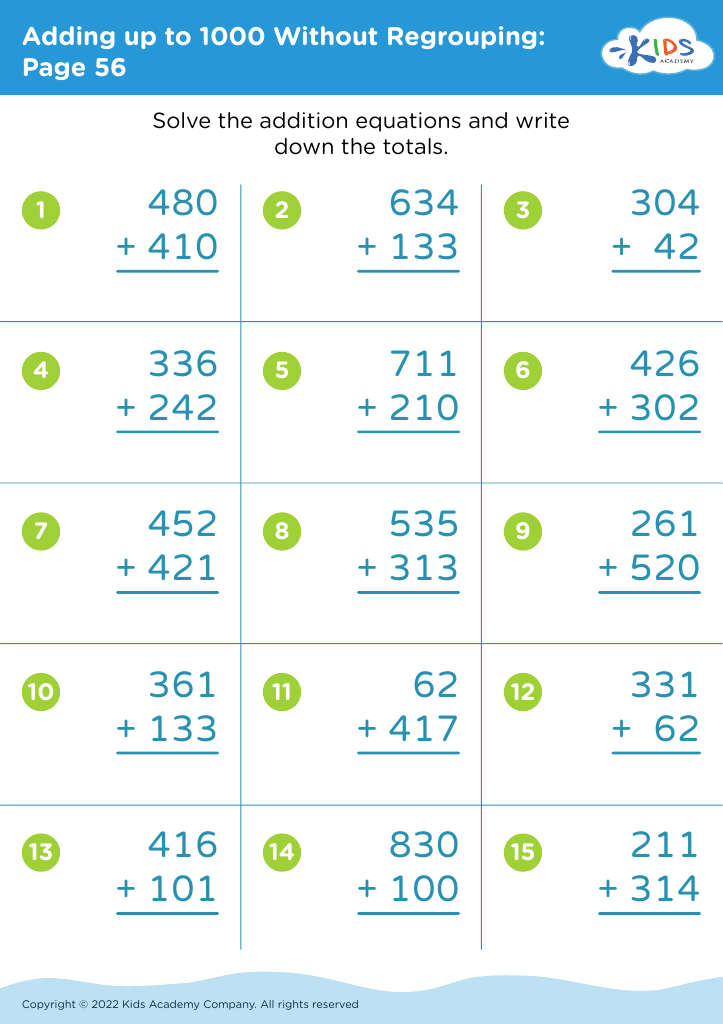
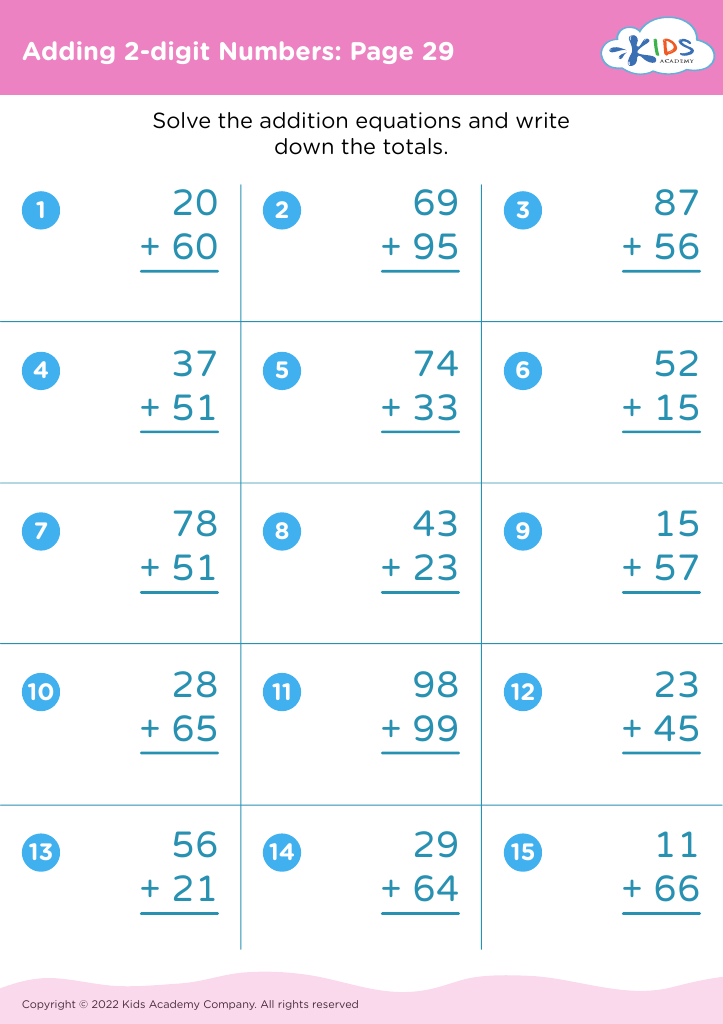
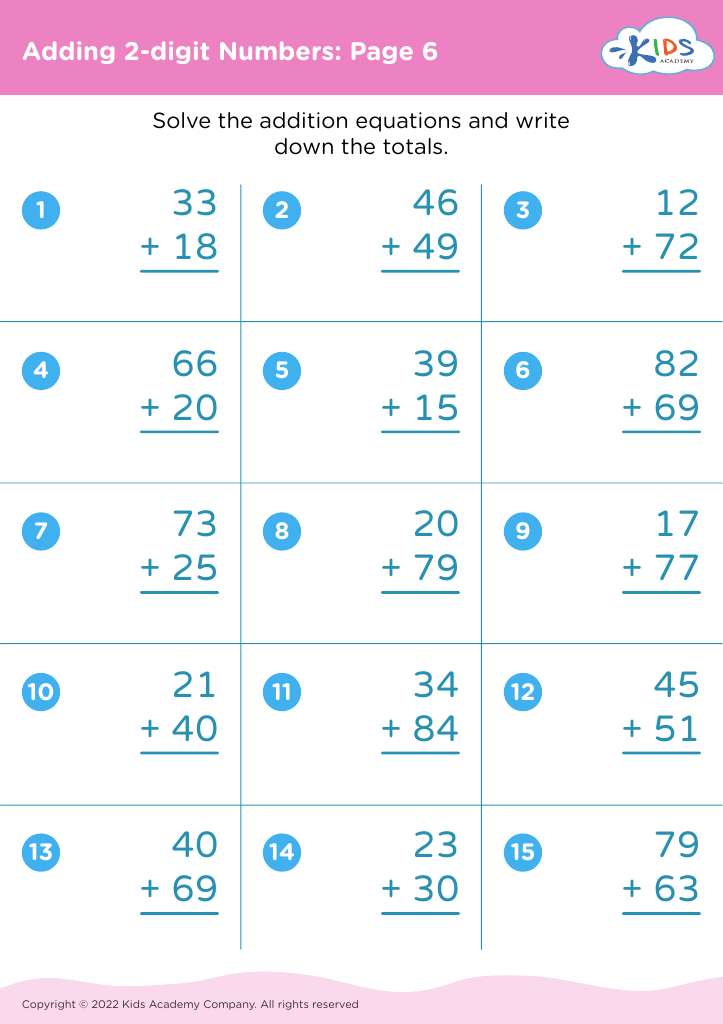
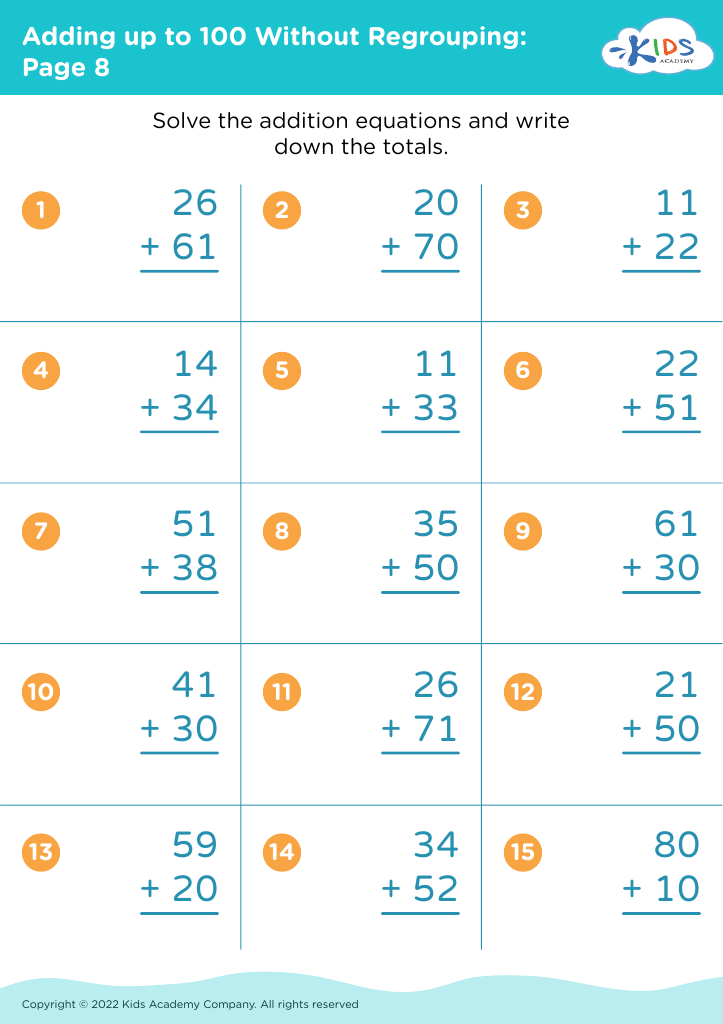
Enhance your child's mathematical skills and boost their vocabulary with our Vocabulary Development Addition Worksheets for Ages 3-9. These expertly designed worksheets seamlessly blend basic addition problems with engaging vocabulary exercises to create a holistic learning experience. Ideal for young learners, these activities foster critical thinking, improve problem-solving skills, and enrich language development. Perfect for at-home practice or classroom use, these printables are a valuable resource for bolstering foundational math abilities while expanding your child's vocabulary, all in a fun and interactive way. Start your child's journey to success with our comprehensive worksheets today!








Vocabulary development is crucial for children aged 3-9 because it lays the foundation for their academic success and communication skills. During these formative years, children’s brains are highly receptive to new information, making it a prime time for vocabulary expansion. A robust vocabulary is directly linked to reading comprehension; children who understand the meaning of more words can easily decode and understand text. This ease of comprehension fosters a love for reading, setting a positive trajectory for lifelong learning.
Further, effective communication is a fundamental skill for social interaction. A rich vocabulary allows children to express their thoughts, emotions, and needs more clearly, which enhances their social and emotional development. It also enables better peer interactions, as children can participate meaningfully in conversations, making social integration smoother.
Moreover, early vocabulary development impacts academic performance across various subjects such as math, science, and social studies. These disciplines often use subject-specific terminology; understanding these terms can significantly boost a child's ability to grasp complex concepts.
Engaging children in vocabulary-rich activities—reading books, engaging in conversations, playing word games—can make learning enjoyable and effective. Parents and teachers should therefore prioritize vocabulary development to equip children with the linguistic tools needed for overall success.








