Enhance logical thinking Math Worksheets for Ages 3-9
4 filtered results
-
From - To
Welcome to our "Enhance Logical Thinking Math Worksheets" designed for kids aged 3 to 9! These engaging and enjoyable worksheets focus on developing critical thinking skills through a variety of fun math activities. Tailored to support young learners, our resources include puzzles, number games, and patterns that promote logical reasoning. As children work through the worksheets, they enhance problem-solving abilities and build a solid mathematical foundation. Ideal for both classroom and home learning, these materials are perfect for reinforcing essential skills while keeping kids motivated and excited. Unlock the power of logical thinking and make learning math a delightful adventure!
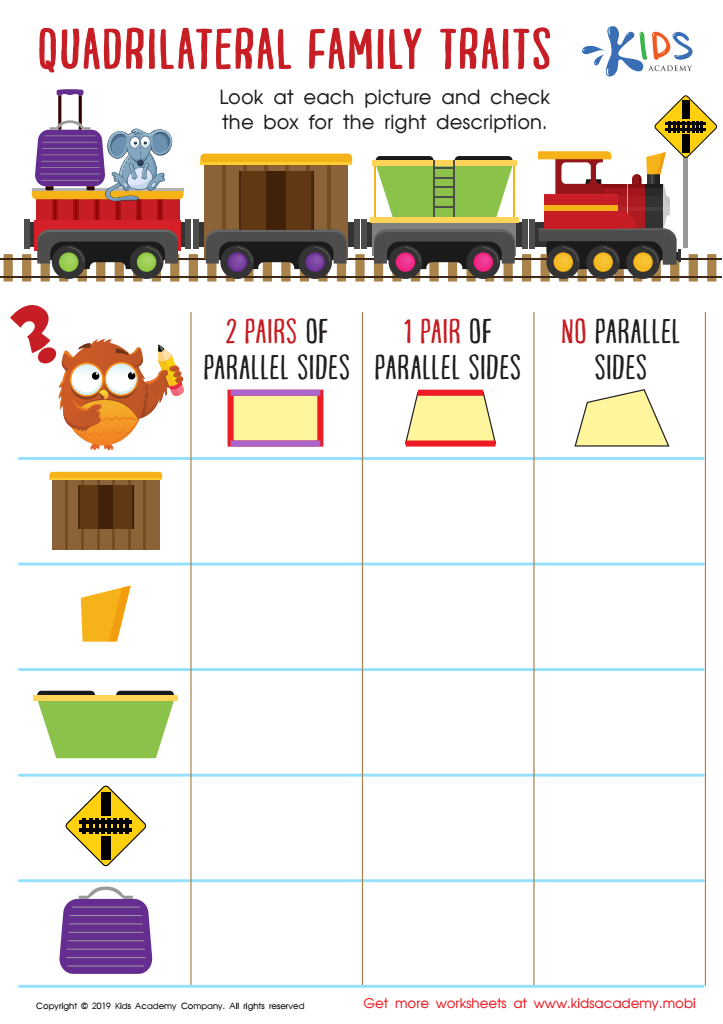
Quadrilateral Family Traits Worksheet
 Assign to My Students








Enhancing logical thinking in young children is crucial for their overall cognitive development, especially in the context of mathematics for ages 3-9. At this formative stage, early exposure to logical reasoning cultivates critical thinking skills that extend beyond math, fostering better decision-making and problem-solving abilities in everyday life.
When children engage with math concepts through logical thinking exercises, they learn to recognize patterns, understand relationships, and develop sequential reasoning. This skill set forms the foundation for more complex mathematical concepts and helps in children’s ability to analyze and interpret information effectively.
Moreover, nurturing logical thinking promotes a positive attitude towards math, breaking down the fear or aversion many children might have towards the subject. It encourages exploratory learning, where children feel confident to ask questions, make predictions, and draw conclusions, which are essential parts of learning.
For parents and teachers, focusing on logical thinking in math can promote a holistic learning environment that values inquiry-based thinking and creativity. This foundation not only enhances academic performance but also equips children with the skills necessary to succeed in a rapidly changing world, making it a crucial focus for educators and caregivers alike.








