Improve fine motor skills Math Worksheets for Ages 3-9
3 filtered results
-
From - To
Boost your child's fine motor skills with our engaging Math Worksheets for ages 3-9! Designed to enhance dexterity and build essential mathematical foundations, these activities provide a seamless blend of fun and learning. Our expertly crafted worksheets help youngsters refine hand-eye coordination, pencil grip, and precise finger movements through colorful, intriguing exercises. Tailored to various skill levels, they cover counting, tracing numbers, simple arithmetic, and shape recognition. Perfect for preschool through early elementary students, these resources transform practice into play, ensuring productive and enjoyable developmental growth. Unlock your child’s potential and encourage a love for learning with Kids Academy's math worksheets!
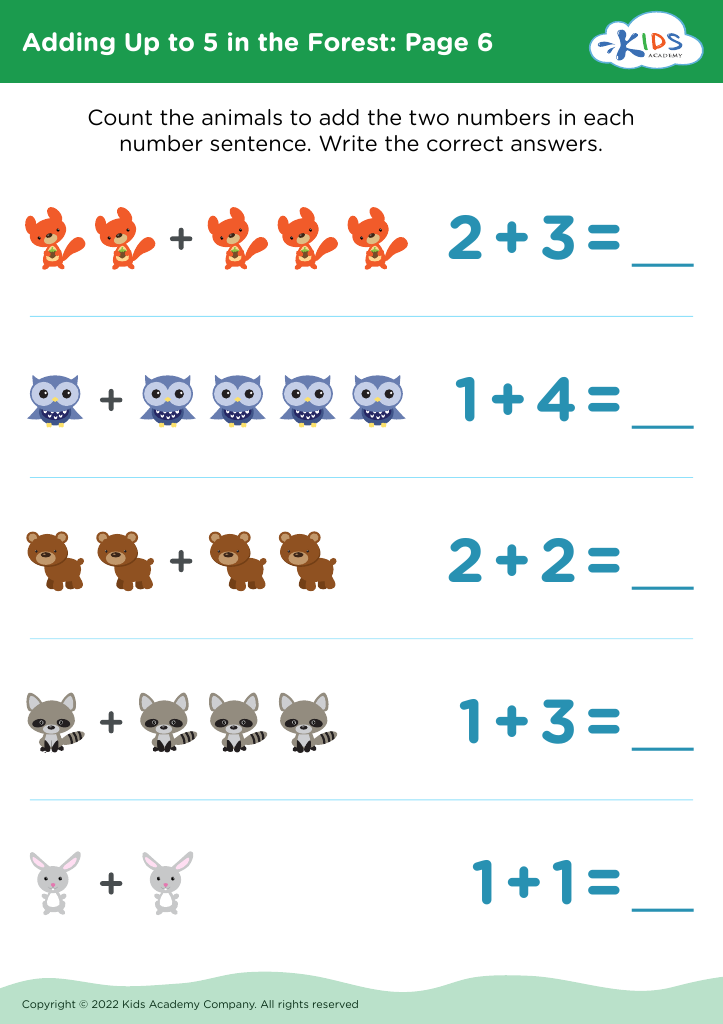
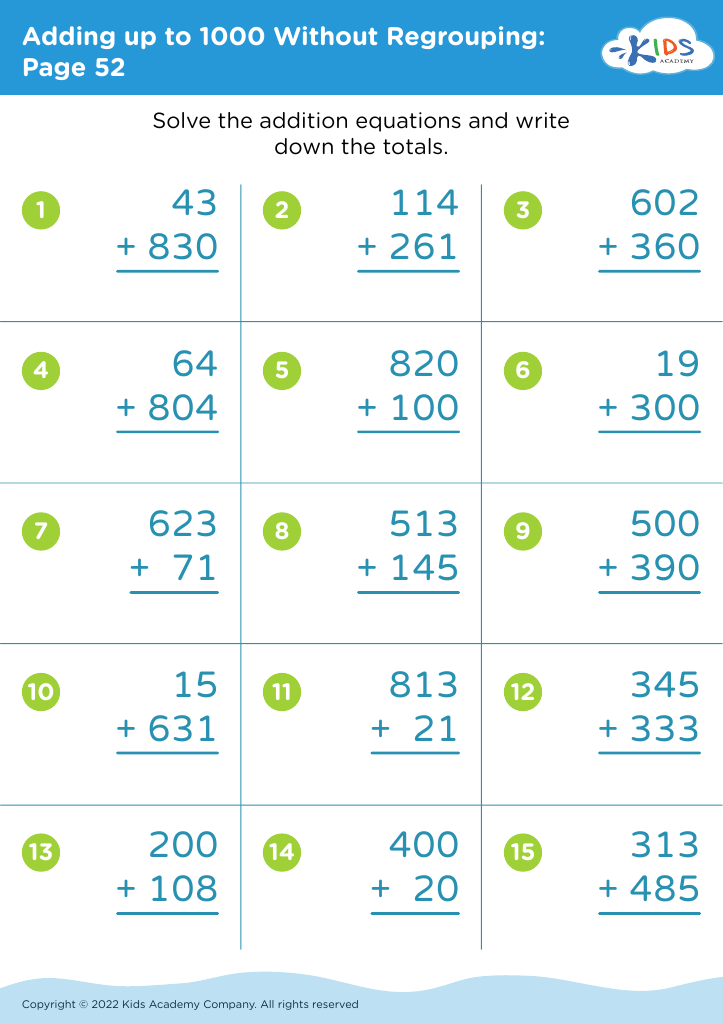
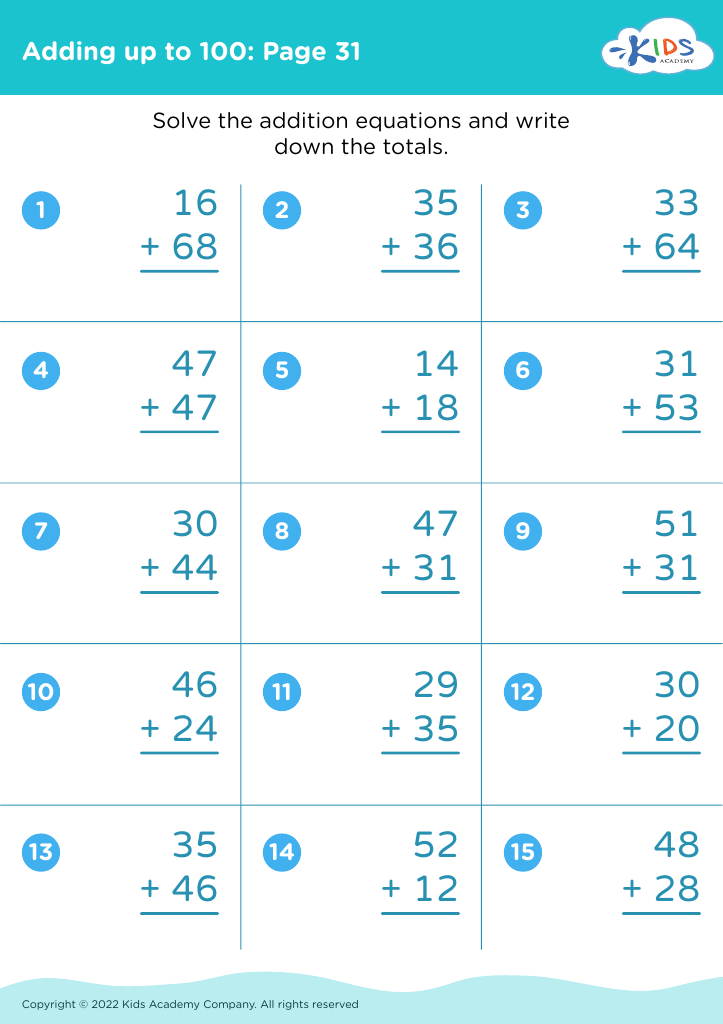








Improving fine motor skills in children aged 3-9 is pivotal for their overall development and academic success, particularly in math. Fine motor skills involve the coordination of small muscles in the hands and fingers, enabling children to perform tasks like writing, drawing, and manipulating objects. These skills are crucial for math activities like counting with fingers, arranging objects, or drawing shapes and numbers.
When fine motor skills are honed, children can execute math-related tasks with greater ease and precision. For example, writing numbers accurately requires control and stability, which are direct outcomes of well-developed fine motor abilities. Likewise, understanding concepts like size, quantity, and space often involves physical interaction with objects, helping to cement these abstract concepts in young minds.
Moreover, linking math to hands-on activities fosters a more engaging and practical learning experience. Puzzles, bead stringing, and building blocks, for instance, not only make math fun but also enhance fine motor dexterity.
Teachers and parents should care about this interconnected development because it lays the foundation for advanced learning. Neglecting fine motor skill development can lead to struggles with daily academic tasks, causing frustration and hindering a child's educational journey. Therefore, an emphasis on strengthening these skills ensures that children are better prepared for future challenges, fostering both confidence and competence in math and beyond.








