Improving fine motor skills Math Worksheets for Ages 3-9
3 filtered results
-
From - To
Enhance your child's math and fine motor skills with our expertly designed worksheets for ages 3-9. At Kids Academy, we offer a range of engaging activities that combine math learning with essential fine motor skill development. Our worksheets are crafted to help children improve their hand-eye coordination, dexterity, and control while mastering key mathematical concepts. Whether tracing numbers, cutting shapes, or solving puzzles, our educational content ensures a fun and productive learning experience. Start today and watch your child gain confidence and proficiency in both math and fine motor tasks, laying a strong foundation for future success.
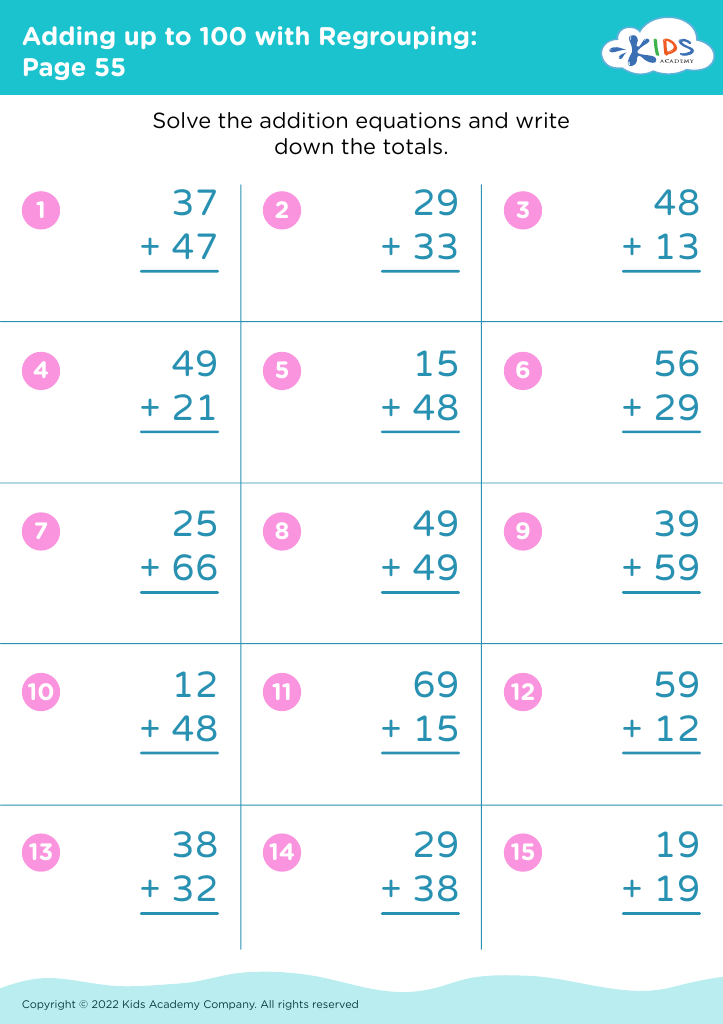
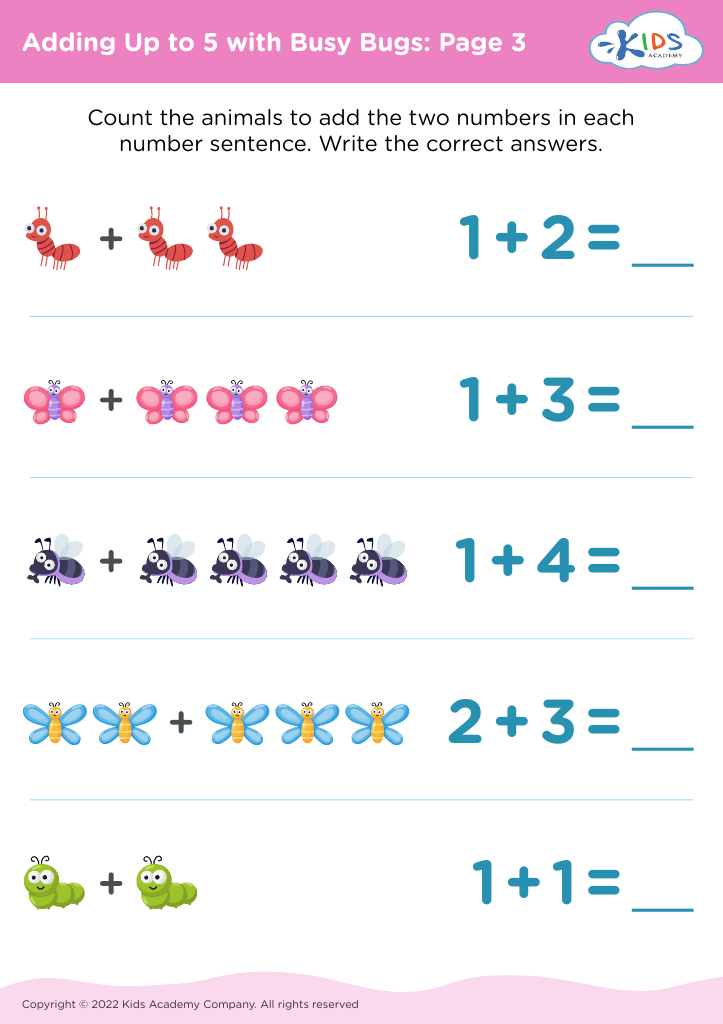
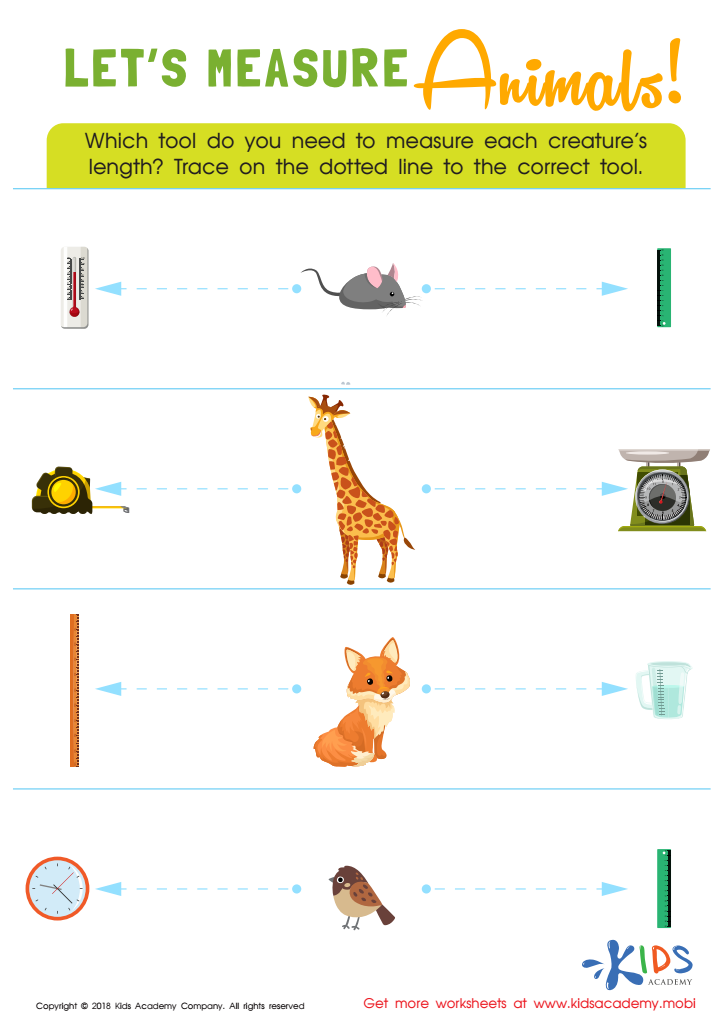
Let's Measure Animals! Worksheet
 Assign to My Students







Improving fine motor skills in children aged 3-9 is essential for their overall development and enhances their mathematical learning experience. Fine motor skills involve the small muscles in the hands and fingers, which are critical for tasks such as writing, buttoning, and manipulating small objects. Strong fine motor abilities are directly linked to better handwriting, enabling children to express their mathematical understanding clearly and accurately.
For math specifically, fine motor skills aid in handling tools like counters, snap cubes, and geometric shapes, making abstract concepts more tangible. Activities that require precise movements, such as connecting dots, sorting small objects, or measuring with rulers, build a foundation for mathematical reasoning and problem-solving. Developing these skills also strengthens hand-eye coordination, which is essential for tasks like drawing numbers, creating number lines, and organizing objects according to size or amount.
When parents and teachers emphasize fine motor skill development, they support cognitive growth, ensuring children are more prepared for complex mathematical tasks as they advance academically. Additionally, improving these skills can boost a child’s confidence and interest in math, making learning a more enjoyable and successful journey. Investing time in these developmental areas provides children with essential tools to excel not just in math, but in various aspects of their educational journey.








