
Improving observational skills Math Worksheets for Ages 3-9
3 filtered results
Difficulty Level
Grade
Age
-
From - To
Subject
Activity
Standards
Enhance your child's observational skills with our engaging math worksheets designed for ages 3-9! Tailored to foster early cognitive development, these worksheets offer a variety of activities that challenge young learners to observe, compare, and identify patterns in visual information. By integrating math concepts with observational tasks, kids will develop critical thinking and reasoning abilities. Each worksheet is colorful and interactive, making learning fun and effective! Perfect for home or classroom use, our resources cater to various learning styles and keep children motivated while building foundational math skills. Start helping your little ones become keen observers and confident mathematicians today!
Favorites
With answer key
Interactive
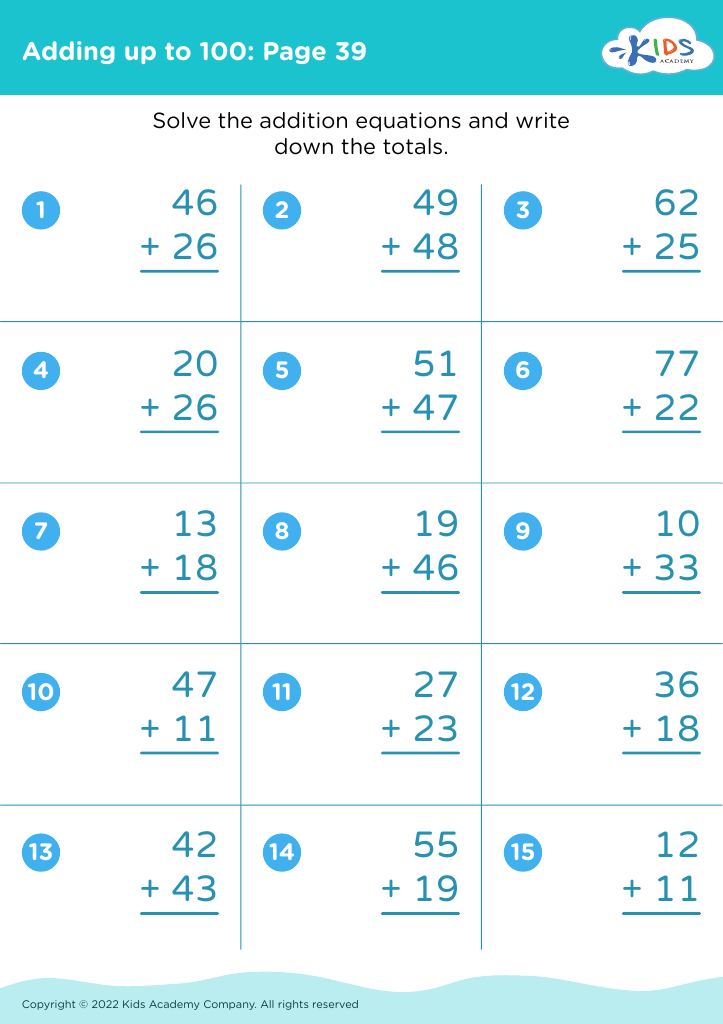
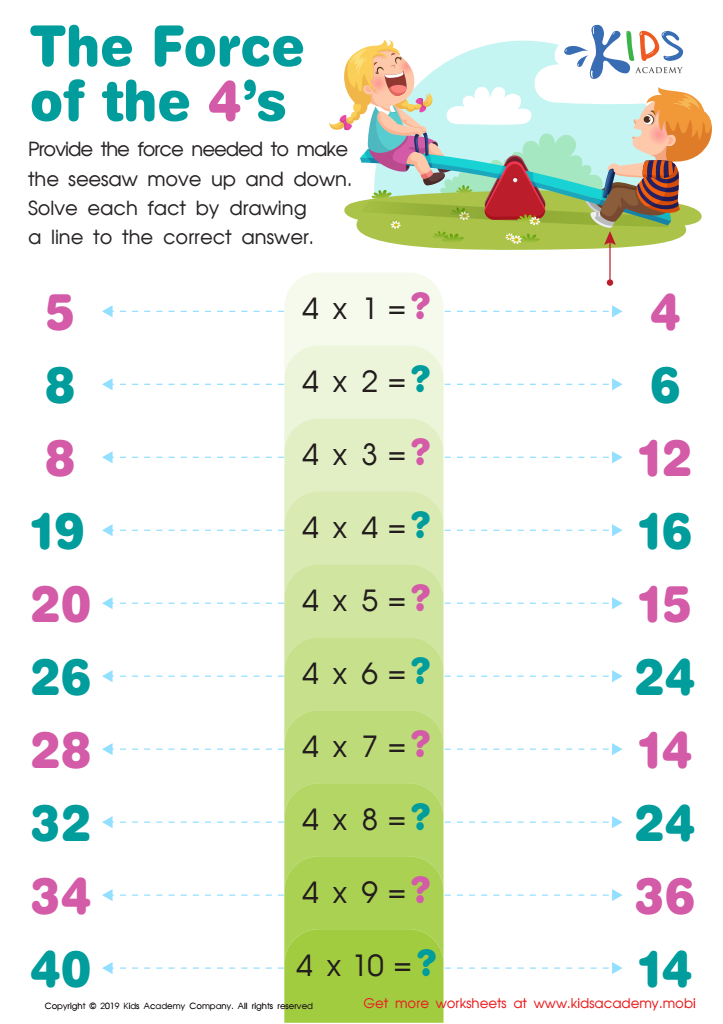
The Force of the 4's Worksheet
Ride a seesaw with your child and explore the physics behind it! Explain how it needs two people and how force makes it go up and down. Use the memories of the pleasurable experience to teach your kid a lesson in force. Show them how to solve the worksheet by drawing a line to the correct answer. This way, they'll learn the force needed for the seesaw to move.
 Assign to My Students
The Force of the 4's Worksheet
Worksheet
Join Kids Academy for Free
Who is primarily going to use this learning content?



.jpg)



Improving observational skills in math for children aged 3-9 is crucial for developing foundational cognitive skills that foster lifelong learning. At this age, children are naturally curious and eager to explore their environment. By honing their observational skills, parents and teachers can help children notice patterns, relationships, and quantitative differences in their surroundings—essential components of mathematical understanding.
For instance, when children learn to observe shapes, sizes, and quantities, they become adept at classification and comparison, paving the way for advanced math concepts. Activities like counting objects, engaging in pattern recognition, and exploring spatial awareness make math enjoyable and relatable. This active participation nurtures critical thinking and problem-solving skills, encouraging children to think mathematically in real-life situations.
Furthermore, observational skills enhance a child's ability to focus and engage, which is beneficial for learning all subjects, not just math. Parents and teachers can foster these skills through playful activities, discussions, and encouraging exploration of everyday scenarios. In the long run, this attention to observational learning creates a strong foundation for more complex math concepts, reinforces a growth mindset, and builds confidence in children's academic journey, ensuring they embrace challenges as opportunities for growth.








