
Practice counting Math Worksheets for Ages 3-9
6 filtered results
Difficulty Level
Grade
Age
-
From - To
Subject
Activity
Standards
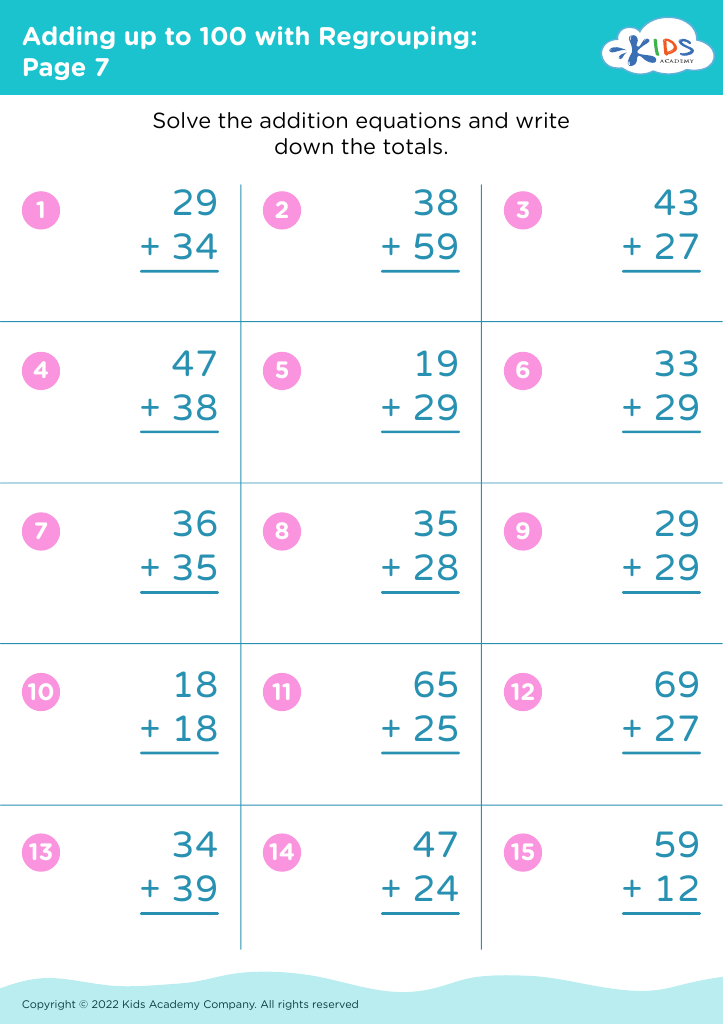
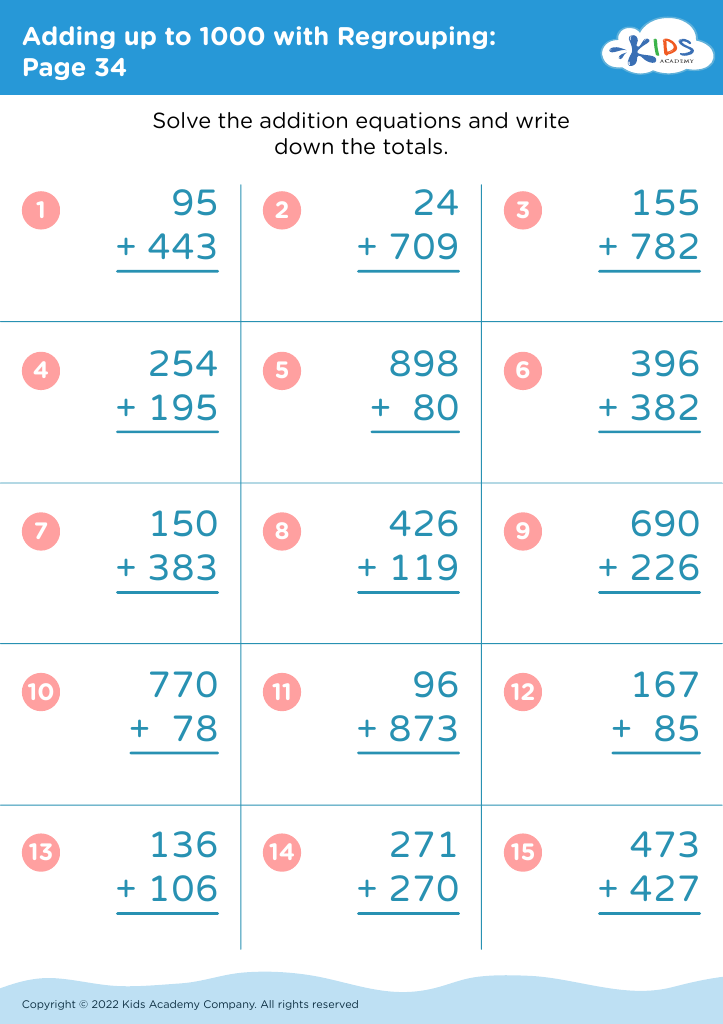
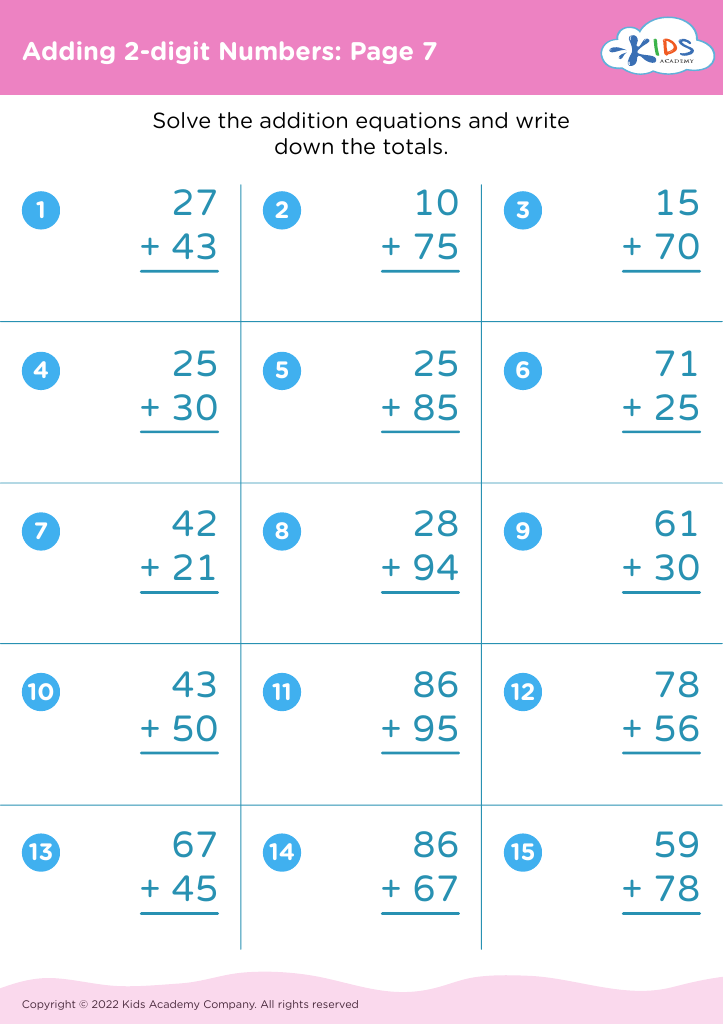
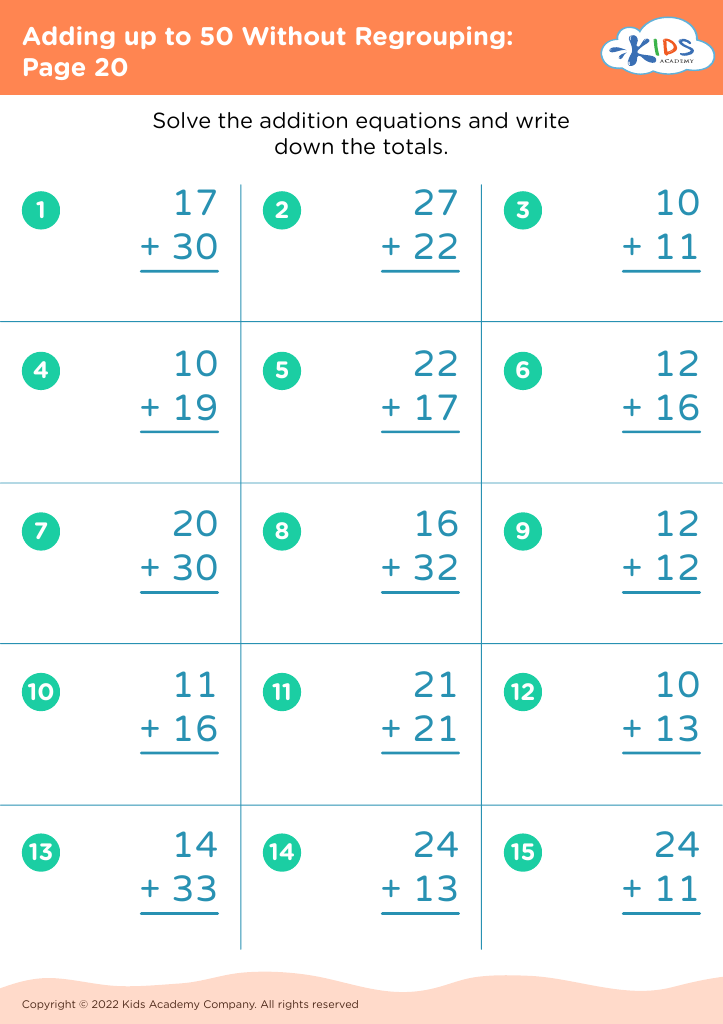
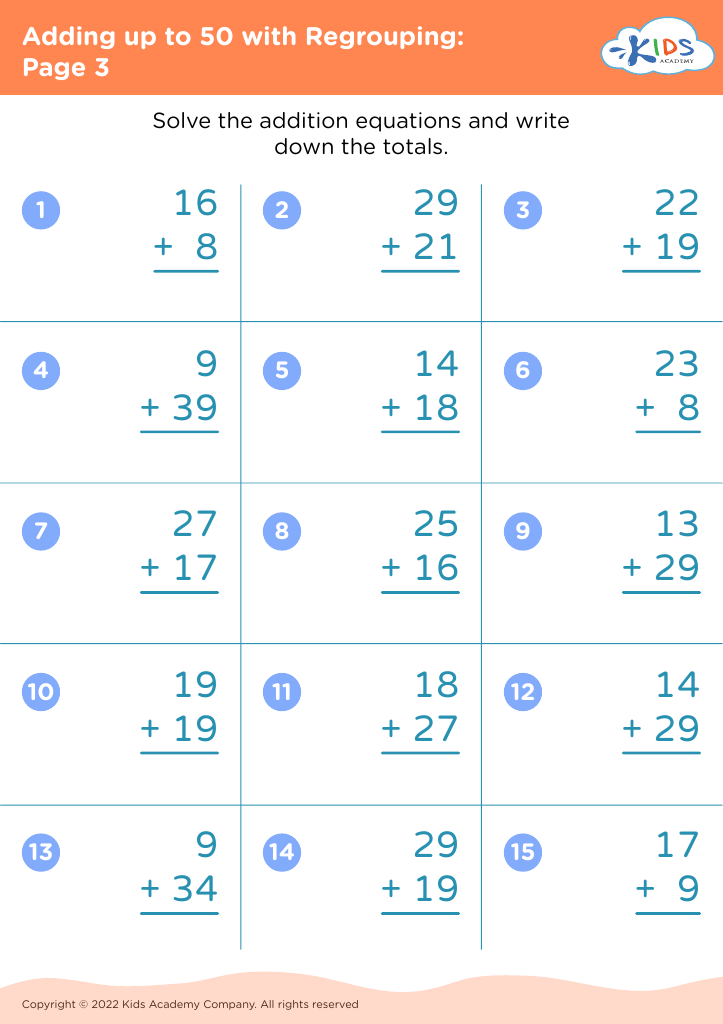
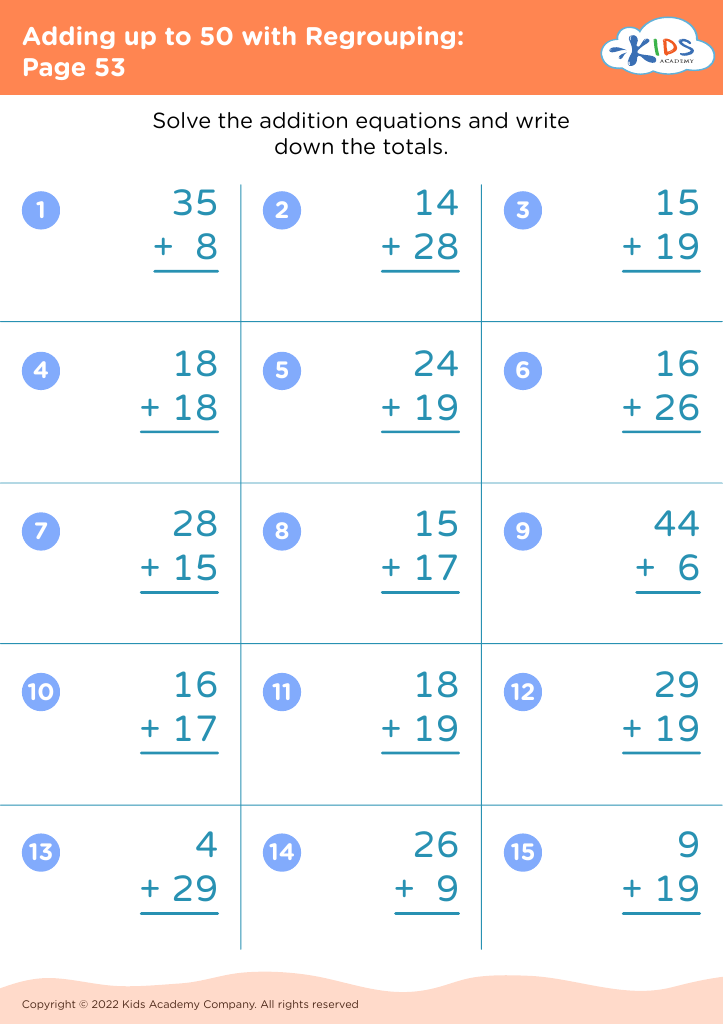
Enhance your child's counting skills with our engaging Practice Counting Math Worksheets designed for ages 3-9. These worksheets provide a fun and interactive way to help young learners grasp essential math concepts. Featuring colorful illustrations and playful activities, children will happily practice counting objects, numbers, and grouping, ensuring they build a solid foundation in numeracy. Designed by educators, our resources cater to various skill levels, making learning suitable for every child. Whether for at-home practice or classroom use, our counting worksheets foster a love for math and boost confidence in young minds. Start your child's math journey today!
Favorites
With answer key
Interactive
Join Kids Academy for Free
Who is primarily going to use this learning content?







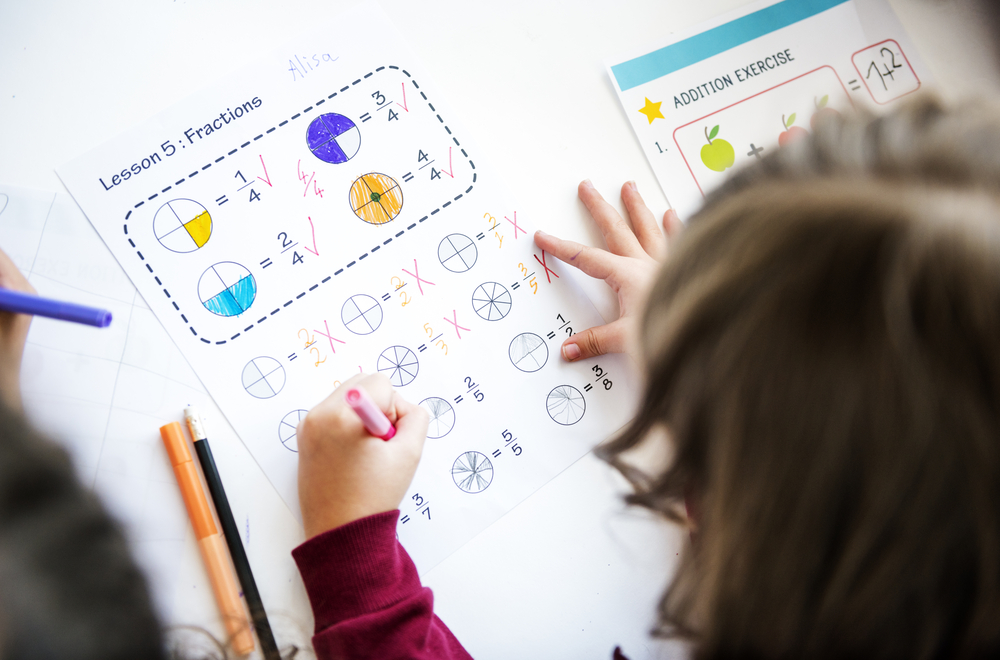
Practicing counting math is crucial for children aged 3-9, as it establishes foundational skills that will support their academic journey. Early exposure to counting helps in developing number sense, which is integral to understanding more complex mathematical concepts in later years. When children count, they learn to recognize patterns, sequences, and relationships between quantities. This not only enhances their cognitive development but also fosters critical thinking skills.
Moreover, counting exercises align with various developmental milestones. For example, children transform abstract concepts into tangible understanding through hands-on activities and real-world applications, such as counting toys or snacks. Parental involvement in these activities cultivates a positive attitude towards math, boosting children's confidence and reducing math anxiety as they grow.
Additionally, practice counting nurtures social-emotional skills. Collaborative counting games can teach cooperation and communication, which are vital life skills. It also strengthens parent-child or teacher-student bonds, enhancing motivation and engagement in learning.
In conclusion, parents and teachers should prioritize counting math practices because they form the building blocks for future learning, enhance critical cognitive and social skills, and foster a love for mathematics, positively impacting a child's educational trajectory.








