Times table familiarity Math Worksheets for Ages 3-9
3 filtered results
-
From - To
Discover our engaging Times Table Familiarity Math Worksheets designed for children ages 3-9! These worksheets provide a fun and interactive approach to help young learners master multiplication concepts and develop a strong foundation in math. Featuring a variety of colorful and age-appropriate activities, kids will enjoy practicing times tables through games, puzzles, and challenges. Our printable resources promote confidence and fluency in multiplication while catering to different learning styles. Perfect for at-home learning or classroom use, these worksheets aim to make math enjoyable and accessible for all children. Unlock your child's potential and enhance their math skills today!
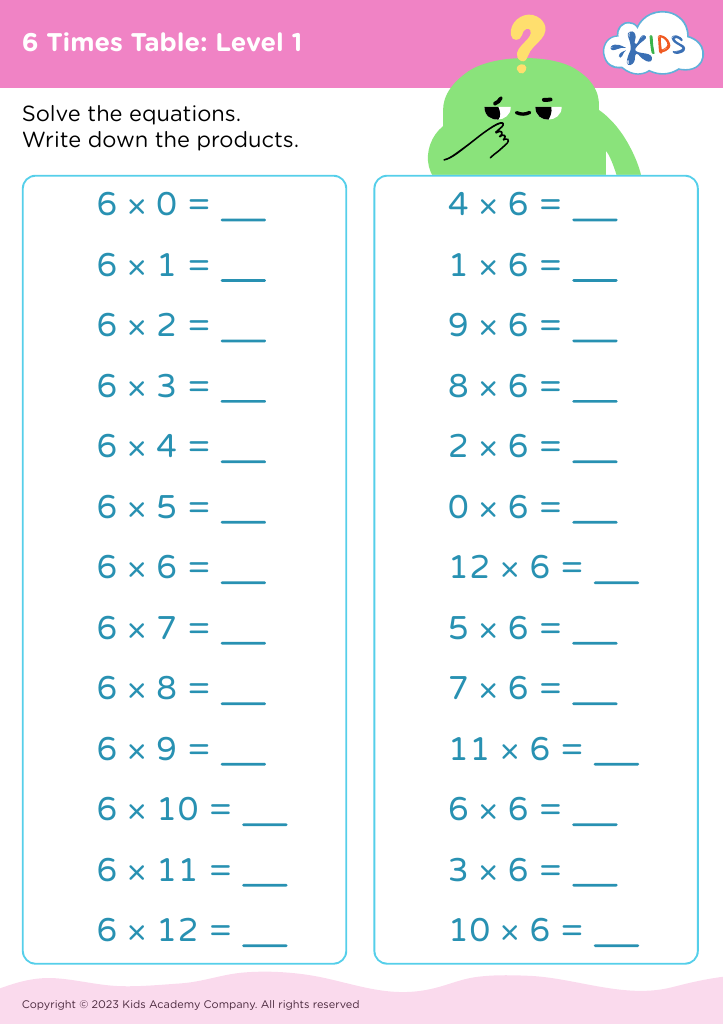
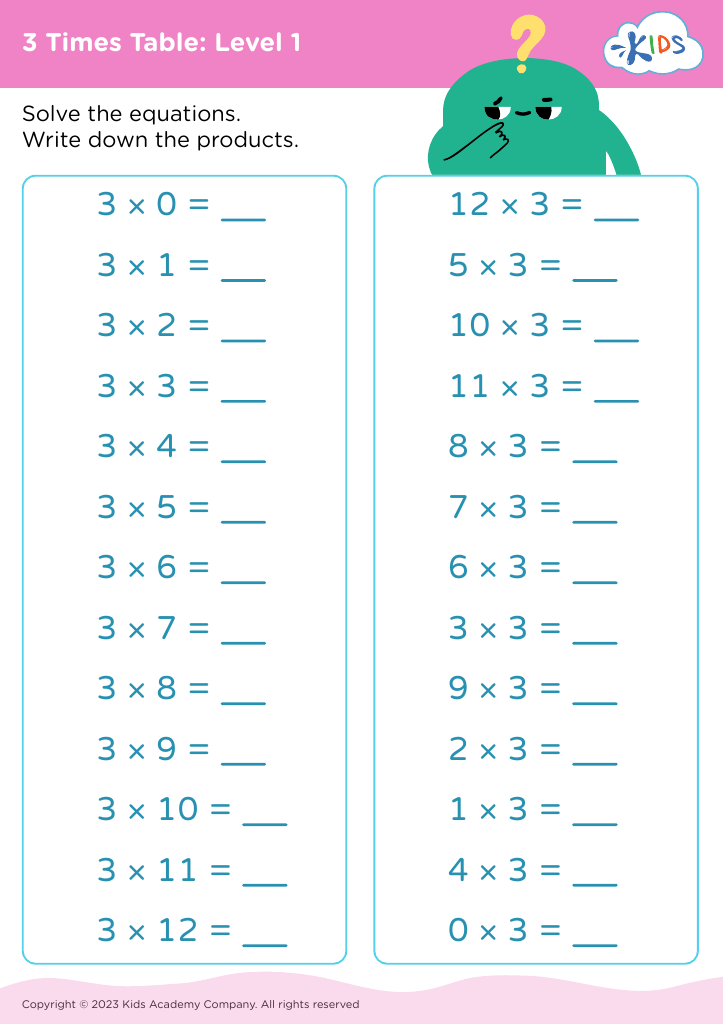
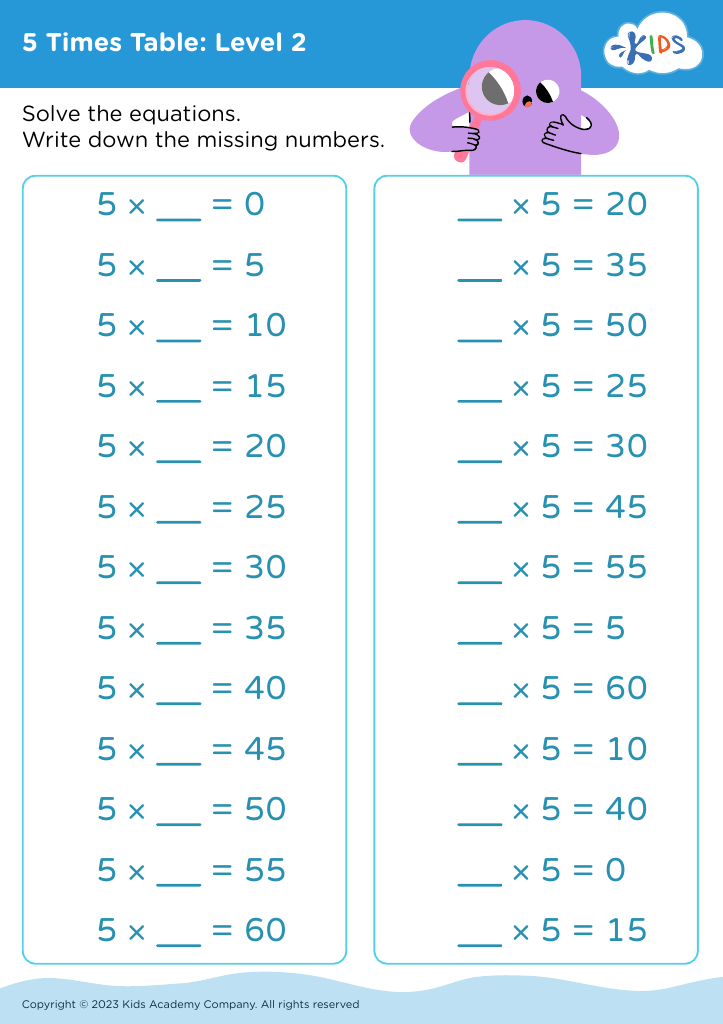






Fostering familiarity with times tables in children aged 3-9 is crucial for several reasons. Firstly, multiplication forms the backbone of advanced mathematical concepts, such as division, fractions, and algebra. Early mastery of times tables empowers students with a strong foundational skill that decays less over time. This comfort with numbers nurtures confidence and reduces anxiety in mathematics, setting a positive tone for future learning.
Moreover, engaging with times tables helps improve a child's problem-solving abilities and analytical thinking. When times tables are practiced regularly, children develop cognitive associations, leading to quicker, intuitive calculations and enhanced mental math skills. This agility in numerical reasoning aids academic performance across various subjects.
In addition, fostering math fluency from an early age encourages a mindset resistant to math phobia. Encouraging exploration of times tables can also turn into enjoyable activities, like games or songs, making it an engaging educational experience.
Ultimately, both parents and teachers should care about times table familiarity, as it not only equips children with critical academic skills but also promotes a positive and enjoyable learning environment, paving the way for future success in mathematics and beyond.








