Understand multiplication Math Worksheets for Ages 3-9
6 filtered results
-
From - To
Discover our engaging "Understand Multiplication" math worksheets designed for children ages 3-9! These worksheets offer a fun, interactive approach to mastering multiplication concepts. Tailored to various learning levels, they incorporate vibrant illustrations and appealing activities that encourage early math skills development. Each worksheet focuses on fundamental multiplication principles, making it easy for young learners to grasp basic multiplication concepts through practice and repetition. With our resources, children can build confidence and proficiency in math, setting a solid foundation for future learning. Explore our collection today and watch your child thrive in their understanding of multiplication!
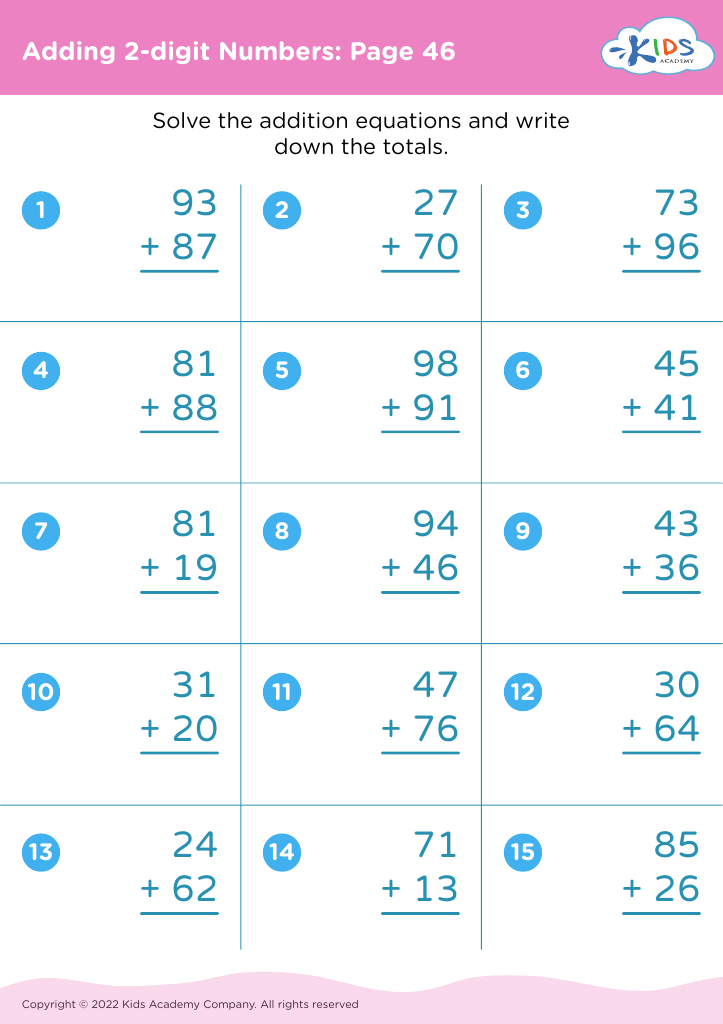
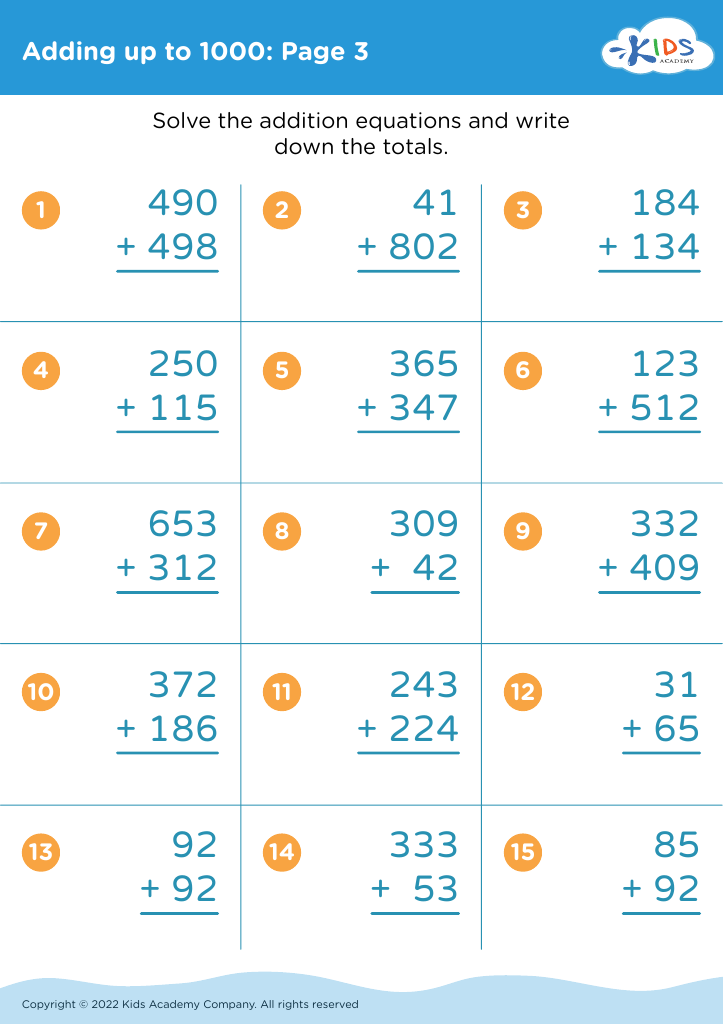
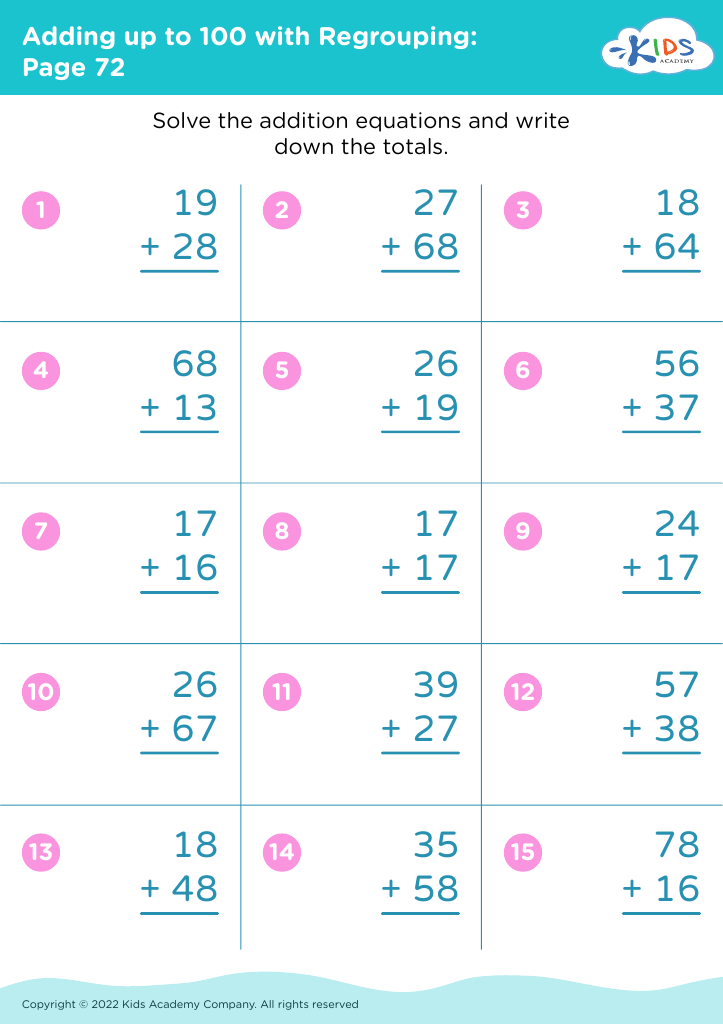
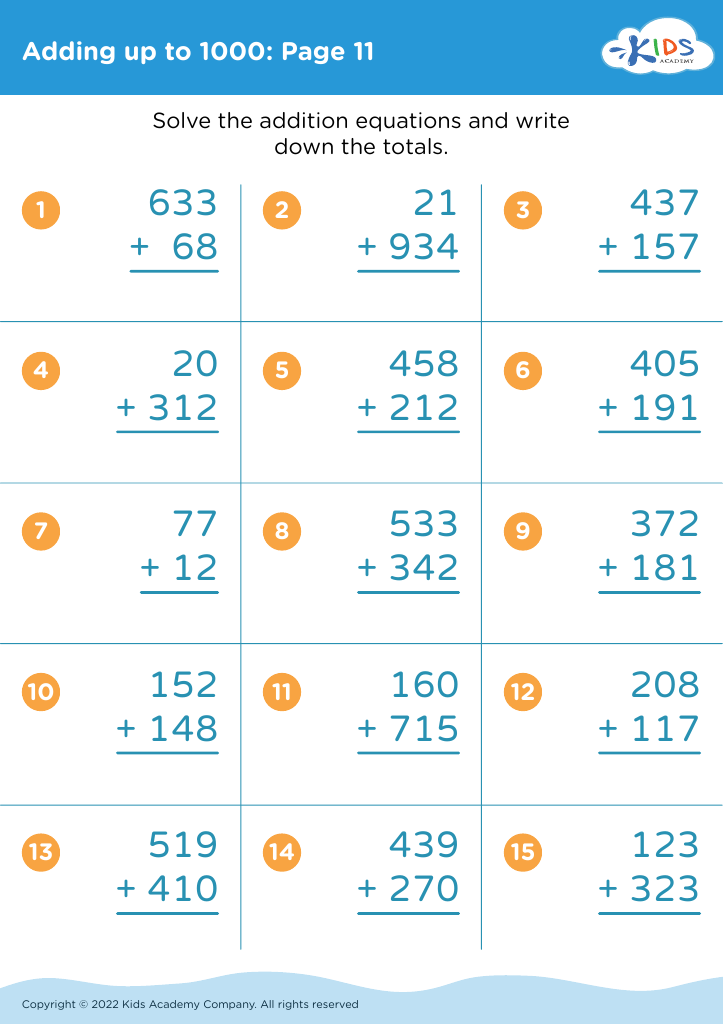







Understanding multiplication is a crucial foundation in mathematical development for children aged 3-9, as it sets the stage for their future learning. For parents and teachers, fostering early multiplication skills is essential for several reasons.
Firstly, multiplication introduces the concept of repeated addition, helping children grasp relationships between numbers. This foundational skill not only builds their confidence but promotes critical thinking and problem-solving abilities. Early exposure influences later success in more complex math concepts, including division, fractions, and algebra.
Secondly, mastering multiplication at a young age can significantly reduce anxiety in later grades, as math becomes less intimidating when children have solid foundational skills. This holistic understanding shapes a positive attitude toward learning, making them more eager to tackle challenges in mathematics.
Moreover, multiplication knowledge enhances daily life skills, such as budgeting and time management. By recognizing patterns and relationships with numbers, children can apply their understanding in real-world situations.
Lastly, a strong conceptual grasp of multiplication fosters better performance in school and lays down an academic trajectory that can lead to success in various career paths. Therefore, engaging children in multiplication learning early on is a joint responsibility for parents and teachers, paving the way for a lifetime love of math.








