Understanding number relationships Math Worksheets for Ages 3-9
9 filtered results
-
From - To
Explore our "Understanding Number Relationships" math worksheets, tailored for children aged 3 to 9. These engaging resources are designed to help young learners grasp essential mathematical concepts, laying a solid foundation for future success. Our worksheets use playful visuals and interactive activities to make learning about number connections fun and effective. Children will develop critical skills such as recognizing patterns, comparing quantities, and grasping basic addition and subtraction. Ideal for both classroom and at-home learning, these worksheets offer a comprehensive approach to building confidence in math. Enhance your child's mathematical journey with our carefully crafted and educationally enriching worksheets today!
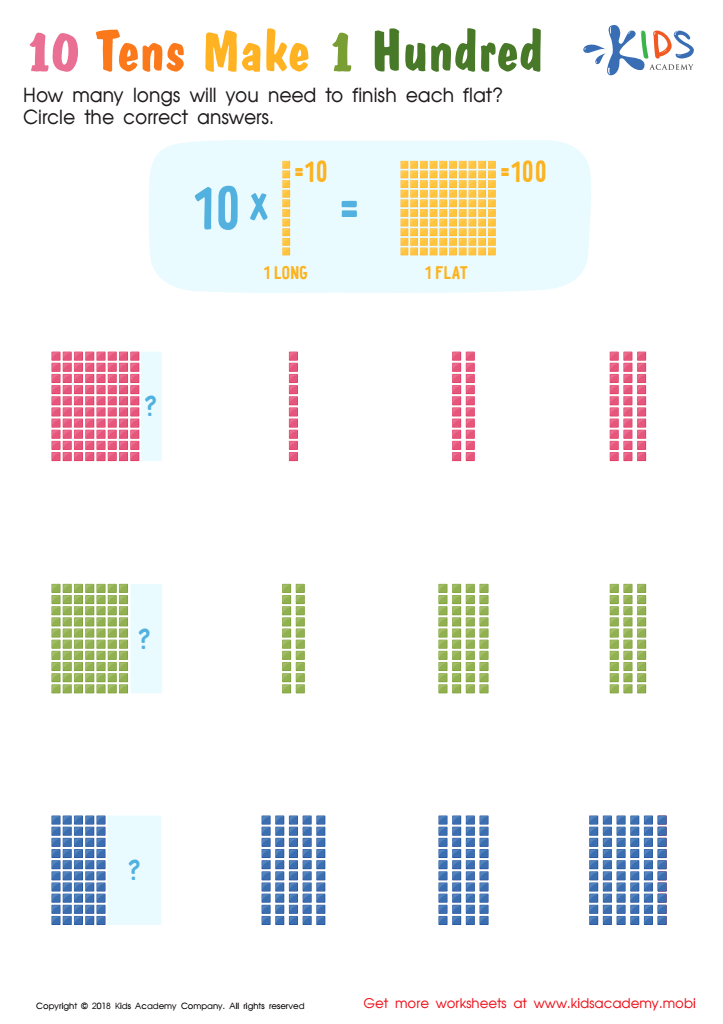
10 Tens Make 1 Hundred Worksheet
 Assign to My Students
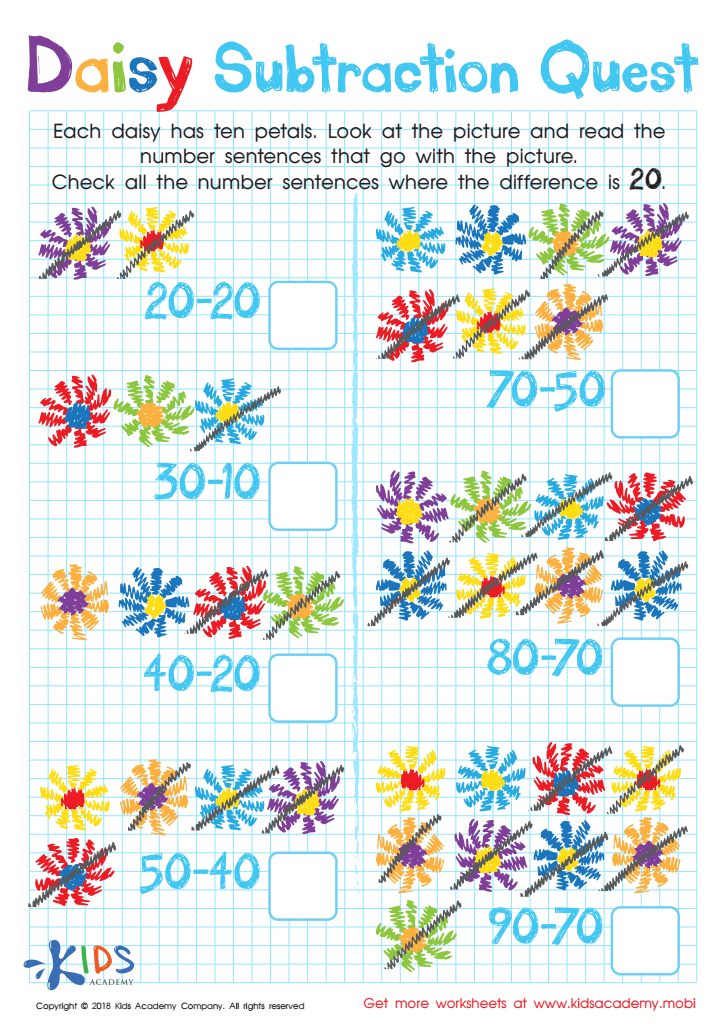
Daisy Subtraction Quest Worksheet
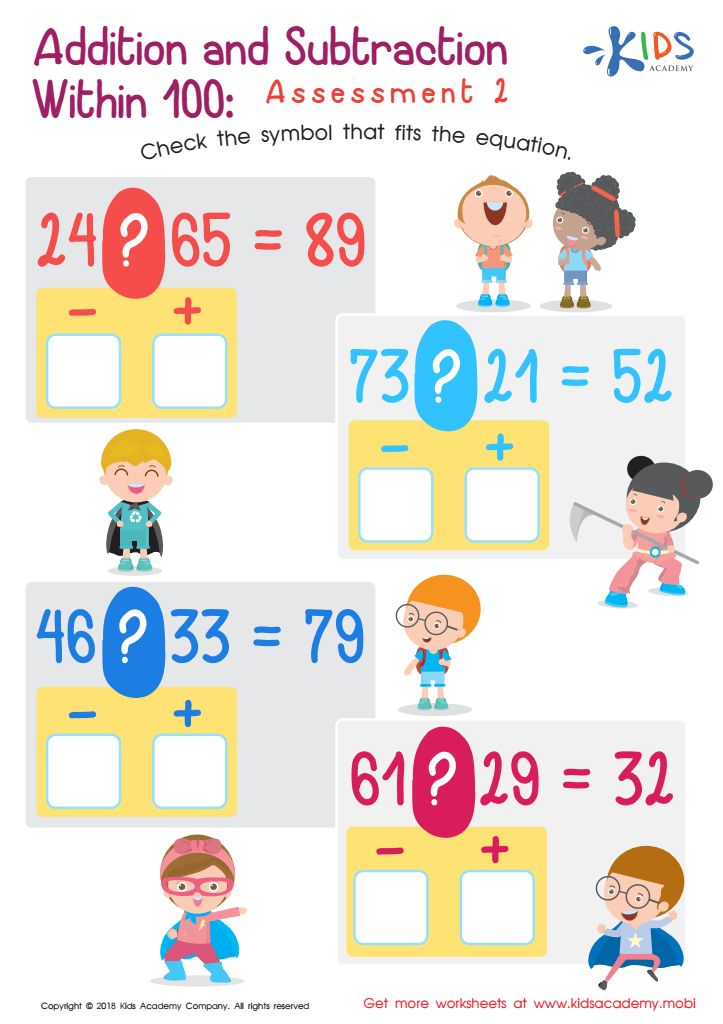
Addition and Subtraction Within 1: Assessment 2 Worksheet
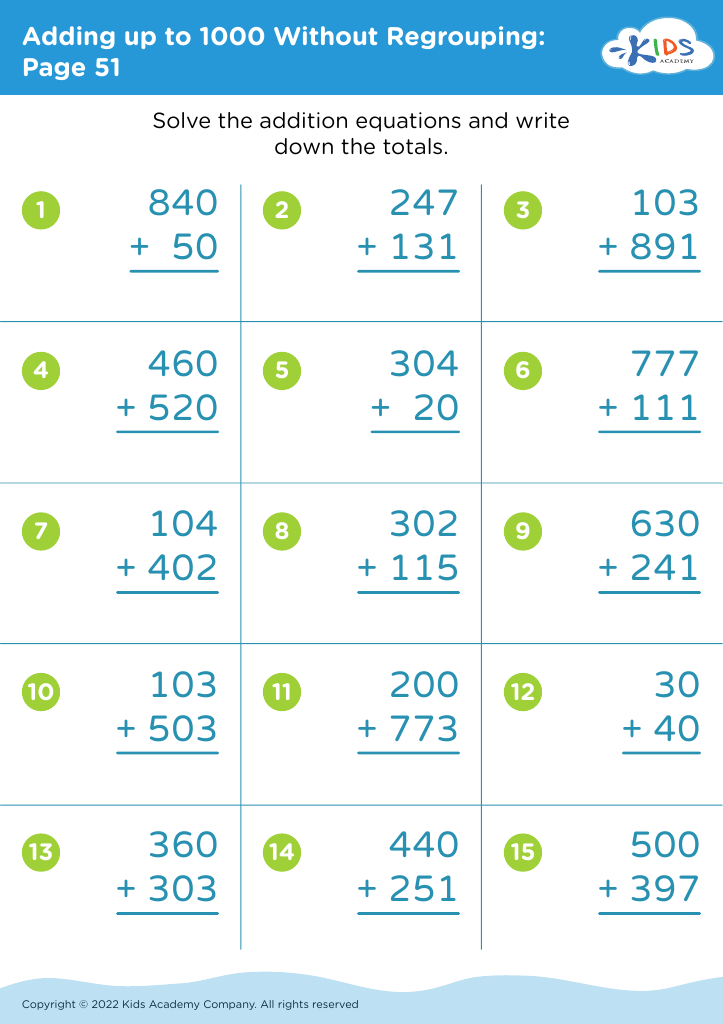
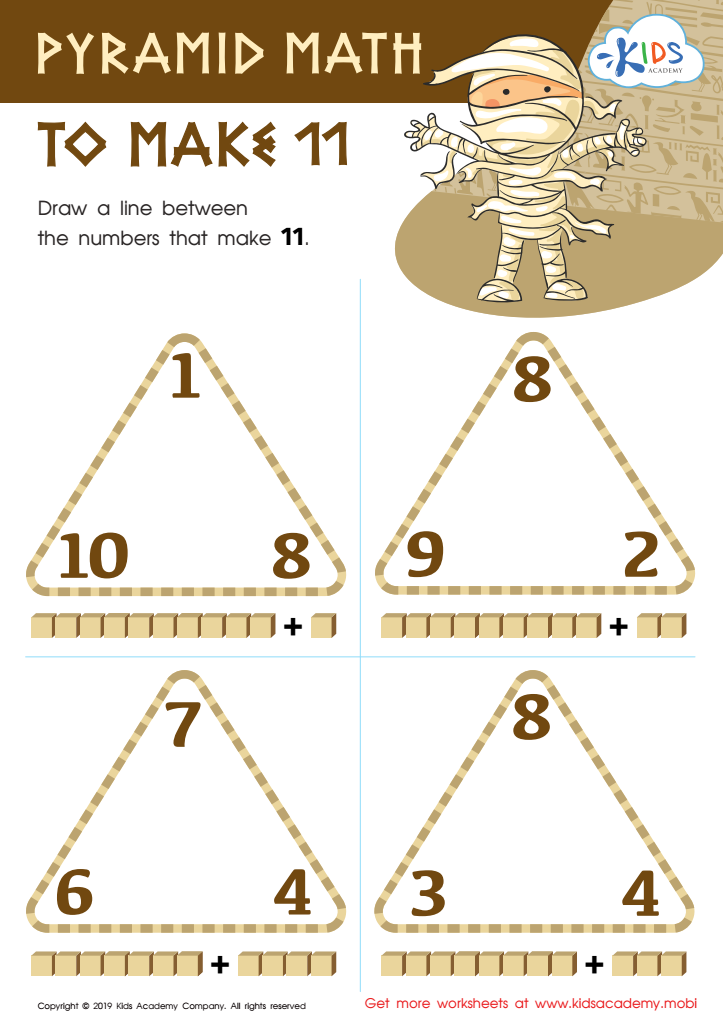
Pyramid Math to Make 11 Worksheet






Understanding number relationships is crucial for children ages 3-9 as it forms the foundation for all future math learning. At this developmental stage, children begin to explore how numbers interact with one another, paving the way for essential skills such as addition, subtraction, and comparison. When parents and teachers focus on fostering a deep understanding of number relationships, children develop strong problem-solving abilities and critical thinking skills.
Recognizing relationships between numbers helps children to grasp mathematical concepts more easily. For instance, knowing that adding one to a number increases its value fosters a natural, intuitive sense of counting and arithmetic. This understanding also promotes number sense, allowing children to make connections between concepts and encouraging them to approach math with confidence and curiosity.
Furthermore, early exposure to number relationships enhances cognitive development, promoting logical reasoning and analytical thinking. As children construct their mathematical knowledge through exploration and play, they are more likely to retain and apply these skills in various contexts.
In conclusion, parents and teachers play a vital role in nurturing early mathematical understanding. By prioritizing number relationships, they equip children with the tools needed for successful future learning and enable them to navigate a world increasingly driven by mathematical literacy.








