Understanding patterns Numbers 0–10 Worksheets for Ages 3-9
3 filtered results
-
From - To
Explore our "Understanding Patterns: Numbers 0–10 Worksheets" designed for children ages 3-9. These engaging and educational printables help young learners develop essential math skills by identifying and creating number patterns. Our resources promote cognitive development, enhance problem-solving abilities, and build a strong mathematical foundation. With colorful, attractive designs and age-appropriate challenges, these worksheets make learning patterns enjoyable for preschool and grade school kids alike. Perfect for at-home practice or classroom reinforcement, our worksheets are a valuable tool for nurturing early math proficiency and fostering a love for numbers in young minds.
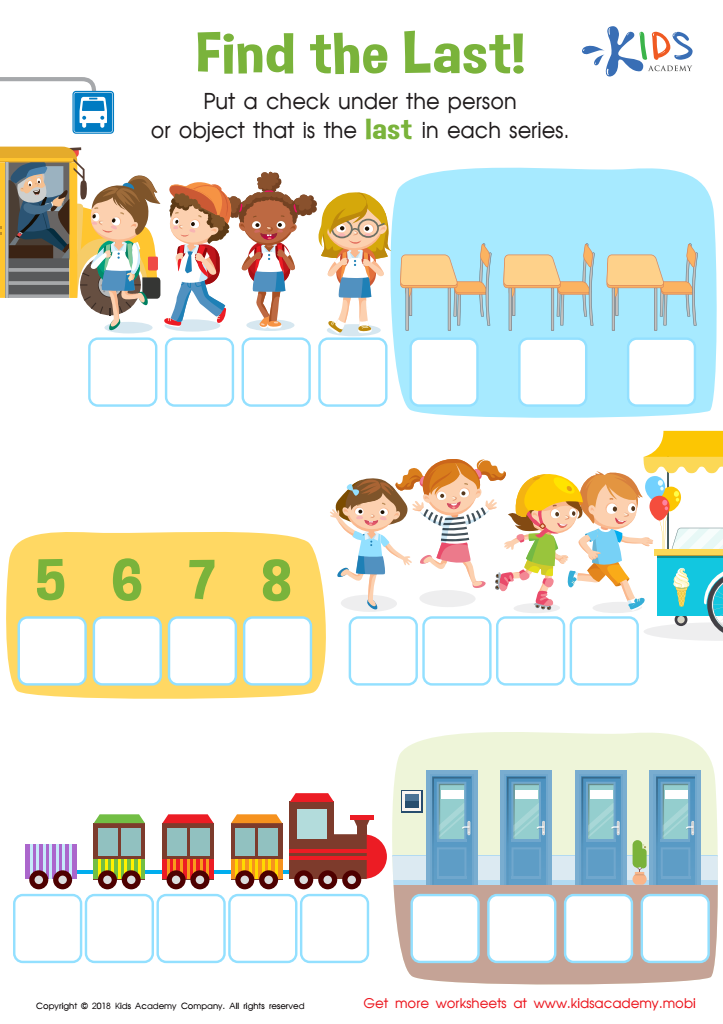
Find the Last! Worksheet
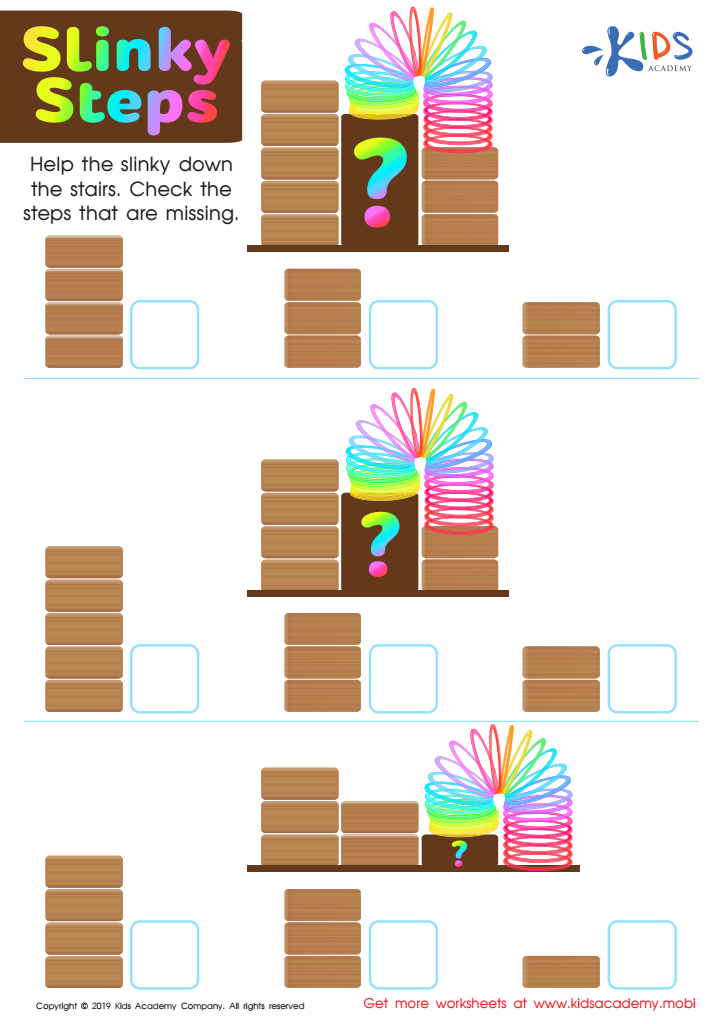
Slinky Steps Worksheet
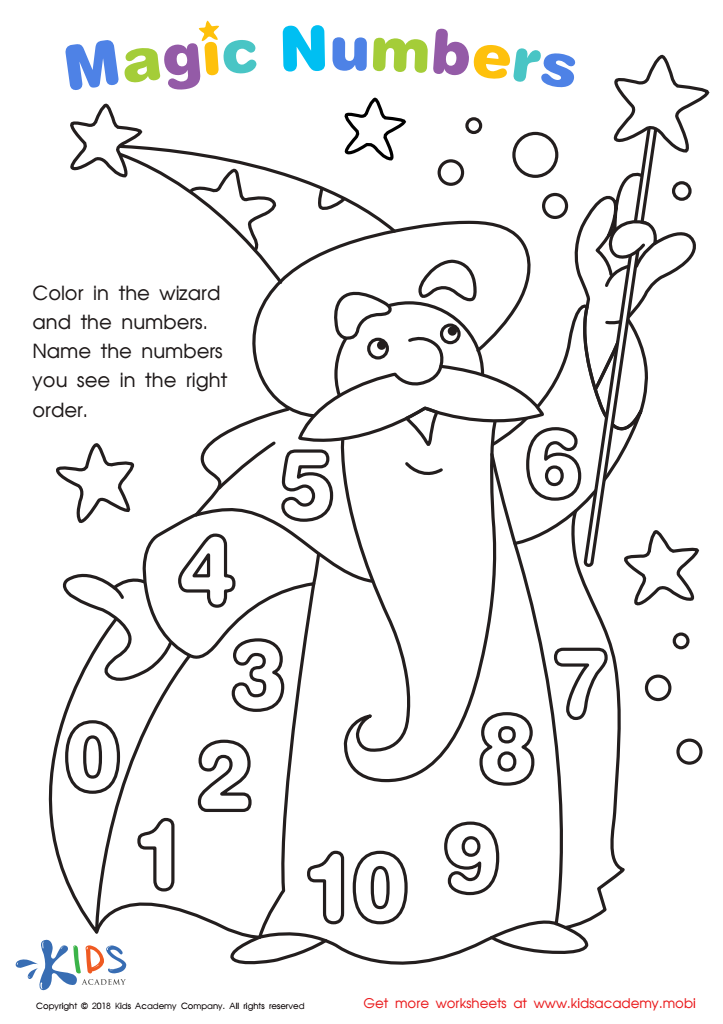
Magic Numbers Worksheet
 Assign to My Students








Understanding number patterns from 0 to 10 is foundational for young children aged 3-9. For parents and teachers, emphasizing this early mathematical concept can greatly benefit a child's cognitive development and future learning.
At its core, recognizing patterns helps children make sense of the world around them. Patterns provide a predictable structure, which is crucial for developing logical thinking and problem-solving skills. When children grasp the concept of numerical patterns, they are better equipped to understand sequences, order, and relationships between numbers. For example, recognizing that each subsequent number in a sequence increases by one helps children build a foundation for addition and subtraction.
Moreover, early exposure to patterns enhances a child’s ability in other academic areas. It supports reading skills by allowing children to predict text sequences, boosts memory through repetitive learning, and even aids in recognizing patterns in nature and daily routines, promoting a well-rounded view of their environment.
For teachers, integrating number patterns into lessons makes learning interactive and engaging. Parents can reinforce these concepts through everyday activities, like counting steps or grouping objects. By prioritizing the understanding of numbers 0–10 and their patterns, teachers and parents set the stage for lifelong numeracy skills and an enthusiastic approach toward learning.