Logical Reasoning Reading Non-Fiction Worksheets for Ages 3-9
4 filtered results
-
From - To
Unlock your child's potential with our "Logical Reasoning Reading Non-Fiction Worksheets" designed for ages 3-9. These engaging worksheets blend fun and education, helping young learners develop critical thinking and logical reasoning skills while exploring the exciting world of non-fiction. Each activity encourages children to analyze information, draw conclusions, and make connections through interactive tasks and thought-provoking questions. Perfect for homeschooling, classroom use, or supplemental learning, our worksheets foster a love for reading and enhance comprehension. Provide your child with the tools to think critically and ignite their curiosity about real-world topics. Start their learning journey today!
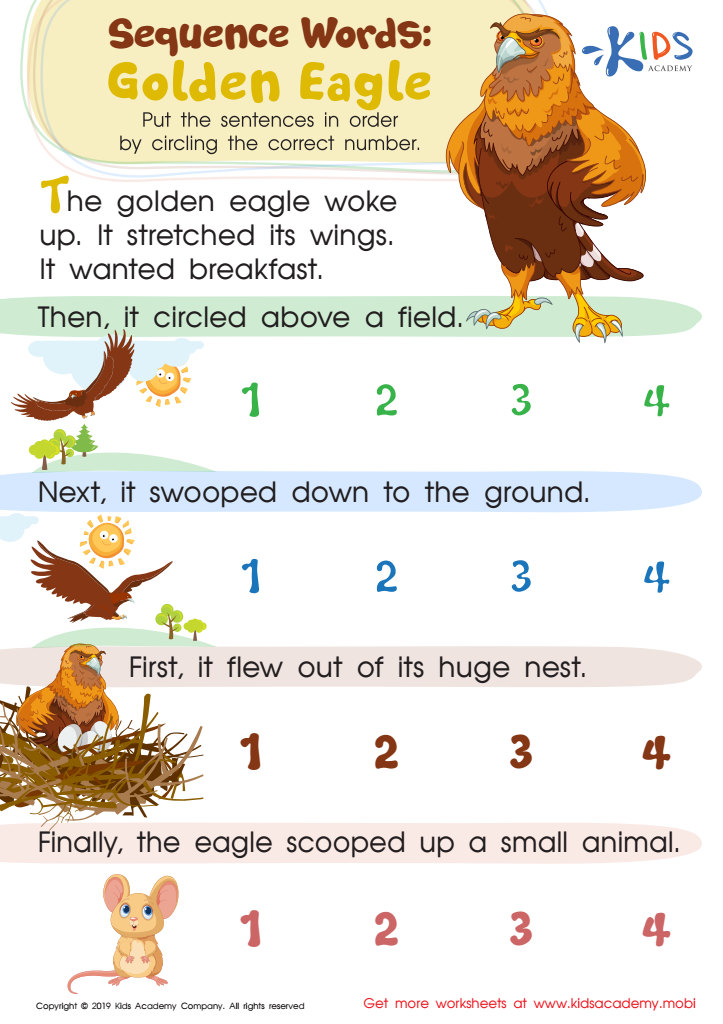
Sequence Word Eagle Worksheet
 Assign to My Students
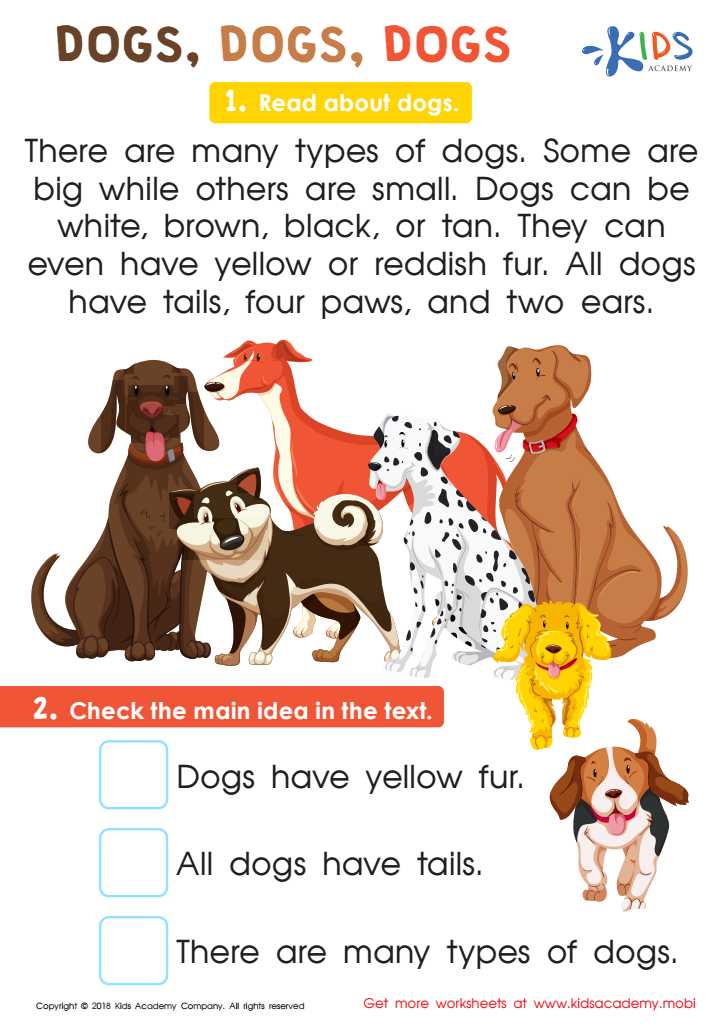
Dogs, Dogs Worksheet
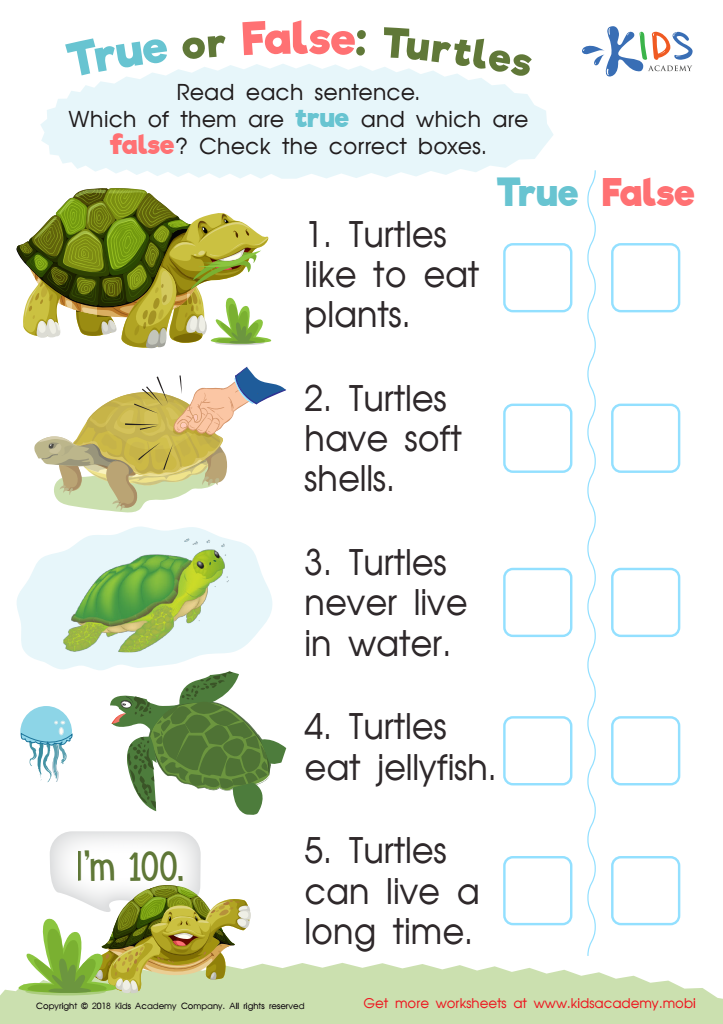
True or False: Turtles Worksheet
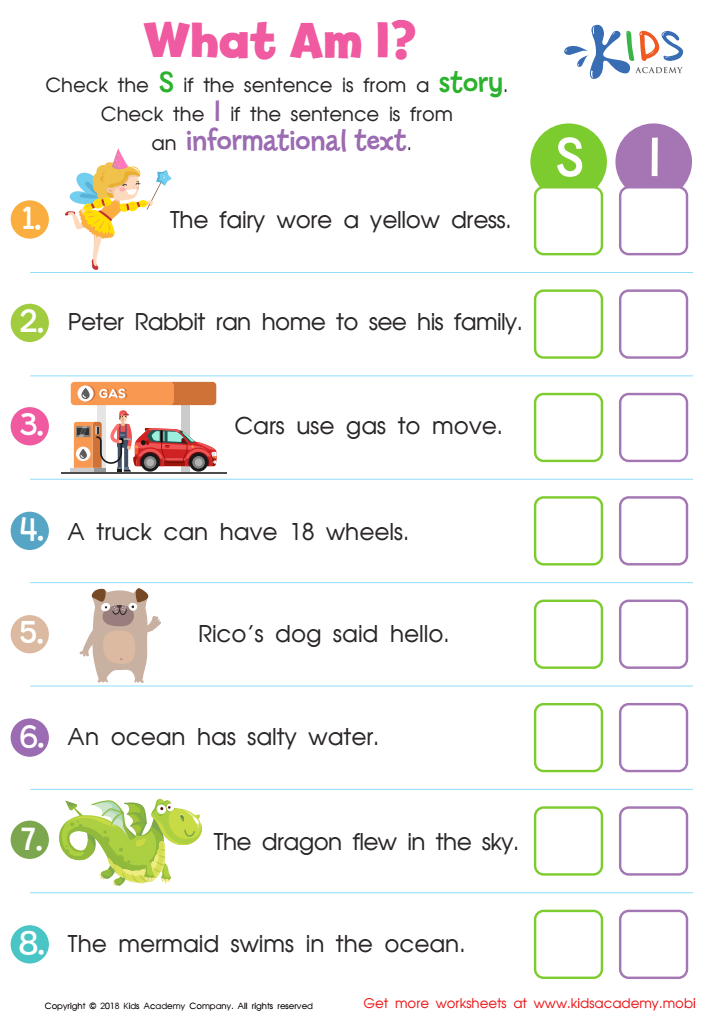
What Am I? Worksheet








Logical reasoning through non-fiction reading is essential for children ages 3-9, and parents and teachers should prioritize it for several reasons. Firstly, engaging with non-fiction exposes young learners to factual information about the world around them, fostering curiosity and a love for exploration. This age group is naturally inquisitive, and logical reasoning helps them make connections between new information and what they already know.
Secondly, developing logical reasoning skills enhances critical thinking abilities. As children analyze texts, they learn to identify cause-and-effect relationships, draw conclusions, and evaluate evidence. These skills are foundational for academic success across all subjects, as they encourage deeper understanding and problem-solving.
Moreover, early exposure to non-fiction reading nurtures a lifelong interest in subjects like science, history, and culture. When children can comprehend and reason through factual content, they are better equipped to engage in classroom discussions and collaborative projects.
Finally, logical reasoning also supports social-emotional development. By understanding different perspectives presented in non-fiction texts, children learn empathy and improve their communication skills. Overall, the combination of logical reasoning and non-fiction reading lays a robust foundation for a well-rounded, informed, and curious young learner.








