
Sound Association Beginning Sounds Worksheets for Ages 4-6
3 filtered results
Difficulty Level
Grade
Age
-
From - To
Subject
Activity
Standards
Discover engaging "Sound Association Beginning Sounds Worksheets" specially designed for children aged 4-6! Encourage early literacy and phonics skills with our fun and interactive activities that help kids identify and match beginning sounds to corresponding images and letters. These printable worksheets are perfect for preschoolers and kindergarteners to practice recognizing initial phonemes, boosting their confidence in reading and writing. With vibrant illustrations and age-appropriate exercises, learning becomes an enjoyable adventure for young learners. Get started today and watch your child's language skills soar with our expertly crafted resources aligned to enhance foundational literacy development.
Favorites
With answer key
Interactive
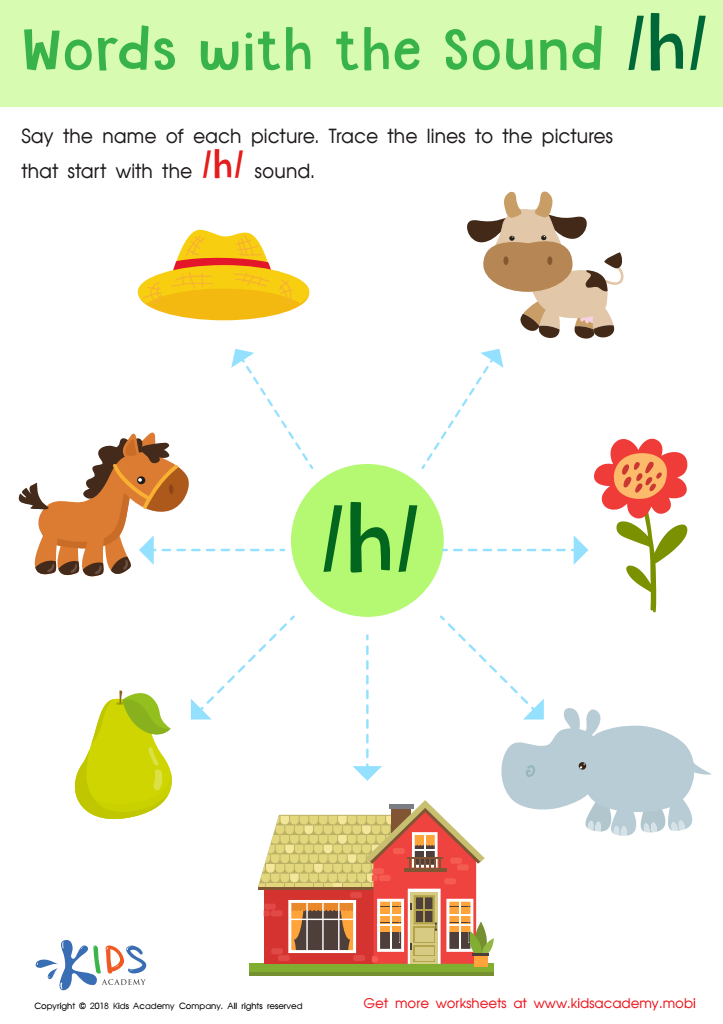
Words with sound h Reading Worksheet
The letter H can often be heard in words! Check your child's knowledge with an engaging worksheet from Kids Academy. Ask them to go around a circle and name each image aloud. Listen for the starting sound and trace the line from the middle letter to the images with the sound. This is a great way to practice phonics!
 Assign to My Students
Words with sound h Reading Worksheet
Worksheet
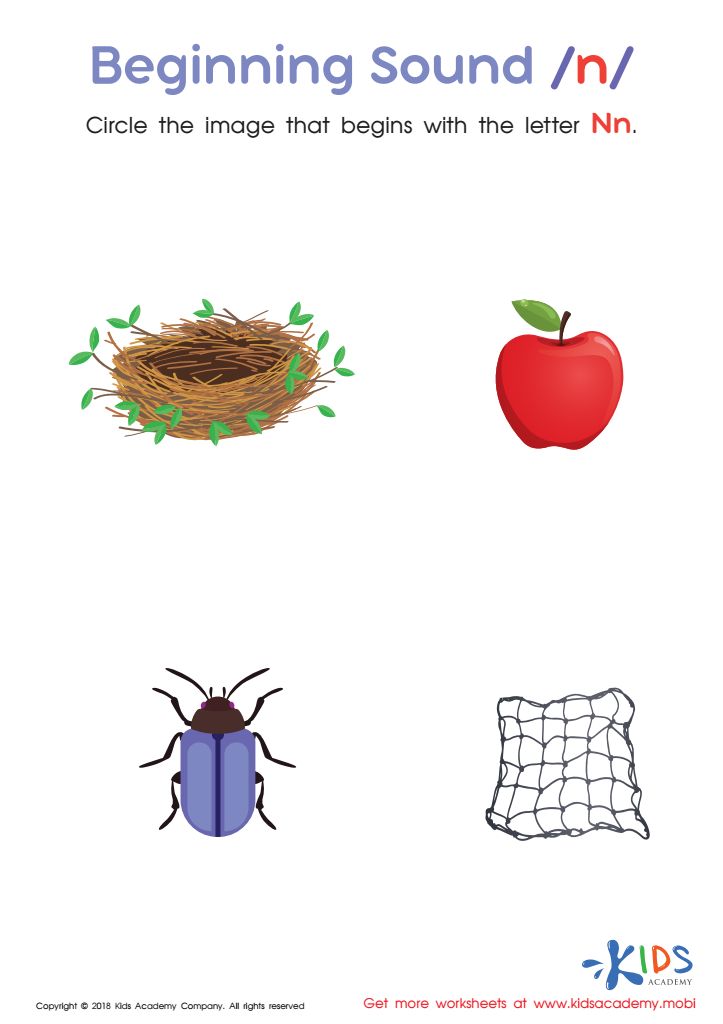
Beginning Sound «n» Worksheet
Help your emerging reader learn the initial «n» sound with this free PDF worksheet! Strengthen fine motor skills by tracing circles around words beginning with «n». Pictures are clear and engaging, giving beginning Phonics learners the right amount of practice and the confidence to succeed.
Beginning Sound «n» Worksheet
Worksheet
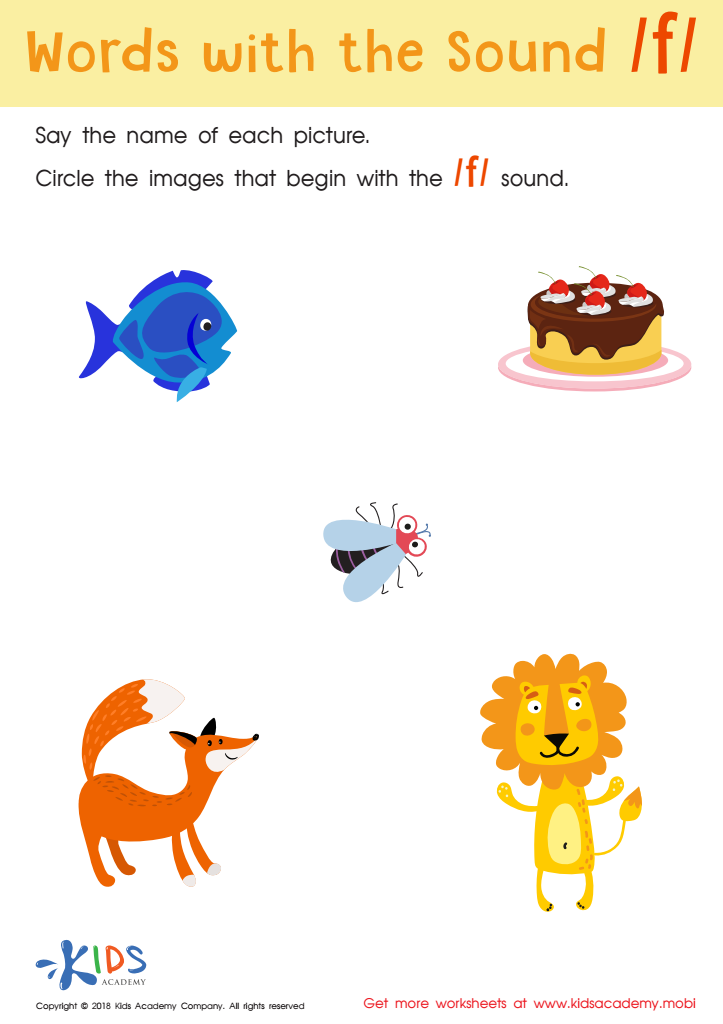
Words with sound f Reading Worksheet
This illustrated phonics worksheet is ideal for preschool or kindergarten. It helps boost learners' literacy skills with a focus on the letter "f". Ask your child to name all the pictures, listening for that sound. Examples are fish, fox, lion, bug. When they can identify which words start with "f", have them circle the images. Congratulate them on a job well done!
Words with sound f Reading Worksheet
Worksheet
Join Kids Academy for Free
Who is primarily going to use this learning content?








Understanding and identifying beginning sounds is a foundational skill for young children aged 4-6, critical to their language development and future reading success. During this developmental stage, children are in the emergent literacy phase where they start recognizing sounds and associating them with letters. This skill, known as phonemic awareness, is the ability to hear, identify, and manipulate individual sounds in words. Effective mastery of beginning sounds enables children to decode new words, improving their reading fluency and comprehension.
Parents and teachers play a pivotal role in nurturing this skill. Engaging in playful activities like sound matching games, singing phonics songs, and reading aloud can make learning enjoyable and more effective. These activities not only enhance a child's listening skills but also build a strong foundation for later phonics instruction, where kids learn to connect sounds with letters.
The development of sound association at this age also fosters confidence and a positive attitude towards learning. When children succeed in recognizing and using beginning sounds, they feel a sense of achievement, motivating them to participate more actively in reading activities. Thus, focusing on beginning sounds is an essential step in ensuring that children are well-prepared for their academic journey and lifelong learning.







