Vocabulary expansion Beginning Sounds Worksheets for Ages 4-6
7 filtered results
-
From - To
Discover the fun of language with our Vocabulary Expansion Beginning Sounds Worksheets designed specifically for children aged 4 to 6! These engaging worksheets help young learners identify and practice the initial sounds of words, laying a strong foundation for reading and writing skills. Each activity encourages vocabulary growth through playful exercises and visual aids, making learning enjoyable. Ideal for preschool and kindergarten classrooms or home use, our worksheets enhance phonemic awareness and critical thinking. Foster your child's language development and boost their confidence with these colorful, interactive resources. Explore our collection today and watch your child's vocabulary flourish!
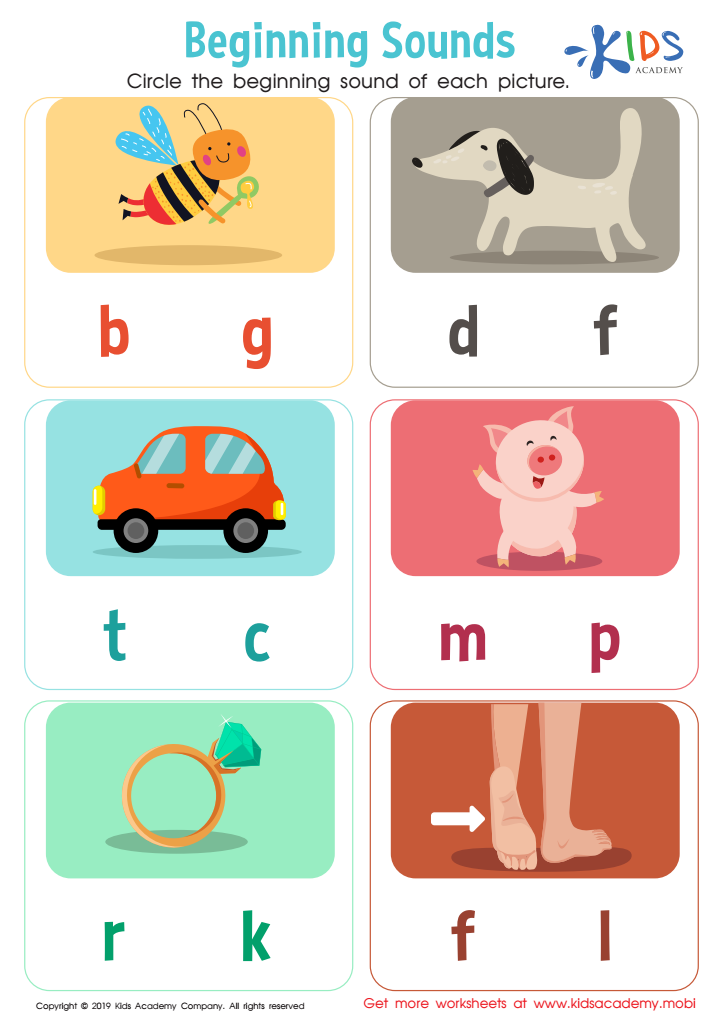
Beginning Sounds Worksheet
 Assign to My Students
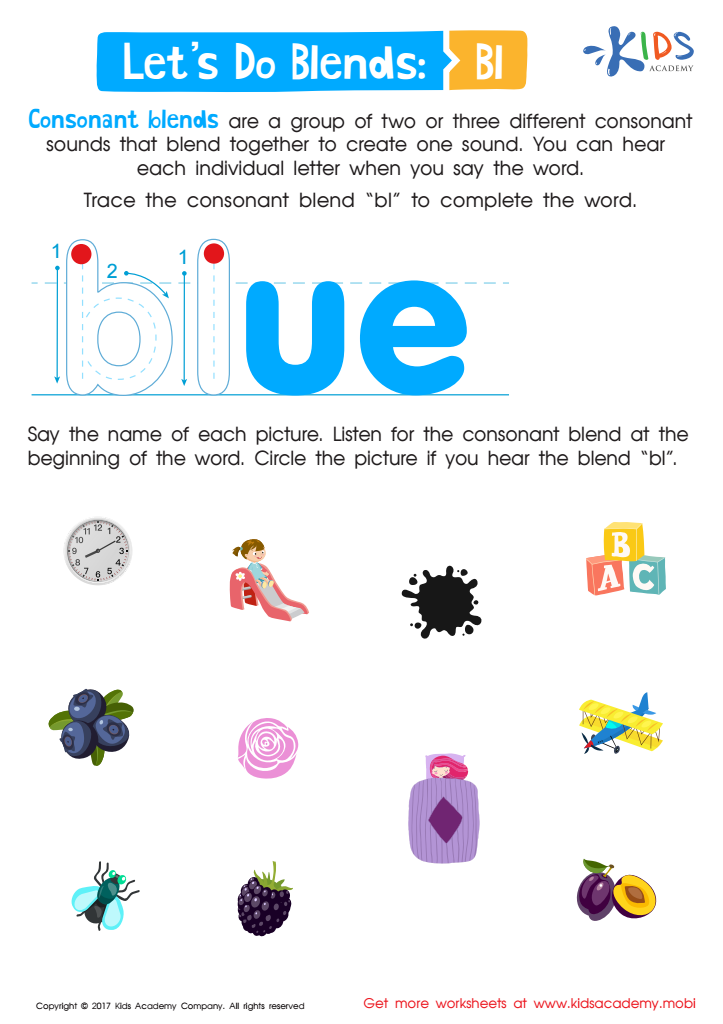
Beginning Blends: "Bl" Words Worksheet
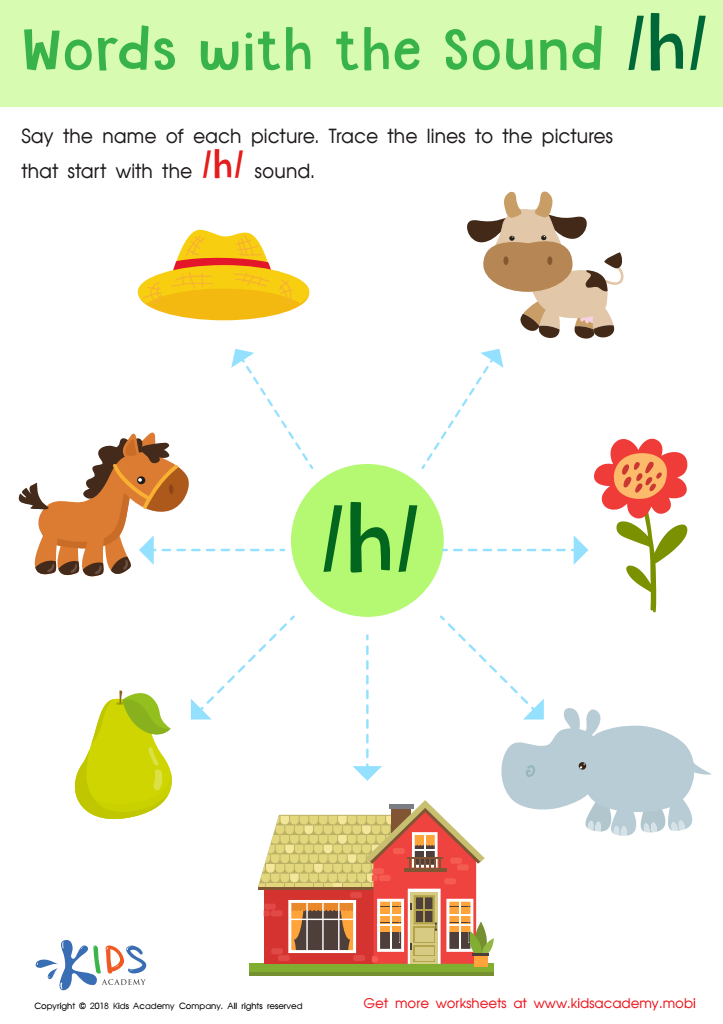
Words with sound h Reading Worksheet
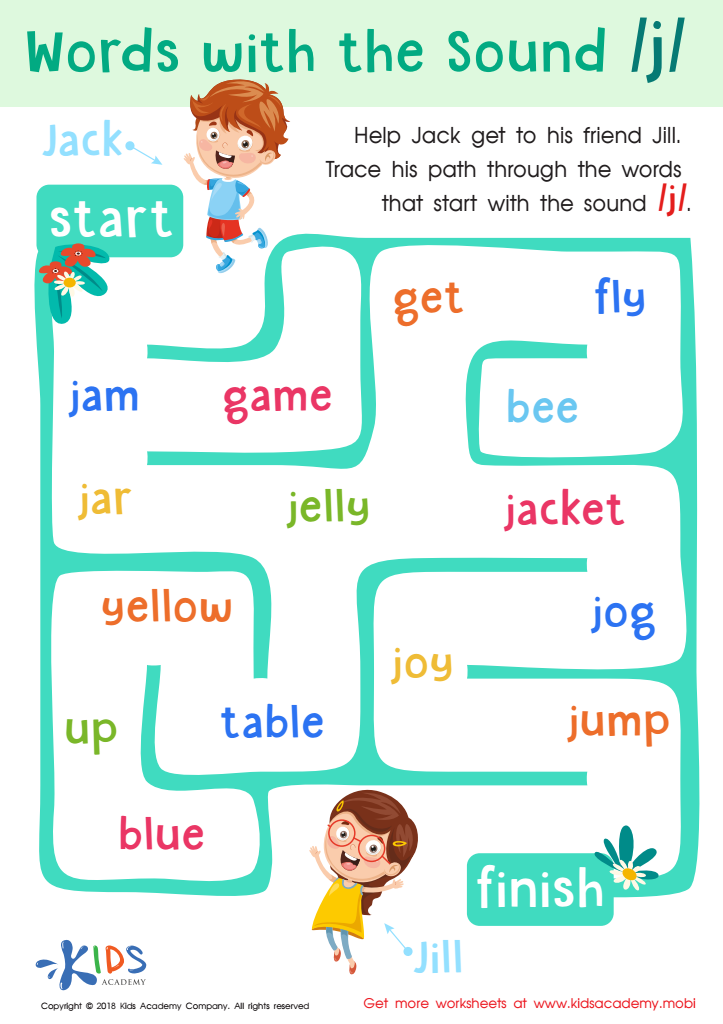
Words with sound j Reading Worksheet
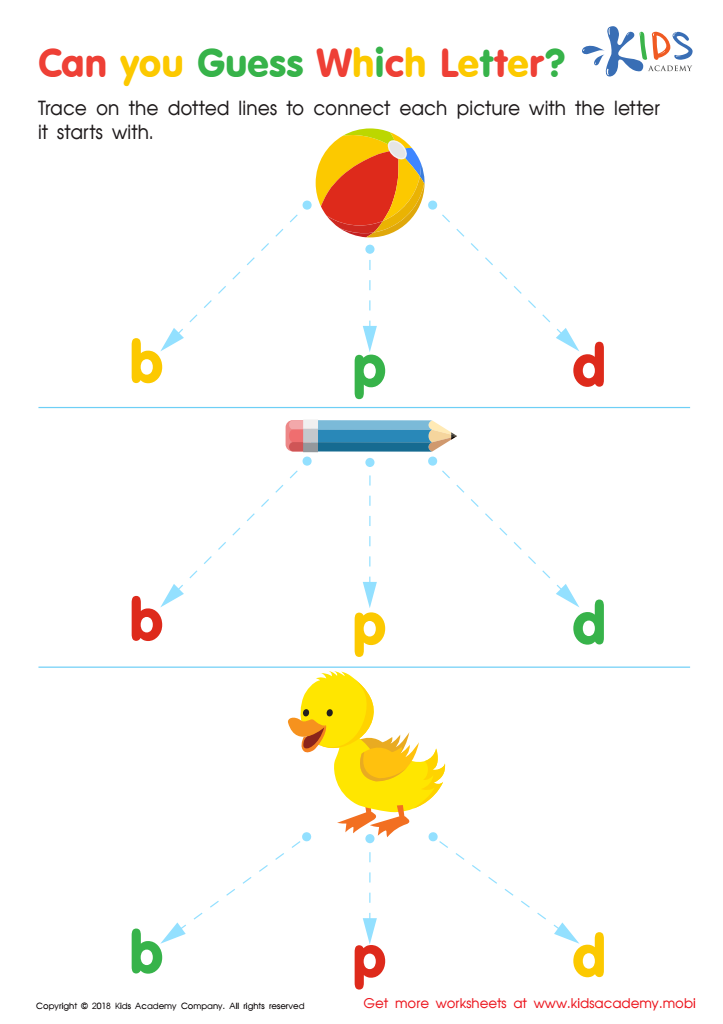
Can you Guess Which Letter? Worksheet
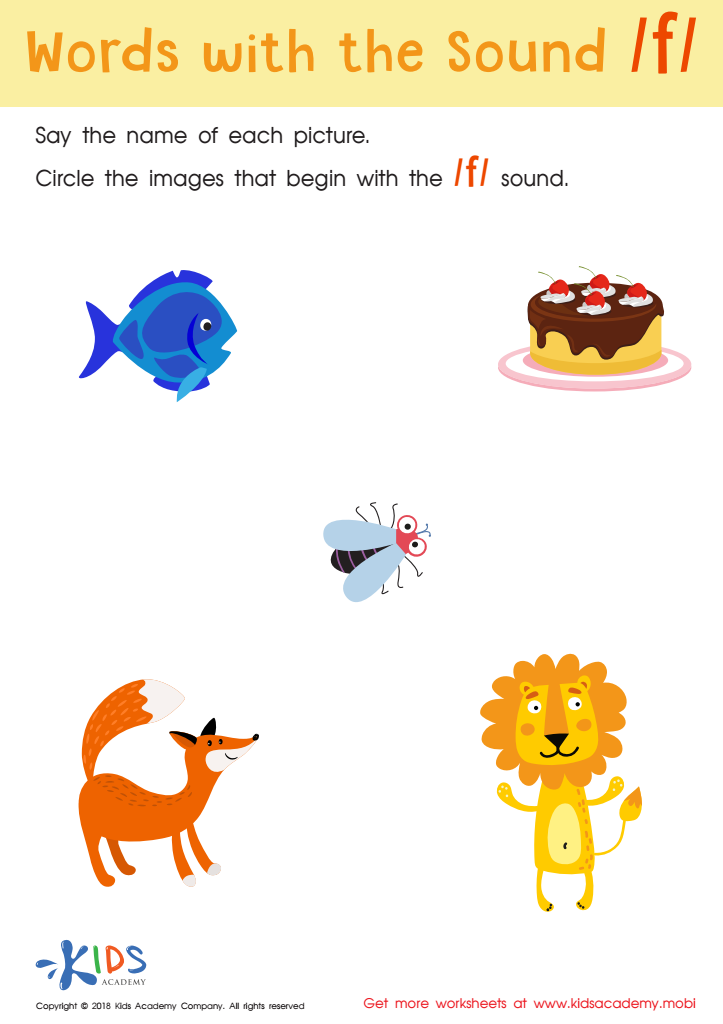
Words with sound f Reading Worksheet
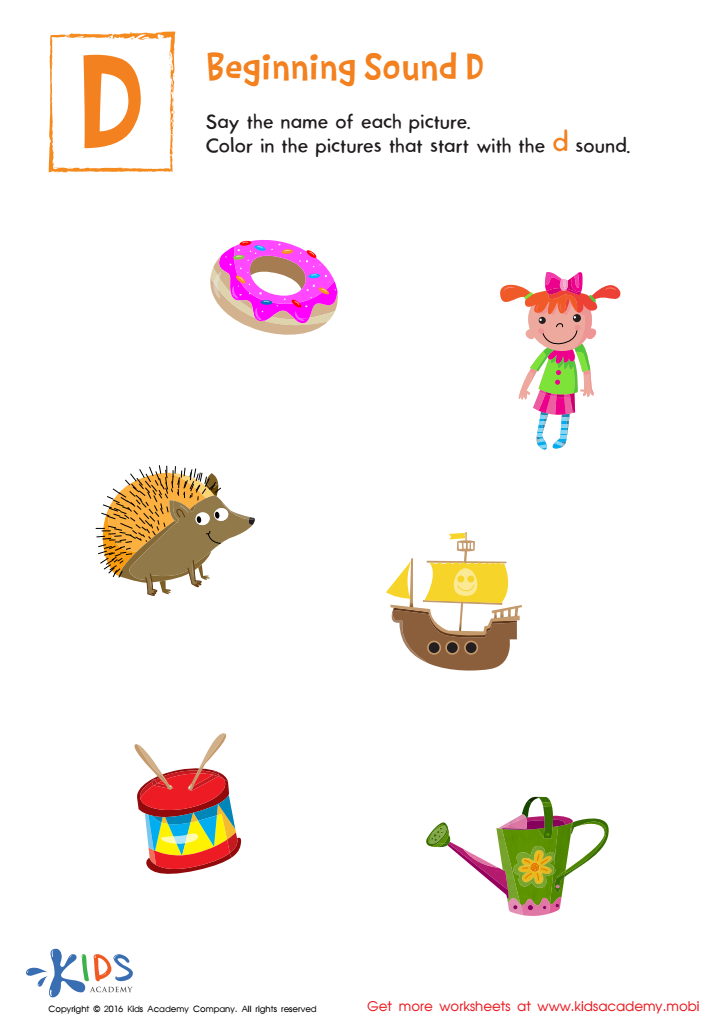
Beginning Sound D Worksheet








Vocabulary expansion and understanding beginning sounds are essential components of early reading and language development for children aged 4-6. This stage is crucial, as it lays the foundation for a child's literacy skills.
Developing a rich vocabulary helps children express their thoughts and feelings effectively, fostering confidence in communication. When children recognize beginning sounds, they can decode words, which is vital for reading fluency. This skill aids in phonemic awareness, enabling children to blend and segment sounds, ultimately leading to better comprehension as they advance in their reading capabilities.
Moreover, strong early literacy skills are linked to academic success. When parents and teachers prioritize vocabulary expansion and phonetic skills, they equip children with the tools necessary for lifelong learning. Engaging children through fun activities, songs, and games centered around beginning sounds can make the learning process enjoyable and effective.
Additionally, supporting vocabulary development nurtures a child’s imagination and creativity, as a well-stocked vocabulary allows for more nuanced expression. Thus, fostering vocabulary and sound recognition is not just an academic pursuit; it significantly impacts their overall development and lays the groundwork for success in various areas of life. In short, providing opportunities for exposure to vocabulary can lead to brighter futures for young learners.







