Phonics recognition Letter Sounds Worksheets for Ages 4-6
7 filtered results
-
From - To
Elevate your child's reading skills with our engaging Phonics Recognition Letter Sounds Worksheets for ages 4-6! Designed to foster early literacy, these interactive worksheets make learning letter sounds fun and effective. Children will enjoy a variety of activities, including tracing, matching, and identifying letters, all aimed at reinforcing their phonics knowledge. Tailored for young learners, these worksheets promote essential skills like listening, recognition, and pronunciation in a playful format. Perfect for parents and educators, our resources support developmental milestones and spark a love for reading. Dive into the world of phonics today and watch your child thrive in literacy!
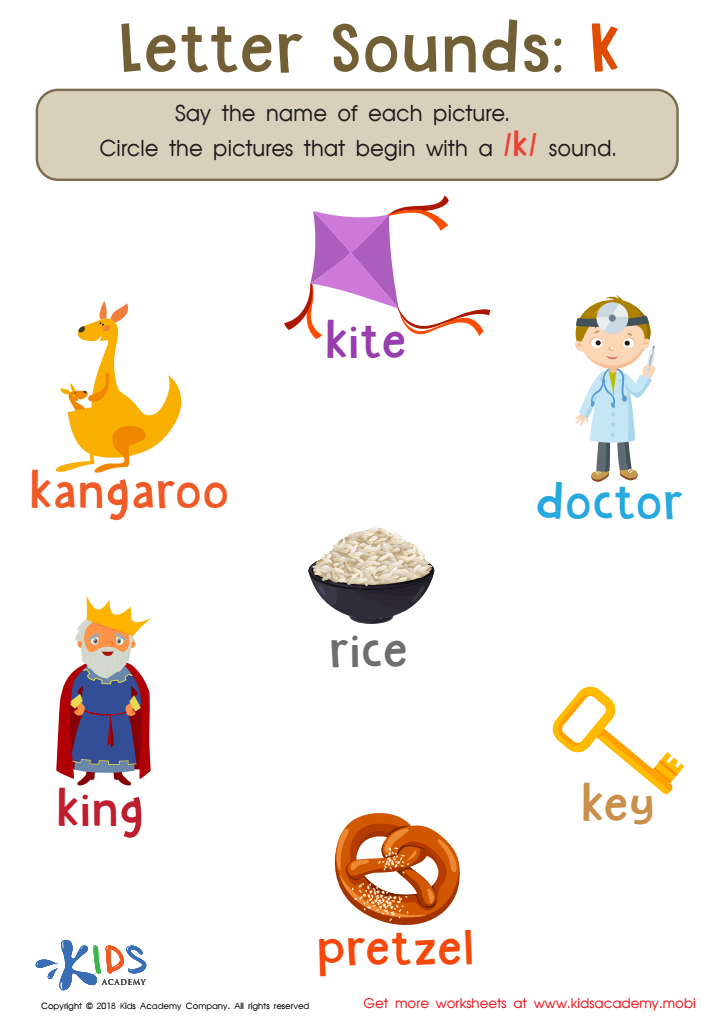
Letter K Sounds Worksheet
 Assign to My Students
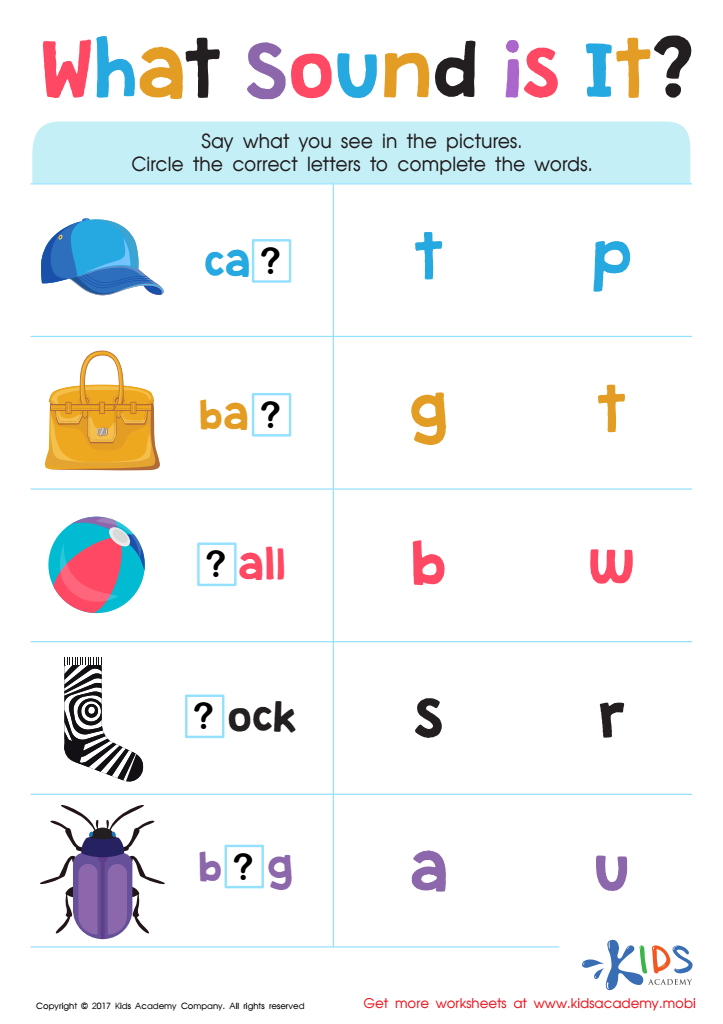
What Sound Is it? Worksheet
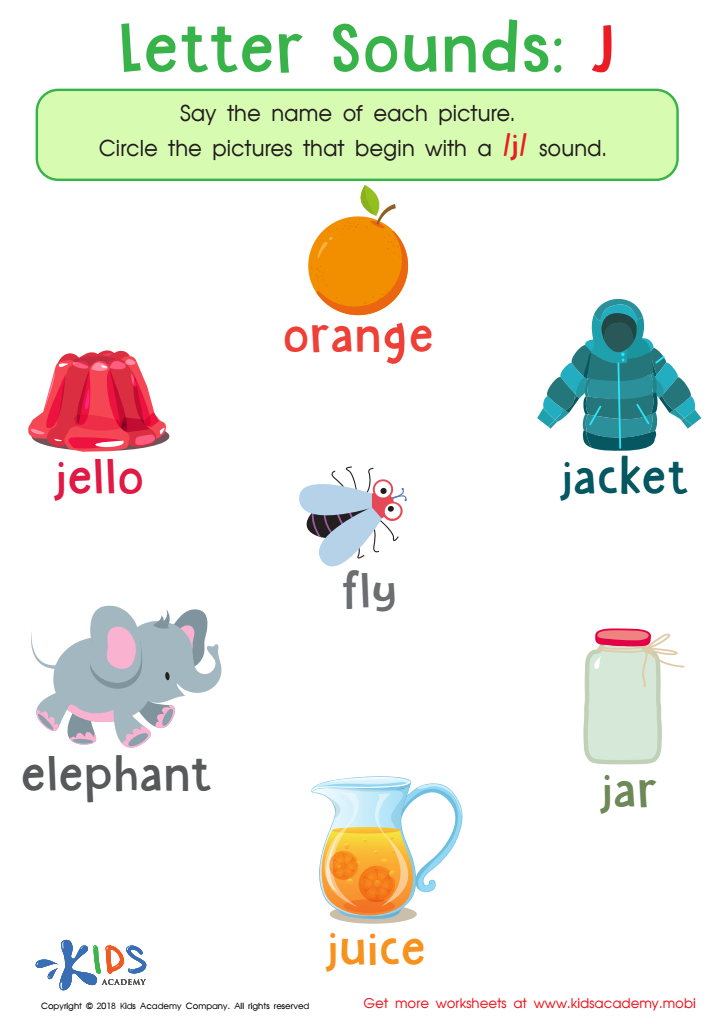
Letter Sounds: J Printable Worksheet
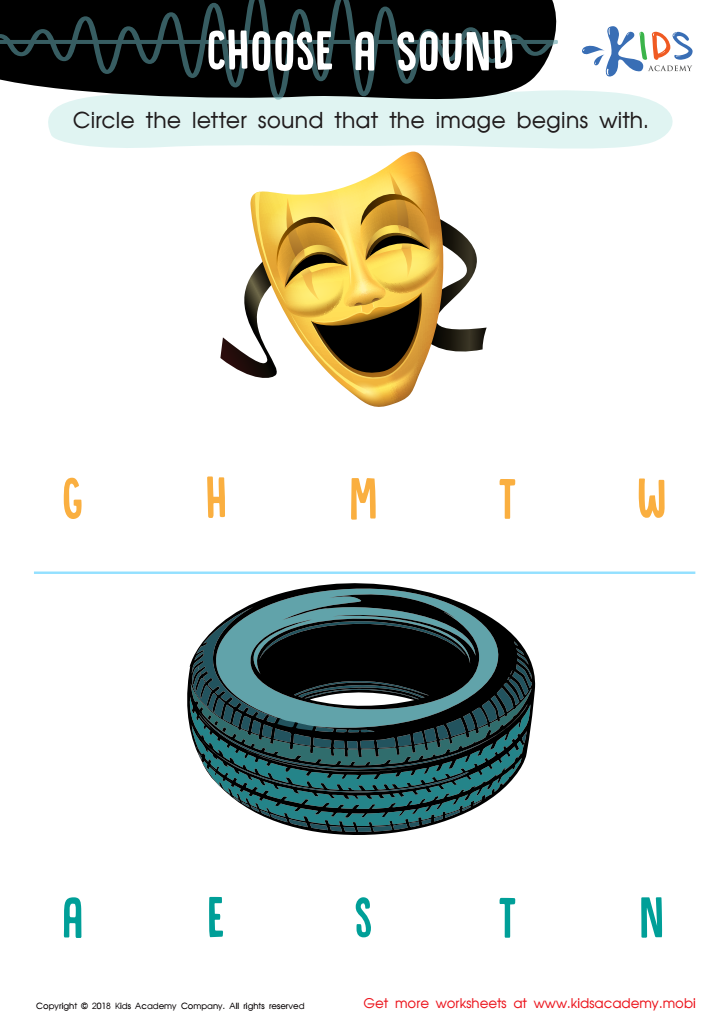
Choose a Sound Worksheet
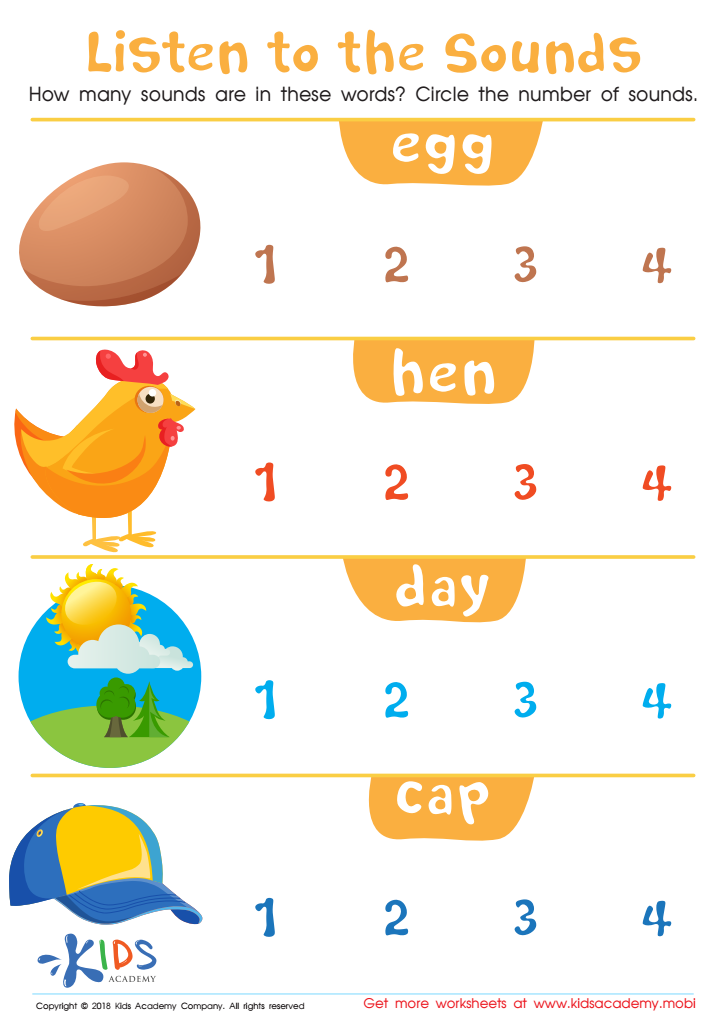
Listen to the Sounds Worksheet
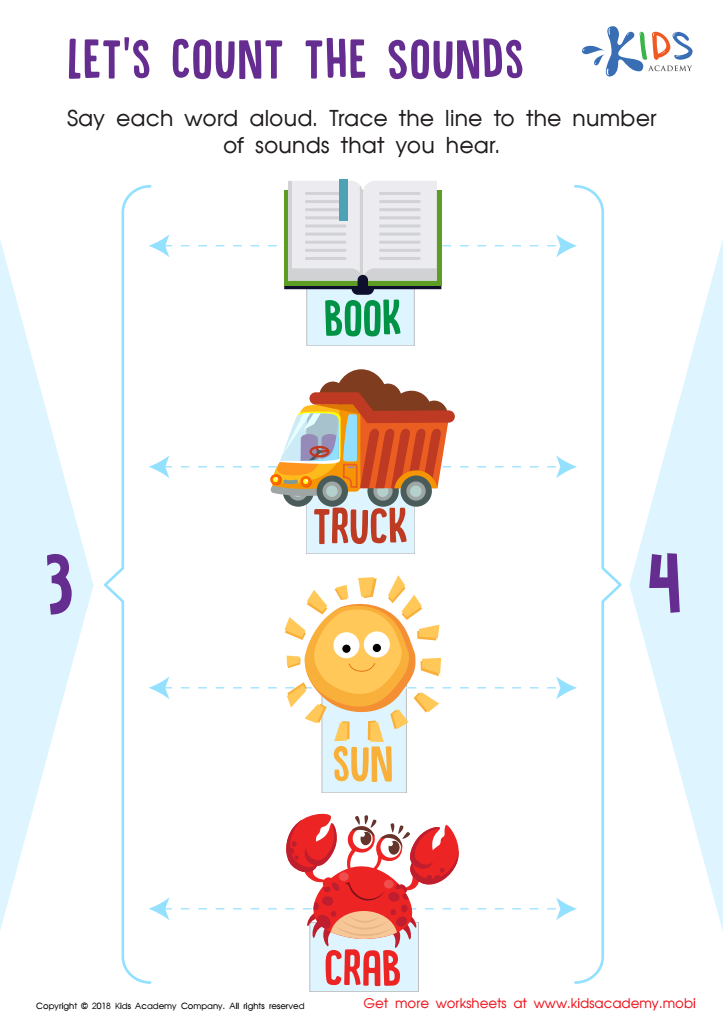
Let's Count the Sounds Worksheet
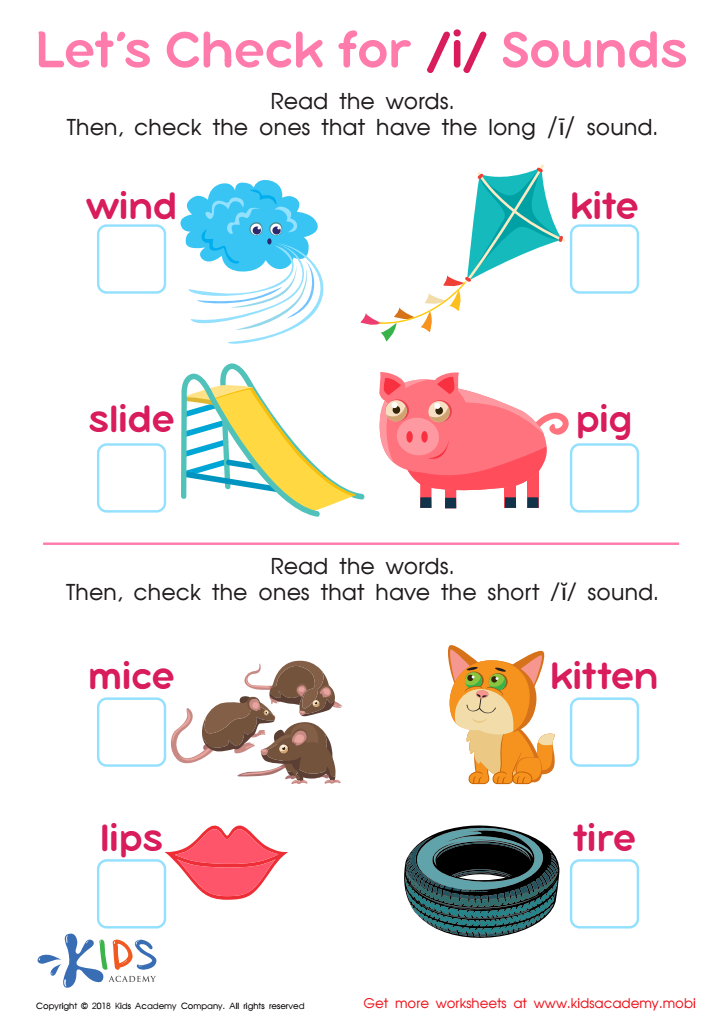
Let's Check for «i» Sounds Worksheet








Phonics recognition and letter sound knowledge are fundamental building blocks for early reading and literacy skills. For children aged 4-6, understanding the relationship between letters and their corresponding sounds is crucial for developing proficient reading abilities. Research consistently shows that children who develop strong phonics skills are more likely to achieve reading success in later years.
Parents and teachers should prioritize phonics recognition as it enhances children's ability to decode words. When children can sound out letters, they become more capable of reading new words independently, allowing for greater confidence and engagement in the learning process. This early foundation in phonics also supports comprehension skills, enabling children to understand and connect with the text they read.
Moreover, phonics instruction can boost vocabulary development, as children encounter a broader range of words and begin to understand how they are constructed. Engaging children in playful phonics activities—such as rhyming games or letter-sound matching—makes the learning process enjoyable and effective.
By focusing on phonics recognition and letter sounds at a young age, parents and teachers can significantly impact children's literacy development, setting the stage for lifelong learning and academic success. Early intervention in phonics can help prevent reading difficulties, benefiting children in their educational journey.







