Letter-sound association Lowercase/Small Letters Worksheets for Ages 4-6
3 filtered results
Difficulty Level
Grade
Age
-
From - To
Subject
Activity
Standards
Enhance early literacy skills with our engaging Letter-Sound Association Lowercase/Small Letters Worksheets, designed for children aged 4-6. These worksheets promote phonemic awareness and letter recognition by linking lowercase letters to their corresponding sounds. Through fun activities and illustrated exercises, young learners will develop essential reading foundations. Suitable for both home and classroom use, our printables support beginning readers, solidifying their understanding of the alphabet and phonics. Perfect for preschool and kindergarten students, these resources offer an interactive and enjoyable way to boost confidence in reading and language skills. Download and start your child's literacy journey today!
Favorites
With answer key
Interactive
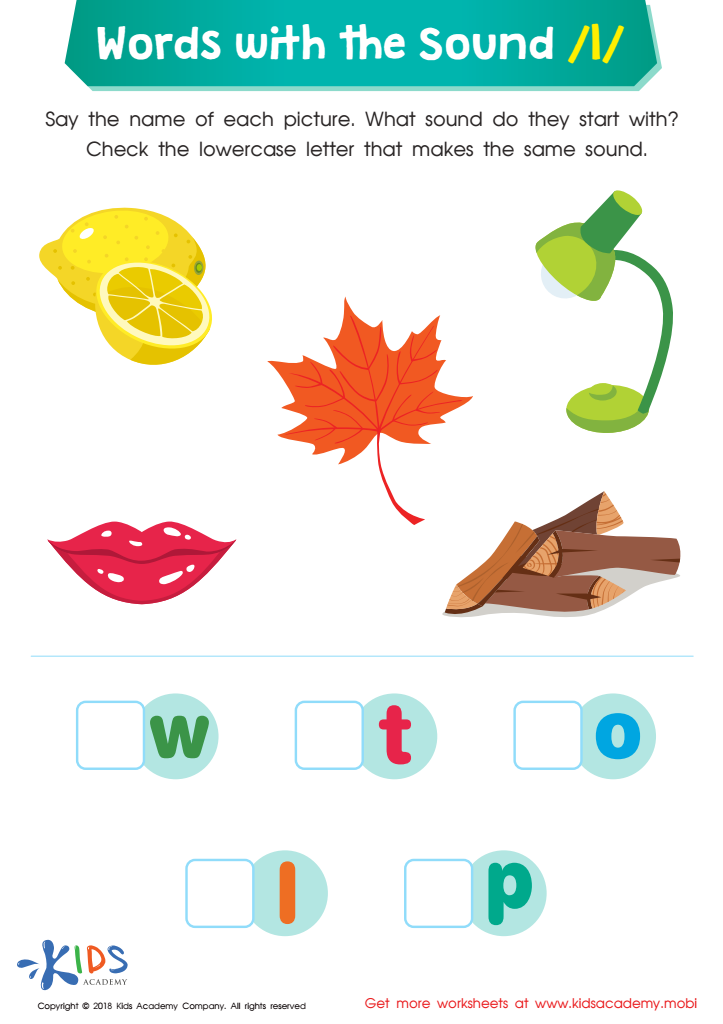
Words with Sound L Reading Worksheet
This PDF worksheet is great for helping emerging readers isolate initial sounds. Kids name familiar pictures, then identify the correct letter for the "l" sound. This worksheet strengthens fine motor skills, plus builds visual discernment. It's fun and colorful too!
 Assign to My Students
Words with Sound L Reading Worksheet
Worksheet

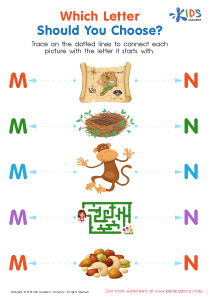
Lowercase Letters m n o Worksheet
Help your child learn the alphabet with letter tracing. Show them the difference between uppercase and lowercase letters by working through this free worksheet, tracing and writing lowercase m, n and o.
Lowercase Letters m n o Worksheet
Worksheet
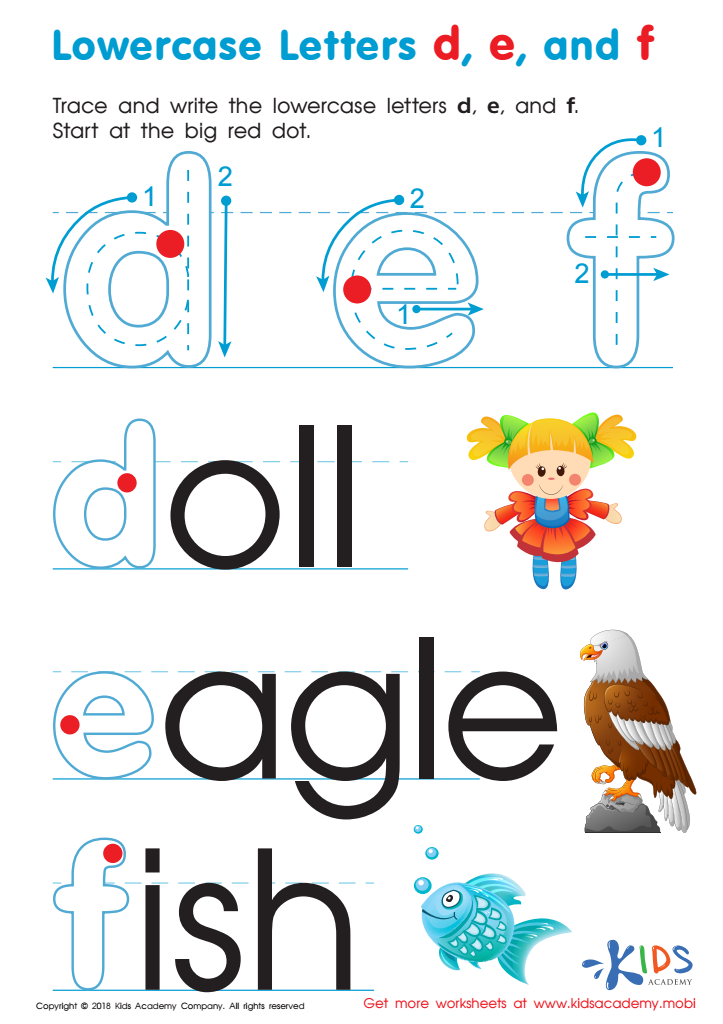
Lowercase Letters d e f Worksheet
Help your child learn the alphabet letters by tracing and writing the lowercase letters d, e, and f. Begin at the big red dot and follow the dots. This worksheet will help your little one gain a better understanding of the letters.
Lowercase Letters d e f Worksheet
Worksheet
Join Kids Academy for Free
Who is primarily going to use this learning content?


Letter-sound association, especially with lowercase or small letters, is crucial for young learners aged 4-6. This foundational skill significantly impacts reading and writing proficiency as children advance in their education. At this stage, children's brains are highly receptive to new information, making it an ideal period for developing essential literacy skills.
Understanding that each letter represents specific sounds enables children to decode words effectively. When they recognize that the lowercase letter 'b' makes the /b/ sound, for instance, they can begin to read and spell simple words like 'bat' and 'bag.' This phonemic awareness forms the cornerstone of reading fluency and comprehension.
Furthermore, lowercase letters are more commonly used in books and written material than uppercase letters. Familiarity with lowercase letters ensures children are not confused when transitioning from learning the alphabet to reading simple sentences. When children become comfortable with letter-sound associations, they develop confidence in their reading abilities, fostering a positive attitude towards learning.
Parents and teachers play a critical role in reinforcing these skills through interactive and engaging activities. By prioritizing letter-sound associations and focusing on lowercase letters, adults can support the development of strong, independent readers who are well-prepared for future educational challenges.