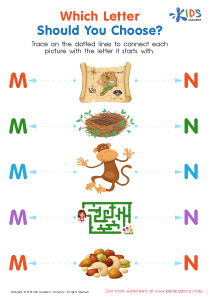
Lowercase letter writing Lowercase/Small Letters Worksheets for Ages 4-6
3 filtered results
-
From - To
Introduce your child to the world of writing with our Lowercase/Small Letters Worksheets for ages 4-6. Designed to develop early literacy skills, these educational resources guide little learners in mastering lowercase letters. Each worksheet offers engaging, fun activities that improve fine motor skills, letter recognition, and handwriting precision. Offering tactile tracing practices, colorful illustrations, and step-by-step instructions, these sheets make learning alphabet basics an enjoyable experience for young minds. Perfect for home or classroom use, our worksheets cater to individual learning paces, ensuring every child gains the confidence needed to write beautifully. Download now and watch your child’s writing skills flourish!
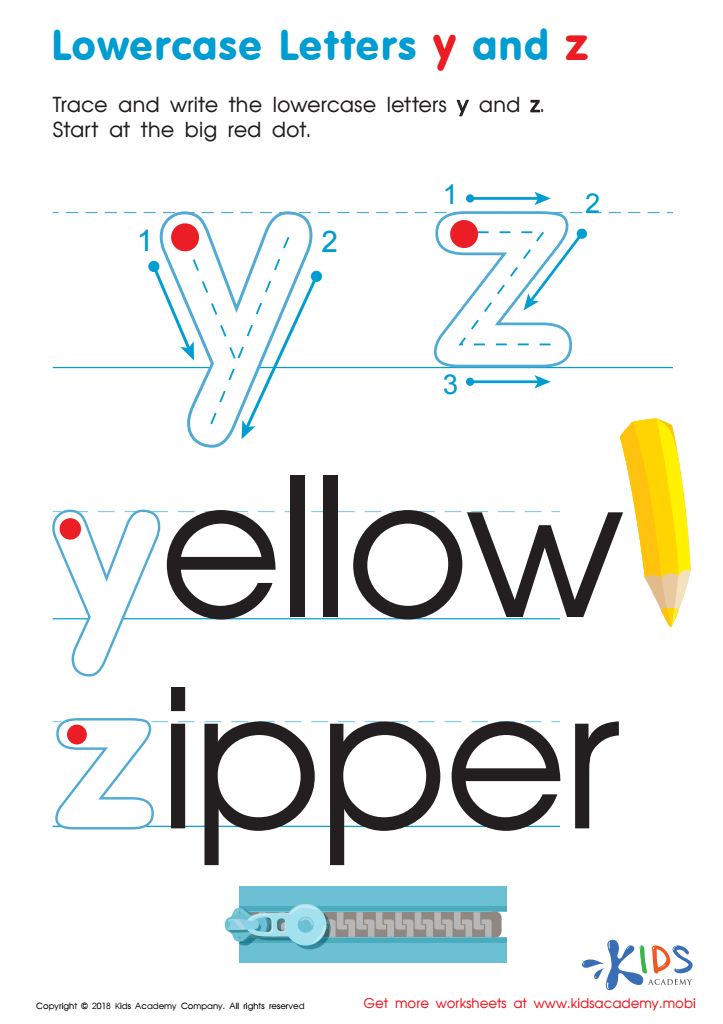
Lowercase Letters y z Worksheet
 Assign to My Students
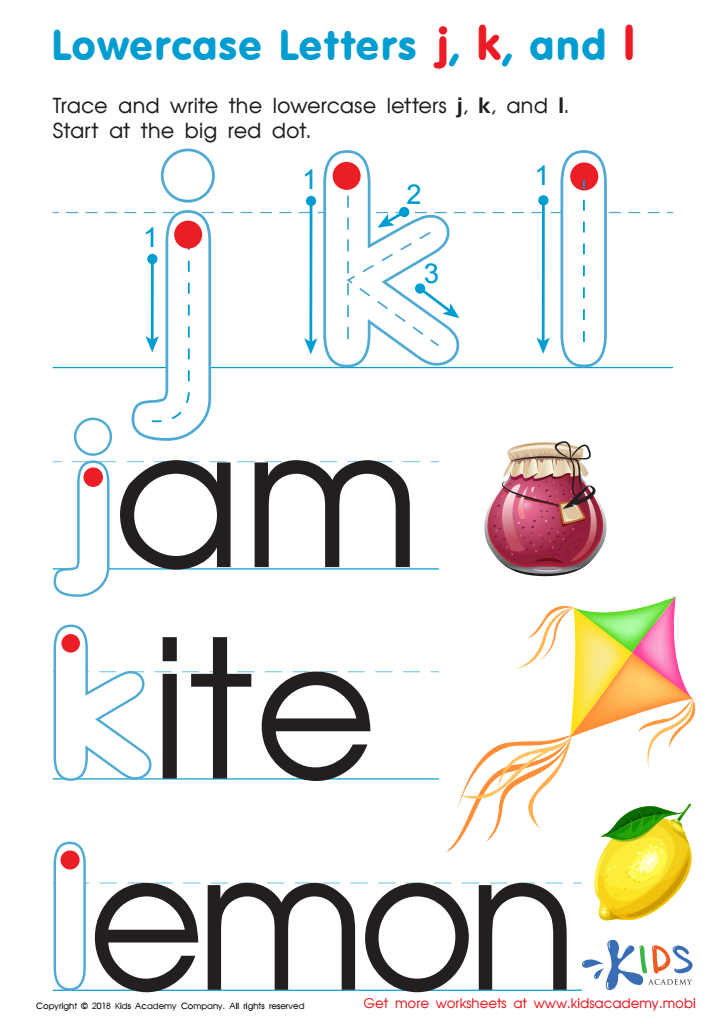
Lowercase Letters j k l Worksheet
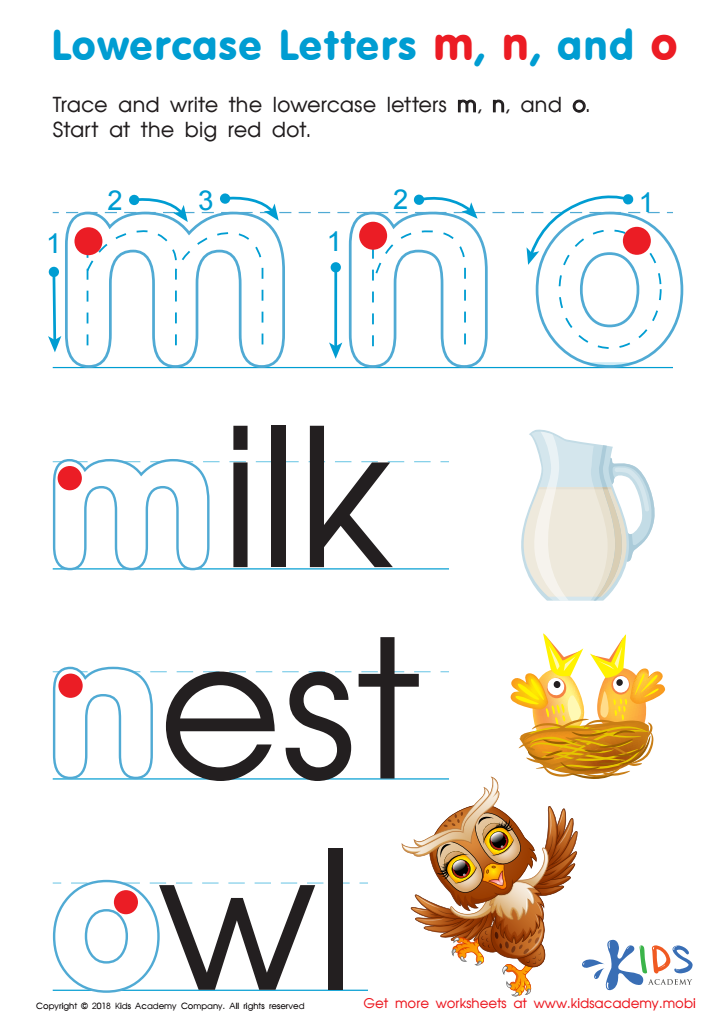
Lowercase Letters m n o Worksheet


Parents and teachers should place great importance on teaching lowercase letter writing to children aged 4-6 because it builds foundational literacy skills essential for lifelong learning. During these formative years, children’s brains are rapidly developing, making it an ideal time to establish strong handwriting habits. Mastering lowercase letters, which appear more frequently than uppercase letters in texts, enables children to read and write more efficiently, fostering better comprehension and communication.
Fine motor skills and hand-eye coordination significantly improve through the practice of writing lowercase letters, aiding overall dexterity and precision. This early proficiency benefits children's other fine motor activities, such as drawing or using tools. Mastery of lowercase letters boosts children’s confidence and sense of achievement, promoting a positive attitude toward learning.
Moreover, consistent and legible handwriting is linked to better academic performance, particularly in writing-intensive subjects. Engaging teaching approaches, such as fun writing exercises and multisensory activities, can make learning these skills enjoyable. In summary, fostering lowercase letter writing skills in young children empowers them academically, enhances their motor skills, and lays a solid foundation for their future educational pursuits.