Reading comprehension Rhyming Worksheets for Ages 4-6
8 filtered results
-
From - To
Enhance your child's reading skills with our engaging Rhyming Worksheets designed specifically for ages 4-6! These worksheets promote reading comprehension while making learning fun, encouraging young learners to explore sound patterns and expand their vocabulary. Each activity features captivating illustrations and interactive prompts that stimulate critical thinking and word recognition. As children practice identifying and completing rhymes, they build foundational literacy skills essential for future reading success. Perfect for home or classroom use, our worksheets foster a love for reading while aiding in early language development. Let the adventure of learning begin with our exciting collection of rhyming activities today!
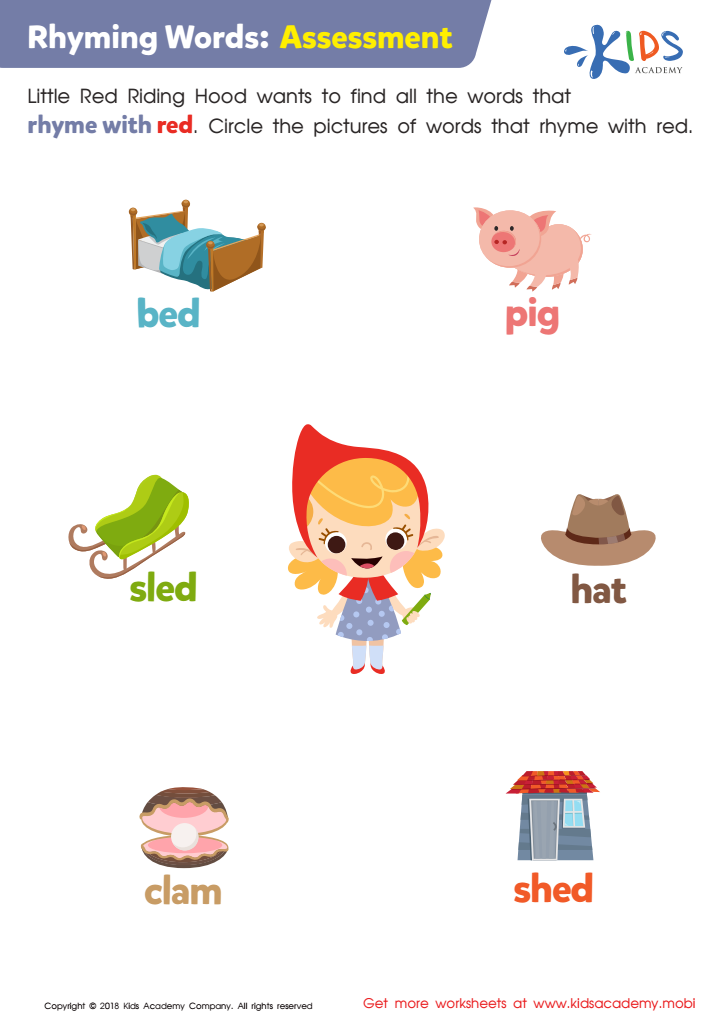
Rhyming Words: Assessment Worksheet
 Assign to My Students
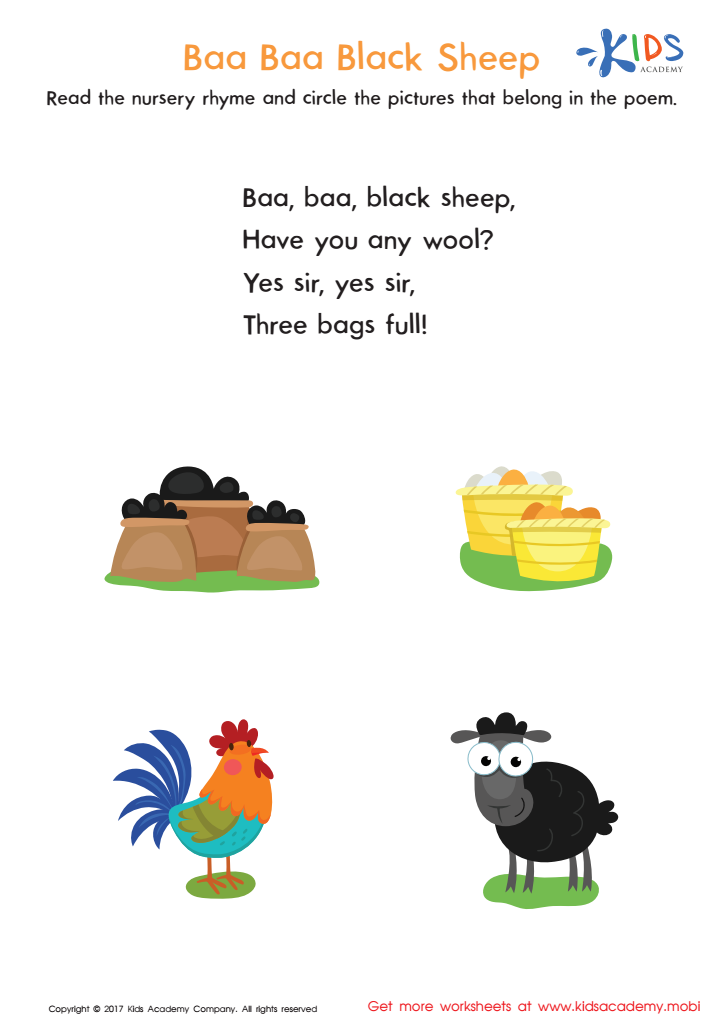
Baa Baa Black Sheep Printable
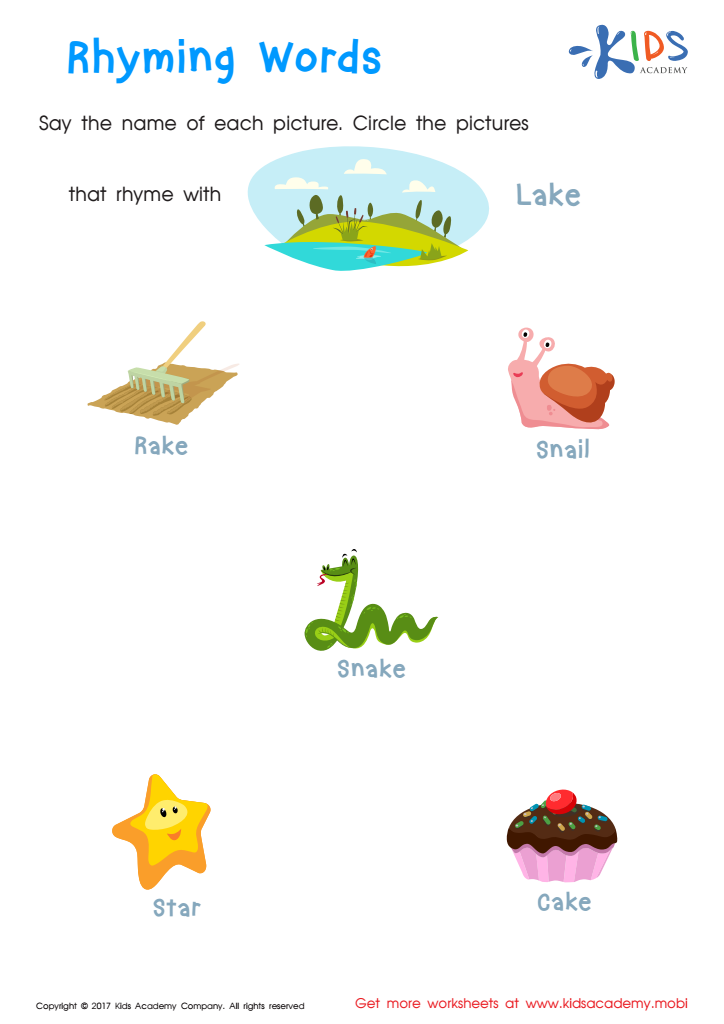
Rhyming Words Rhyming Worksheet
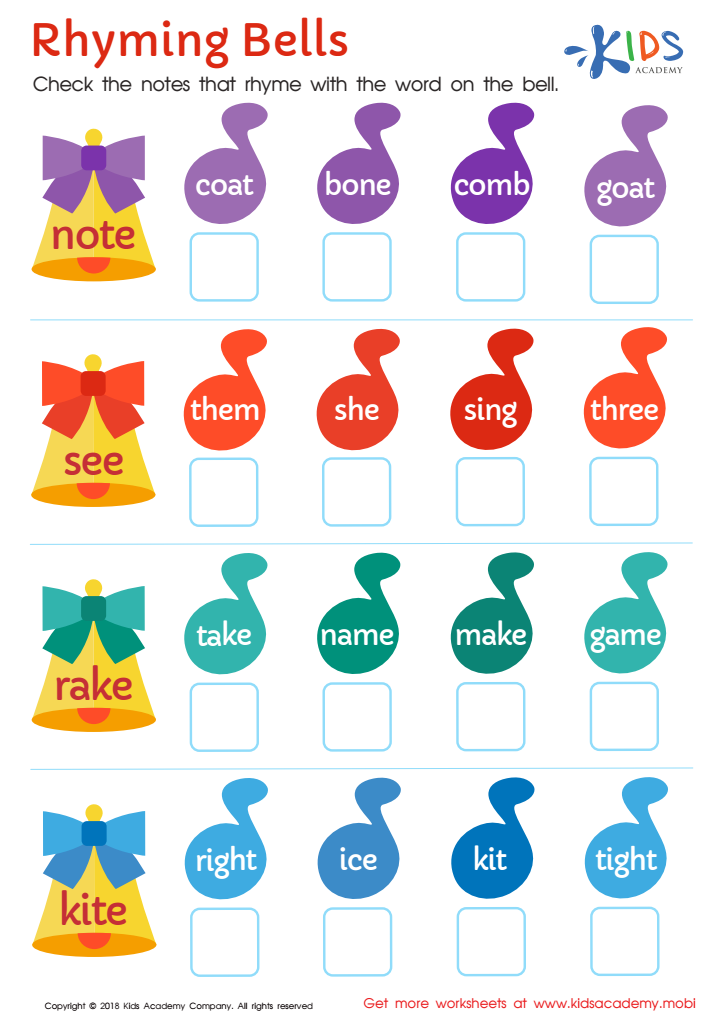
Rhyming Bells Worksheet
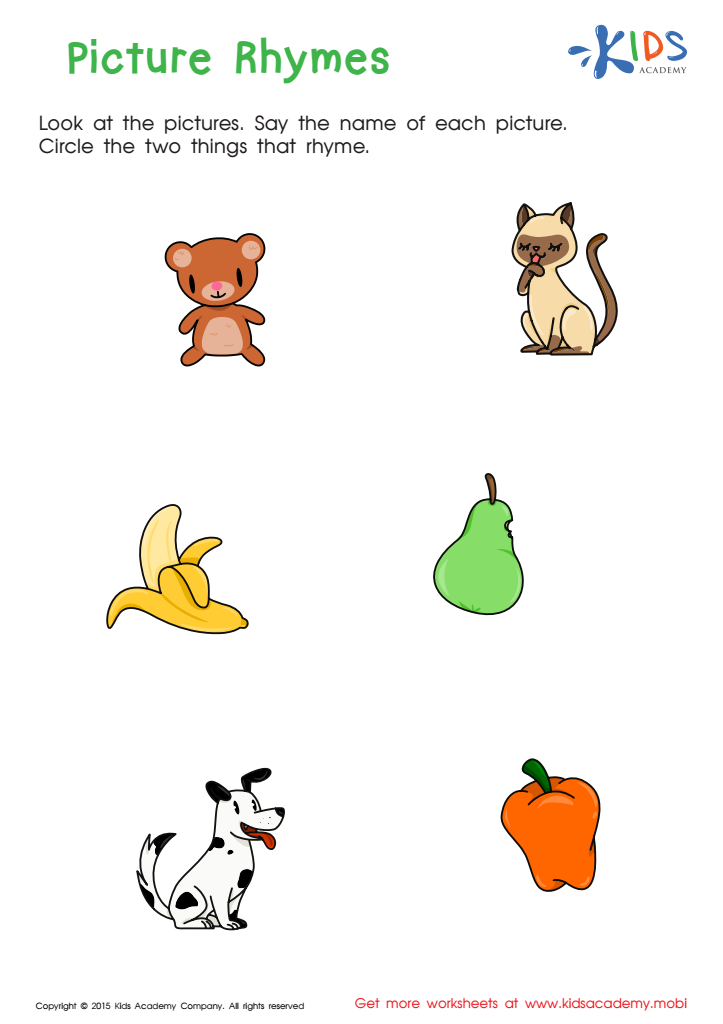
First Words: Picture Rhymes Worksheet
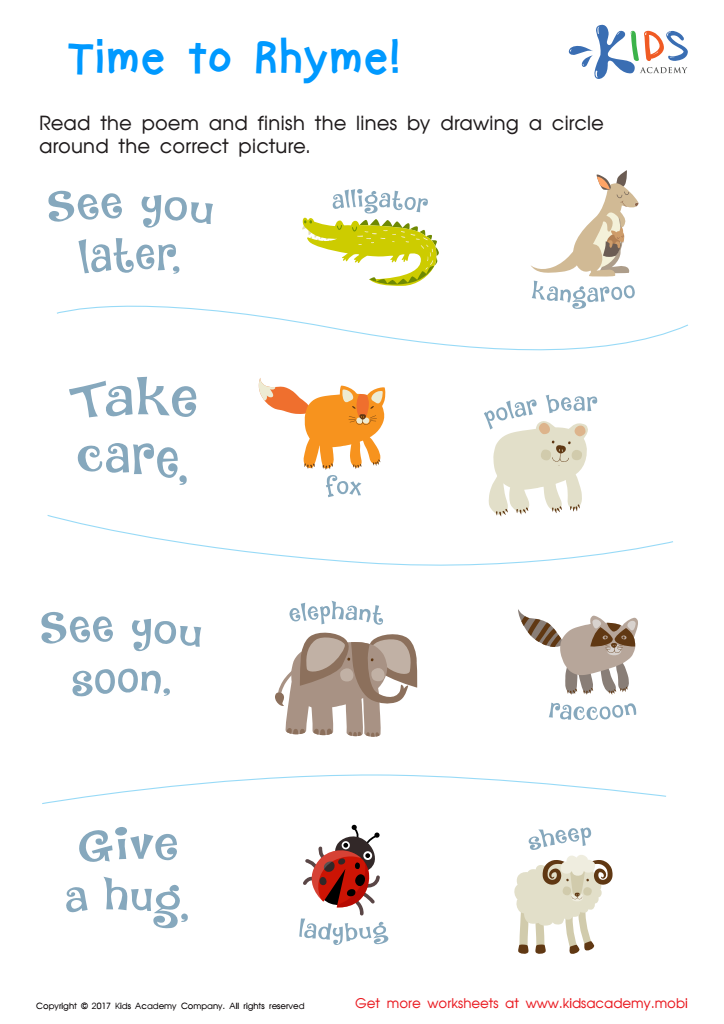
Time to Rhyme Rhyming Worksheet
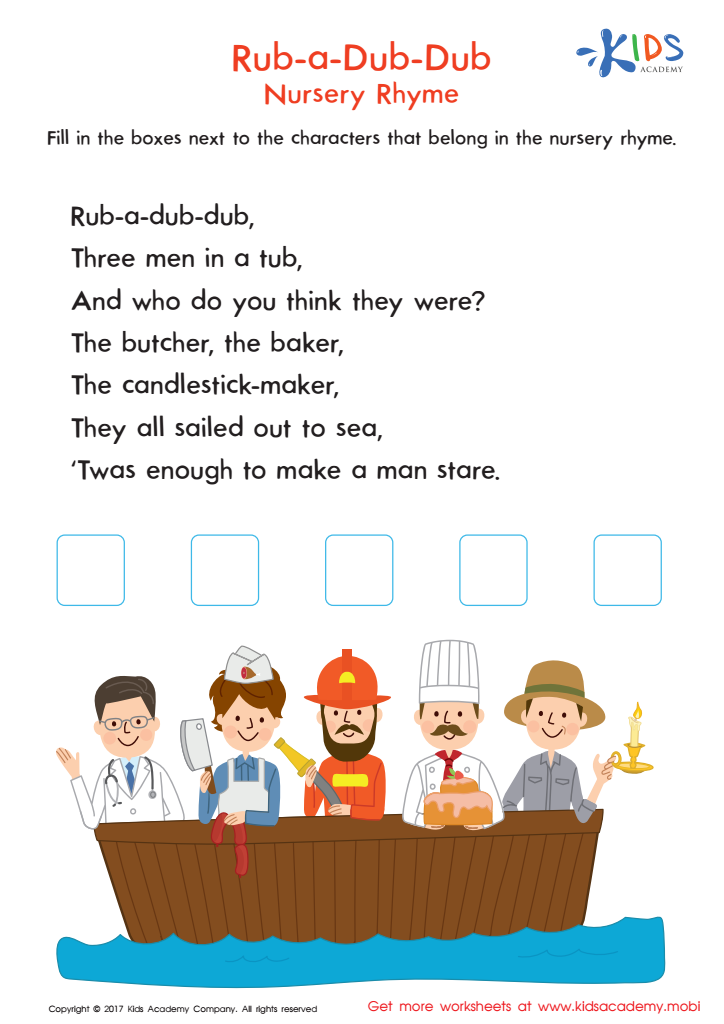
Rub a Dub Dub Printable
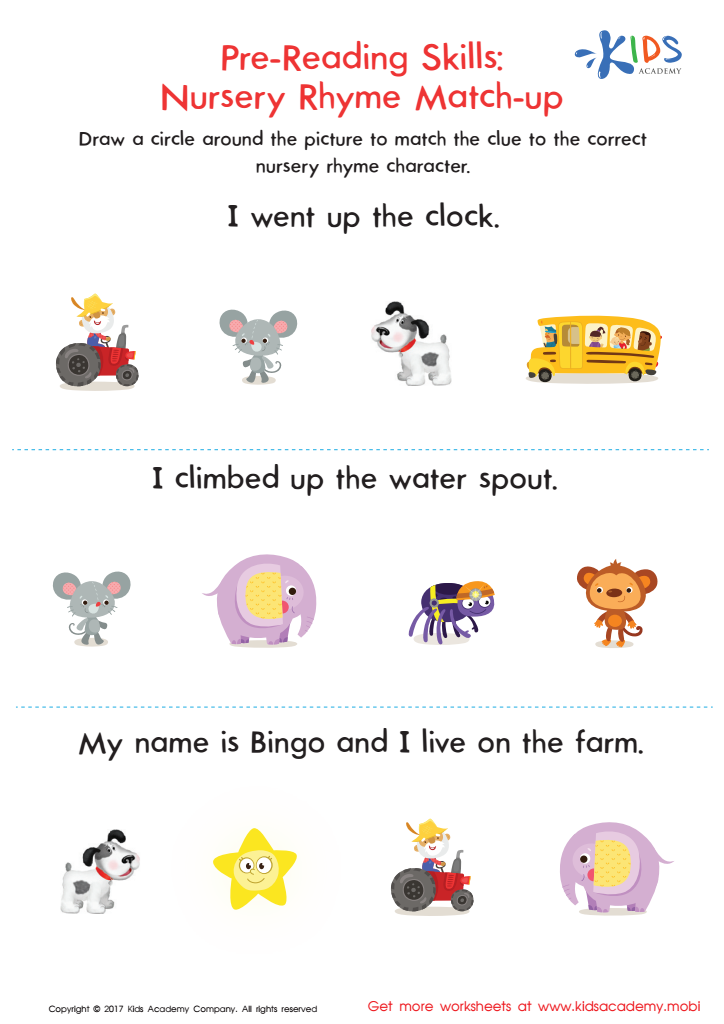
Nursery Rhyme Match–Up Worksheet








Reading comprehension and rhyming are pivotal for children aged 4-6 as they lay the foundation for literacy skills, cognitive development, and a love for literature. At this age, children are naturally inclined toward rhythm and melody, making rhyming books an engaging way to grasp language structures. When children hear rhymes, they learn to recognize sounds, syllables, and patterns in words, enhancing phonemic awareness, which is crucial for reading proficiency later on.
Moreover, rhyming texts improve memory and recall, helping kids to remember what they’ve read. This practice boosts understanding by allowing children to make connections between words, concepts, and emotions; crucial aspects of reading comprehension.
Additionally, reading comprehension skills encourage curiosity and critical thinking. By asking questions about rhyming texts, parents and teachers can expand a child’s vocabulary and prompt discussions about stories, characters, and settings. These interactions not only promote language skills but also foster a supportive relationship between adults and children, nurturing the child's interest in reading.
In sum, incorporating rhyming into early literacy education supports essential skills that symmetricalize a holistic learning experience, equipping young learners with the tools for future academic success and sustained engagement with literature.







