
Vocabulary expansion Rhyming Worksheets for Ages 4-6
3 filtered results
Difficulty Level
Grade
Age
-
From - To
Subject
Activity
Standards
Discover our engaging Vocabulary Expansion Rhyming Worksheets, specially designed for children ages 4-6. These worksheets encourage early literacy development by making learning fun through rhymes. Each activity features colorful illustrations and simple prompts that help young learners build their vocabulary, enhance phonemic awareness, and improve comprehension skills. By identifying and creating rhymes, children will boost their language skills while enjoying the creative process. Ideal for home or classroom use, these worksheets help foster a love for reading from an early age. Empower your young learners with the tools necessary for successful communication through our interactive vocabulary expansion resources!
Favorites
With answer key
Interactive
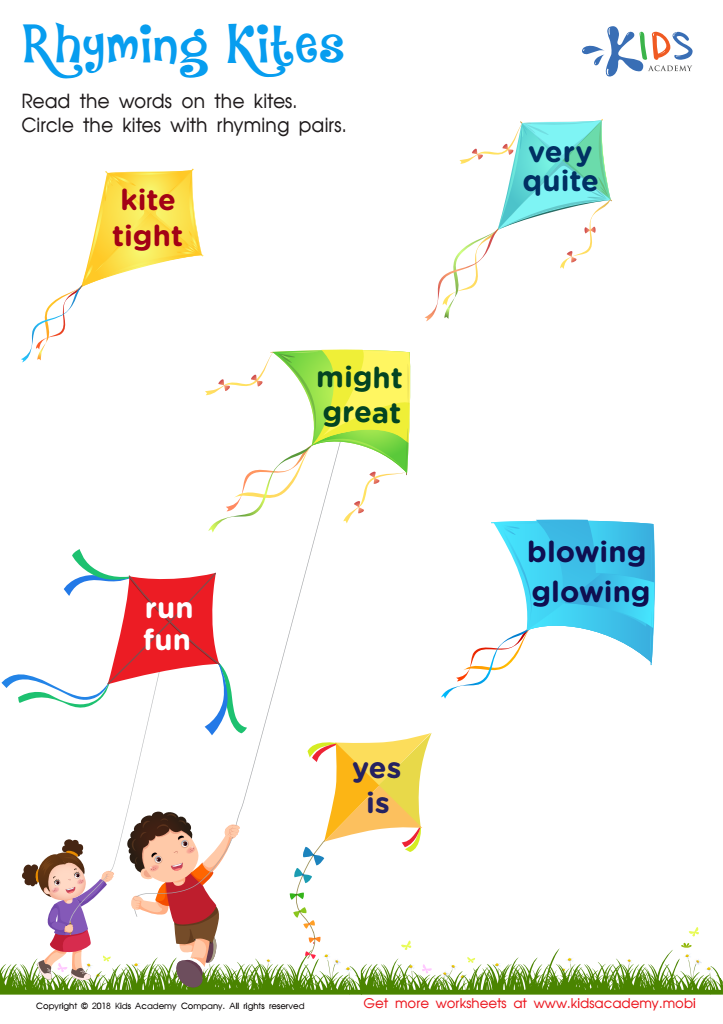
Rhyming Kites Worksheet
On a spring day, fly a kite! Kids Academy has a rhyming worksheet to boost your child's skills. Read the pairs of words aloud. Circle the kites if they rhyme, leave them blank if they don't. Listen carefully and find all the rhyming word pairs to complete this sheet!
 Assign to My Students
Rhyming Kites Worksheet
Worksheet
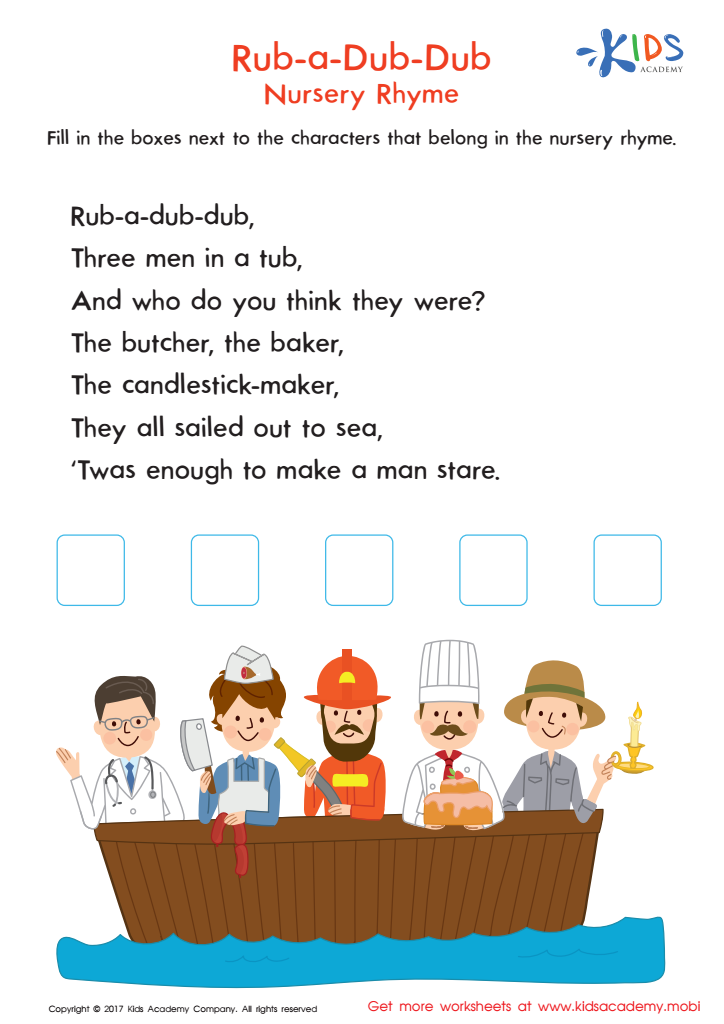
Rub a Dub Dub Printable
Delight your child and foster early reading skills with this printable nursery rhyme, Rub a Dub Dub! Let your little reader select the three men in the tub and practice important reading comprehension skills.
Rub a Dub Dub Printable
Worksheet
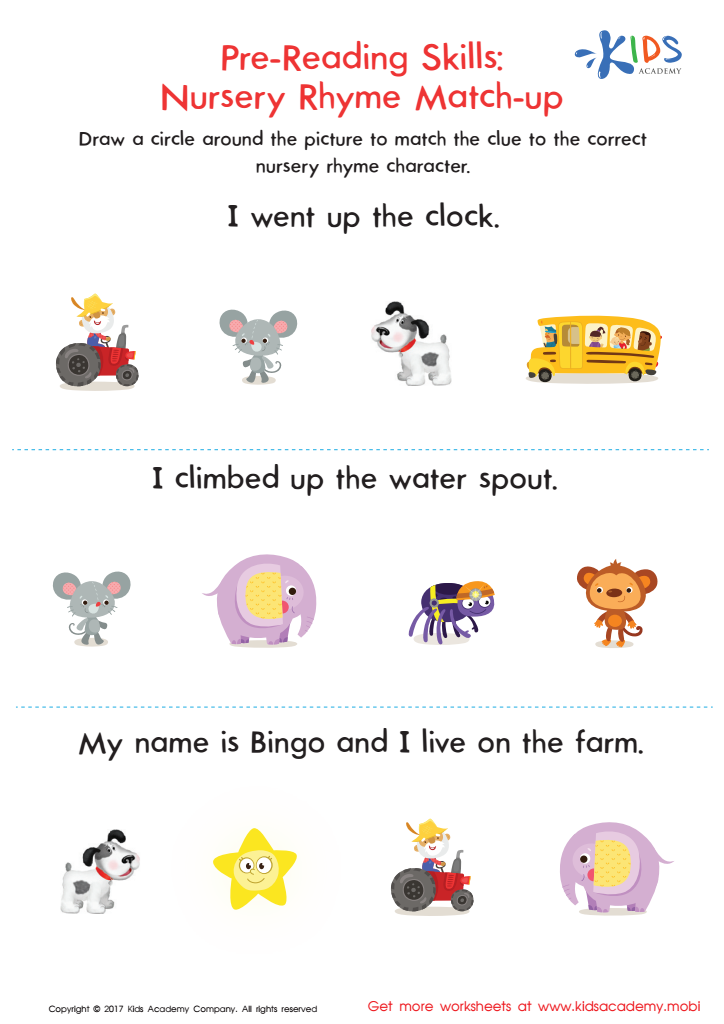
Nursery Rhyme Match–Up Worksheet
This worksheet helps kids build pre-reading skills using stories they know and love! By connecting with prior knowledge, kids can develop ideas about characters and set the stage for reading strategies.
Nursery Rhyme Match–Up Worksheet
Worksheet
Join Kids Academy for Free
Who is primarily going to use this learning content?








Vocabulary expansion through rhyming is crucial for children ages 4-6 as it significantly enhances their language development and literacy skills. At this early age, children are naturally drawn to the sounds and patterns of language. Engaging them in rhyming activities not only makes learning fun, but also helps them to develop phonemic awareness, which is essential for reading.
When children rhyme, they learn to recognize and manipulate sounds, improving their ability to decode words. This skill is foundational for reading fluency and comprehension. Furthermore, rhyming enhances memory and recall, making it easier for children to absorb new vocabulary. The repetitive nature of rhyming allows them to build connections between words, enriching their language through context and usage.
Additionally, rhyming nurtures creativity and imaginative thinking. It encourages self-expression as children invent their own rhymes and stories. For parents and teachers, incorporating rhyming games, songs, and storybooks creates opportunities for active participation, fostering strong bonds and engagement in the learning process. Supporting vocabulary expansion through rhyming lays the groundwork for future academic success and instills a lifelong love for language and literature, making it an essential focus for caregivers in early childhood education.







