Alphabet familiarity Uppercase Letters Worksheets for Ages 4-6
4 filtered results
Difficulty Level
Grade
Age
-
From - To
Subject
Activity
Standards
Discover our engaging Alphabet Familiarity Uppercase Letters Worksheets, designed specifically for children ages 4-6. These printable resources enhance early literacy skills by familiarizing young learners with uppercase letters through fun activities. Each worksheet encourages children to identify, trace, and color letters, promoting hands-on learning and creativity. Our carefully crafted exercises help build letter recognition, phonemic awareness, and prepare kids for reading and writing success. Ideal for parents and educators, these worksheets are perfect for home or classroom use. Foster a love for learning and boost your child's confidence in reading with our delightful uppercase letter resources today!
Favorites
With answer key
Interactive
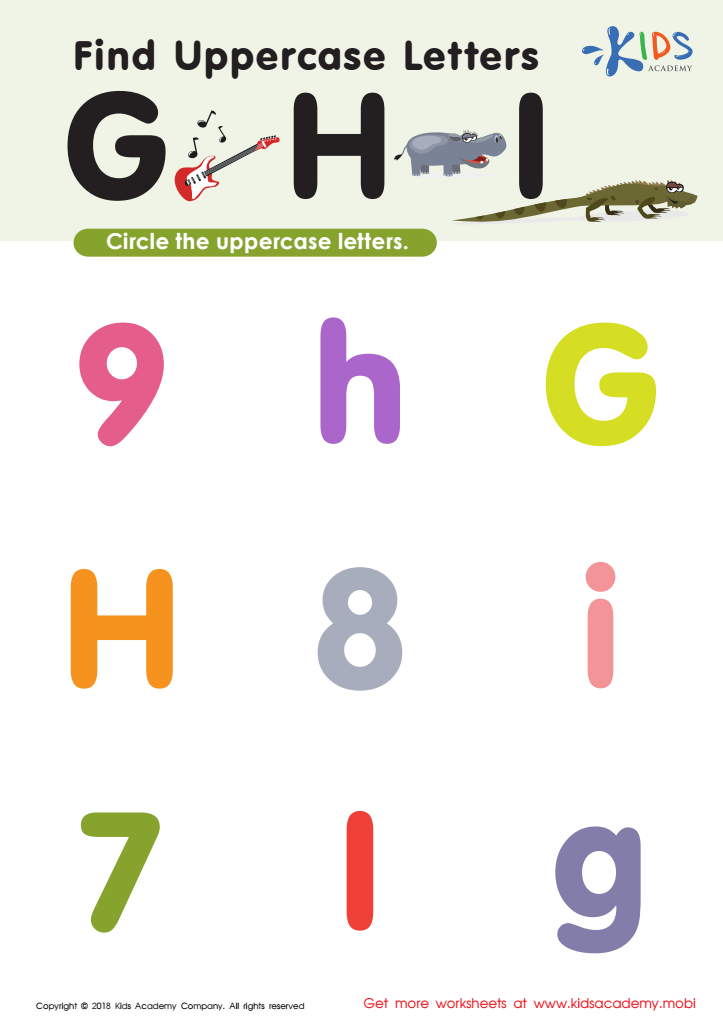
Find Uppercase Letters G, H, and I Worksheet
Find G, H, and I in uppercase with this downloadable worksheet! Numbers are included to challenge your kindergartener's letter recognition skills. Plus, practice G, H, and I sounds using the cute graphics. Perfect for learning letter case recognition!
 Assign to My Students
Find Uppercase Letters G, H, and I Worksheet
Worksheet
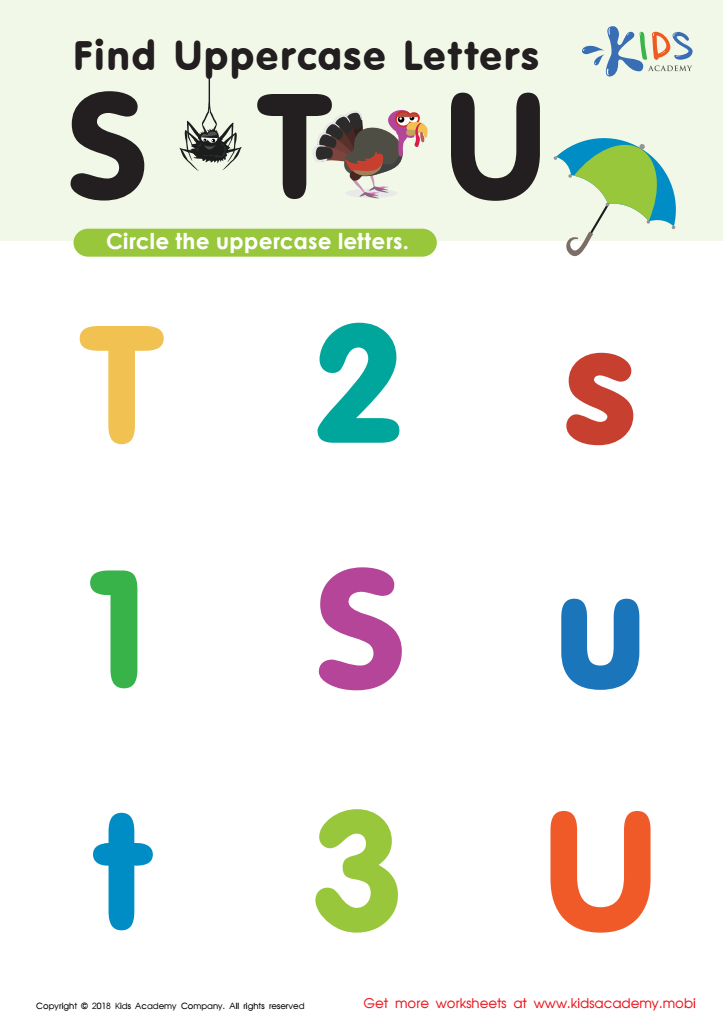
Find Uppercase Letters Worksheet
What level is your kid at now? Can they tell the difference between small and uppercase letters? Ask them to name words beginning with S, T and U, then help them find and circle the uppercase letters S, T and U in a mix of small letters, numbers and uppercase letters.
Find Uppercase Letters Worksheet
Worksheet
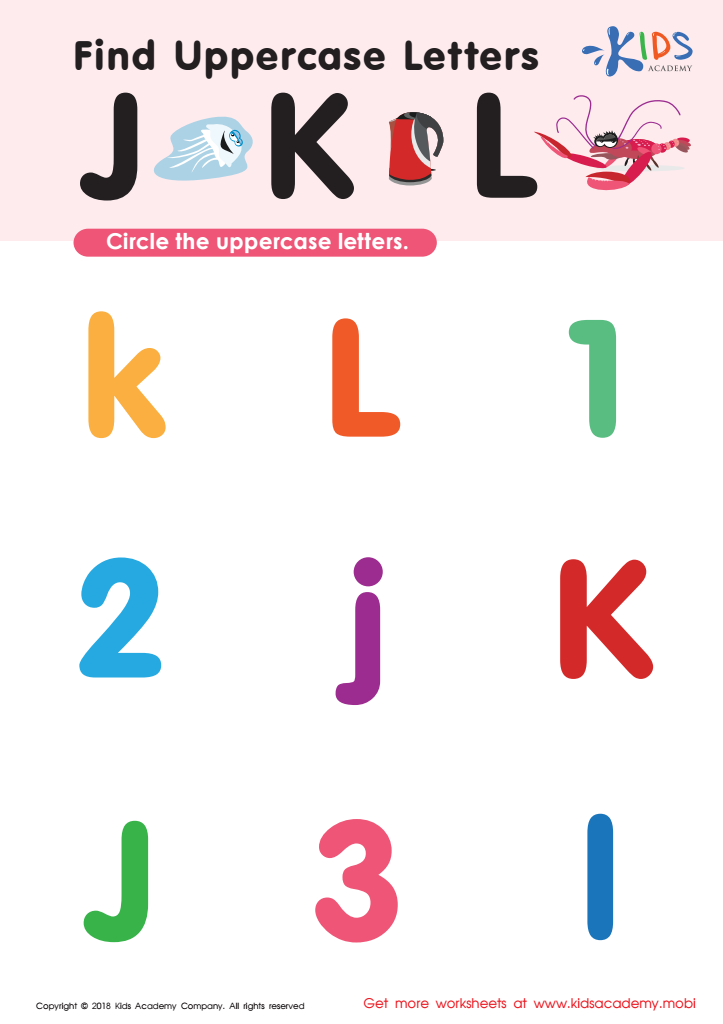
Find Uppercase Letters J, K, and L Worksheet
Search for the uppercase letters J, K, and L in this fun worksheet! Help your child identify the starting sound of each picture, then look for the letters. Keep an eye out for numbers that look like letters. Swim with the jellyfish and solve this delightful puzzle!
Find Uppercase Letters J, K, and L Worksheet
Worksheet

Find Uppercase Letters A, B, and C Worksheet
Check out this PDF worksheet and spot all the capital letters! Arranged as a puzzle, this exercise will test little learners to read and recognize uppercase letters and tell the difference between letters and numbers. To help them, use the pictures on top of the page to practice the sounds A, B and C make! 80 words.
Find Uppercase Letters A, B, and C Worksheet
Worksheet
Join Kids Academy for Free
Who is primarily going to use this learning content?








Understanding uppercase letters is crucial for children aged 4-6, as it lays the foundation for overall literacy and communication skills. This early stage represents a pivotal moment in cognitive development, where children begin to recognize and differentiate basic elements of written language. Familiarity with uppercase letters enhances phonemic awareness, enabling kids to associate sounds with symbols, an essential step towards reading and writing.
Parents and teachers play a vital role in fostering this understanding. For parents, engaging in activities that promote letter recognition—like reading storybooks, playing alphabet games, or writing letters—creates a fun environment that can boost a child's desire to learn. These interactions also strengthen parent-child bonds, which can positively influence a child’s motivation and attitude toward learning.
For teachers, incorporating uppercase letter instruction into the classroom curriculum sparks creativity and aids in forming foundational literacy skills. By integrating hands-on activities, visual aids, and songs, teachers can make learning enjoyable and effective.
Ultimately, mastering uppercase letters equips children with the skills they need for more advanced literacy tasks, setting them on a trajectory for academic success. By prioritizing this early literacy component, parents and teachers collaboratively create a solid base for emotional, social, and cognitive growth.