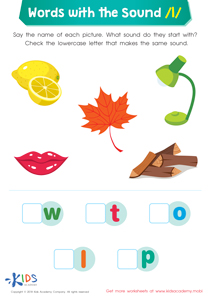
Uppercase identification Uppercase Letters Worksheets for Ages 4-6
5 filtered results
-
From - To
Discover our engaging Uppercase Letters Worksheets designed specifically for children ages 4-6! These fun, interactive worksheets help young learners identify, recognize, and memorize uppercase letters through a variety of activities. Tailored to enhance early literacy skills, our resources include exciting games, tracing exercises, and colorful illustrations that make learning enjoyable. Perfect for home and classroom use, these worksheets promote a solid foundation in letter identification, ensuring that children build confidence as they embark on their alphabet journey. Join in the fun and watch your child thrive in their reading and writing skills with our Uppercase Letters Worksheets!
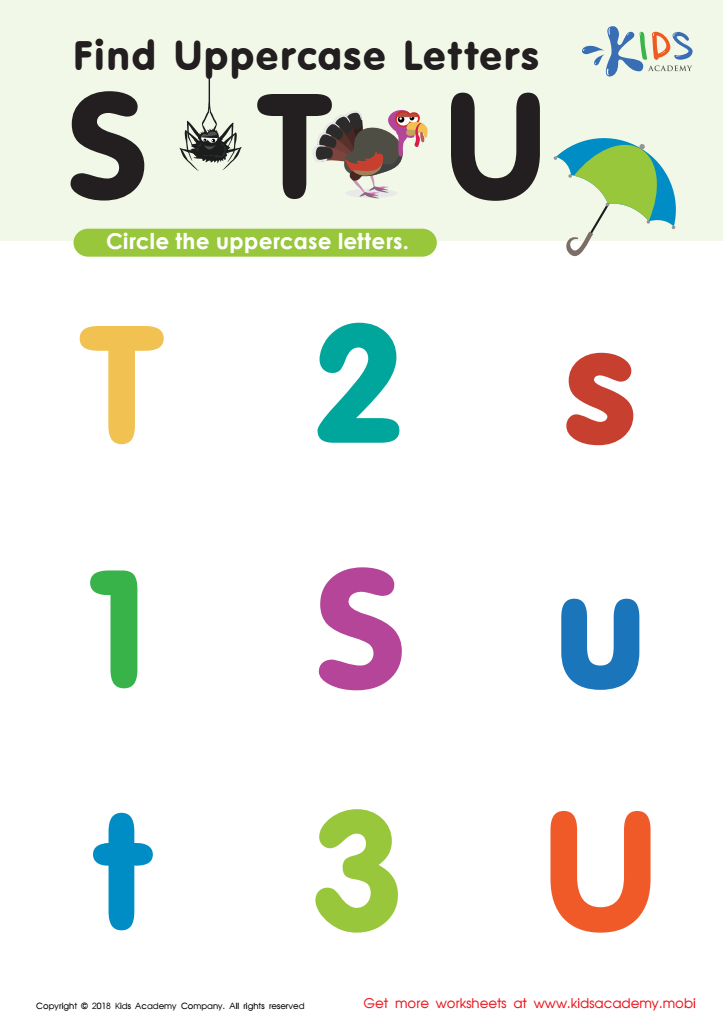
Find Uppercase Letters Worksheet
 Assign to My Students
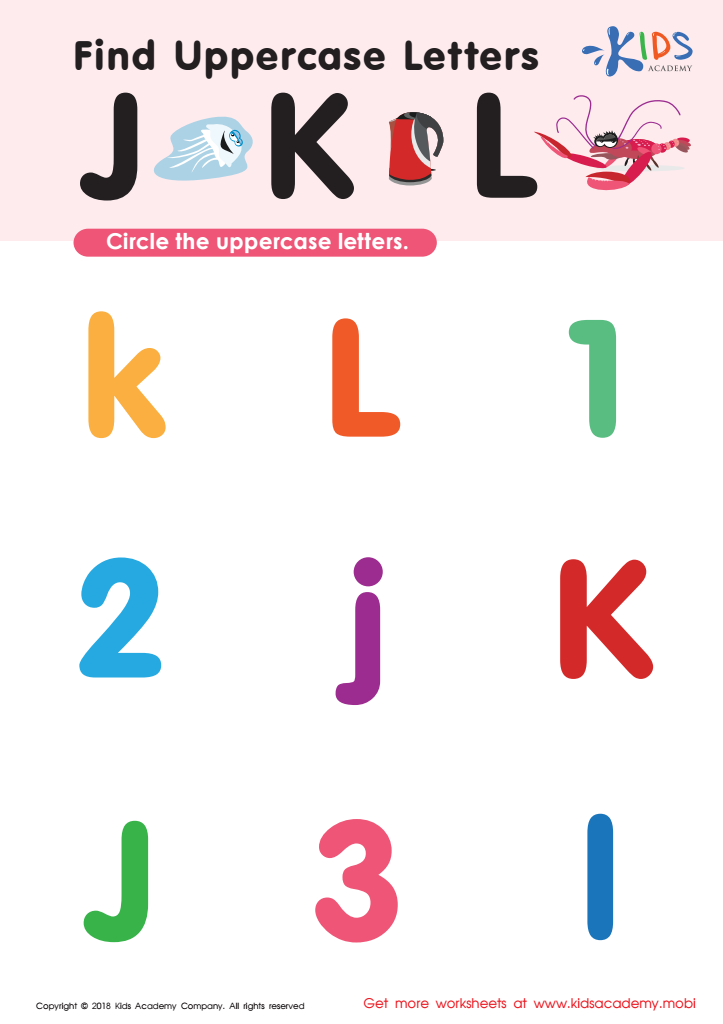
Find Uppercase Letters J, K, and L Worksheet

Find Uppercase Letters A, B, and C Worksheet
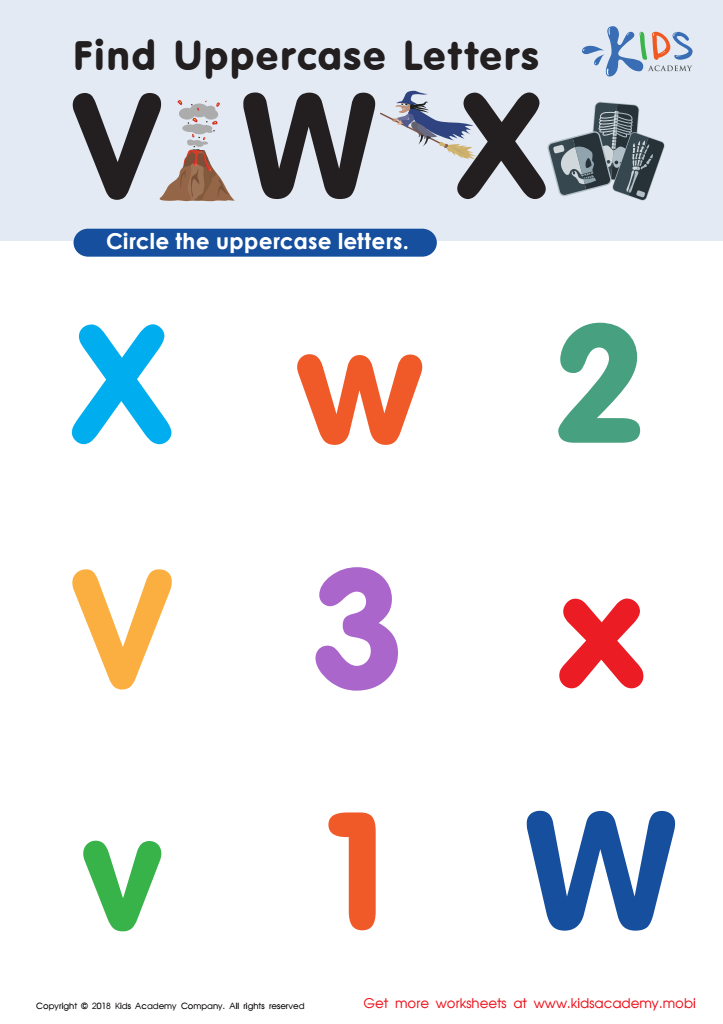
Find Uppercase Letters V, W, X Worksheet
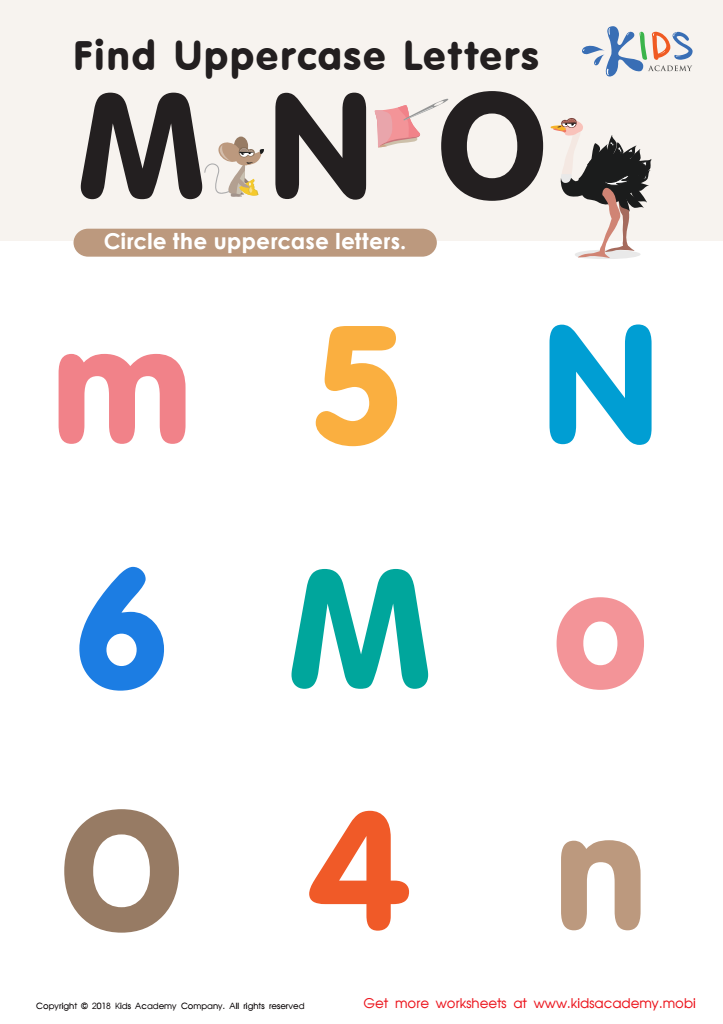
Find Uppercase Letters M, N, and O Worksheet








Parents and teachers should prioritize uppercase letter identification for children aged 4-6 because it sets a strong foundation for literacy development. Recognition of uppercase letters is essential for early reading and writing skills, as many texts start sentences and proper names with capital letters. Introducing these letters helps children recognize and understand the structure of written language, enabling them to connect sounds with corresponding letters.
Additionally, identifying uppercase letters can spark children's interest in learning. Engaging activities, such as alphabet games or colorful flashcards, make learning fun and interactive. This positive approach boosts confidence and instills a love for reading from an early age.
Furthermore, uppercase letters often dominate signs and labels in children's environments, making their identification crucial for day-to-day comprehension and communication. As children navigate their world, recognizing uppercase letters can help them make sense of written messages around them.
Teachers and parents can collaborate to reinforce uppercase identification through playful experiences and consistent practice. This shared commitment not only enhances children's literacy skills but also promotes critical thinking and problem-solving abilities, setting them up for academic success in the future. Overall, uppercase letter identification is a vital early milestone in a child's educational journey.