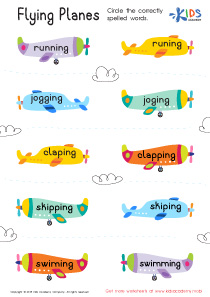
Spelling practice Vowels and Consonants Worksheets for Ages 4-6
5 filtered results
-
From - To
Boost your child's literacy skills with our engaging Spelling Practice Worksheets focused on Vowels and Consonants, designed specifically for ages 4-6! Our fun and colorful resources help young learners develop essential spelling abilities while familiarizing them with the building blocks of language. Each worksheet encourages kids to identify, sort, and practice writing both vowels and consonants through enjoyable activities. As they work through these age-appropriate exercises, children build confidence in their reading and writing skills. Ideal for classroom use or home learning, our Spelling Practice Worksheets provide a solid foundation for a lifetime of literacy. Enhance your child's educational journey today!
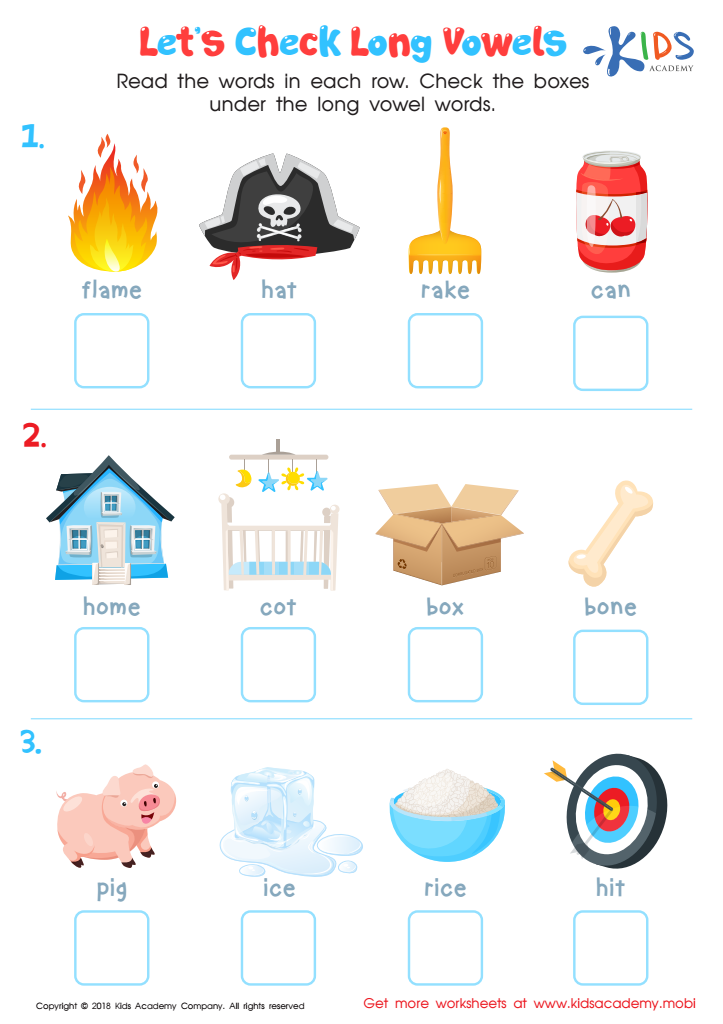
Let's Check Long Vowels: Assessment Worksheet
 Assign to My Students
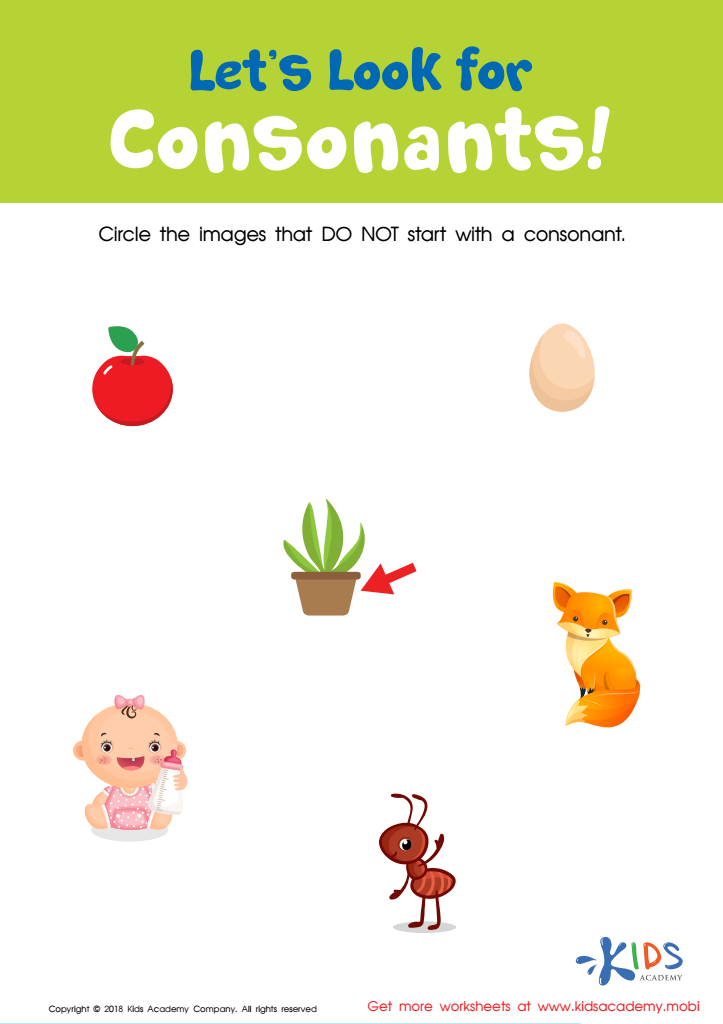
Let's Look for Consonants Worksheet
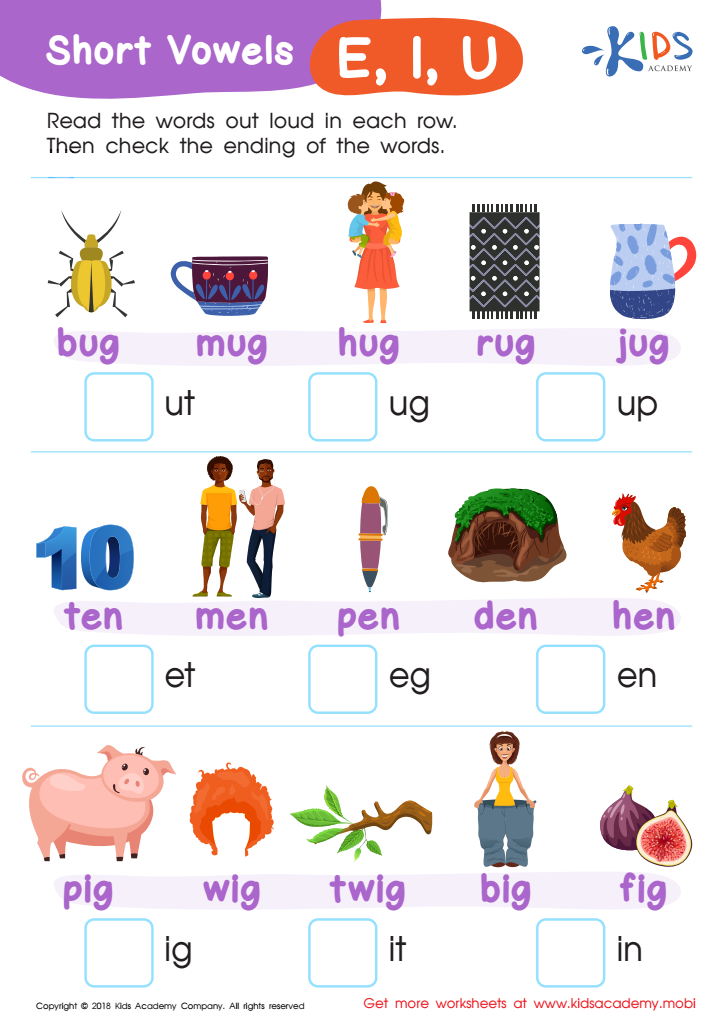
Short Vowels /e/, /i/, and /u/ Worksheet
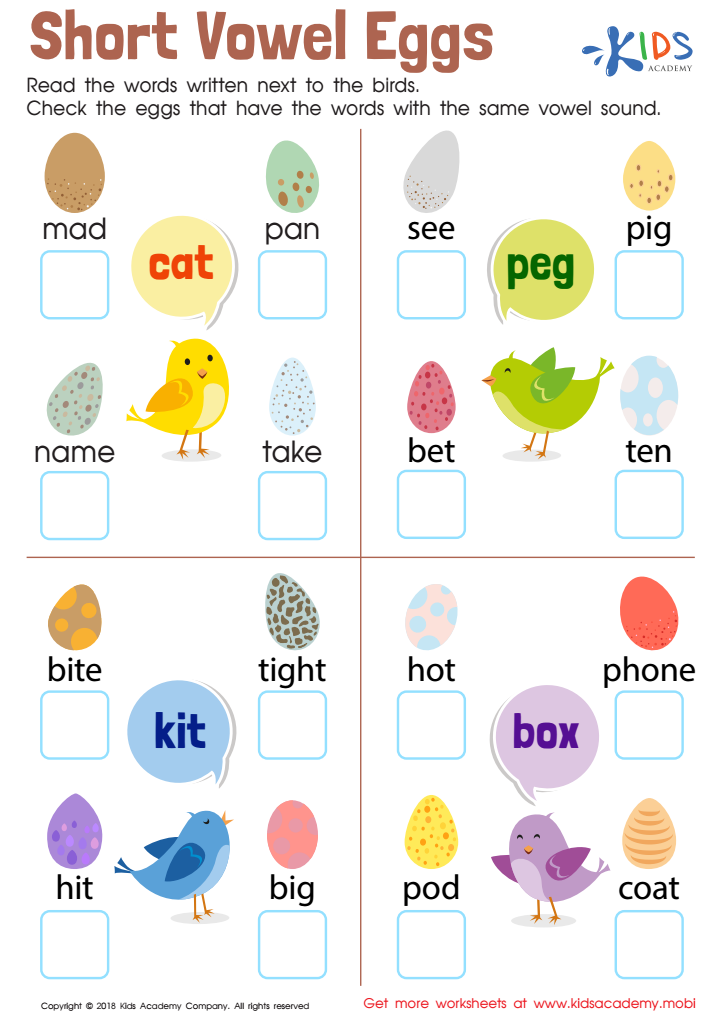
Short Vowel Eggs Worksheet
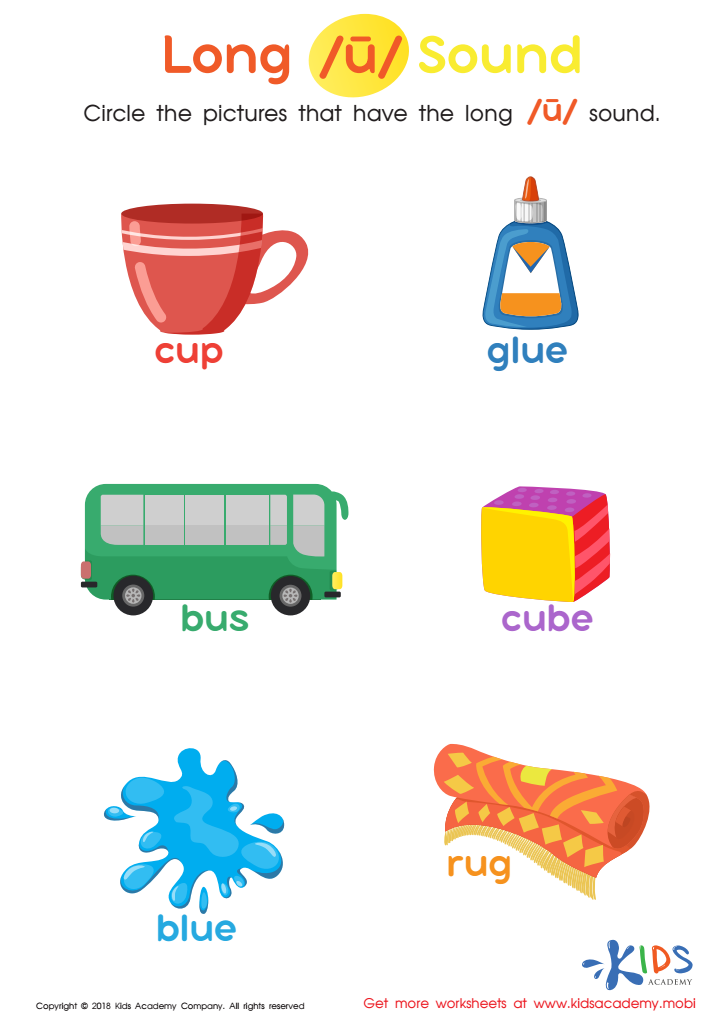
Long «u» Sound Worksheet



Spelling practice focused on vowels and consonants is crucial for children aged 4-6 for a variety of reasons. At this developmental stage, children are laying the foundation for their literacy skills, which will serve them throughout their educational journey. Understanding vowels and consonants enhances their ability to decode words, aiding in reading proficiency.
Regular practice helps children differentiate between the sounds of letters, which is essential for phonemic awareness. This awareness is not only vital for spelling but also for pronunciation and comprehension. Engaging with vowels and consonants helps make sense of language structures, allowing young learners to build their vocabulary.
Additionally, developing strong spelling skills at this early age fosters confidence. Children who can spell basic words correctly gain a sense of accomplishment that motivates them to learn more. It supports their writing abilities, enabling them to express their thoughts and creativity more effectively.
Parents and teachers play a pivotal role by creating a supportive and fun environment for learning and practice. Incorporating games, songs, and interactive activities can make spelling enjoyable, reinforcing the material while cultivating a love for language that lasts a lifetime. Ultimately, focusing on vowels and consonants lays the groundwork for effective communication and academic success.