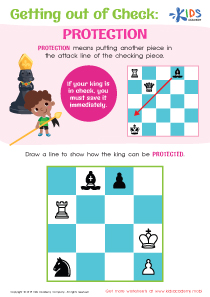
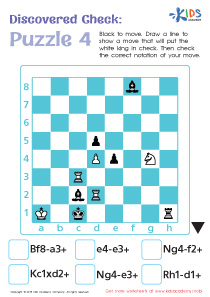
Critical thinking development Chess Worksheets for Ages 4-6
5 filtered results
-
From - To
Enhance your child's critical thinking skills with our engaging chess worksheets designed specifically for ages 4-6. Our carefully crafted activities introduce the fundamentals of chess while promoting essential cognitive abilities, such as problem-solving, pattern recognition, and logical reasoning. These worksheets provide a fun and interactive way for young learners to develop their analytical skills through the strategic elements of chess. Each worksheet is tailored to be age-appropriate, ensuring that your child gains confidence while exploring new concepts. Perfect for use at home or in the classroom, these resources encourage creativity and critical thinking in a playful environment. Start your chess journey today!
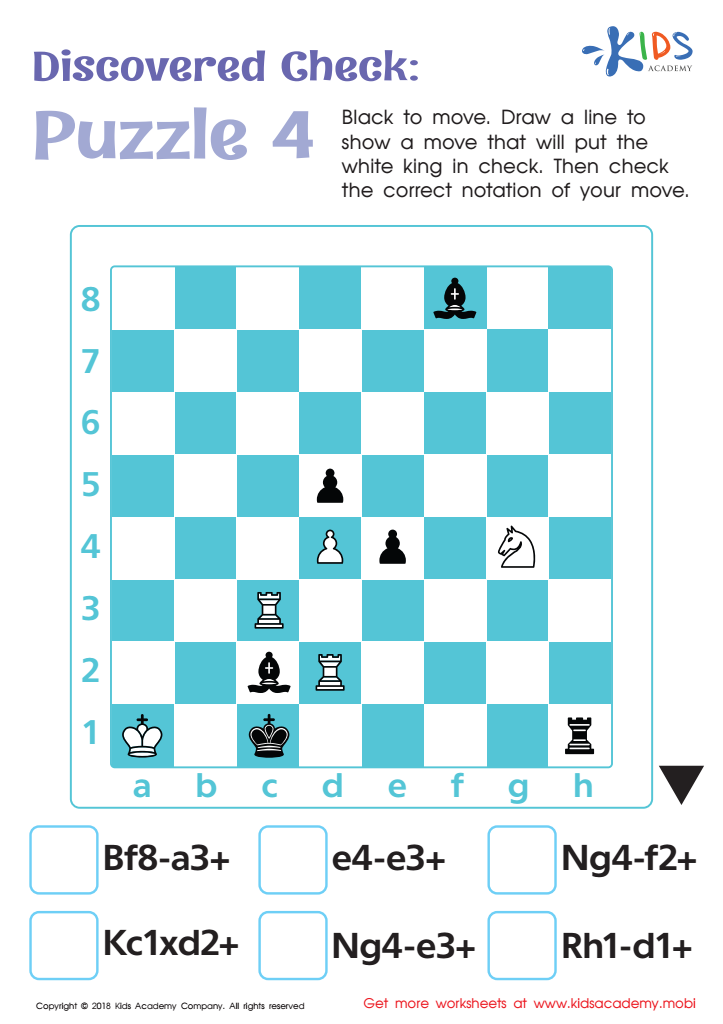
Discovered Check: Puzzle 4 Worksheet
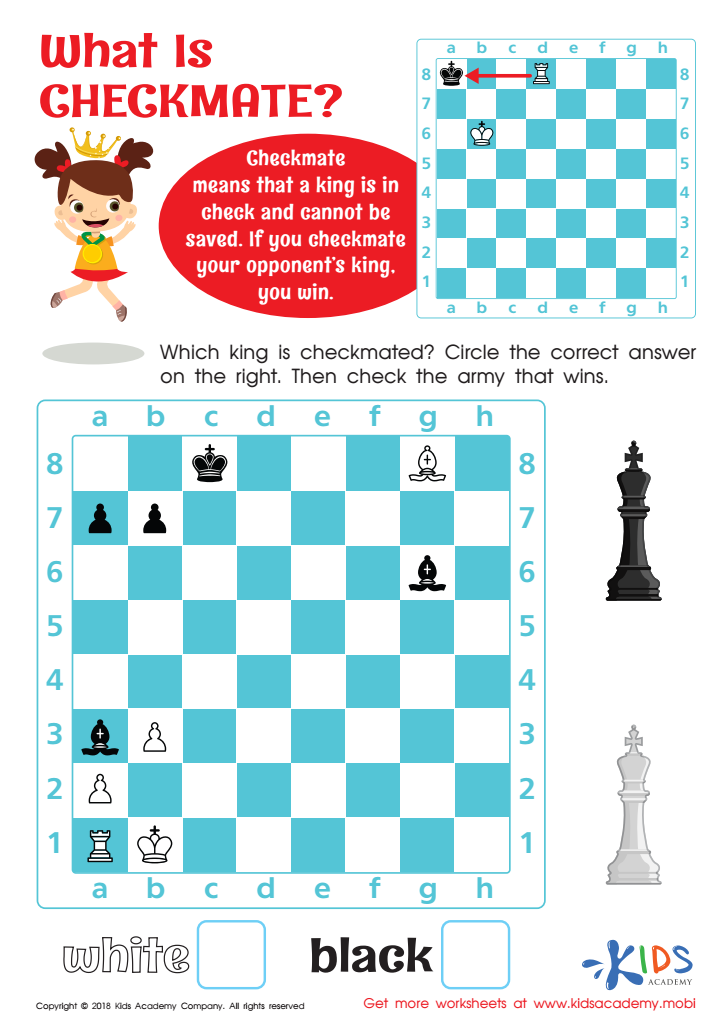
What is Checkmate? Worksheet
 Assign to My Students
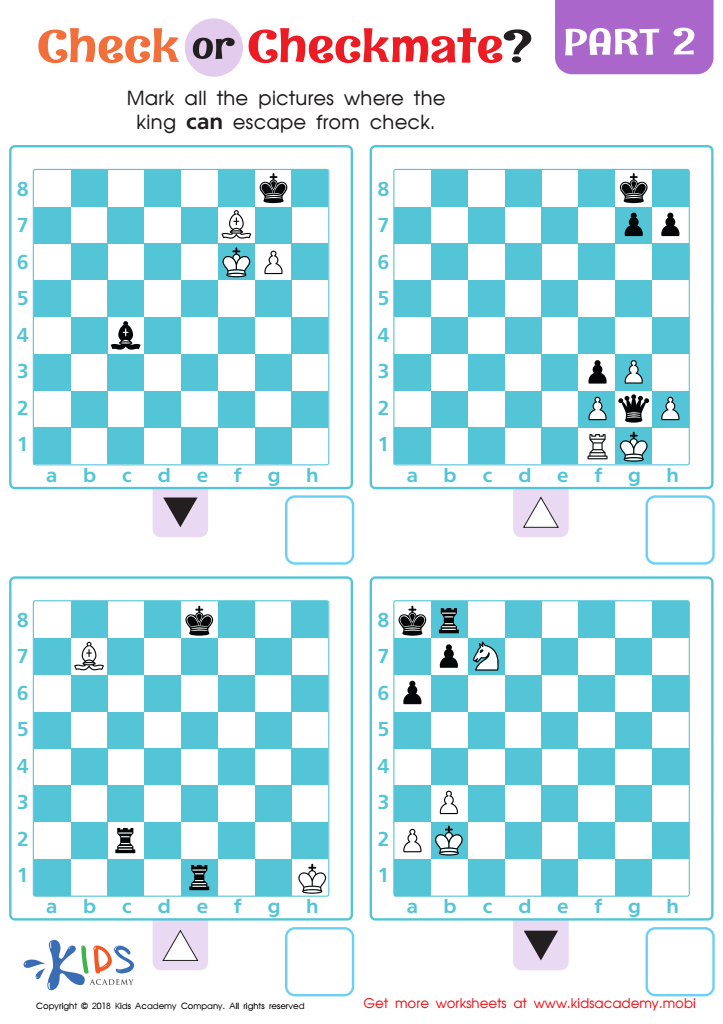
Check or Checkmate: Part 2 Worksheet
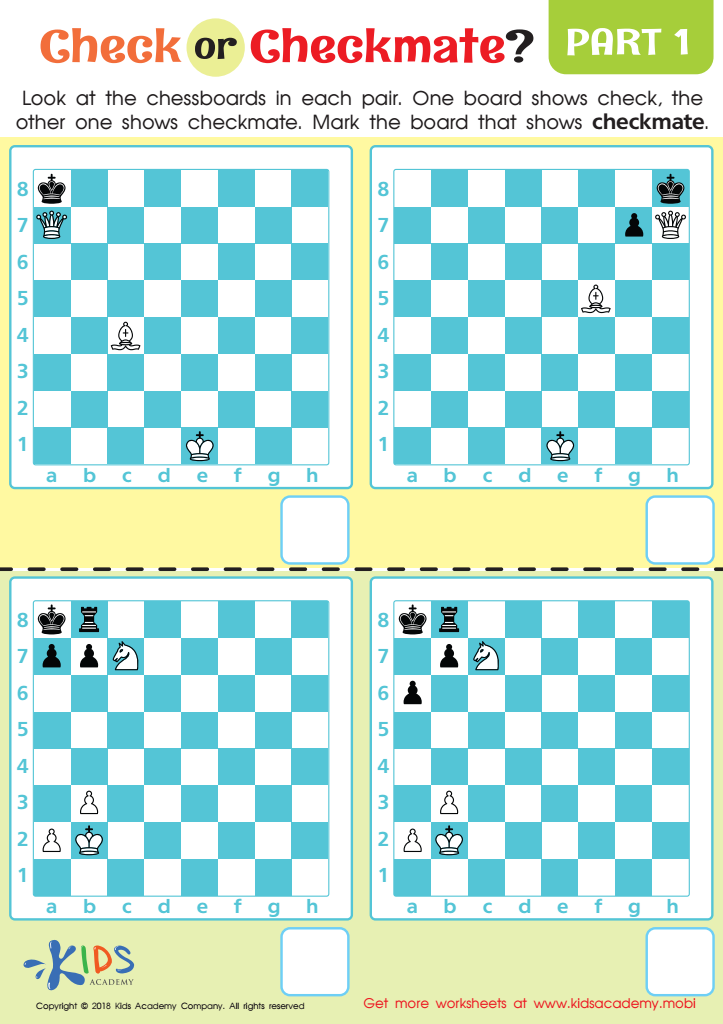
Check or Checkmate: Part 1 Worksheet
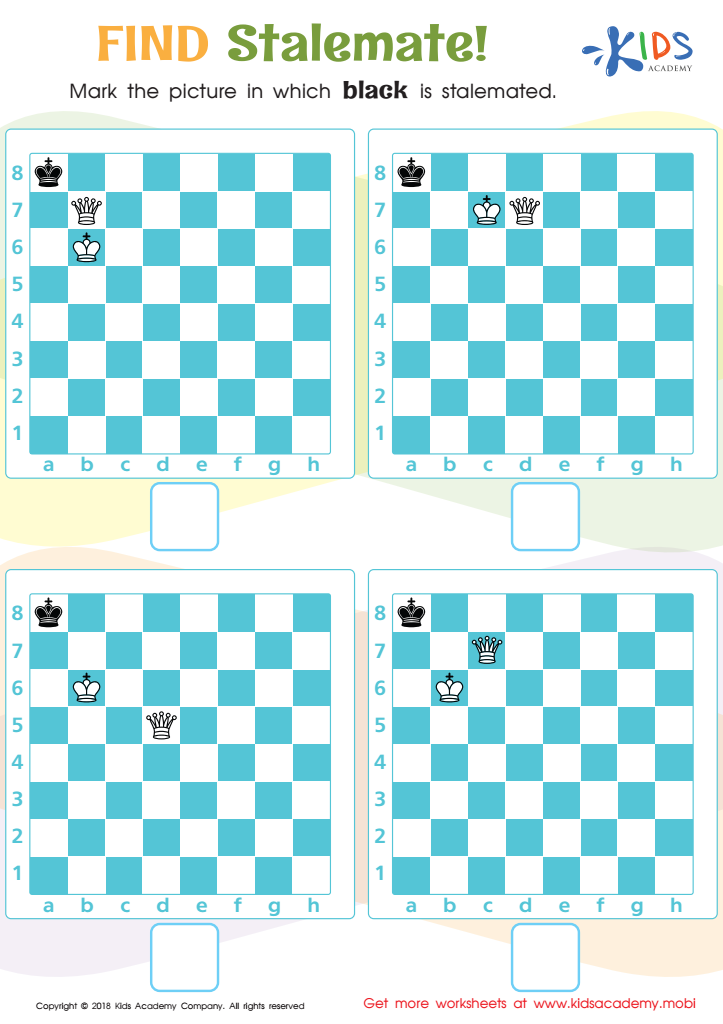
Find Stalemate! Worksheet






Critical thinking development is essential for young children, as it lays the foundation for effective problem-solving, decision-making, and creativity. Introducing chess to children ages 4-6 is an excellent way to cultivate these skills in a fun and engaging manner. Chess challenges young minds to think ahead, consider multiple outcomes, and develop strategic plans—all vital components of critical thinking.
Teachers and parents should care about this development because the cognitive benefits of chess extend beyond the game itself. It improves focus, concentration, and perseverance by encouraging children to work through challenges rather than giving up. This game helps in developing their ability to analyze situations, recognize patterns, and draw conclusions, skills that are applicable in academics and everyday life.
Moreover, playing chess fosters social skills, such as sportsmanship and communication, as children interact with peers during games. Research also indicates that chess can enhance mathematical and reading skills, further supporting its value in a child's early education. Ultimately, by encouraging critical thinking development through chess, parents and teachers not only enhance children's cognitive abilities but also inspire a lifelong love for learning and strategic thinking.