Problem-solving abilities Chess Worksheets for Ages 4-6
3 filtered results
-
From - To
Introduce your child to the timeless game of chess with our "Problem-solving Abilities Chess Worksheets for Ages 4-6"! Specially crafted for young minds, these engaging worksheets boost critical thinking, strategic planning, and cognitive development. By guiding kids through simple, fun chess exercises, our printable activities help them master basic problem-solving skills while igniting their love for the game. Learning through play has never been this enjoyable and beneficial! Ideal for parents and educators, our worksheets offer a delightful blend of education and entertainment, laying a strong foundation for young learners' future success. Make chess mastery accessible and exciting today!
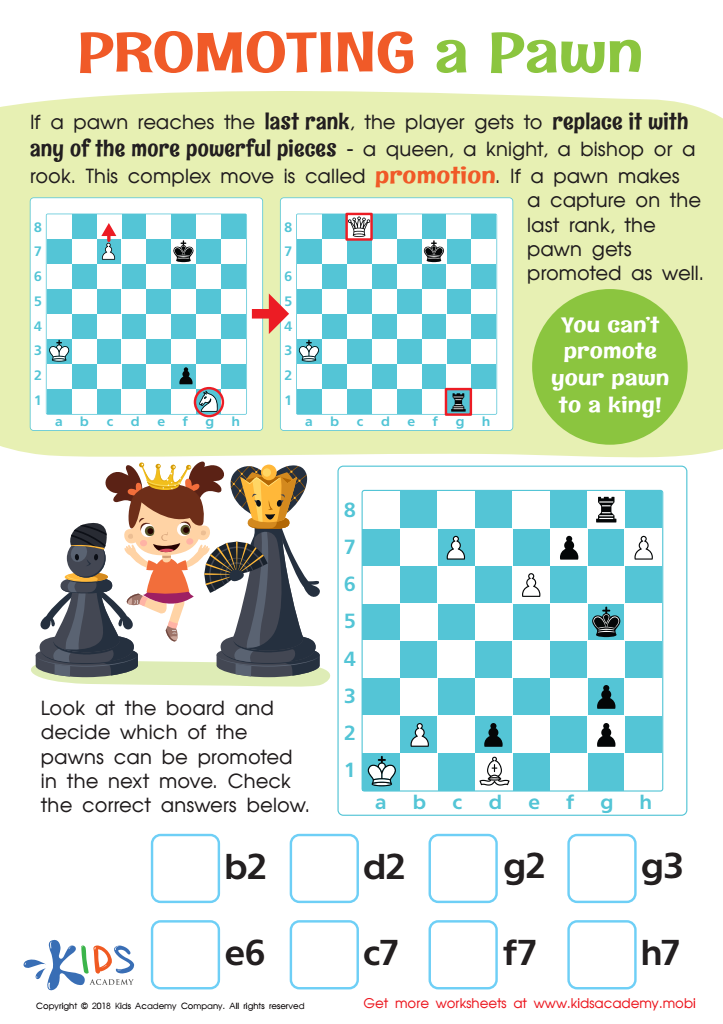
Promoting a Pawn Worksheet
 Assign to My Students
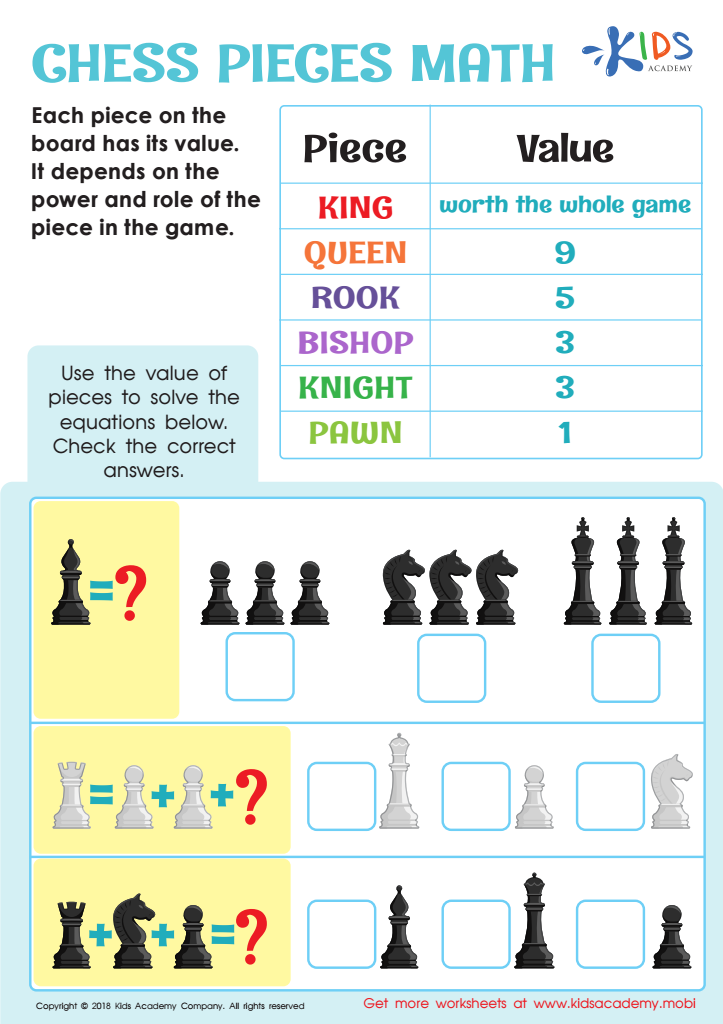
Chess Pieces Math Worksheet
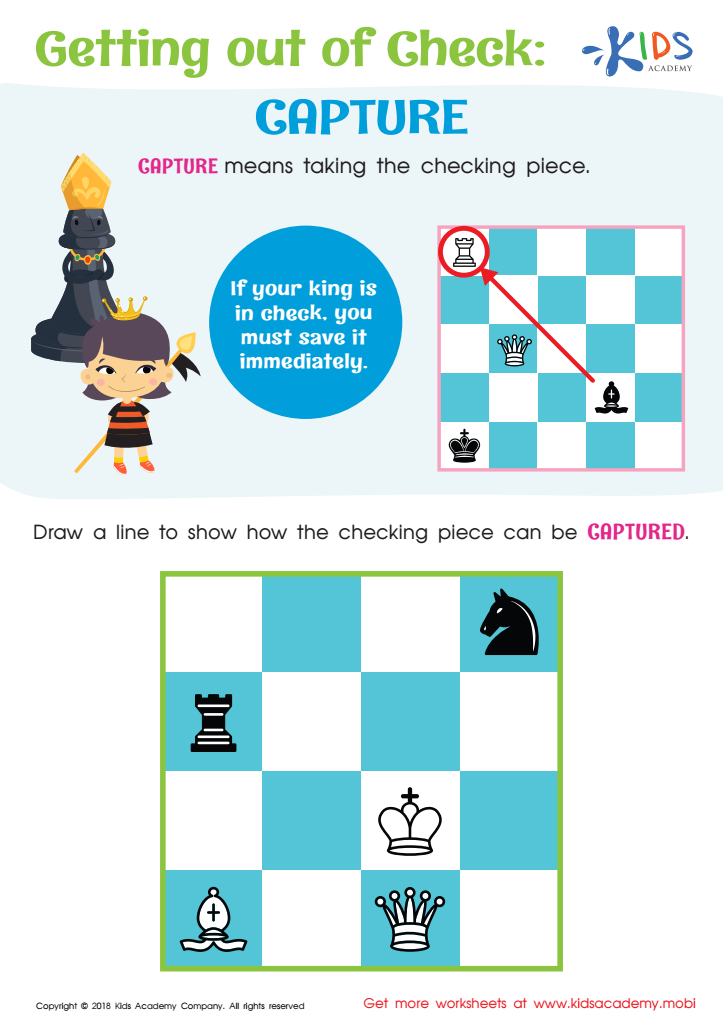
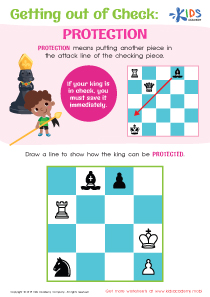
Getting out of Check: Capture






Problem-solving is a crucial skill that helps children successfully navigate both academic and real-world challenges, and chess is an excellent tool for developing this ability, even in very young children aged 4-6. Firstly, chess encourages critical thinking by requiring children to evaluate different potential moves and foresee the possible outcomes. This, in turn, strengthens their ability to analyze situations, consider various solutions, and make strategic decisions.
For young kids, engaging in chess can significantly enhance their cognitive development. It boosts memory, attention span, and spatial skills, which are foundational for academic success across subjects like mathematics, reading, and science. Additionally, as children engage in this mentally stimulating game, they naturally improve their patience and concentration — traits vital for effective learning and daily life activities.
Moreover, chess teaches perseverance and resilience. The nature of the game means that children won't always win, teaching them to learn from their mistakes and keep trying. This resilience is vital for their emotional and social development.
Lastly, playing chess together can strengthen the bond between parents and children or foster a classroom atmosphere focused on collaboration and mutual respect. Therefore, parents and teachers should value and encourage chess as a means to enhance problem-solving abilities and support holistic development in children aged 4-6.