Color Identification Color by Numbers Worksheets for Ages 4-6
5 filtered results
Difficulty Level
Grade
Age
-
From - To
Subject
Activity
Standards
Discover our engaging "Color Identification Color by Numbers Worksheets" designed specifically for children ages 4-6! These fun and interactive worksheets help young learners improve their color recognition and counting skills while promoting fine motor development. Through vibrant illustrations, kids will joyfully color the pictures according to the numbers provided, reinforcing their understanding of colors in a playful context. Perfect for at-home learning or classrooms, our materials not only foster creativity but also enhance critical thinking as children follow the numerical guide to achieve beautifully completed artwork. Unlock your child's potential while they learn and have fun with our color by numbers worksheets!
Favorites
With answer key
Interactive
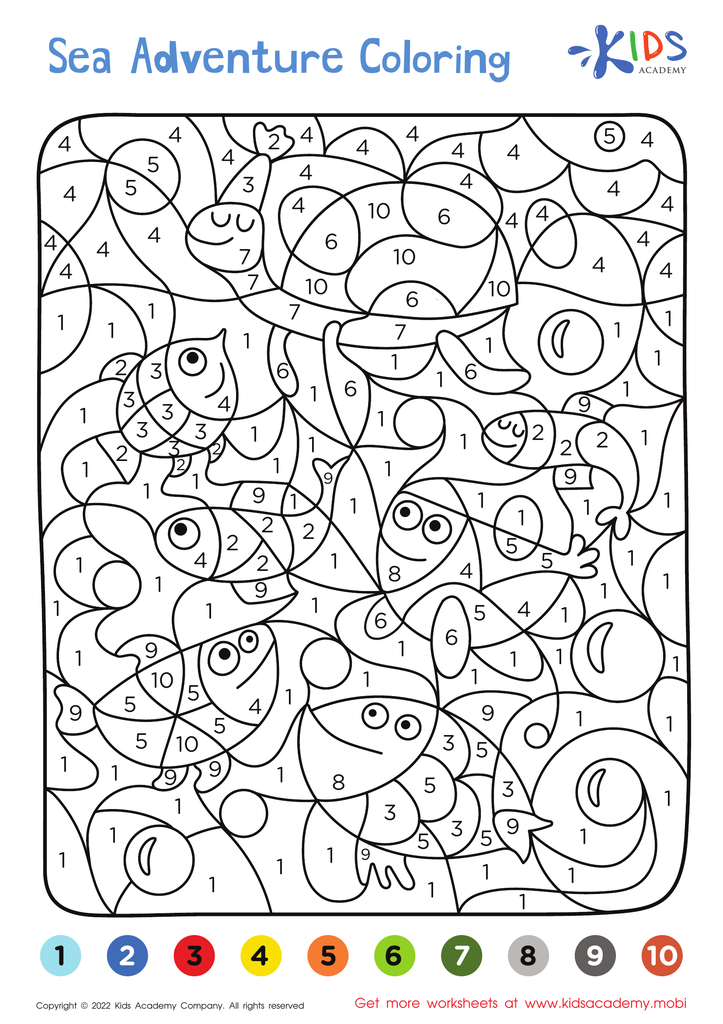
Sea Adventure – Coloring by Numbers
Unlock a sea adventure with a free coloring by numbers PDF page! Download now to get creative and fill the page with vibrant colors.
Sea Adventure – Coloring by Numbers
Worksheet
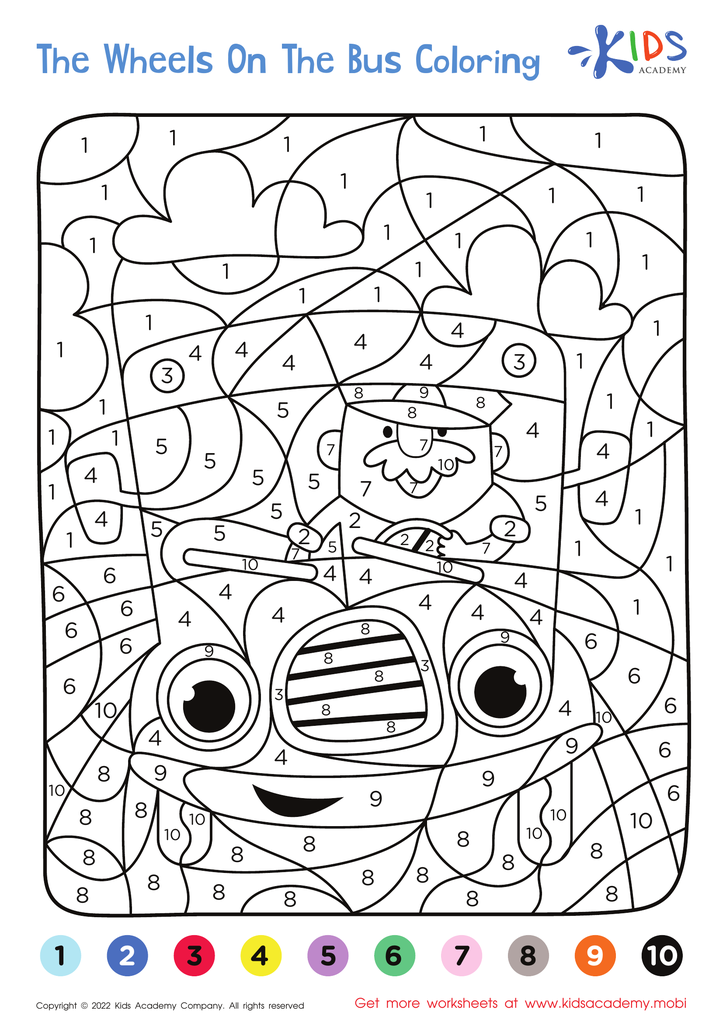
Wheels on the Bus – Coloring by Numbers
Download our free PDF page to color in the bus driver! Simply print, find the right colors, and start creating some fun! Have a great time and don't forget to share your masterpiece with us!
Wheels on the Bus – Coloring by Numbers
Worksheet
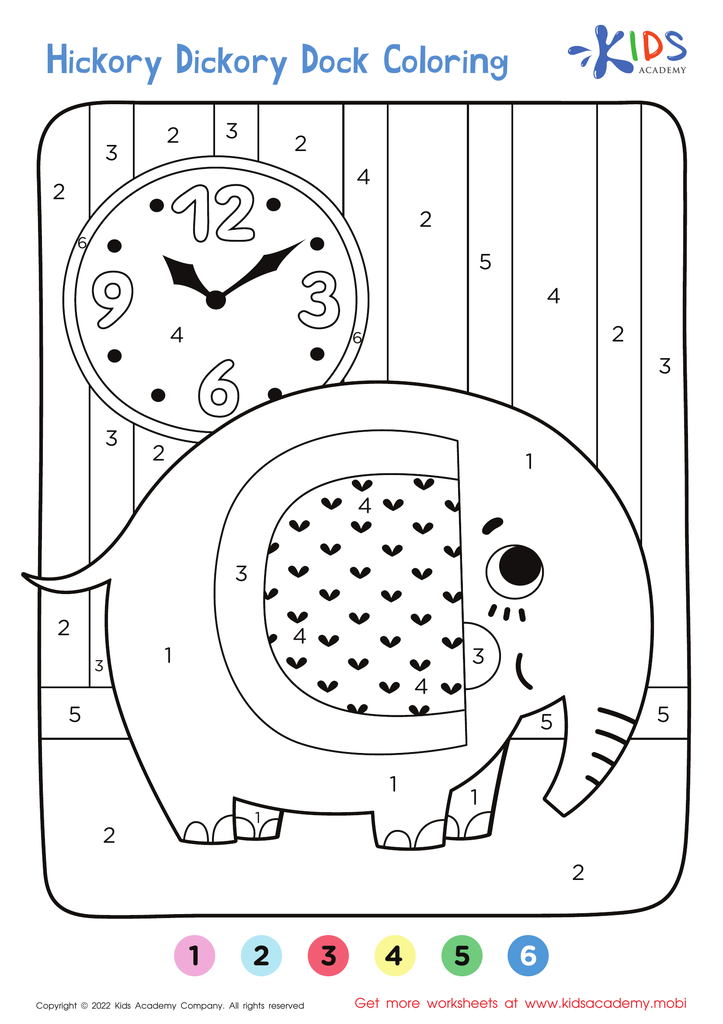
Hickory Dickory Dock – Coloring by Numbers
Colour in a classic nursery rhyme with our free Hickory Dickory Dock PDF page. Follow the numbers to create a scene that will bring the rhyme to life. Download now and get creative!
Hickory Dickory Dock – Coloring by Numbers
Worksheet
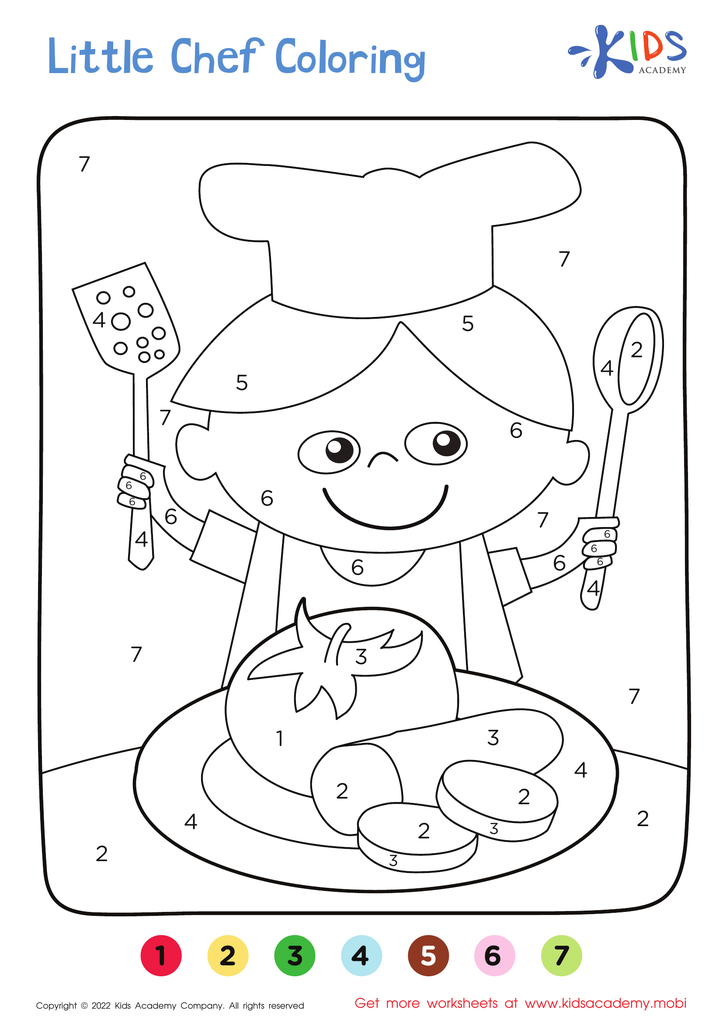
Little Chef – Coloring by Numbers
This PDF page lets you color in a cute little chef! Download it for free and explore your artistic side by using numbers to color in the picture. Let your creativity flow and have some fun!
Little Chef – Coloring by Numbers
Worksheet
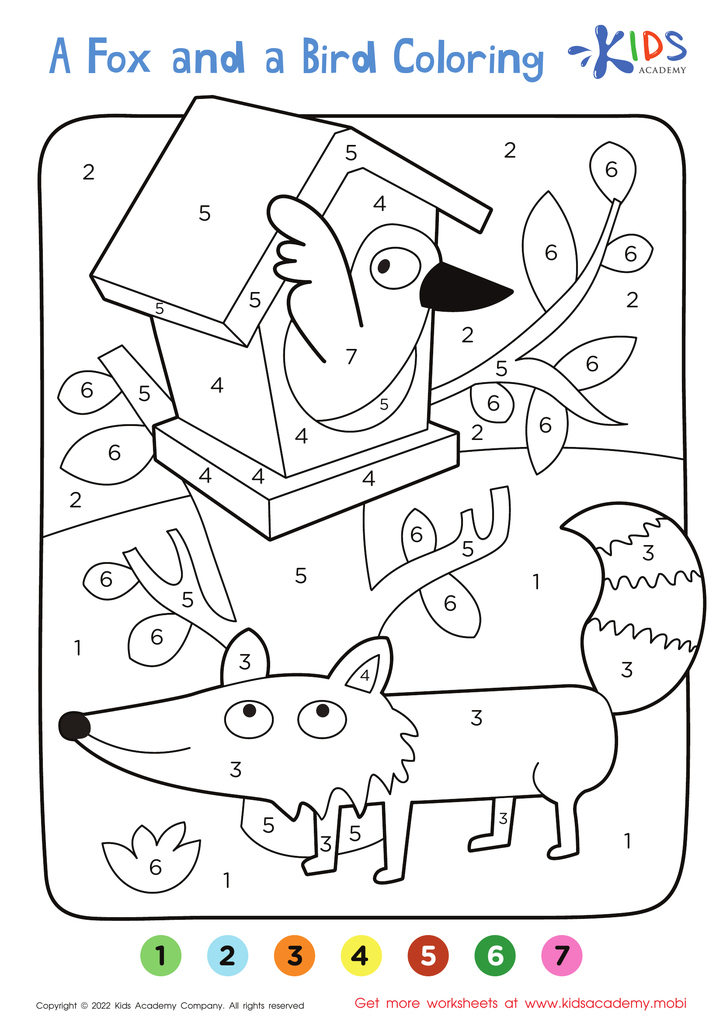
A Fox and a Bird – Coloring by Numbers
Download this free PDF page and color the fox and bird using numbers. Fun and easy way to be creative with the whole family! Spend quality time together and create something unique.
A Fox and a Bird – Coloring by Numbers
Worksheet
Join Kids Academy for Free
Who is primarily going to use this learning content?


.jpg)

Color Identification and Color by Numbers activities are vital for children aged 4-6 for several interconnected reasons. First and foremost, these activities promote early color recognition, an essential foundation for visual literacy. Being able to identify and name colors enhances a child’s ability to express themselves, describe their environment, and engage in more complex learning tasks as they continue their education.
Furthermore, activities like Color by Numbers foster fine motor skills. As children color within the borders, they develop hand-eye coordination and dexterity, which are crucial for writing and other school-related tasks. These early experiences help build the physical skills necessary for future academic and life endeavors.
Moreover, Color by Numbers introduces basic mathematical concepts. By following numerical patterns, children engage with counting, sequencing, and problem-solving in a playful and constructive way. This hands-on approach can help demystify math concepts, laying a stronger groundwork for future learning.
Lastly, engaging in such coloring activities allows children to express their creativity and individuality. When parents and teachers facilitate different ways for children to learn about colors, they encourage exploration and enjoyment in the learning process, setting a positive tone for lifelong learning. Thus, it should be a priority for caregivers and educators alike.