Basic Arithmetic Worksheets for Ages 4-6 - Page 3
52 filtered results
-
From - To
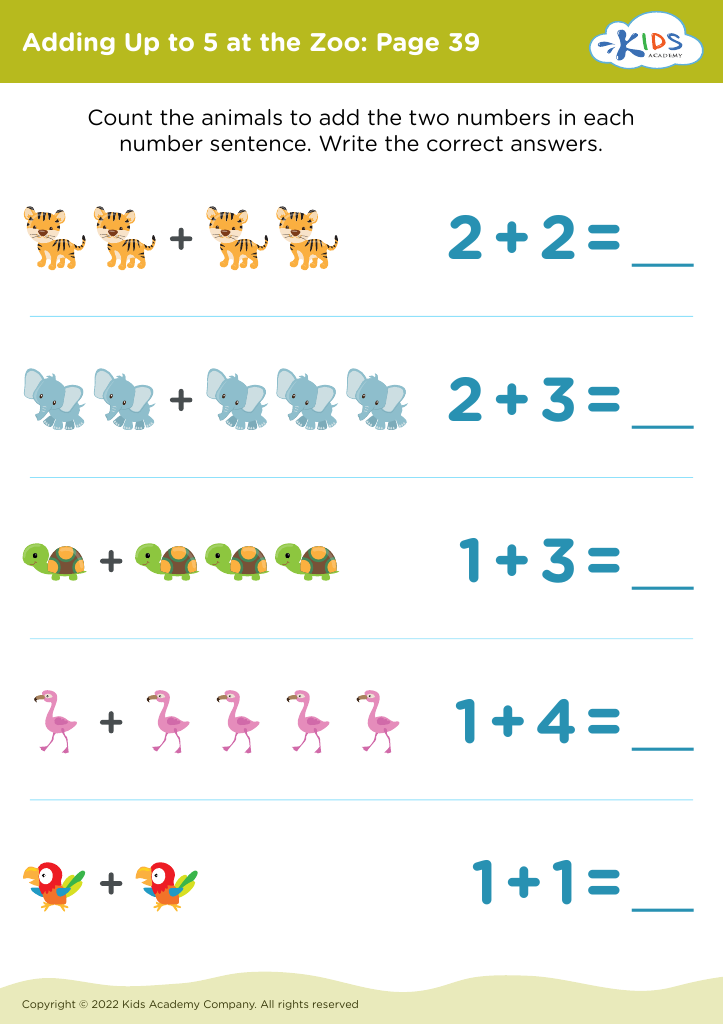
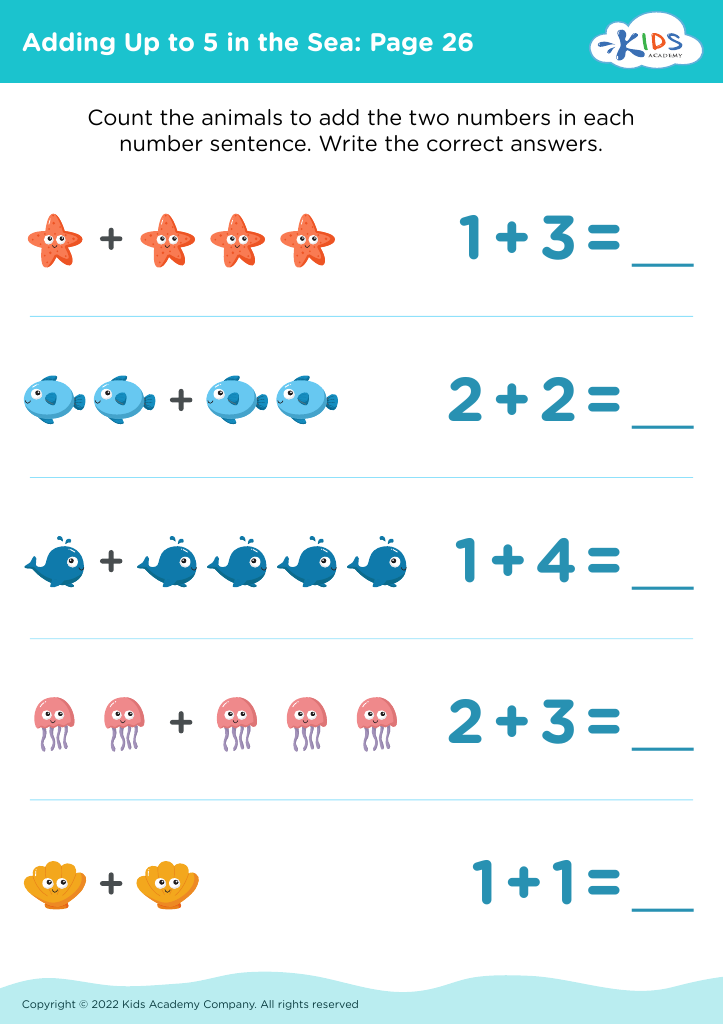
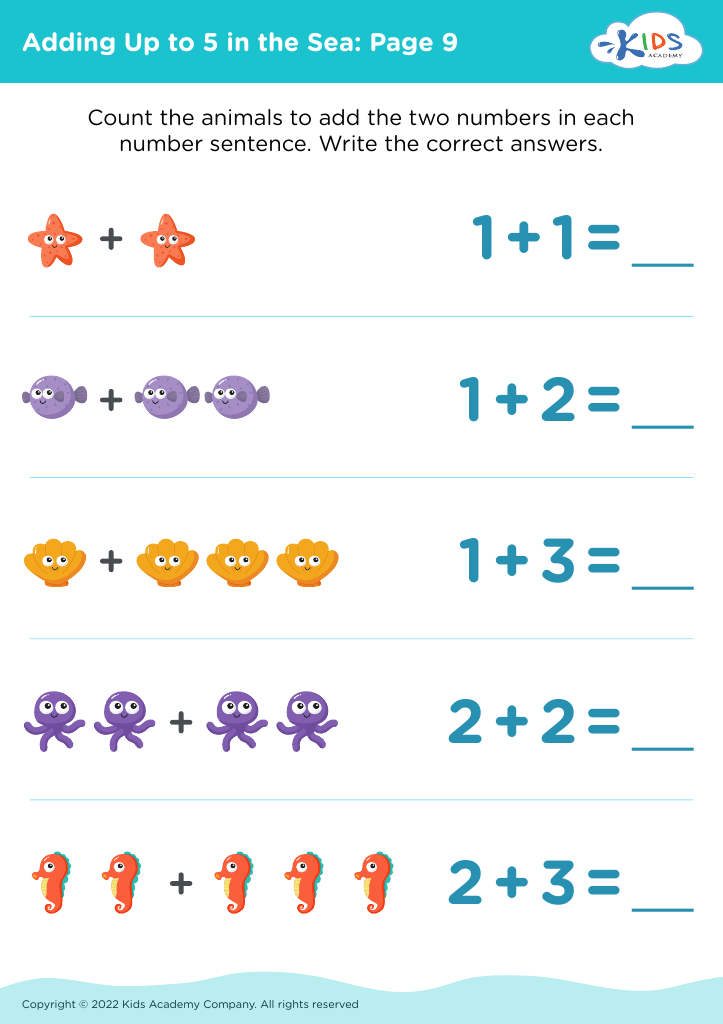




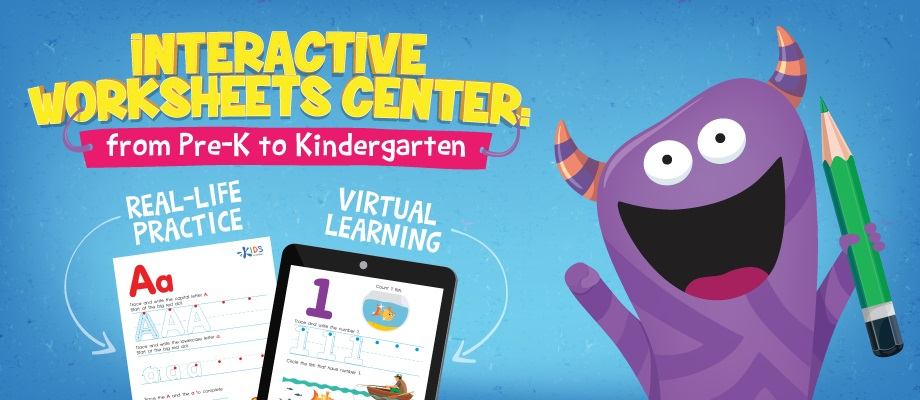



Basic arithmetic for ages 4-6 is crucial as it lays the foundation for all future learning in mathematics and fosters cognitive and problem-solving skills. At this developmental stage, children's brains are highly receptive to new information, and introducing basic arithmetic concepts such as counting, addition, and subtraction can significantly impact their overall academic success.
First, early exposure to arithmetic helps children develop number sense, which is the understanding of numbers and their relationships. This foundational skill is critical not just for mathematics, but for day-to-day tasks and logical thinking. Engaging children in playful, hands-on activities like counting toys, measuring ingredients, or identifying shapes helps solidify these concepts in a fun and memorable way.
Furthermore, mastering basic arithmetic boosts children's confidence and prepares them for more complex mathematical concepts encountered in later grades. Early proficiency in arithmetic has been linked to higher academic achievement in other subjects, including science, reading, and problem-solving. It promotes a growth mindset, encouraging children to view challenges as opportunities for learning and development.
In summary, caring about basic arithmetic for ages 4-6 means more than just teaching numbers. It is about nurturing critical thinking, fostering a love for learning, and equipping children with essential tools that will support their academic and personal growth throughout their lives.








