Basic geometry Worksheets for Ages 4-6
3 filtered results
-
From - To
Discover our engaging Basic Geometry Worksheets designed specifically for children ages 4-6! These worksheets introduce young learners to fundamental concepts such as shapes, sizes, and spatial awareness through fun activities. Our colorful and interactive resources encourage creativity, helping kids recognize and draw various geometric shapes while developing essential math skills. Perfect for home or classroom use, these printable worksheets are tailored to spark curiosity and strengthen early learning. With simple instructions and playful designs, your little ones will enjoy exploring the fascinating world of geometry. Start their mathematical journey today and watch them shine as they master the basics of geometry!
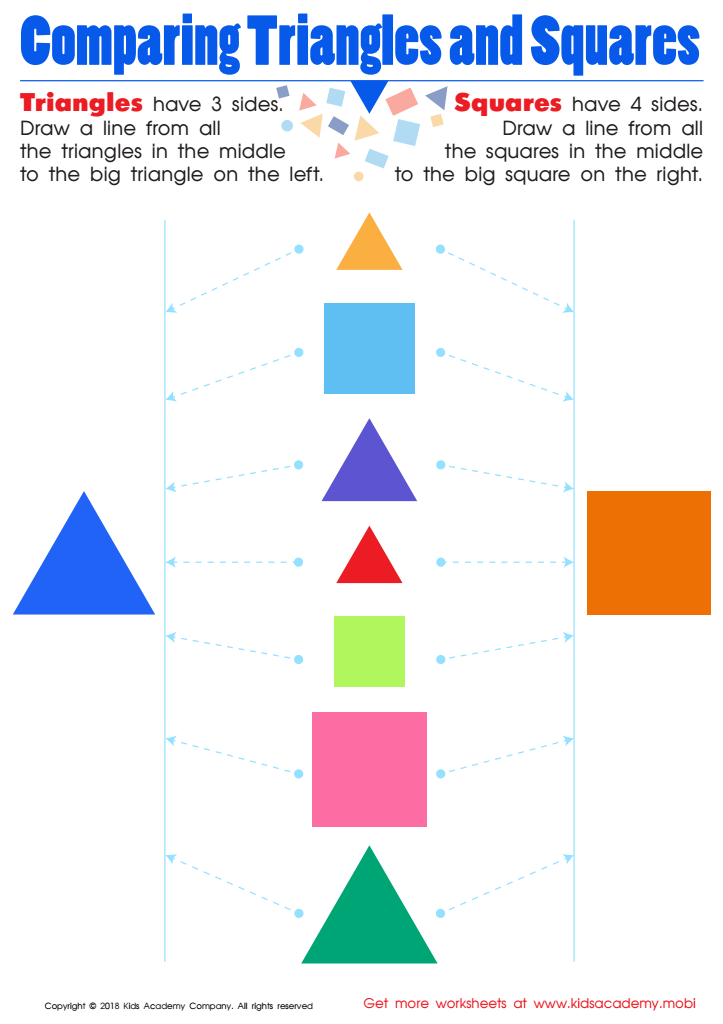
Comparing Triangles Squares Worksheet
 Assign to My Students
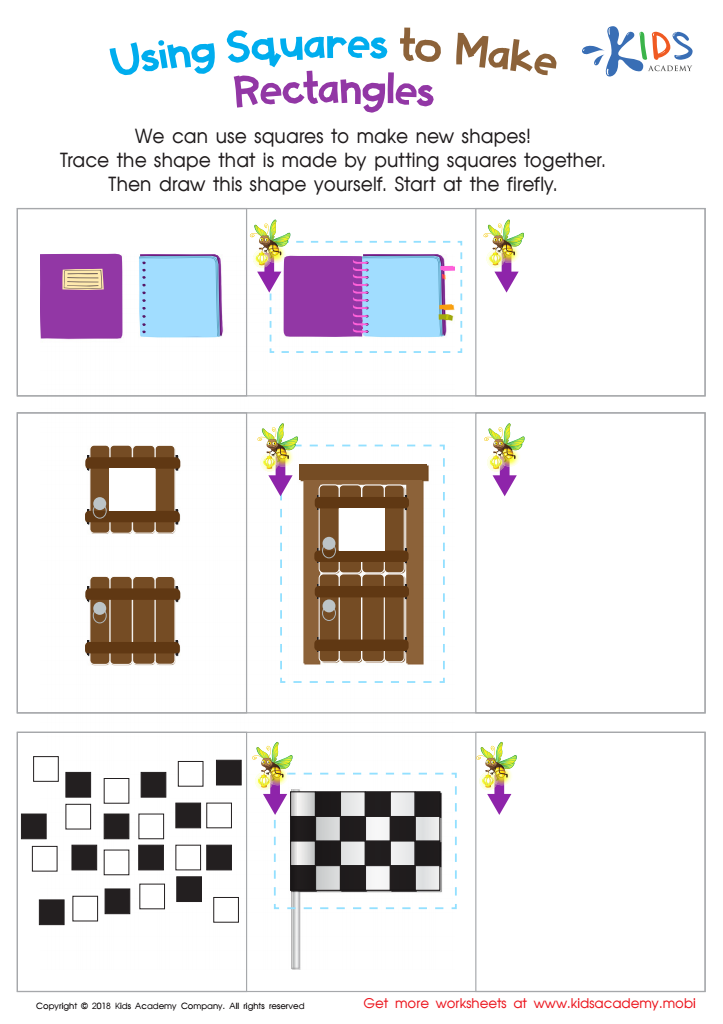
Using Squares to Make Rectangles Worksheet
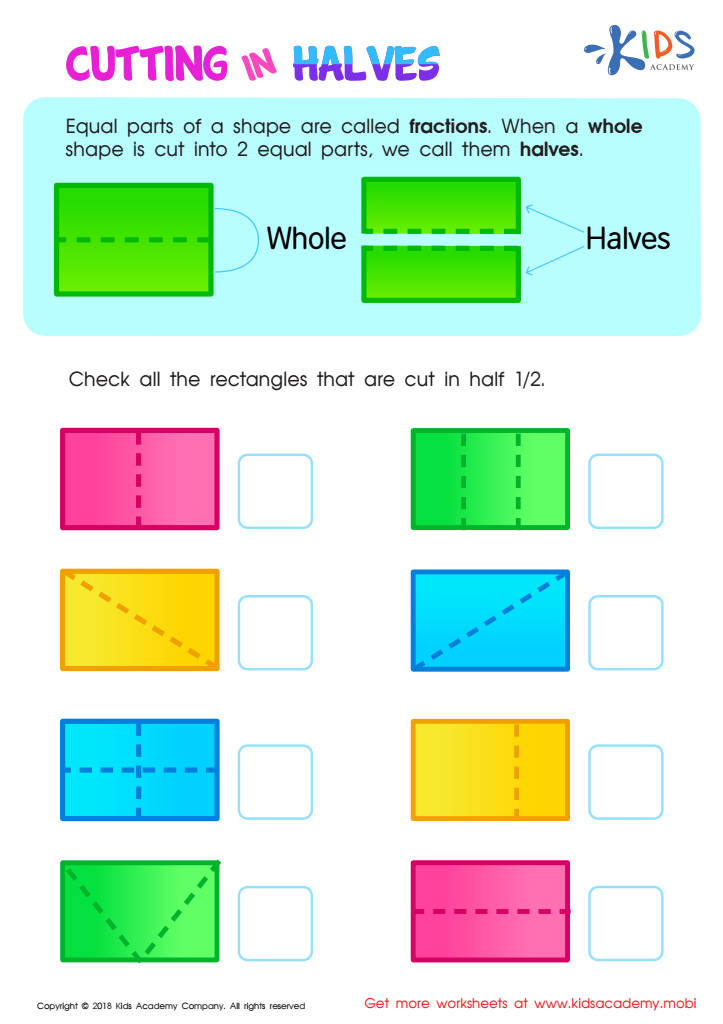
Cutting in Halves Worksheet







Basic geometry is an essential building block in early childhood education, particularly for children aged 4 to 6. At this age, children are naturally curious about the world around them and eager to explore shapes, sizes, and spatial relationships. Introducing basic geometry fosters critical thinking and problem-solving skills essential for future learning.
Understanding geometric concepts helps children develop a strong foundation in mathematics. Recognizing shapes such as circles, squares, and triangles not only enhances their ability to categorize objects but also aids in developing vocabulary and language skills as they describe and differentiate these shapes.
Furthermore, geometry supports cognitive development. Engaging in activities like sorting, drawing, and constructing with shapes cultivates fine motor skills and spatial awareness. These experiences lay the groundwork for more advanced mathematical concepts and inspire a love for learning.
Additionally, incorporating geometry into everyday experiences—like discussing shapes in nature or using blocks for building—creates meaningful connections and enhances observational skills. When parents and teachers prioritize geometric learning, they equip children with the tools needed for success in mathematics and beyond, ultimately creating confident learners who are curious and engaged in understanding their environment.








