Differentiating shapes Worksheets for Ages 4-6
4 filtered results
-
From - To
Unlock the joy of learning with our Differentiating Shapes Worksheets designed specifically for ages 4-6. These engaging and educational printable worksheets help young learners identify and differentiate between various shapes, fostering crucial cognitive and fine motor skills. Perfect for home or classroom settings, each worksheet is carefully crafted to combine fun activities with effective learning strategies. As children trace, color, match, and explore shapes, they build a strong foundational understanding of geometry. Encourage curious minds to discover the world of shapes with our expertly designed resources, ensuring an enjoyable and enriching educational journey.
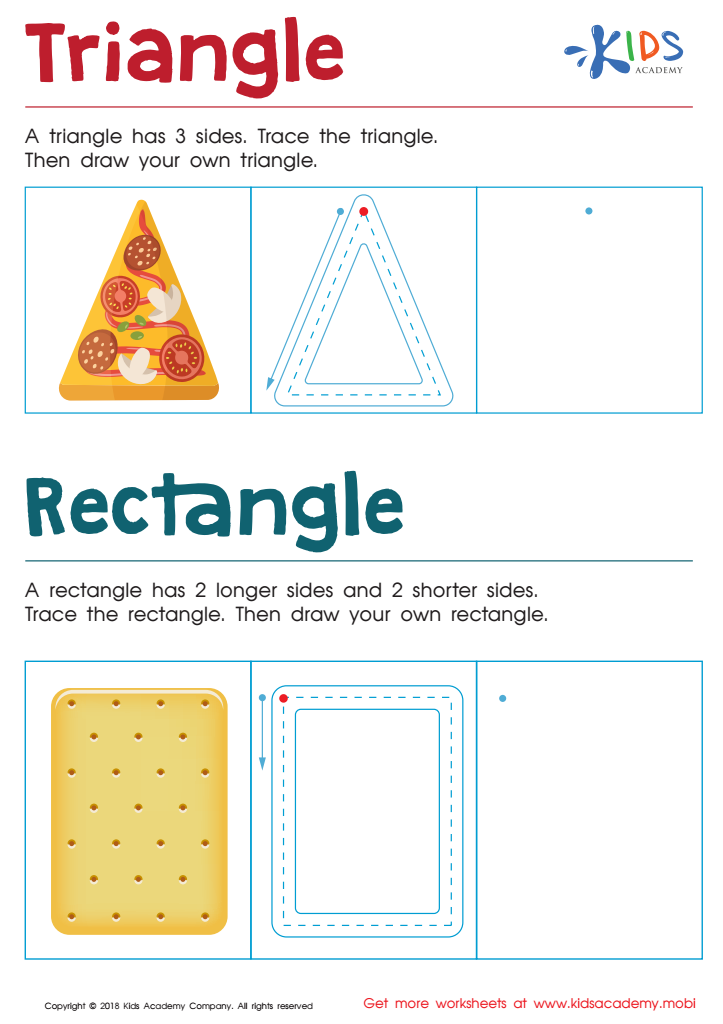
Triangle Rectangle Worksheet
 Assign to My Students
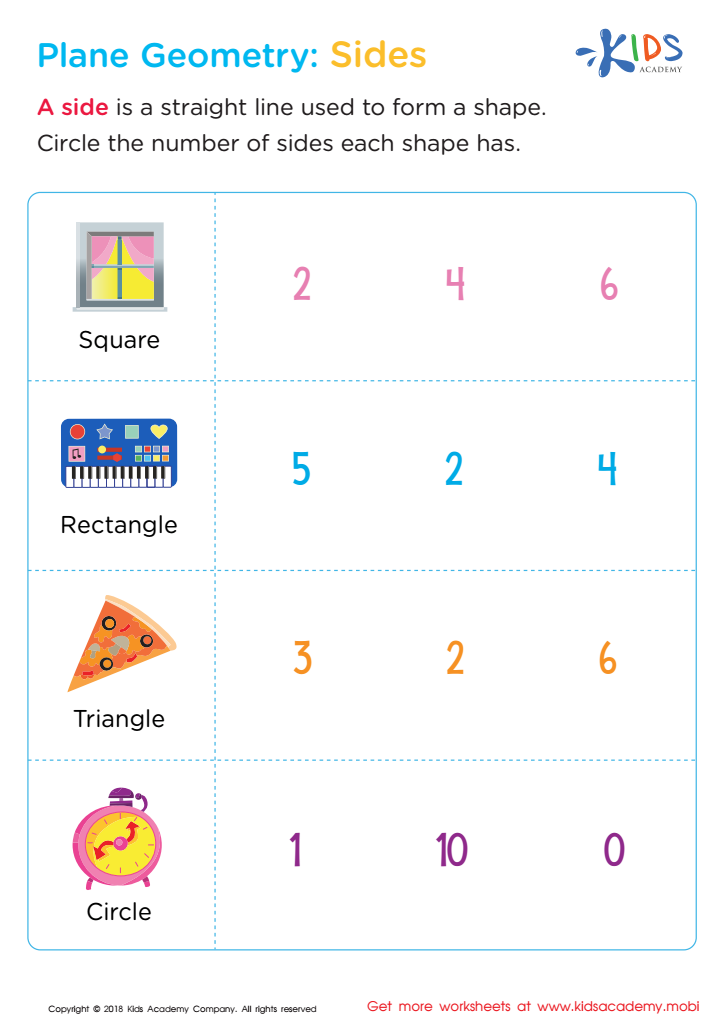
Plane Geometry: Sides Worksheet
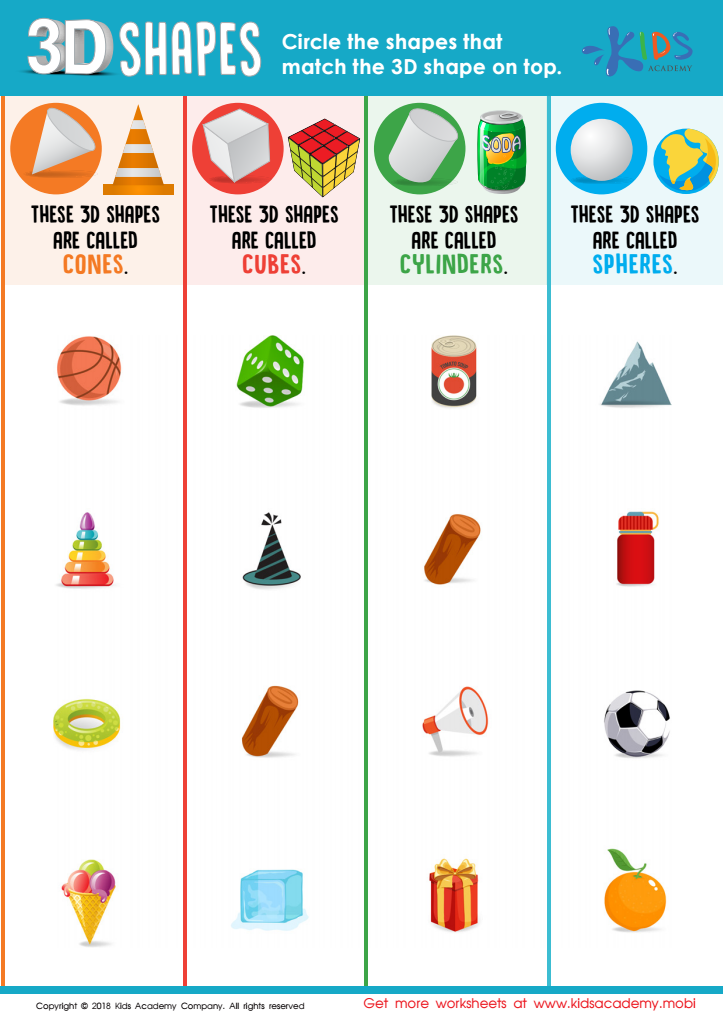
3D Shapes Worksheet



.jpg)




Differentiating shapes is a foundational skill crucial for early childhood development, making it essential for parents and teachers to prioritize this learning. For children ages 4-6, understanding and identifying shapes is more than just recognizing simple forms. It helps develop their cognitive and visual-spatial skills, which are necessary for tasks such as reading and writing. By learning to differentiate between shapes, children begin to notice similarities and differences, enhancing their problem-solving and analytical skills.
Moreover, shape recognition plays a significant role in language development. When children talk about the attributes of shapes—like the number of sides or whether a shape can roll—they enrich their vocabulary and improve their descriptive language skills. Group activities centered around shapes also foster social skills, as children learn to share, cooperate, and communicate with peers.
Shapes are everywhere in our daily environment, from the rectangular shape of a door to the circular shape of a clock. Familiarity with shapes helps children better understand the world around them, supporting other areas of learning such as math and art. Early mastery of these skills sets a strong foundation for future academic success, making shape differentiation a key aspect of early childhood education.








