Enhancing observational skills Worksheets for Ages 4-6
4 filtered results
-
From - To
Unlock your child’s potential with our "Enhancing Observational Skills Worksheets" designed specifically for ages 4-6. These engaging, interactive worksheets help young learners sharpen their ability to observe, compare, and analyze their surroundings. Through fun activities that encourage critical thinking, children will explore patterns, details, and visual recognition, laying a strong foundation for academic success. Our worksheets support early development in literacy and math while promoting curiosity and creativity. Perfect for home or classroom use, these resources provide educators and parents with tools to foster keen observational skills in children. Begin your child's journey toward becoming an attentive and thoughtful learner today!
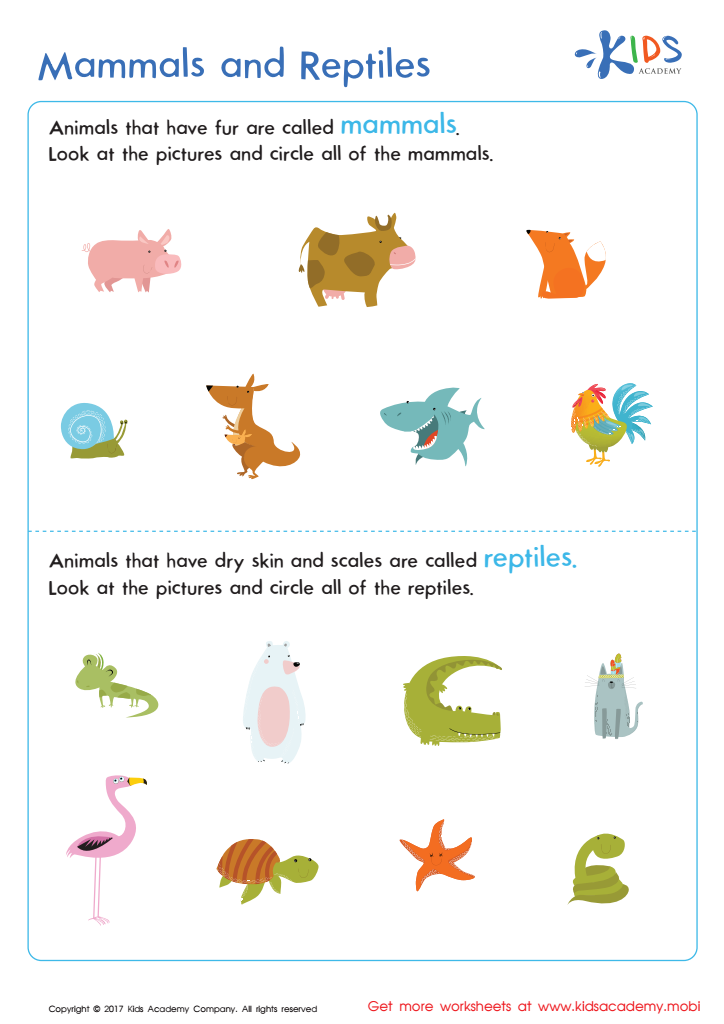
Mammals and Reptiles Worksheet
 Assign to My Students
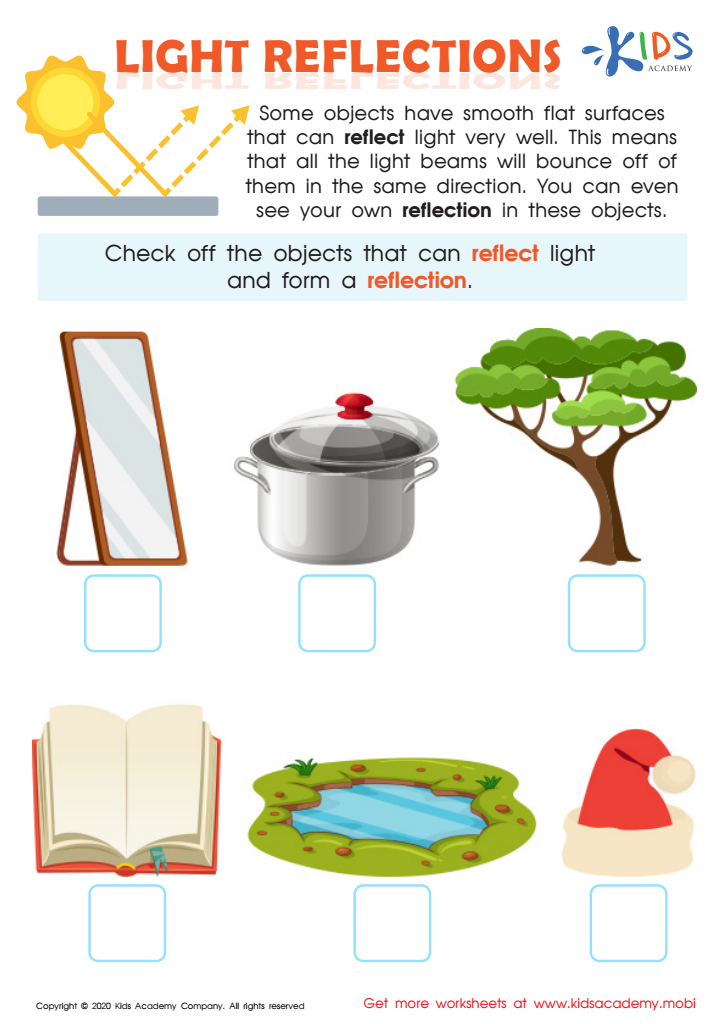
Light Reflections Worksheet
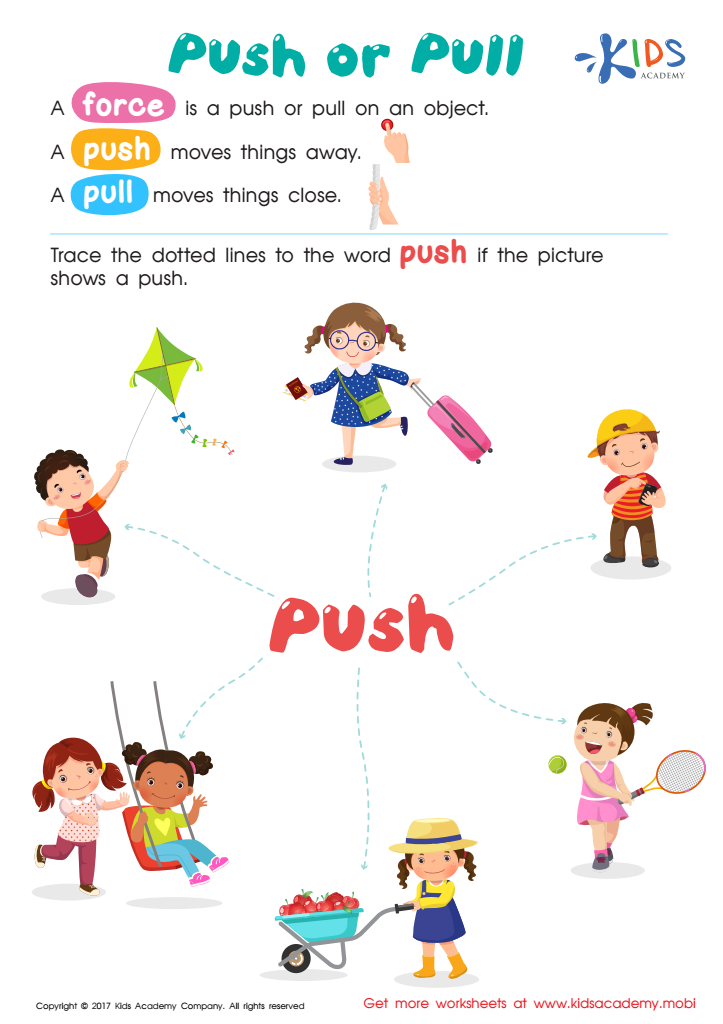
Push or Pull Worksheet








Enhancing observational skills for children aged 4-6 is crucial for their overall development, and parents or teachers should care deeply about fostering this ability. At this young age, children are naturally curious and eager to explore their surroundings. Strengthening their observational skills promotes critical thinking, enabling them to absorb information in meaningful ways. When children learn to pay attention to details, they become better at recognizing patterns, solving problems, and understanding cause-and-effect relationships.
Moreover, developing observational skills nurtures language acquisition, as children learn to describe what they see, hear, and experience. This practice enhances their vocabulary and encourages communication. It also supports emotional intelligence, as children begin to notice the feelings and behaviors of others, fostering empathy and social awareness.
In a classroom setting, enhanced observational skills allow children to engage more effectively with their peers and the environment, promoting cooperation and deeper learning experiences. For parents, guiding their children in observing the world around them cultivates inquisitiveness and a love for learning, laying a solid foundation for future academic success. In essence, investing time and effort into enhancing observational skills in early childhood yields long-lasting benefits that support a child's cognitive, emotional, and social development.








