
Money identification Worksheets for Ages 4-6
3 filtered results
Difficulty Level
Grade
Age
-
From - To
Subject
Activity
Standards
Explore our engaging "Money Identification Worksheets for Ages 4-6" designed to introduce young learners to the world of coins and bills. These interactive worksheets offer a fun and effective way for preschoolers and kindergarteners to develop essential money recognition skills. Through a variety of activities, including matching, coloring, and counting exercises, children will enhance their understanding of different denominations and improve their math abilities. Our carefully crafted resources provide a solid foundation for financial literacy in a playful and enjoyable manner. Download our free worksheets today and help your child become comfortable with money and develop critical early math skills!
Favorites
With answer key
Interactive
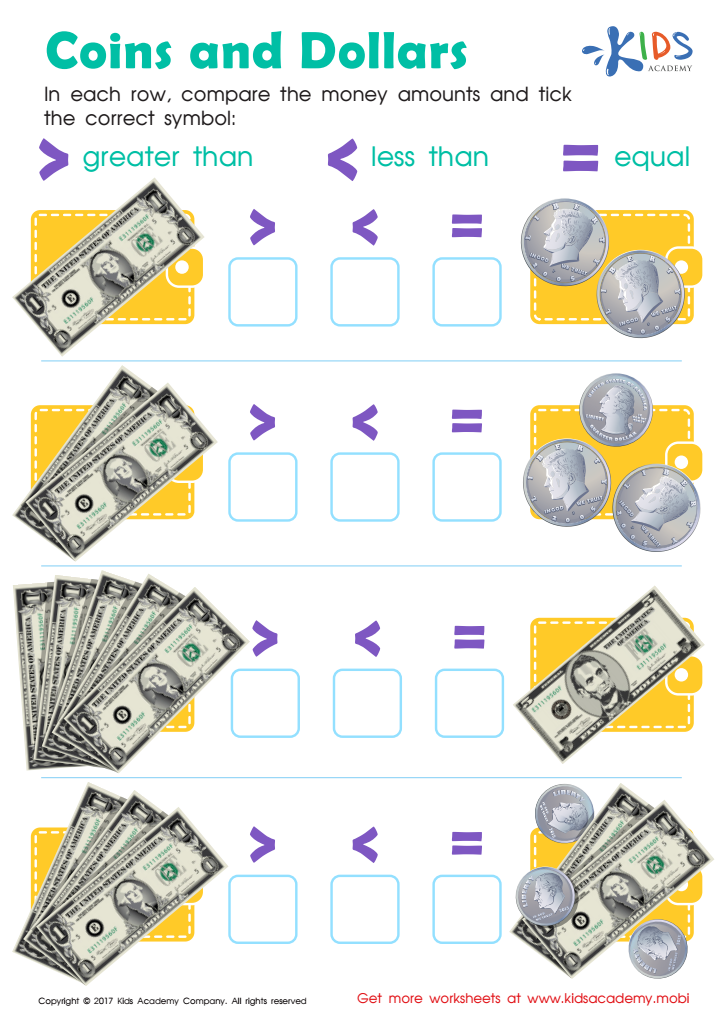
Money: Coins Dollars Printable
Motivate your kid to learn and practise essential math skills, like 'greater than' and 'less than', by introducing the importance of money! The money worksheet "Coins and Dollars" will give them a hands-on experience of counting coins and dollars, making math symbols more memorable.
 Assign to My Students
Money: Coins Dollars Printable
Worksheet
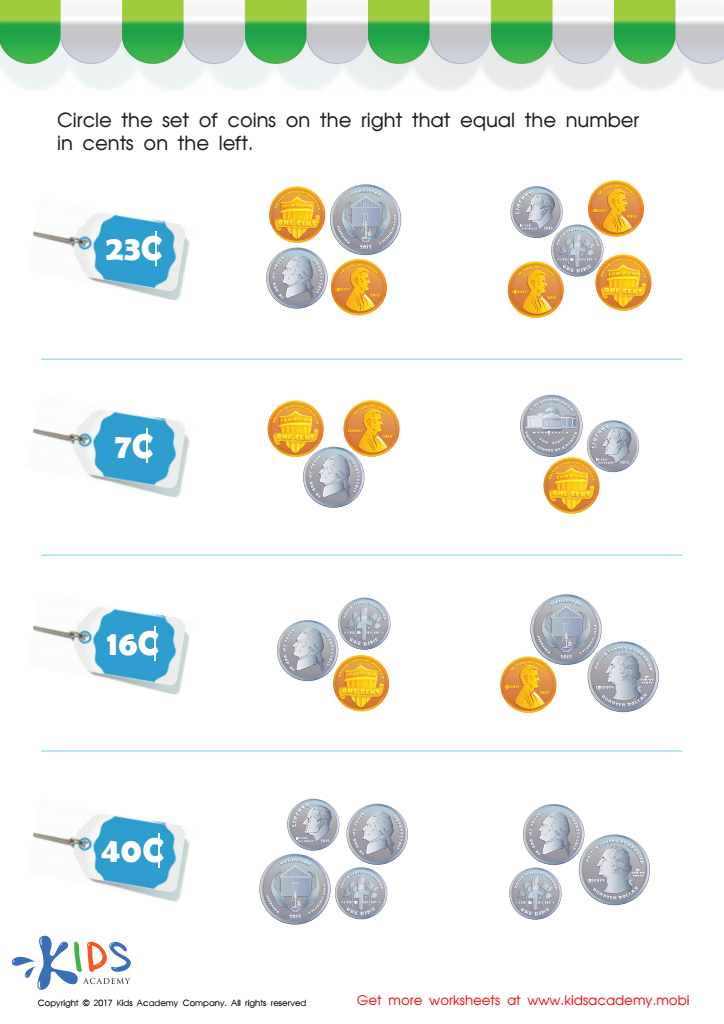
Picking the Coins You Need Money Worksheet
Let's learn to count money with Parents and Kids Academy! Investigate a real shop together: buy a globe, pencils, books, and a school bag using coins. Then, circle the coins you'll need. Visit our website for more free and fun money games for kids!
Picking the Coins You Need Money Worksheet
Worksheet
Join Kids Academy for Free
Who is primarily going to use this learning content?








Money identification is a crucial skill for children aged 4-6, as it lays the foundation for financial literacy and everyday life skills. At this young age, children are naturally curious about the world around them, including the concept of money. By teaching them how to identify different coins and bills, parents and teachers can help children understand the fundamental role money plays in daily transactions, which is vital for their future independence and decision-making.
Additionally, recognizing money shapes, colors, and sizes fosters cognitive development. It enhances fine motor skills as children handle coins, and encourages early math skills such as counting, comparing values, and basic addition. Learning about money also opens doors to important conversations about spending, saving, and sharing, instilling values around financial responsibility.
Moreover, engaging children in money-related activities can be a fun and interactive way to strengthen their learning experience. Whether it’s through games, role-play, or real-life scenarios like shopping, early exposure to money identification ignites interest and curiosity. By prioritizing this foundational skill, parents and teachers empower young children to make confident financial decisions as they grow, setting them up for success in an increasingly complex economic landscape.








