Phonetics understanding Worksheets for Ages 4-6
4 filtered results
-
From - To
Discover our engaging Phonetics Understanding Worksheets designed specifically for children aged 4-6. These worksheets foster early literacy skills by helping young learners recognize and interpret phonetic sounds through fun activities. Each worksheet incorporates colorful illustrations and interactive exercises to keep kids motivated and enhance their understanding of phonics. From identifying letters and sounds to blending phonemes, these worksheets cater to various learning styles, making phonetics both accessible and enjoyable. Perfect for preschoolers and kindergarteners, our resources support classroom learning and at-home practice, ensuring children build a strong foundation for reading and language development. Unlock your child's potential with our phonetics worksheets today!
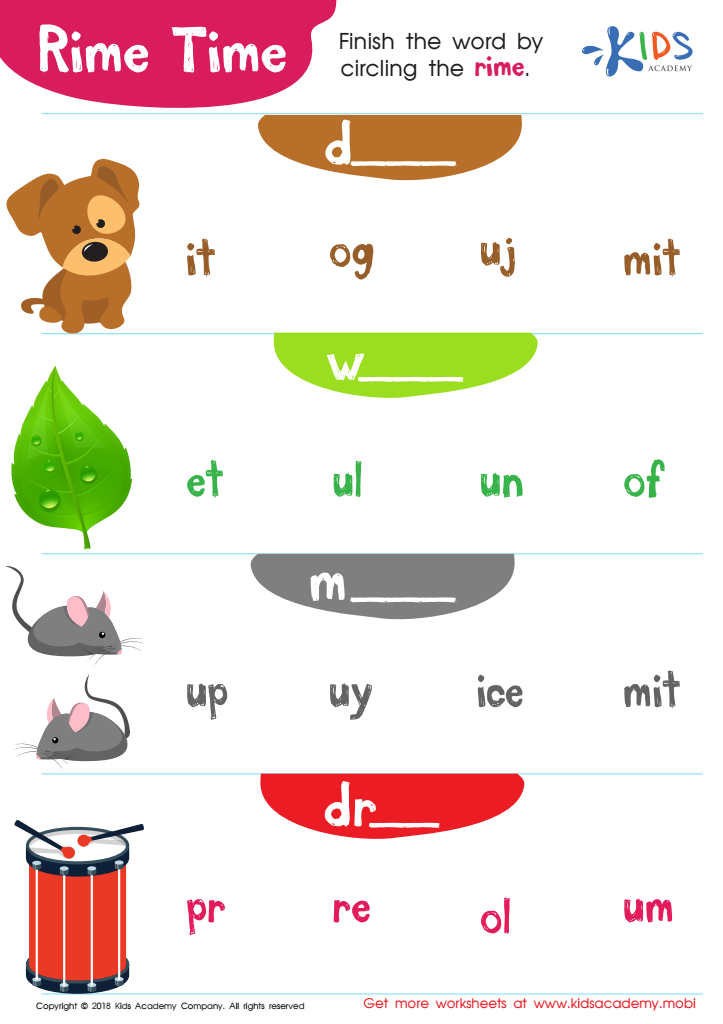
Rime Time Worksheet
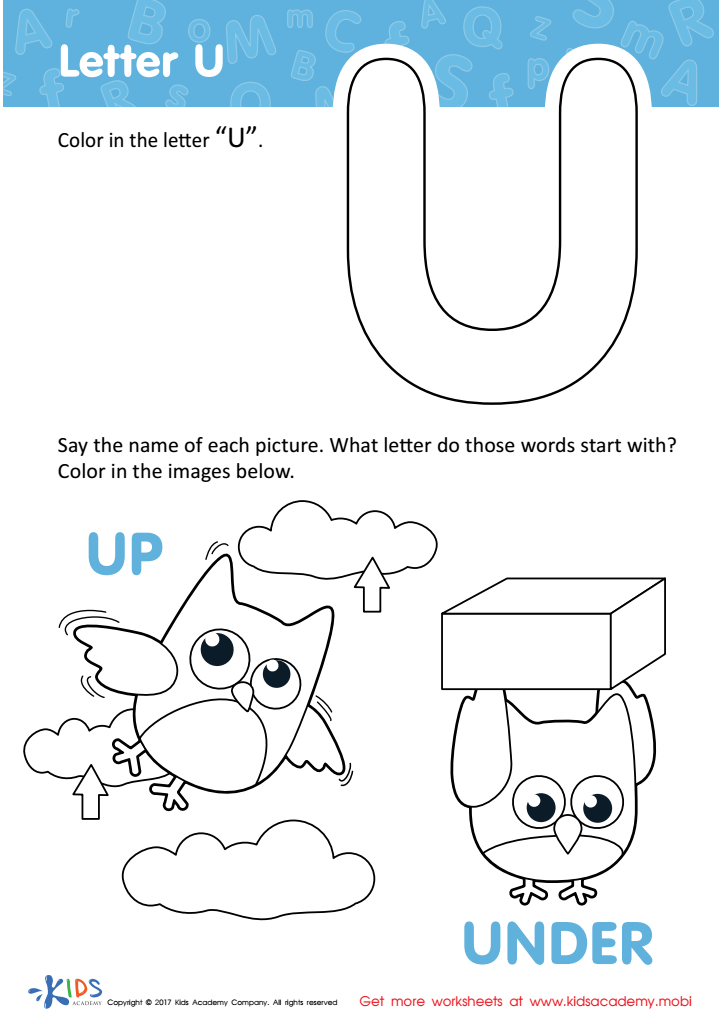
Letter U Coloring Sheet
 Assign to My Students
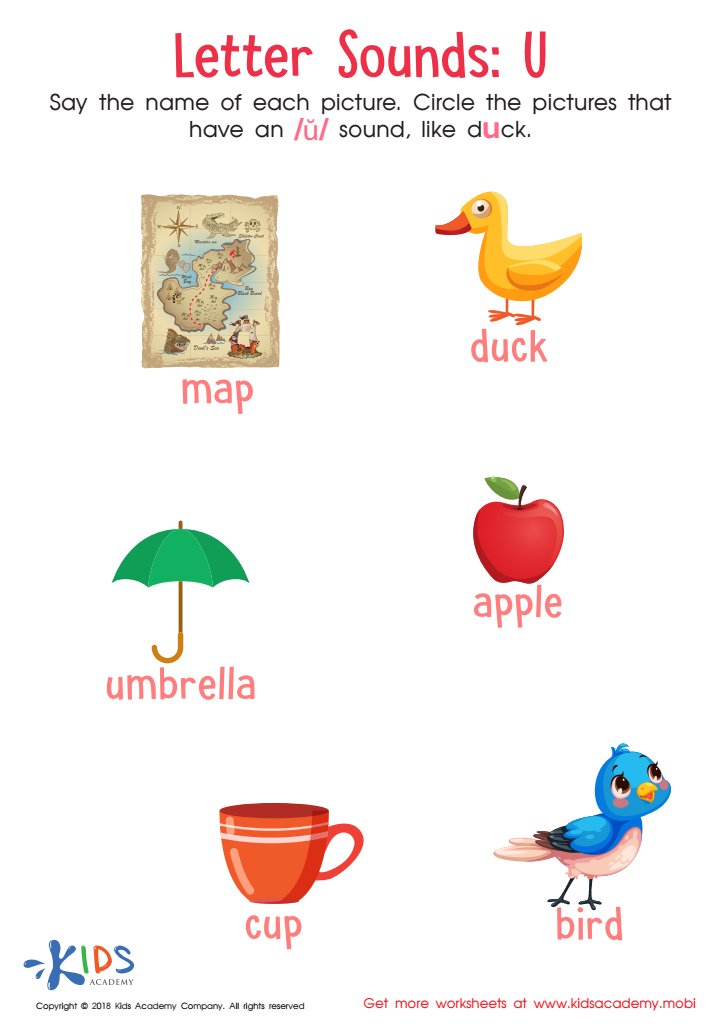
Letter U Sounds Worksheet
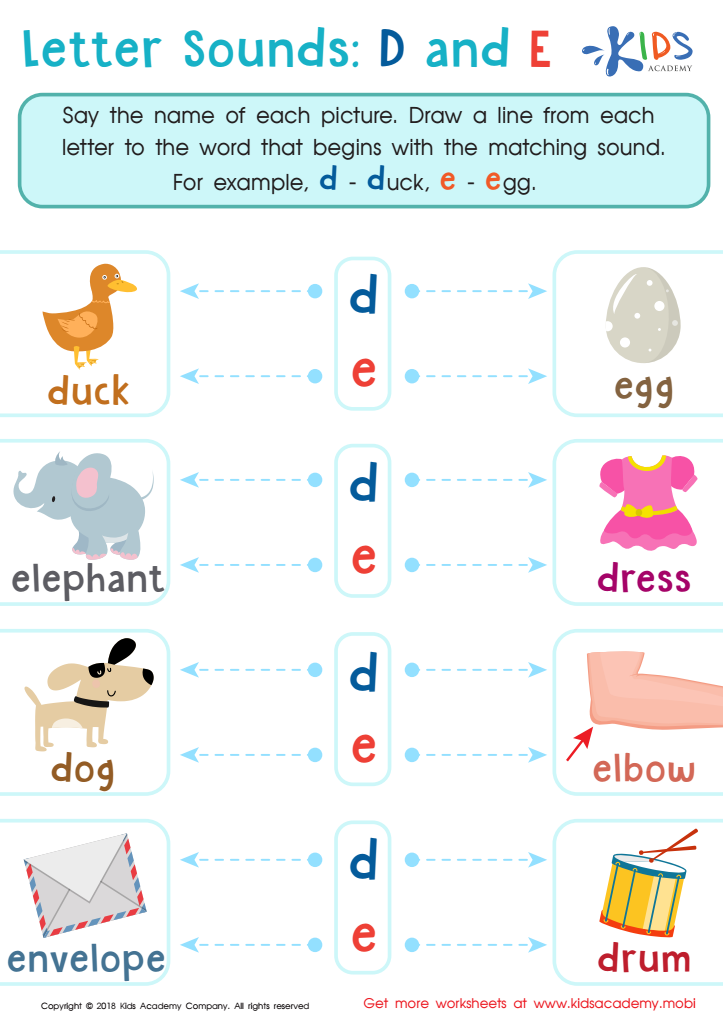
Letter D and E Sounds Worksheet








Understanding phonetics is crucial for children ages 4-6 as it lays the foundation for their reading and writing skills. At this developmental stage, children begin to recognize sounds and letters, a skill essential for literacy. Phonetics helps them understand the relationship between sounds (phonemes) and letters (graphemes), enhancing their decoding abilities when they encounter new words.
Parents and teachers should care about phonetics because it significantly influences a child's confidence and competence in reading. When children grasp how sounds form words, they are more inclined to engage with reading materials and participate in literacy activities. This foundational understanding also supports spelling and vocabulary development, which are vital for overall academic success.
Moreover, early phonetic awareness can identify and help prevent reading difficulties, including dyslexia, if addressed promptly. By incorporating phonetics into daily activities—like rhyming games or sound-based apps—parents and teachers can create a fun and supportive environment for learning. Attention to phonetics fosters not only a love for reading but also encourages critical thinking, listening skills, and oral language development, all of which contribute to their social and cognitive growth. Therefore, embracing phonetics is essential for nurturing well-rounded, literate individuals.








