Welcome to our Phonics Skills Development Worksheets for Ages 4-6! Designed for early learners, these engaging worksheets help children build essential phonics skills through fun activities. Each resource focuses on letter recognition, sound-letter correspondence, and blending sounds to improve reading fluency. Our brightly illustrated worksheets capture children's interest while supporting various learning styles. Ideal for home or classroom use, they encourage independent practice and promote early literacy. Parents and teachers will find a wealth of activities that are both educational and entertaining, ensuring young minds are prepared for future learning. Discover a world of phonics fun and boost your child's reading skills today!

Check out this FREE "Phonics skills development" Trial Lesson for age 4-6!

The Letter Q Sound

Favorites
With answer key
Interactive
  • 4-6
  • Phonics skills development
Words with sound j Reading Worksheet

Words with sound j Reading Worksheet

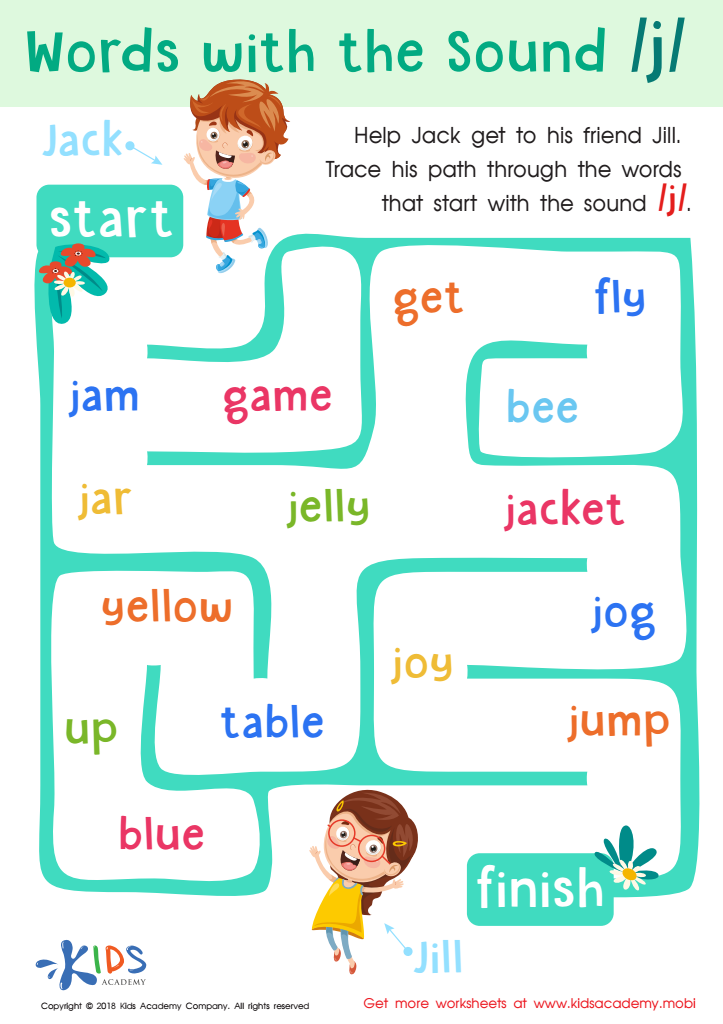
Don't be fooled: The letter J sounds like G in this letter sounds maze! Kids will enjoy helping Jack find Jill by listening to beginning sounds and tracing a path to the exit. Choose words that start with the letter J sound to complete the challenging maze!
Words with sound j Reading Worksheet
Worksheet
Words with Sound Q Reading Worksheet

Words with Sound Q Reading Worksheet

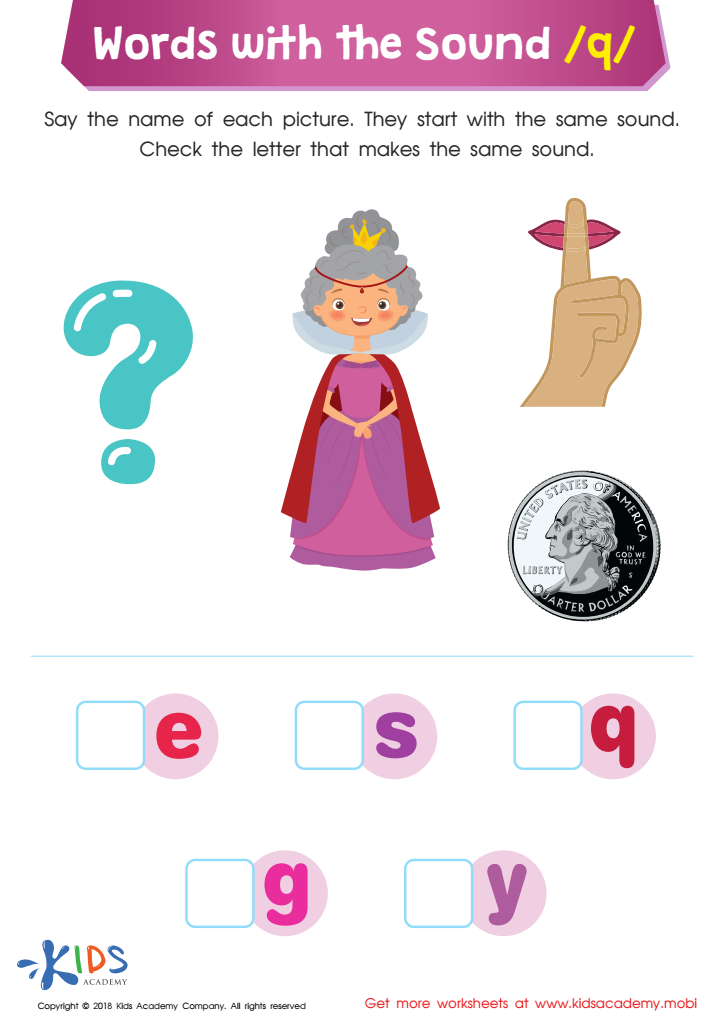
Beginning readers will love this free PDF worksheet! Bright colors and familiar pictures make it fun, as they say the name of each image and work on fine motor skills. Letters “q” is featured among others, helping to recognize and isolate its sound, which is often seen with a “u” behind it.
Words with Sound Q Reading Worksheet
Worksheet
Phonics for Kids | Short Vowel Sound U | PDF Worksheet 2

Short Vowel Sound U Worksheet

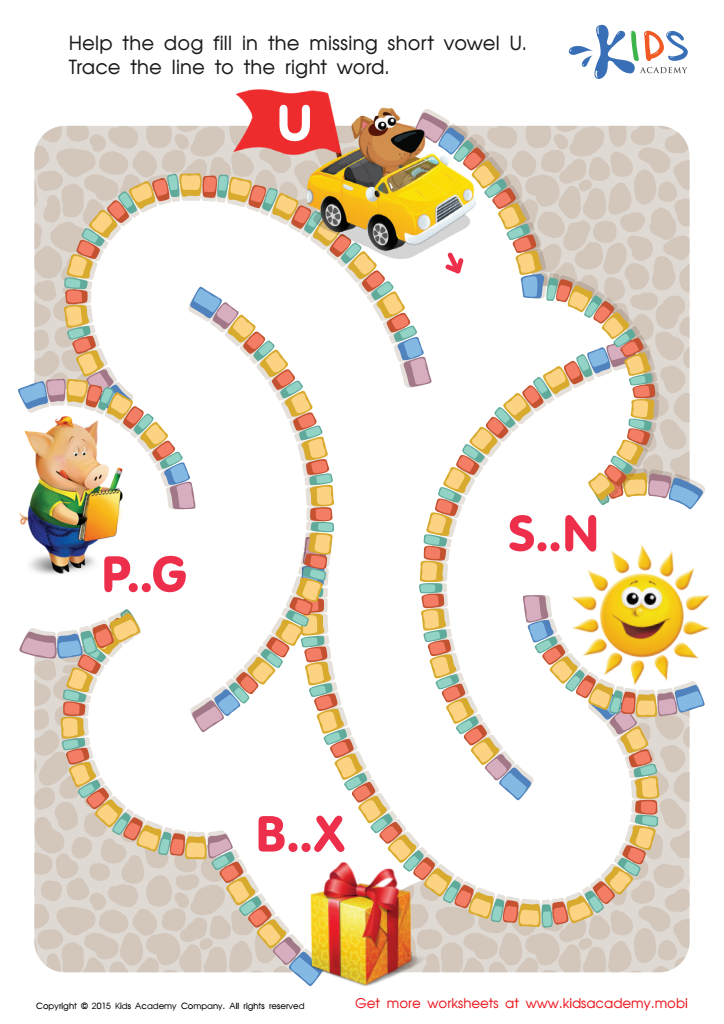
Practice abc phonics to help young learners link sounds to letters. This free printable phonics worksheet helps your kid learn the short vowel sound U. Guide them through the maze to help the dog complete the word "sun". Make sure they say the word out loud to emphasize the short U sound. Check out more phonics worksheets with mazes here.
Short Vowel Sound U Worksheet
Worksheet
Spelling worksheet: Short Vowel Sounds O

Short vowel Sounds "o" Spelling Worksheet
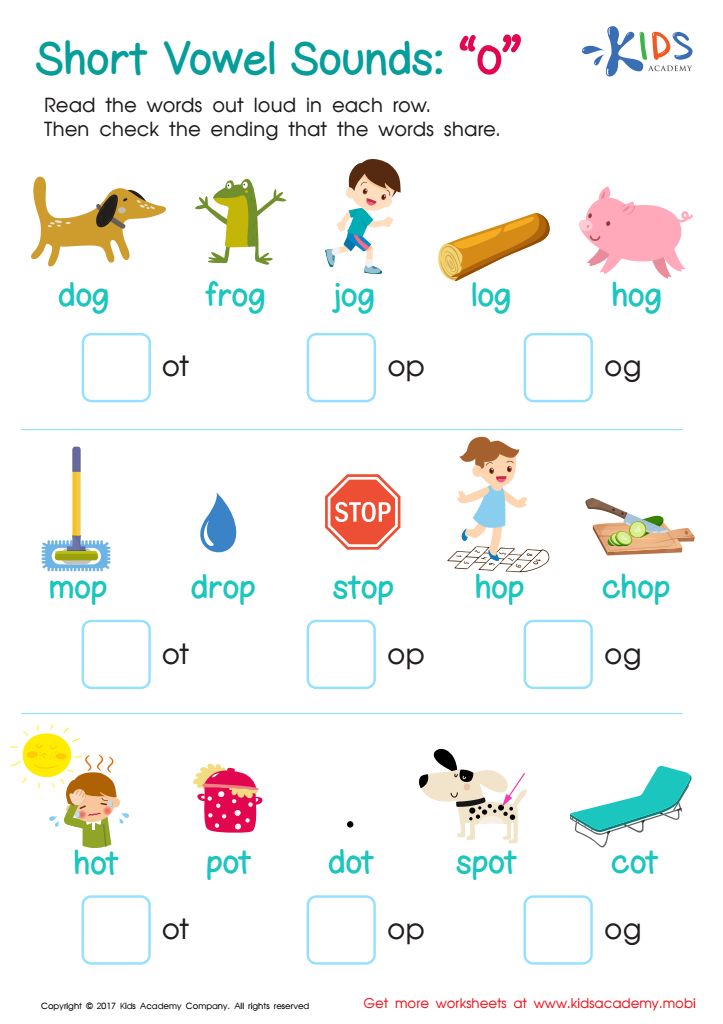
This worksheet will get your child thinking! Have them look at the pictures, read the words and check the ending of each. They'll learn to analyze words and vowel sounds using the Short Vowel Sounds "O" spelling worksheet.
Short vowel Sounds "o" Spelling Worksheet
Worksheet
Long and Short I Worksheet

Long and Short I Worksheet

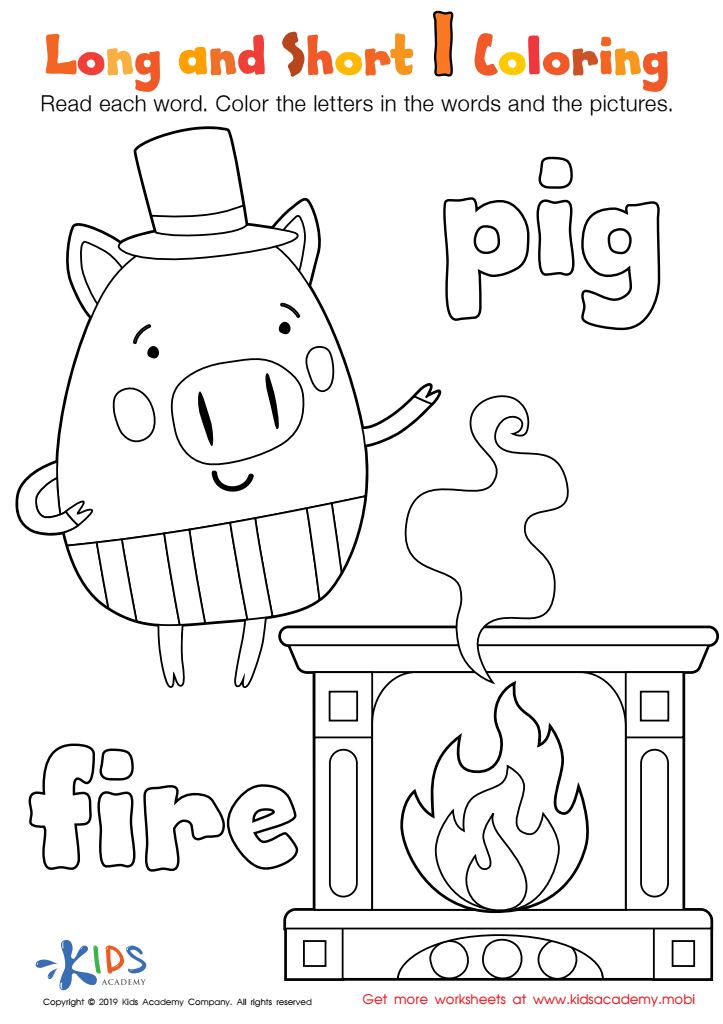
Print the worksheet and have the students read "pig" and "fire". Check for understanding the difference between long and short vowels. Color in words and pictures to make learning phonics fun! This exercise is perfect for introducing the topic to your students.
Download (PDF)
Assign to My Students
Long and Short I Worksheet
Worksheet
Sounds to Communicate Worksheet

Sounds to Communicate Worksheet

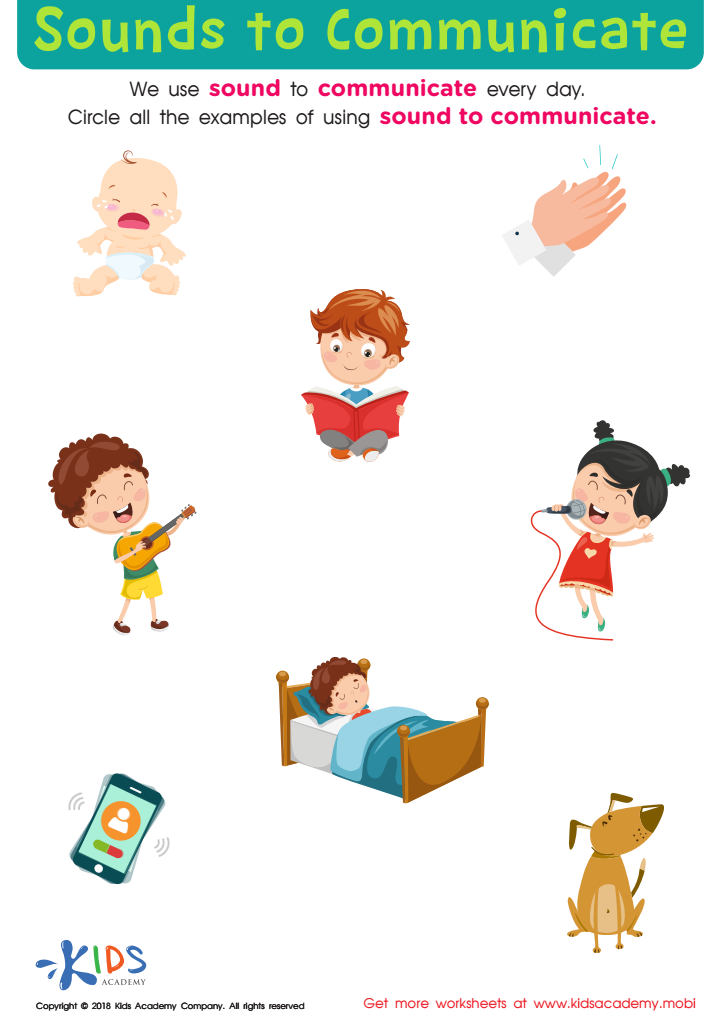
Sounds are important for communication. Ask your students to name sounds people, animals and things make. Then, review this worksheet with them and see if they can identify the activities. Ask them to circle examples of sounds used to communicate.
Sounds to Communicate Worksheet
Worksheet
Long and Short O Worksheet

Long and Short O Worksheet

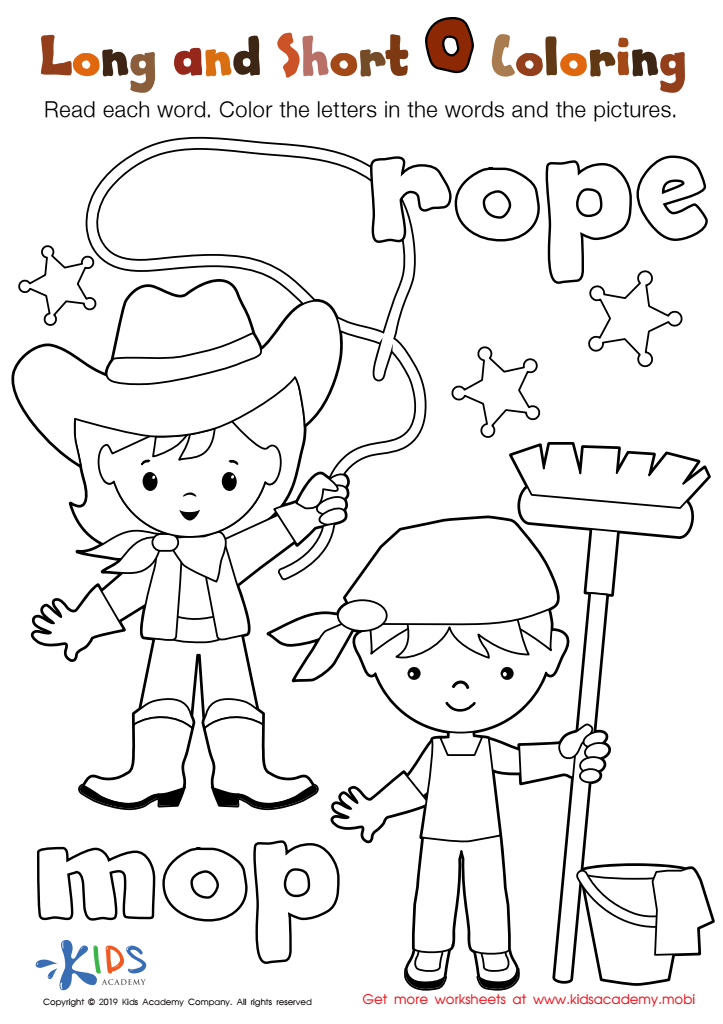
Help your students recognize the difference between long and short «Os» with this fun printout. Let them read and color-in "rope" and "mop" simultaneously. Listen to the different sounds, then color the words and pictures. Great for classes, it'll make your phonics lesson memorable and enjoyable.
Download (PDF)
Assign to My Students
Long and Short O Worksheet
Worksheet


Phonics skills development for ages 4-6 is crucial for several reasons. First, it forms the foundation of reading and writing, enabling young children to connect sounds with corresponding letters and words. Mastering phonics allows children to decode new words, which enhances their vocabulary and comprehension abilities, essential for academic success.

Secondly, strong phonics skills boost children's confidence and enjoyment of reading. When they perceive reading as an accessible and enjoyable activity, they are more likely to develop a lifelong passion for books and learning. Furthermore, children who struggle with phonics may face challenges in later grades, potentially leading to difficulties in literacy and overall educational achievement.

Parents and teachers play a pivotal role in fostering these skills through engaging activities, games, and storytelling that incorporate phonemic awareness. By prioritizing phonics development in early education, adults can help children become proficient readers and writers and set them on a path towards greater learning opportunities.

Ultimately, advocating for phonics skills is a crucial investment in children's futures, equipping them with the necessary tools to navigate academic challenges and blossom into skilled communicators.