Uppercase identification Worksheets for Ages 4-6
5 filtered results
-
From - To
Enhance your child’s early literacy skills with our engaging Uppercase Identification Worksheets for ages 4-6! These educational worksheets are designed to help young learners recognize and identify uppercase letters through fun activities, such as coloring, tracing, and matching. Perfect for preschoolers and kindergarteners, our printable worksheets make learning letters enjoyable and interactive. By incorporating vibrant images and age-appropriate exercises, we ensure kids remain interested while building a strong foundation in letter recognition. Ideal for both home and classroom settings, our worksheets are a valuable resource for parents and educators aiming to boost early reading and writing skills.
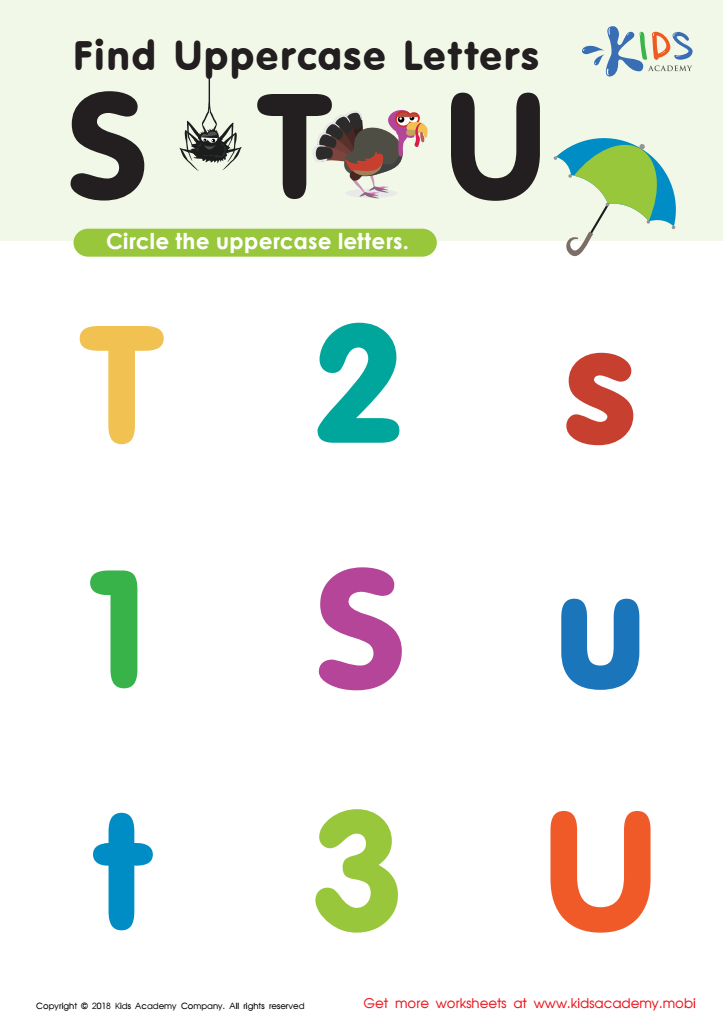
Find Uppercase Letters Worksheet
 Assign to My Students
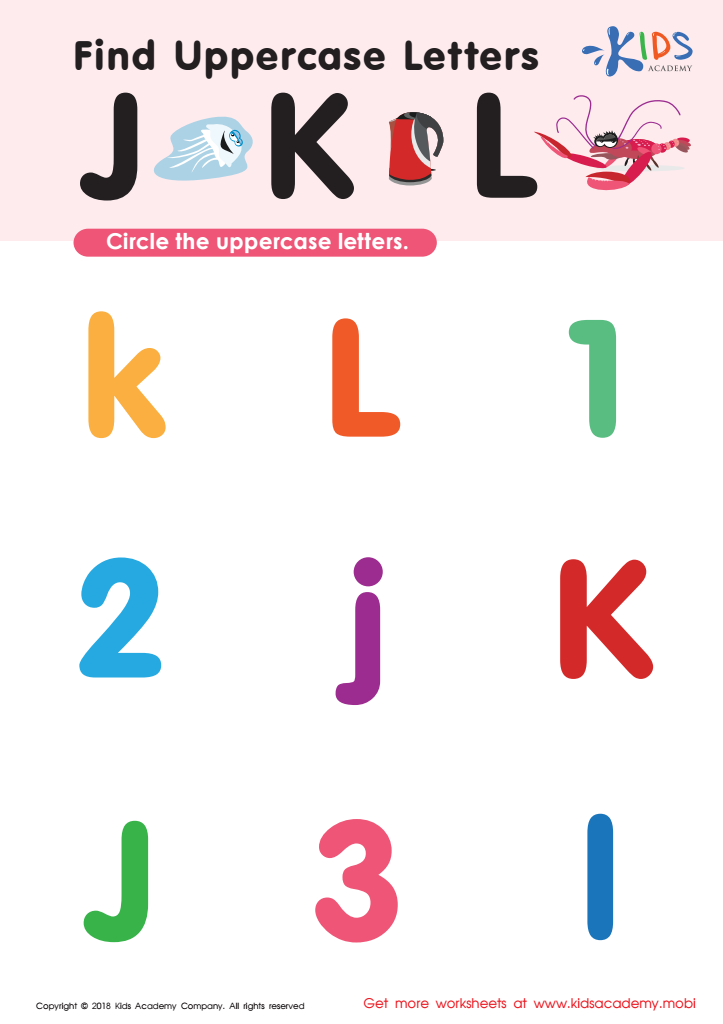
Find Uppercase Letters J, K, and L Worksheet
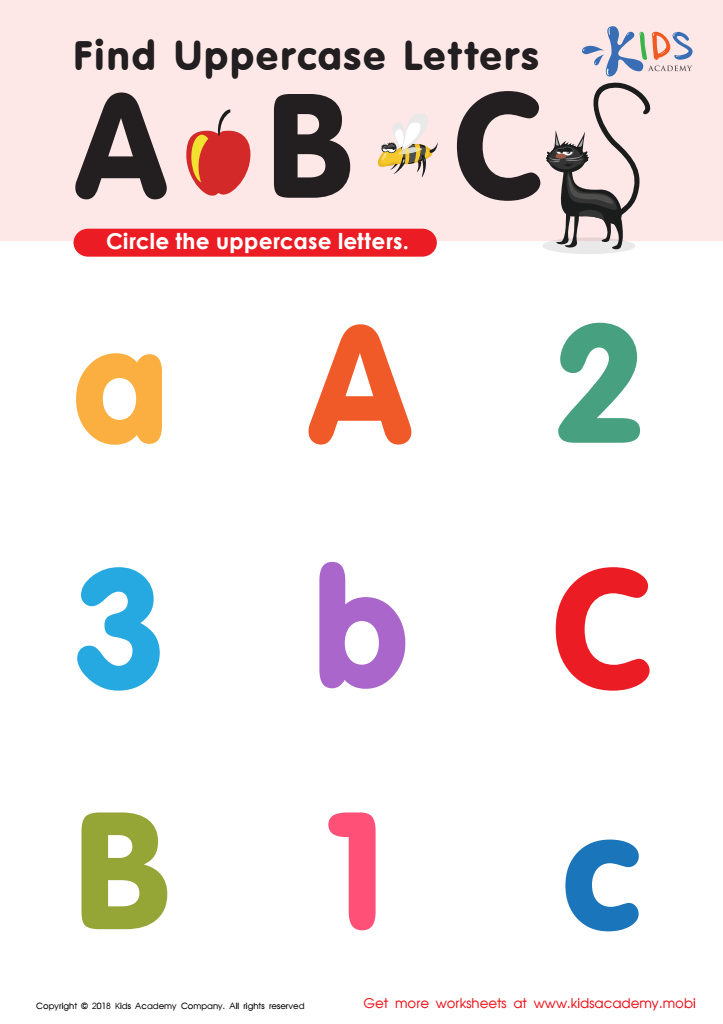
Find Uppercase Letters A, B, and C Worksheet

Find Uppercase Letters V, W, X Worksheet
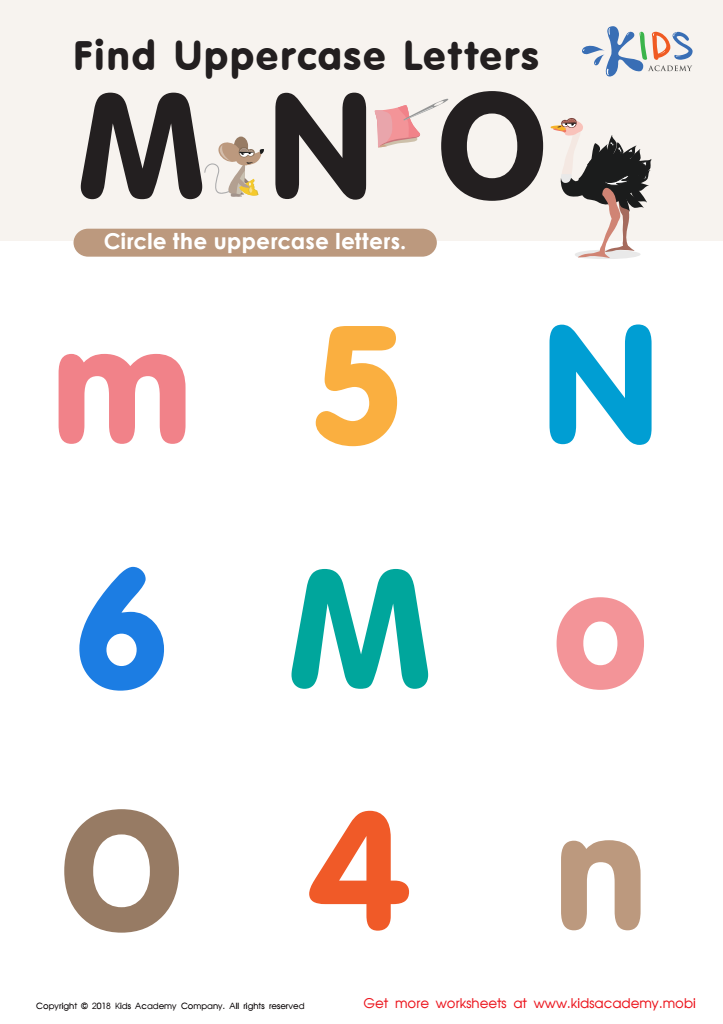
Find Uppercase Letters M, N, and O Worksheet






.jpg)
Parents and teachers should prioritize uppercase identification for children aged 4 to 6 because this foundational skill is integral to early literacy development. At this impressionable age, children are rapidly absorbing new information and forming the basis for future learning. Recognizing and naming uppercase letters is a key predictor of reading success. When children identify these letters, they are better equipped to recognize words and understand that text carries meaning.
Uppercase letters are often easier for young learners to distinguish because they are more visually distinct from one another, offering a straightforward starting point for letter recognition. Mastery of uppercase letters facilitates smoother transition to lowercase and builds confidence, setting a positive tone for literacy learning.
Additionally, early uppercase identification aids in fine motor skills as children practice writing these bold, distinct shapes. By ensuring that young learners can identify and understand uppercase letters, parents and teachers lay the groundwork for the crucial 'pre-reading' skills. These children are more likely to develop an early passion for reading, setting them on a path of academic success. Early intervention and emphasis on this critical skill are fundamental, making it an essential focus area for educators and parents alike.








