Animal recognition Adding in the Forest Worksheets for Ages 4-6
15 filtered results
-
From - To
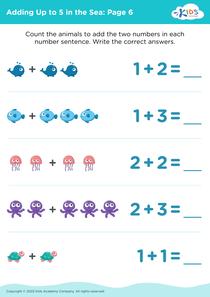
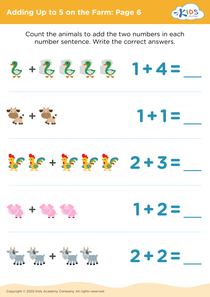
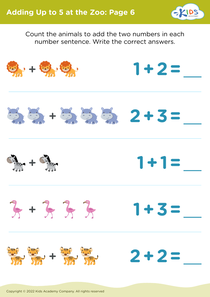
Discover our "Animal Recognition Adding in the Forest Worksheets," designed for young learners aged 4-6. These engaging worksheets seamlessly blend fun animal themes with essential math skills. Children will identify various animals while practicing simple addition, enhancing both their recognition abilities and foundational math knowledge. Each worksheet encourages interaction and critical thinking, making learning exciting and enjoyable. Perfect for classroom or home use, these activities promote cognitive development through playful visuals and hands-on exercises. Help your child build confidence in math while fostering a love for nature and wildlife with our educational resources. Explore the wonders of the forest today!
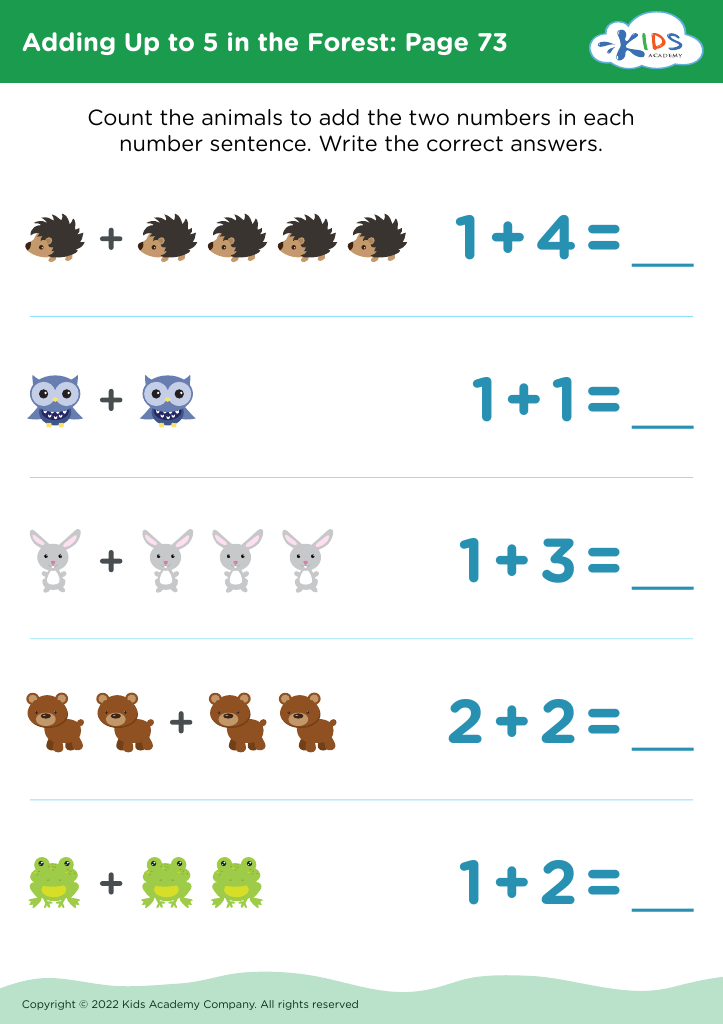
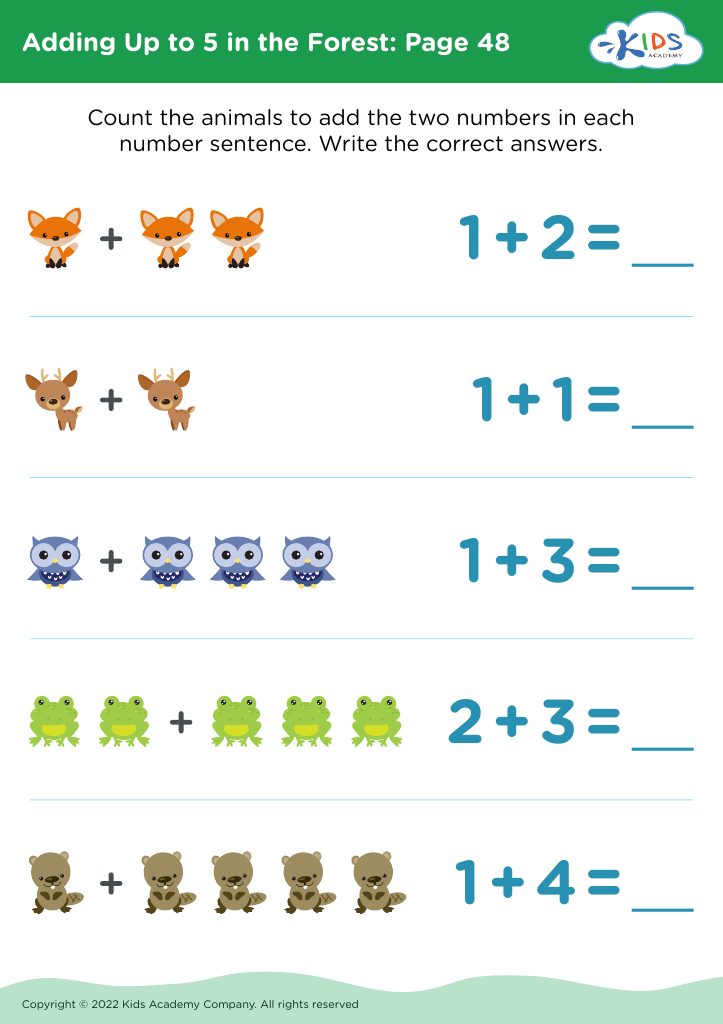
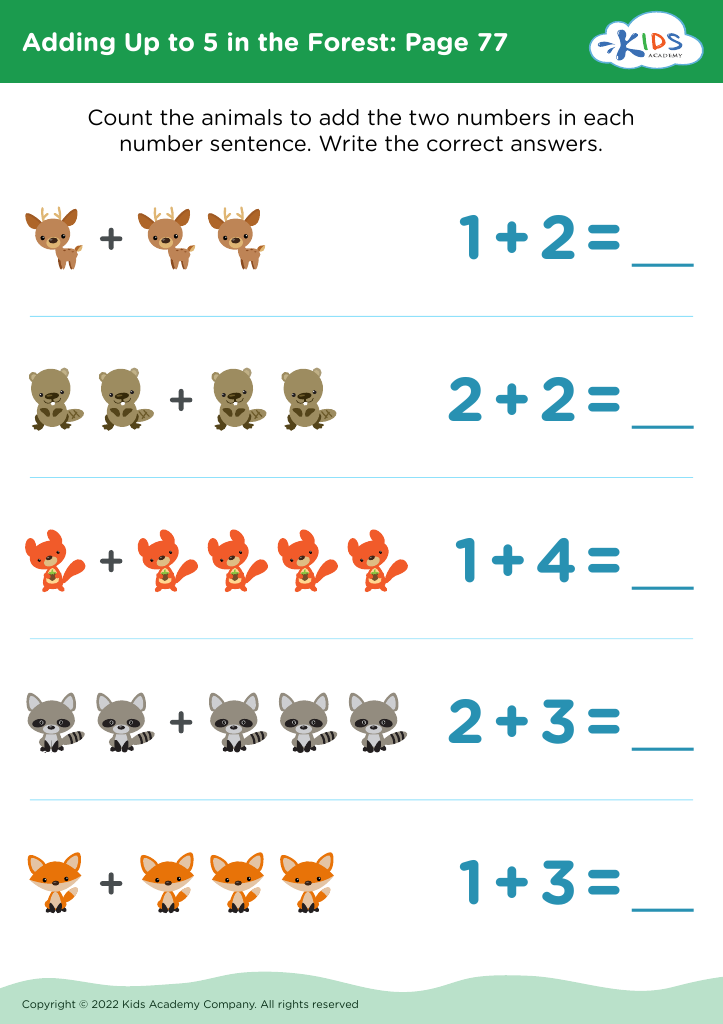
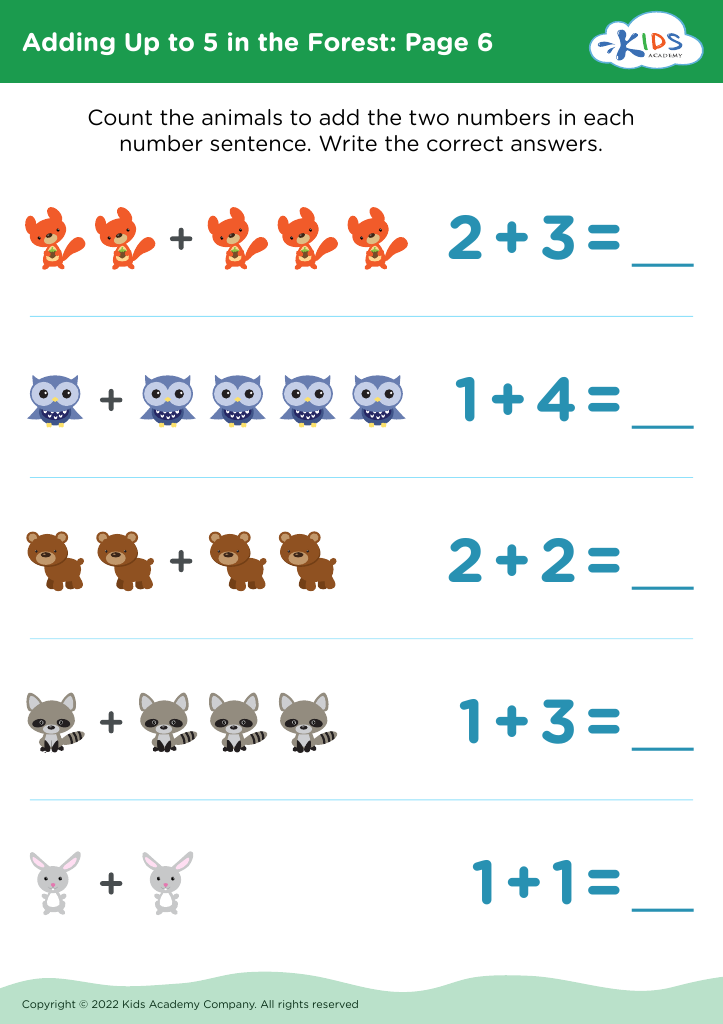
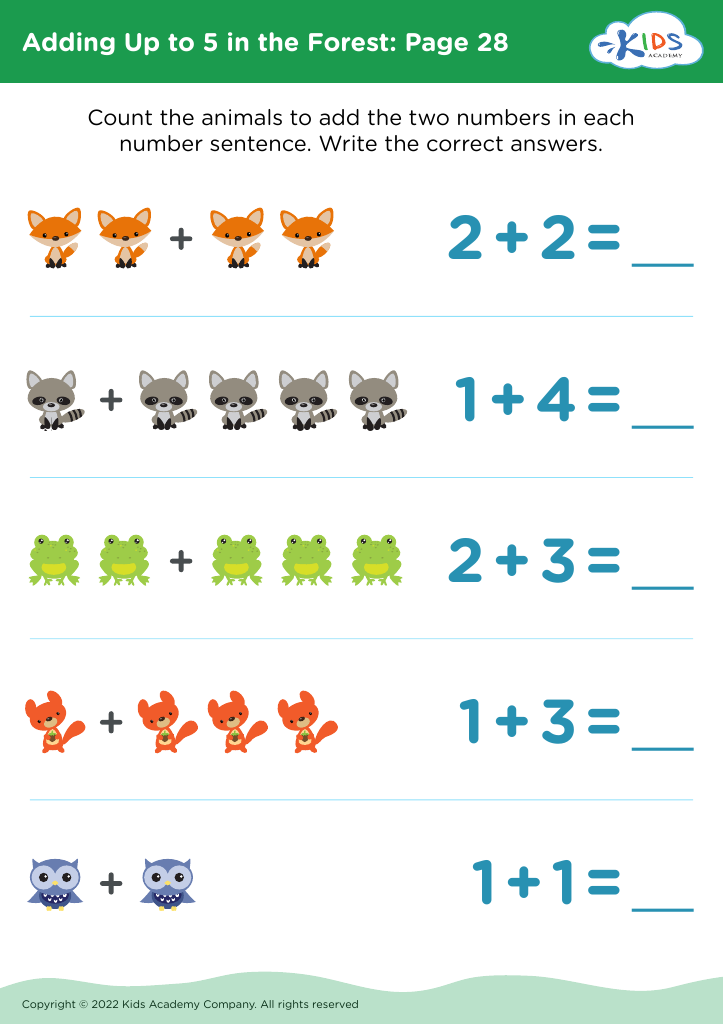
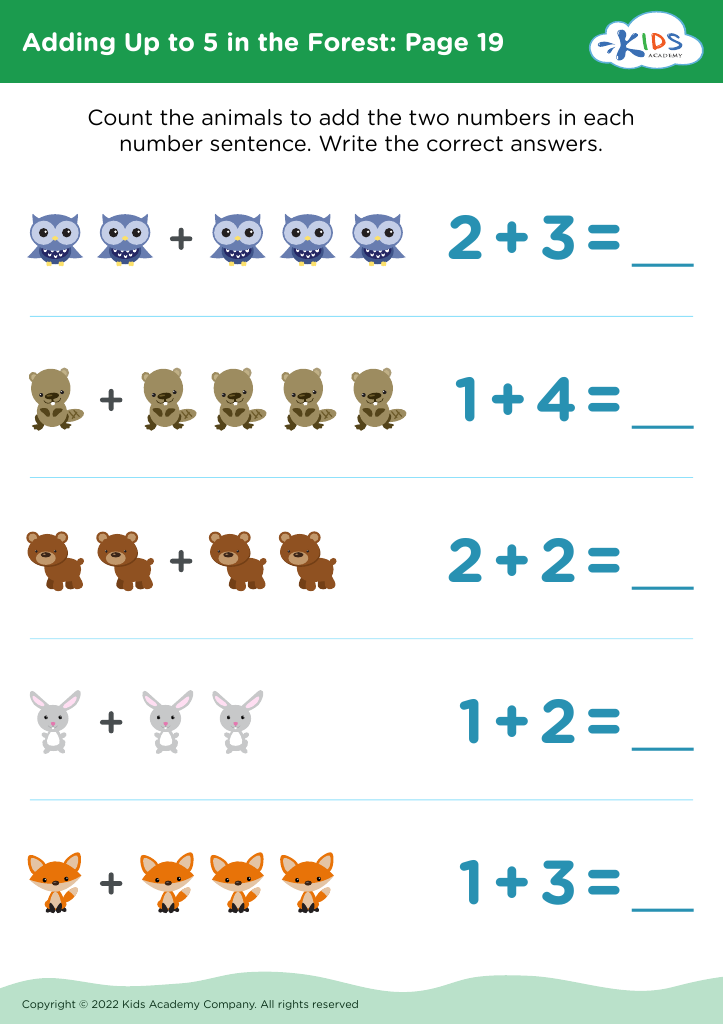
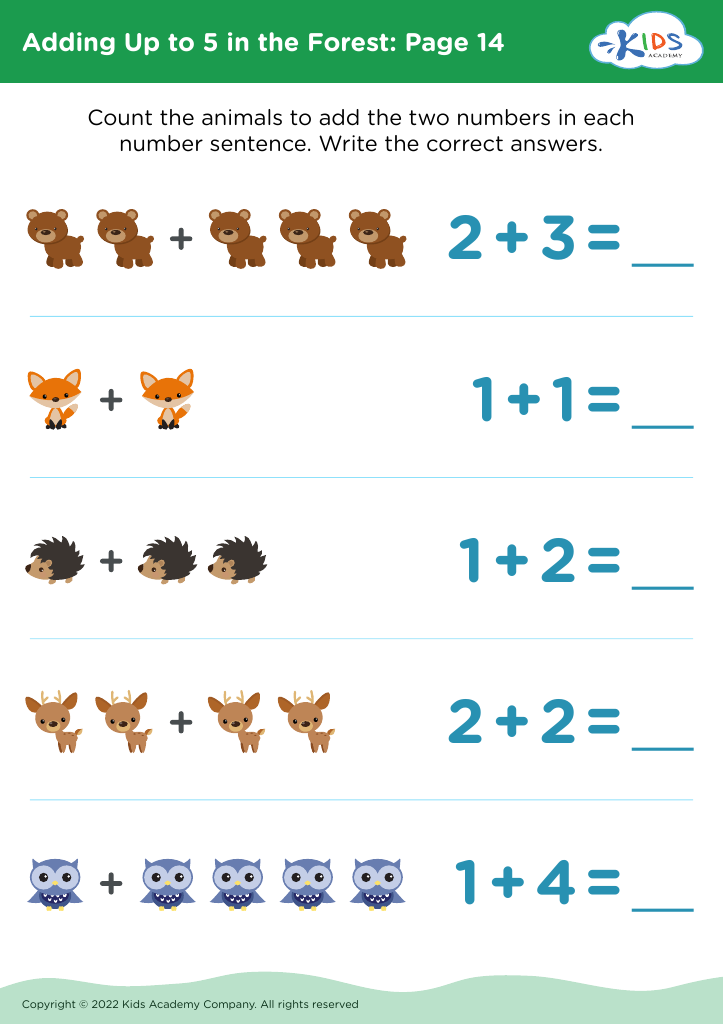
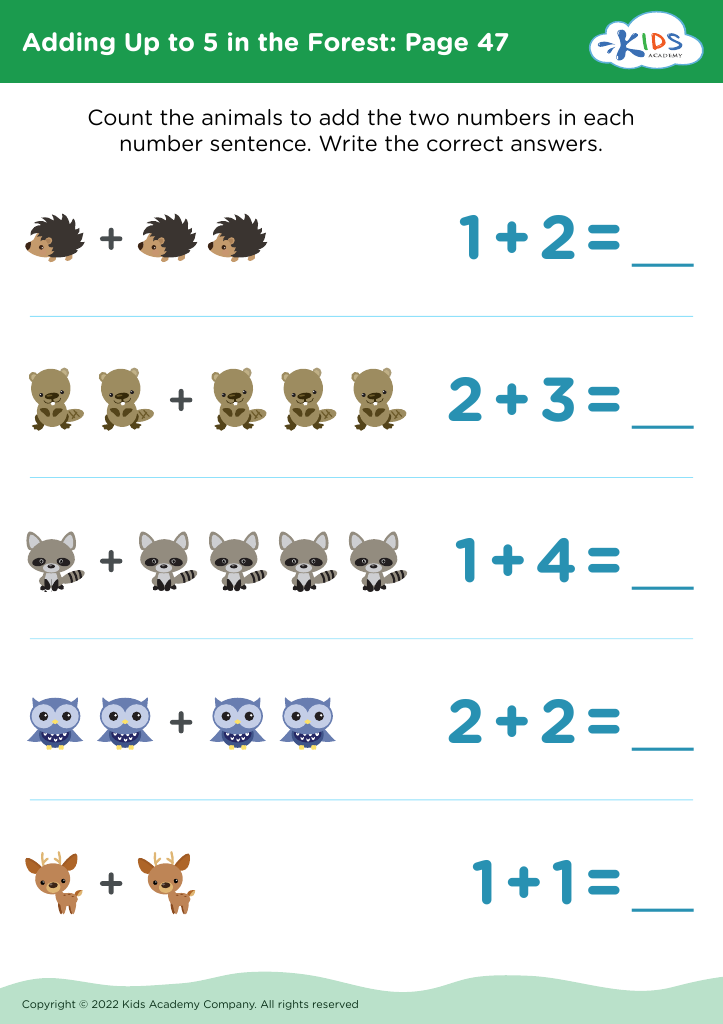
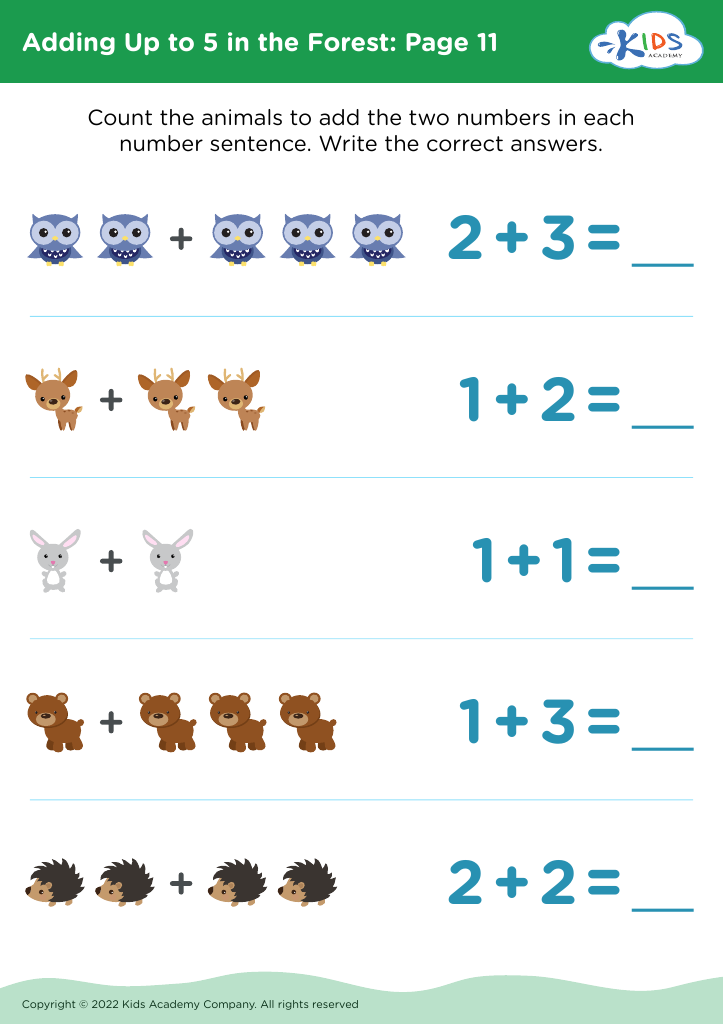
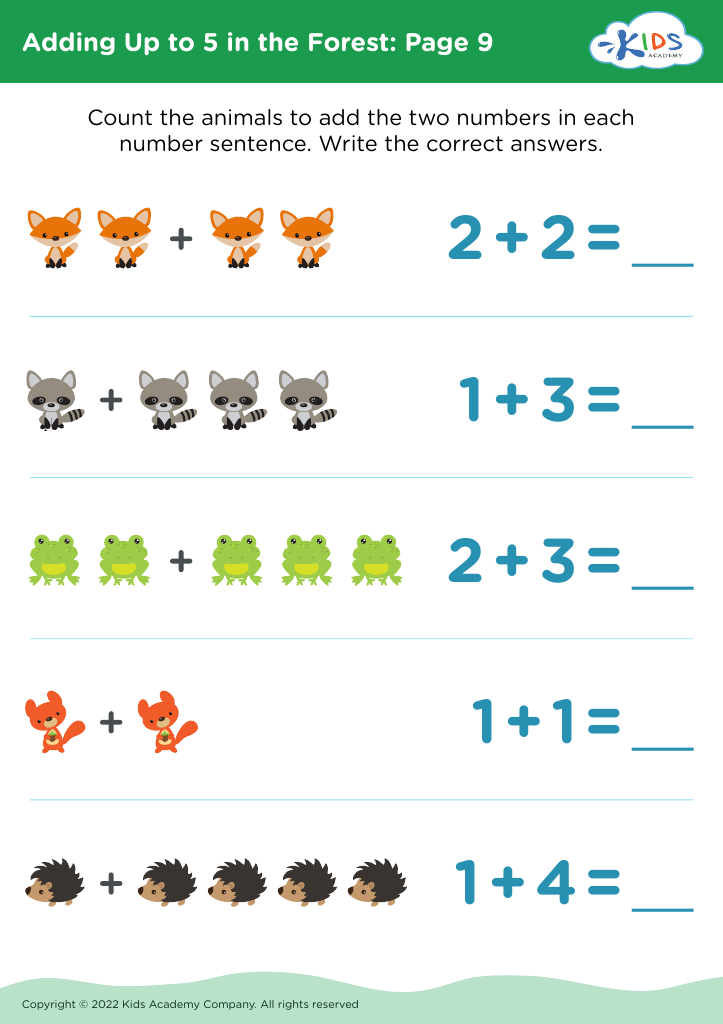
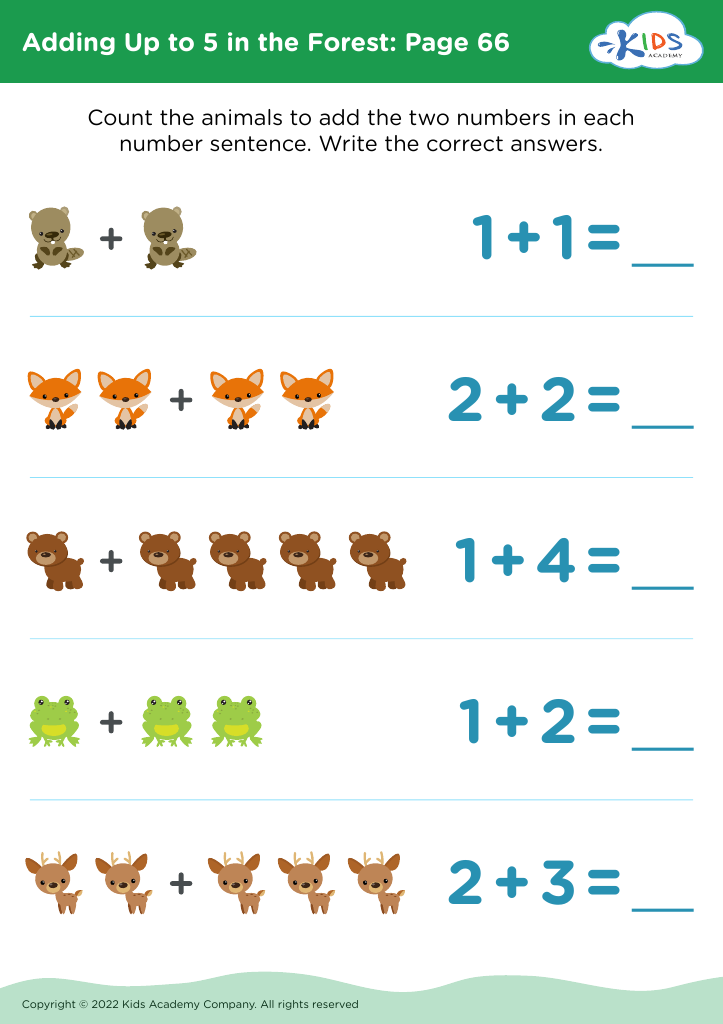
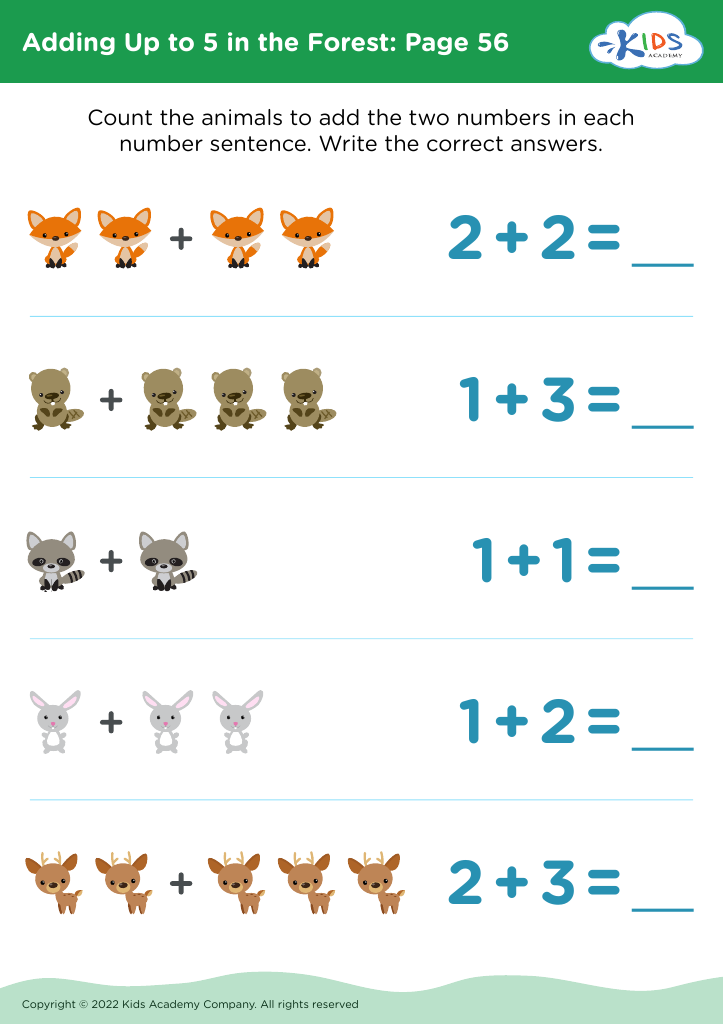
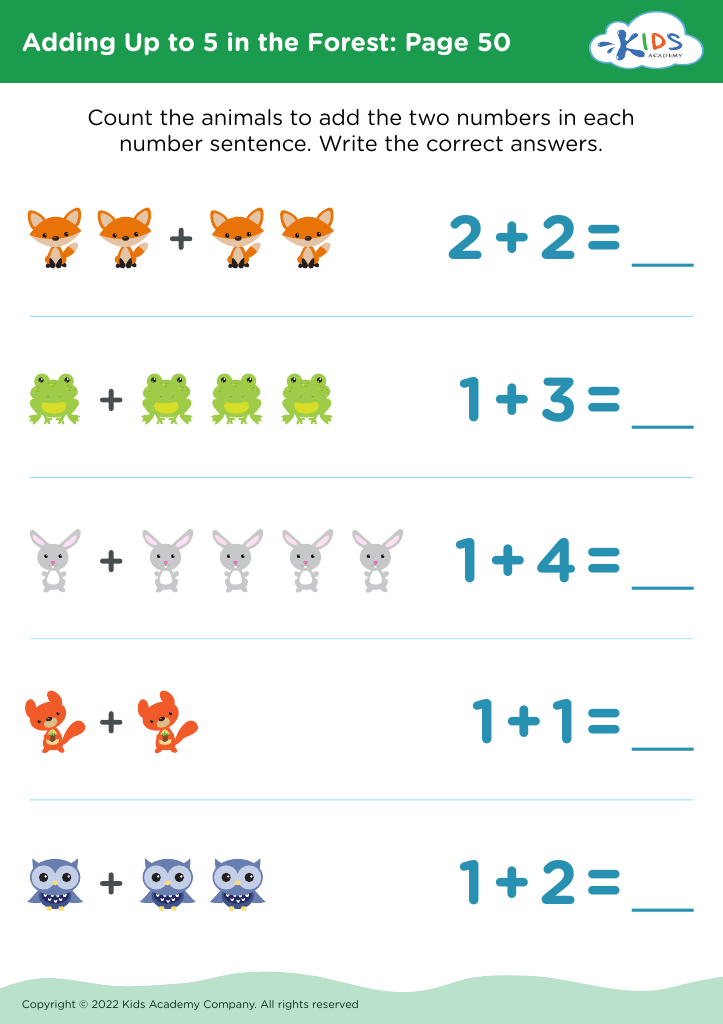
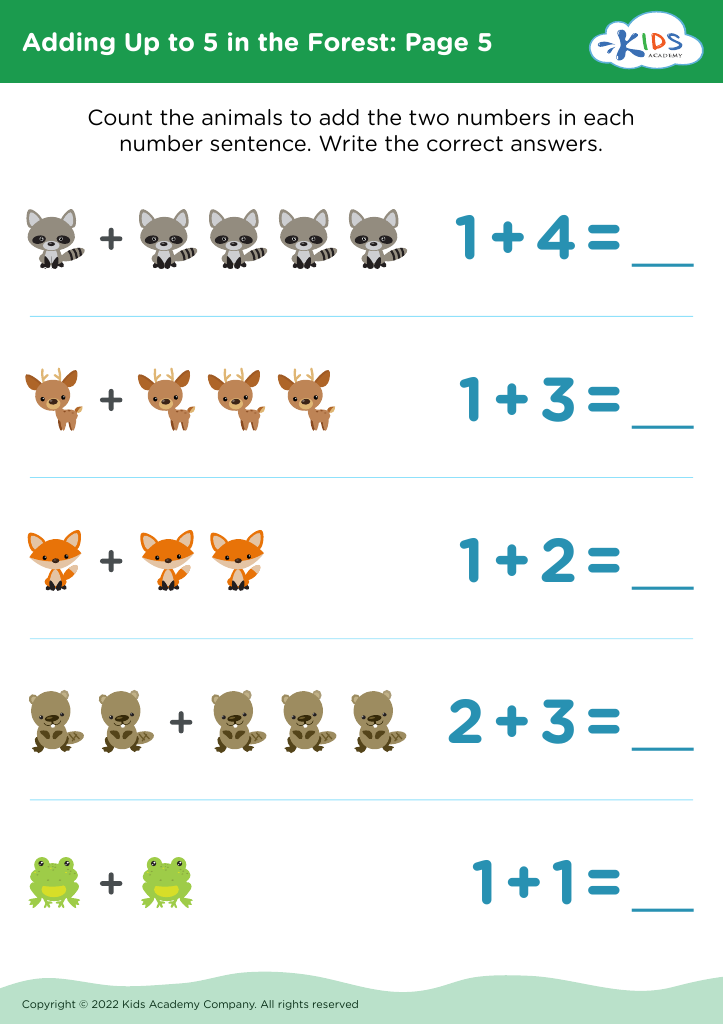
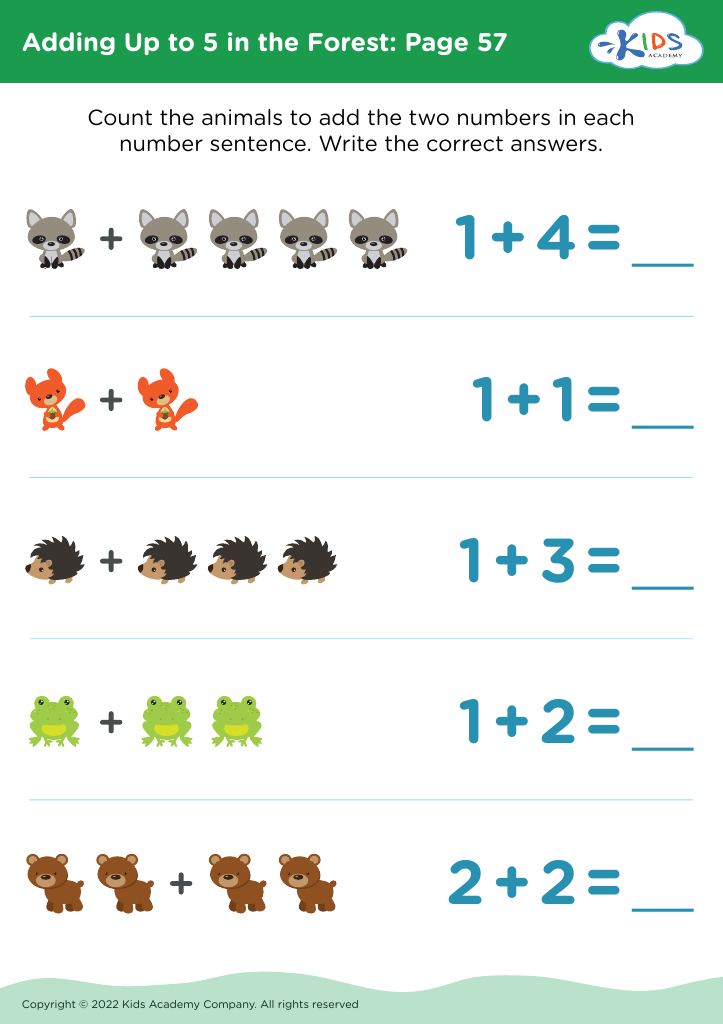



Animal recognition is an essential aspect of early childhood education, particularly in settings like "Adding in the Forest," where children engage with nature. For ages 4-6, fostering a connection to animals can significantly enhance learning and development.
Firstly, recognizing animals helps children get acquainted with biodiversity and environmental awareness. Understanding various species encourages empathy toward living creatures and promotes a stewardship mindset toward nature. This foundational respect can lead to more environmentally conscientious adults in the future.
Moreover, animals can serve as engaging teaching tools. Integrating animal recognition into lessons encourages curiosity and exploration. When children learn to identify animals, it stimulates their cognitive skills, enhances vocabulary, and builds memory. For example, pairing animal names with their sounds or habitats can facilitate multimodal learning, making education more interactive and exciting.
Additionally, recognizing animals enhances social skills as children often share their observations and experiences. This practice aids in cooperative learning and improves communication abilities. Ultimately, by encouraging animal recognition in educational activities like "Adding in the Forest," parents and teachers cultivate an enriching learning environment that nurtures awareness, curiosity, and a love for nature, all while supporting essential developmental milestones in young children.