Basic Addition Skills Adding in the Forest Worksheets for Ages 4-6 - Page 3
55 filtered results
-
From - To
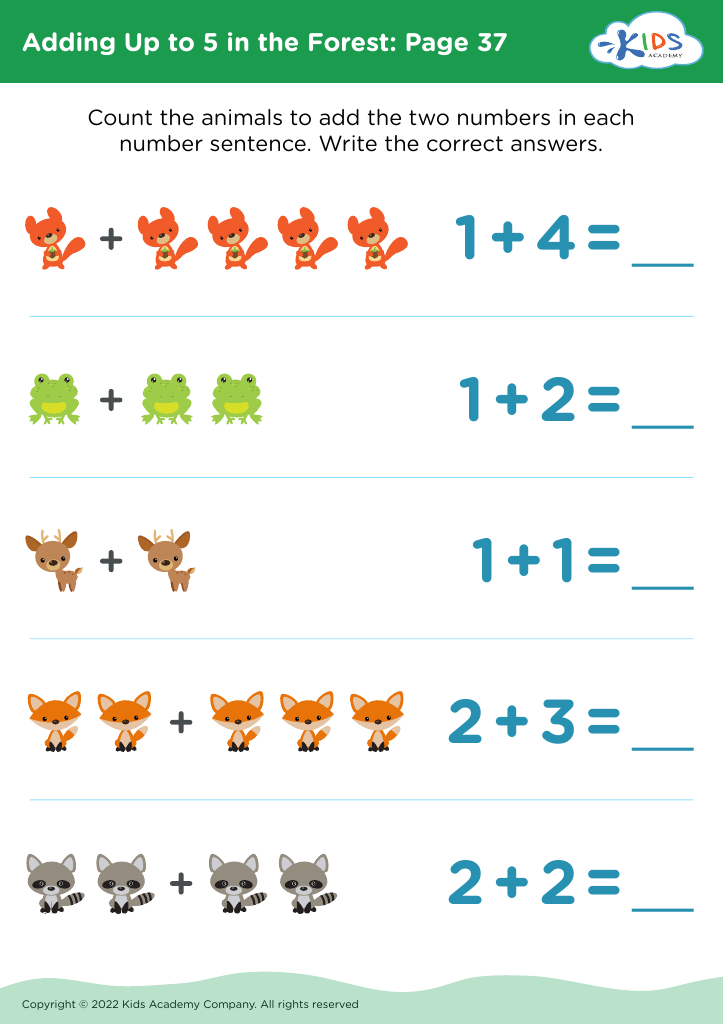
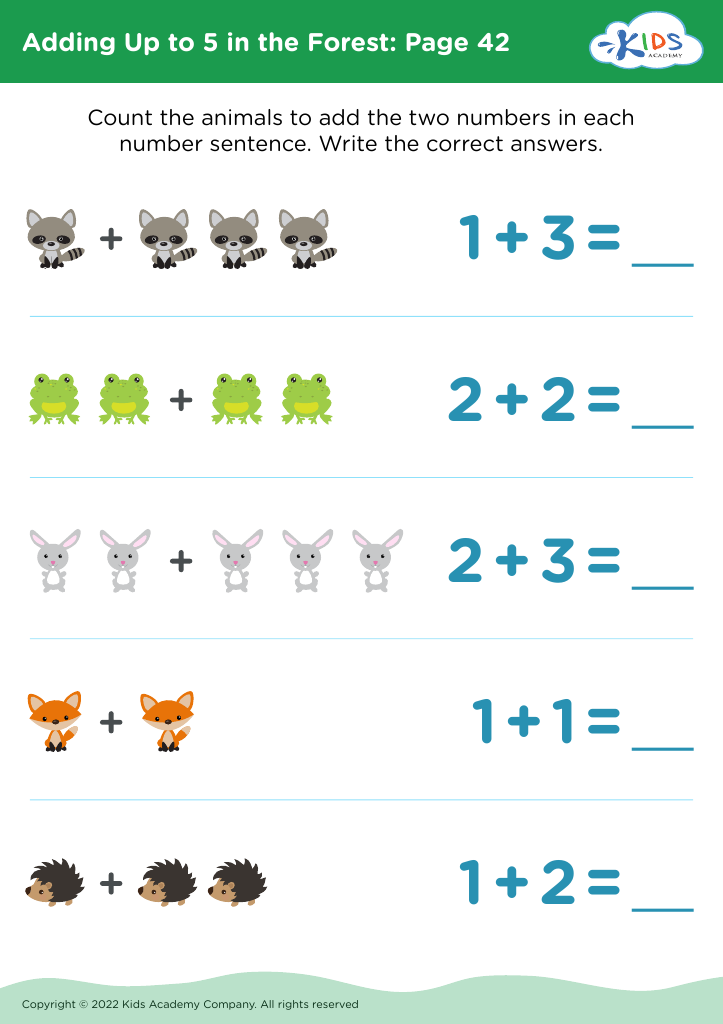
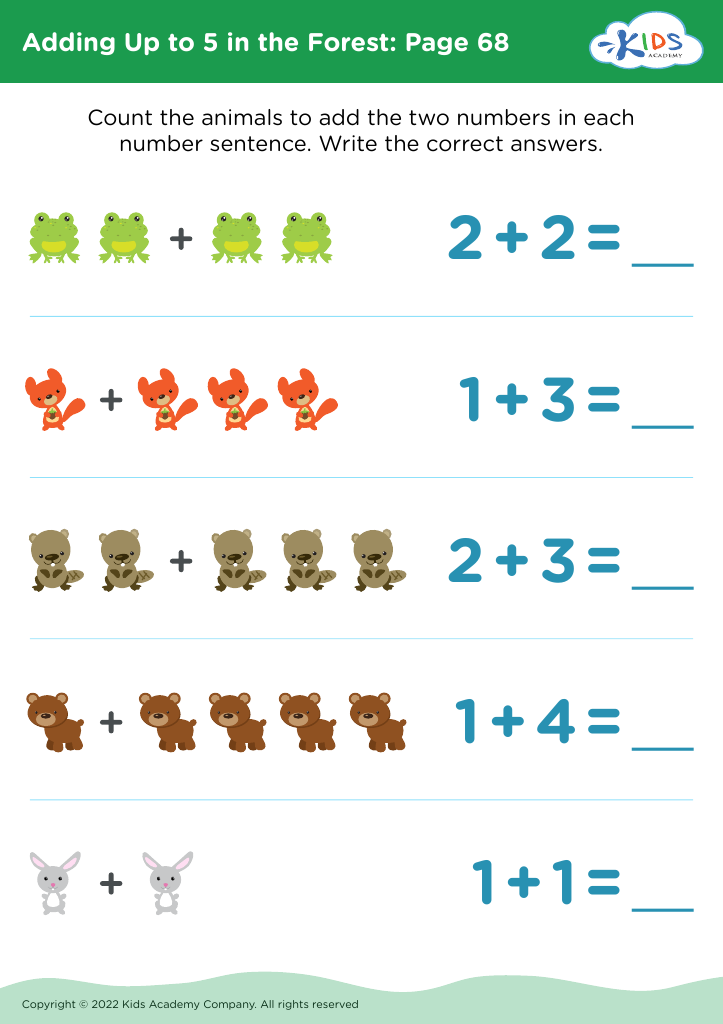
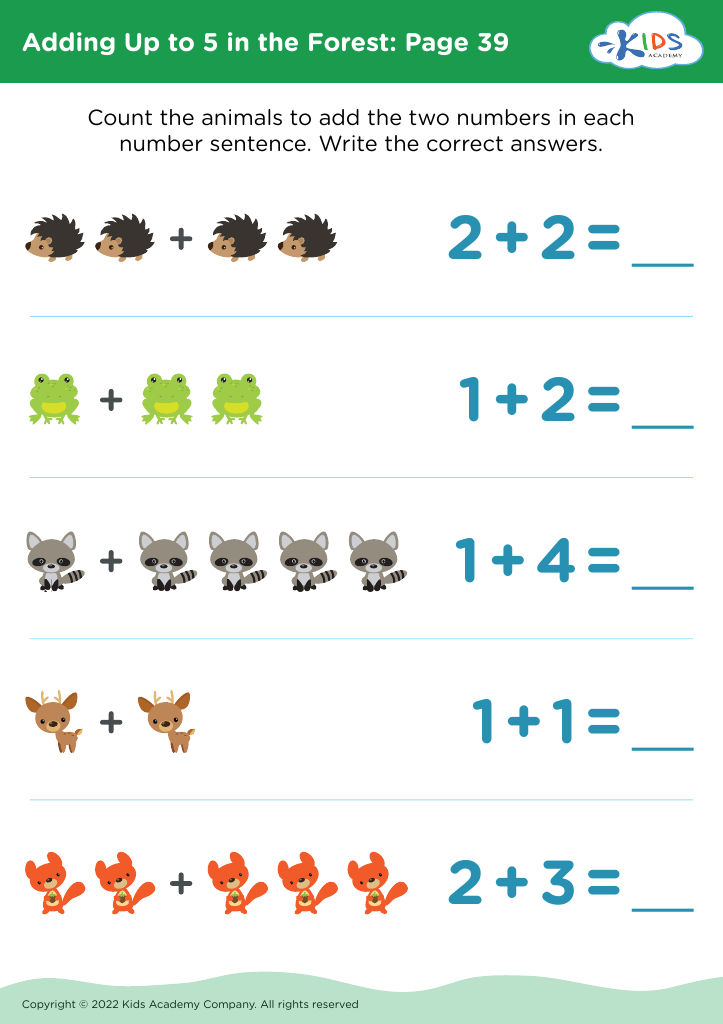
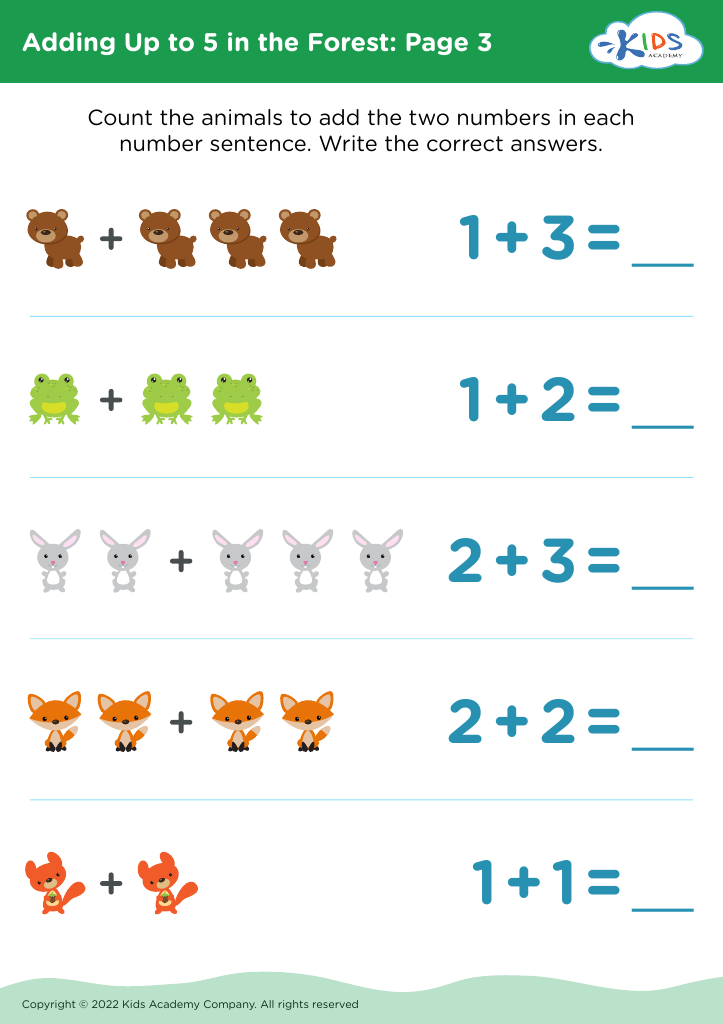
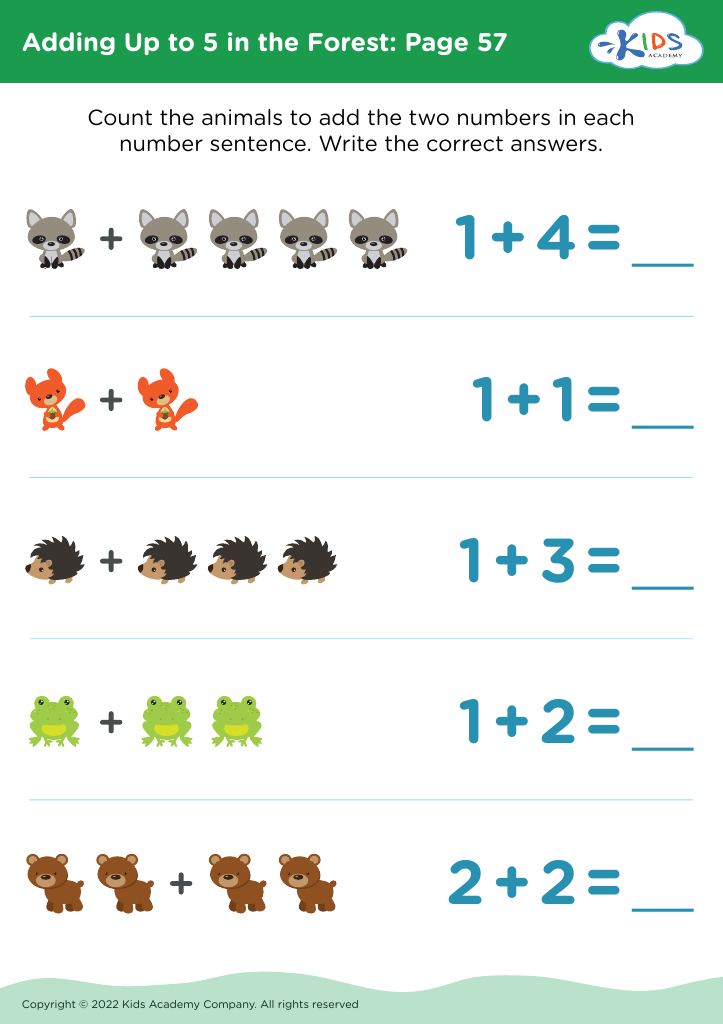
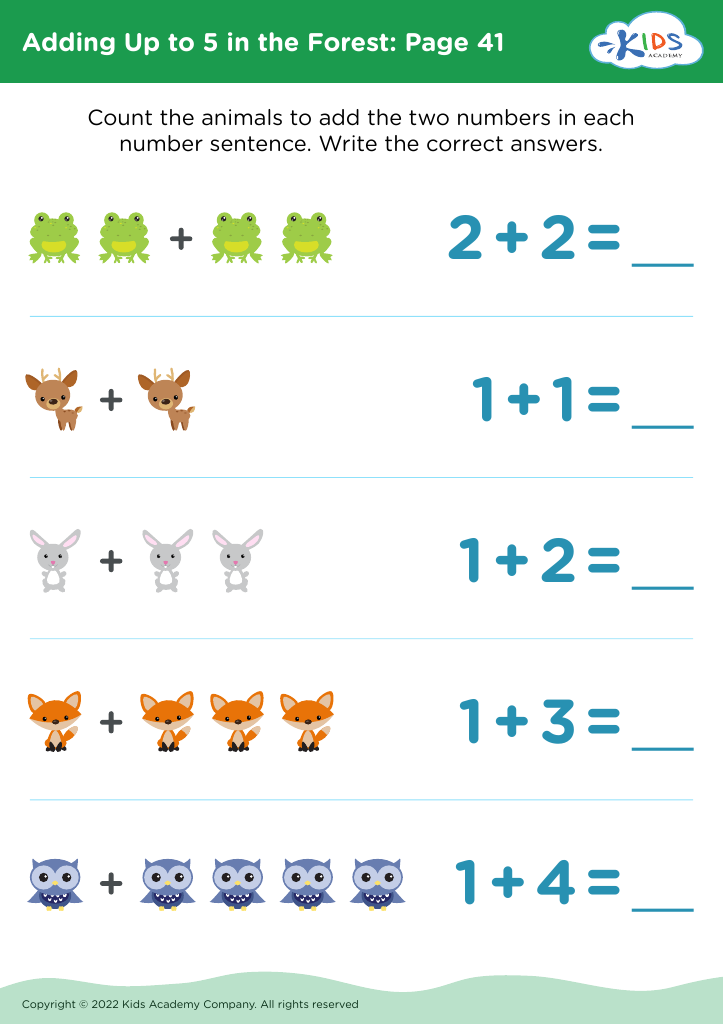




Basic addition skills are foundational for children's overall mathematical understanding and critical thinking abilities. For children ages 4-6, learning to add is not just about numbers; it’s about developing problem-solving skills that will benefit them throughout their education and everyday life. Incorporating engaging themes like “Adding in the Forest” resonates with young learners, tapping into their natural curiosity and imagination while learning basic math concepts.
This method provides a vibrant context for students to explore addition through storytelling, nature, and hands-on activities, making learning feel more interactive and enjoyable. Such thematic learning also encourages cooperation, communication, and social skills as children work together on problems. Teachers and parents should care because these skills will support later math readiness and proficiency, helping avoid difficulties in upper grades. Early mastery of addition boosts confidence and prepares children for more complex concepts down the road. Furthermore, by using enjoyable techniques like play and storytelling tied to nature, learners can build positive associations with math, fostering a lifelong love for learning. Thus, investing time and resources in activities like “Adding in the Forest” benefits both academic growth and holistic child development.