Counting practice Adding in the Forest Worksheets for Ages 4-6 - Page 2
43 filtered results
-
From - To
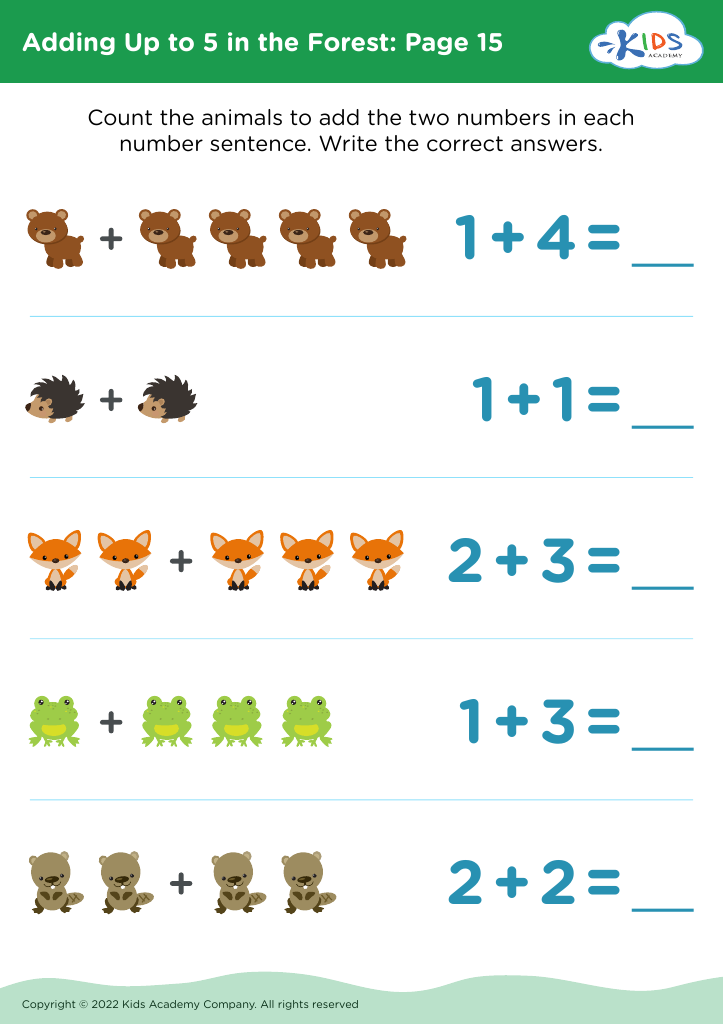
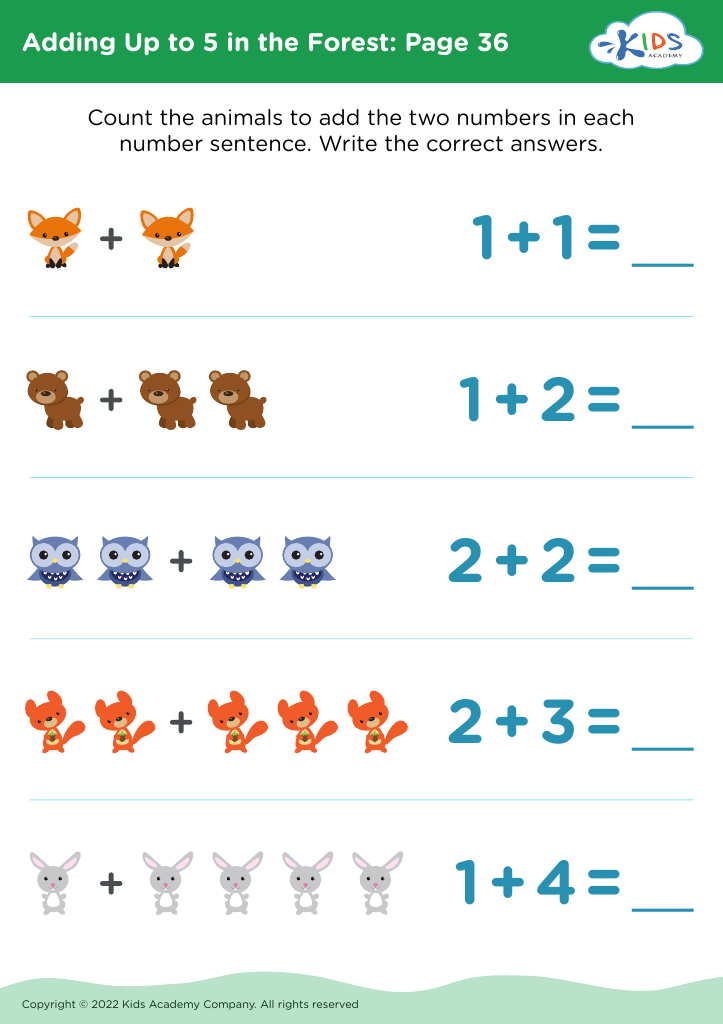
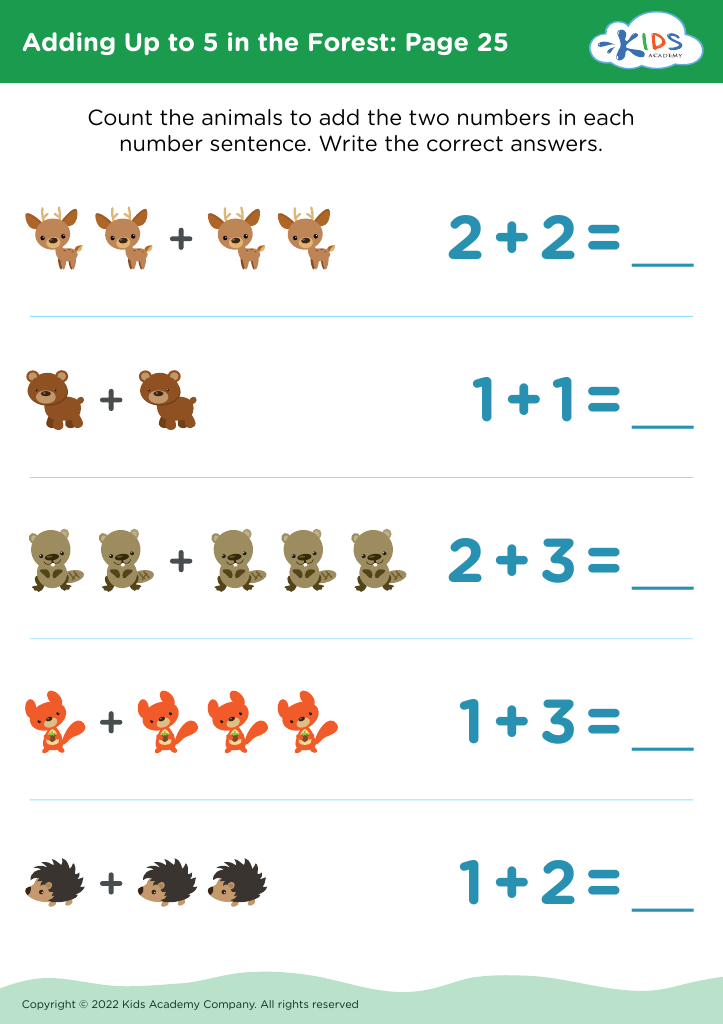
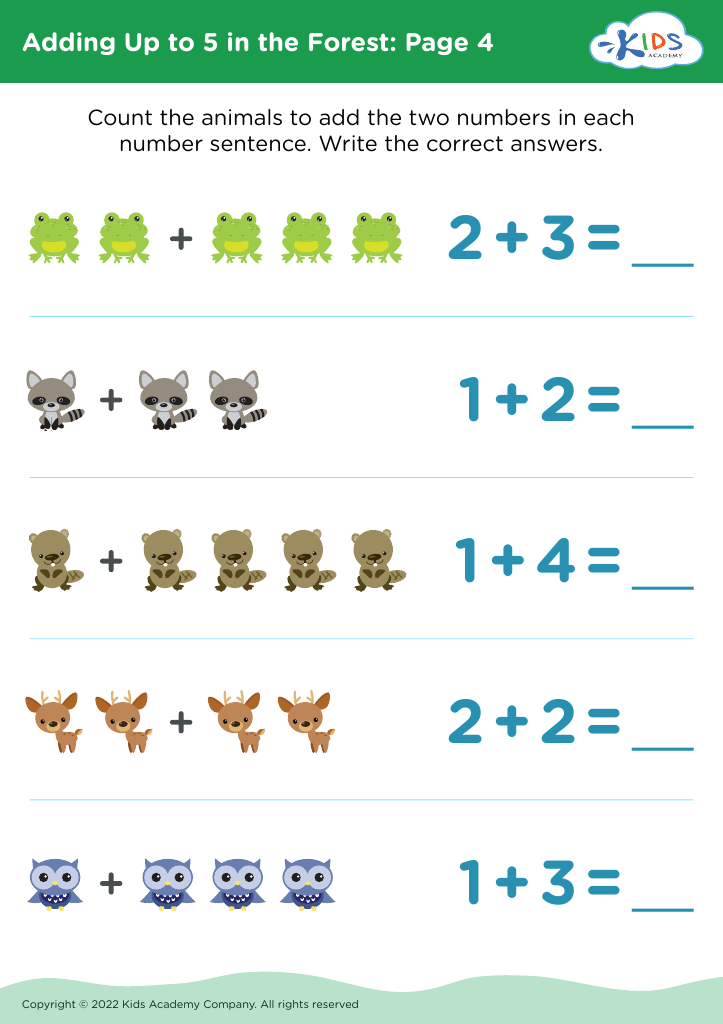
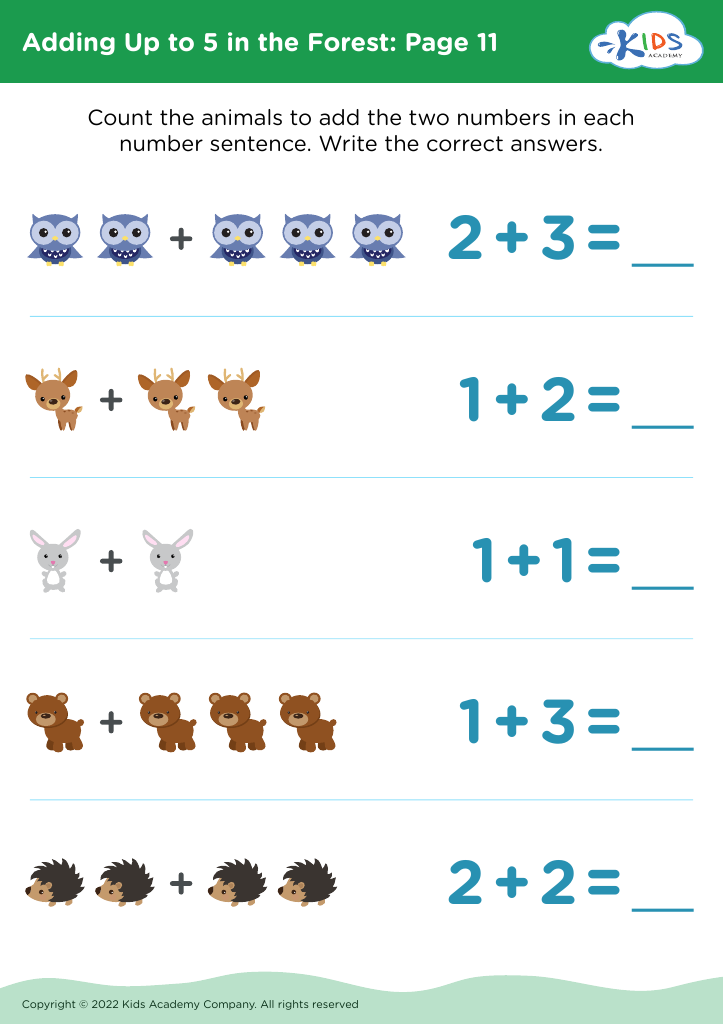
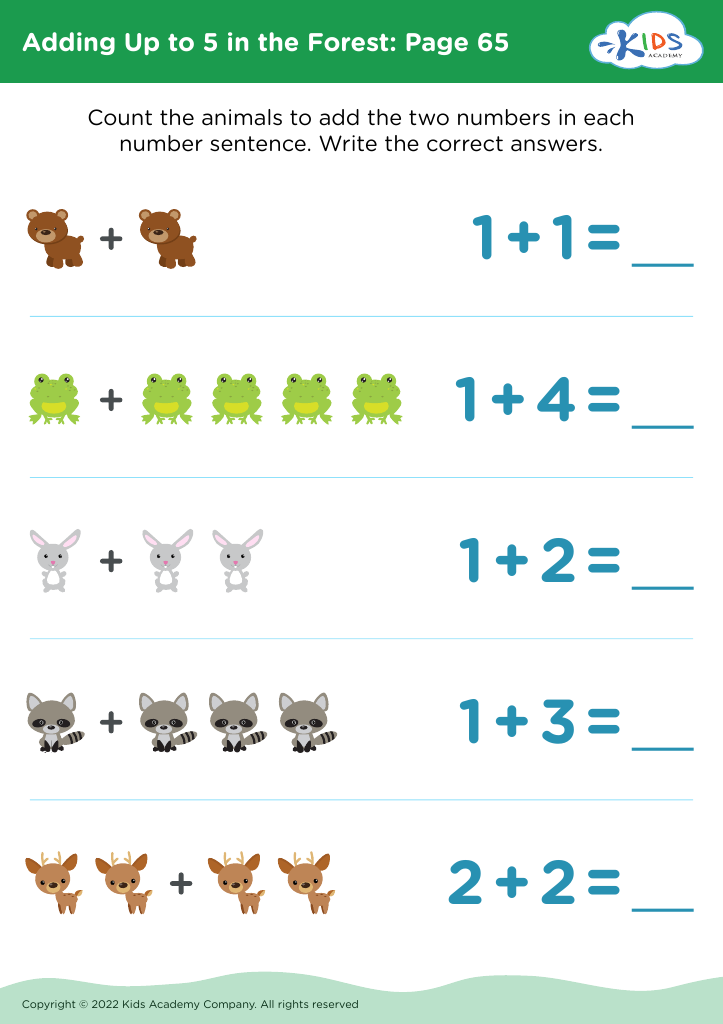
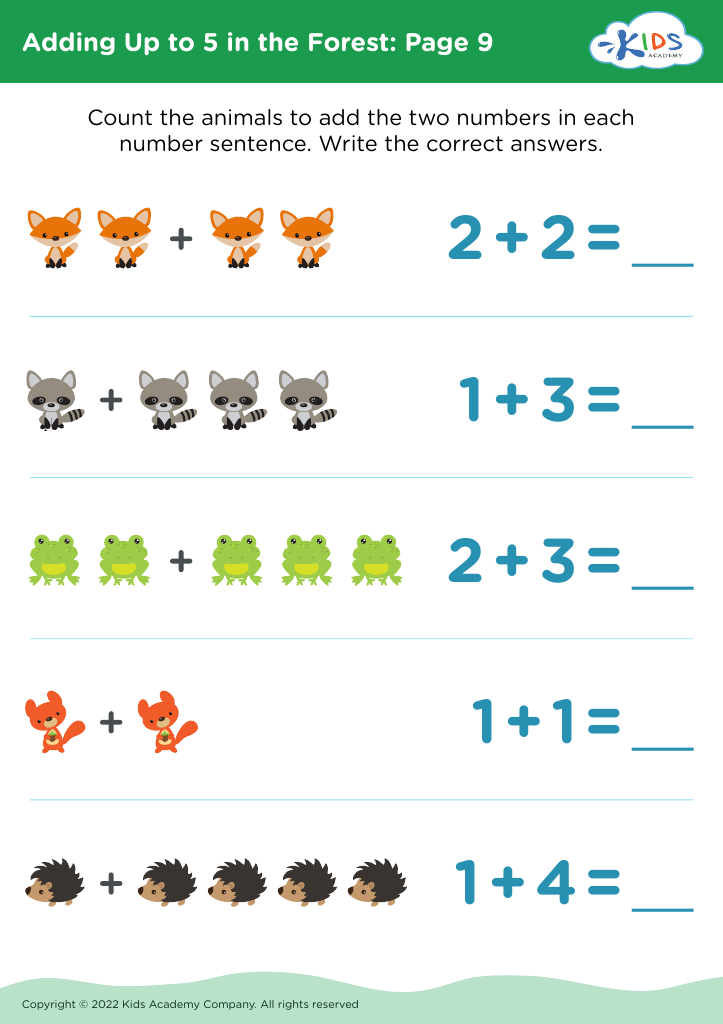
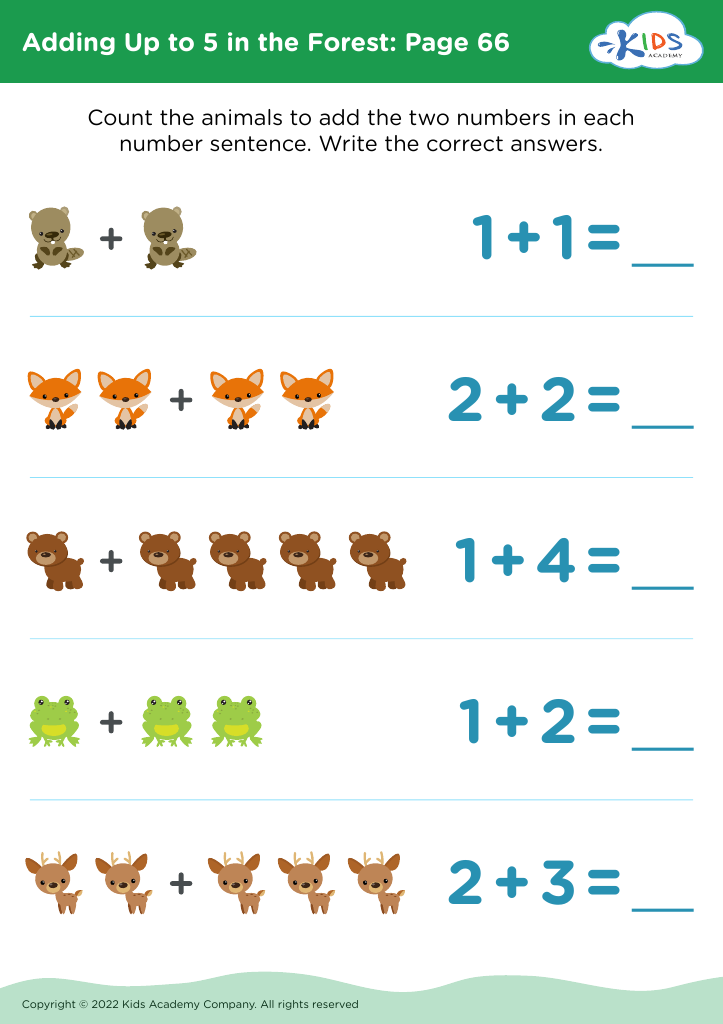
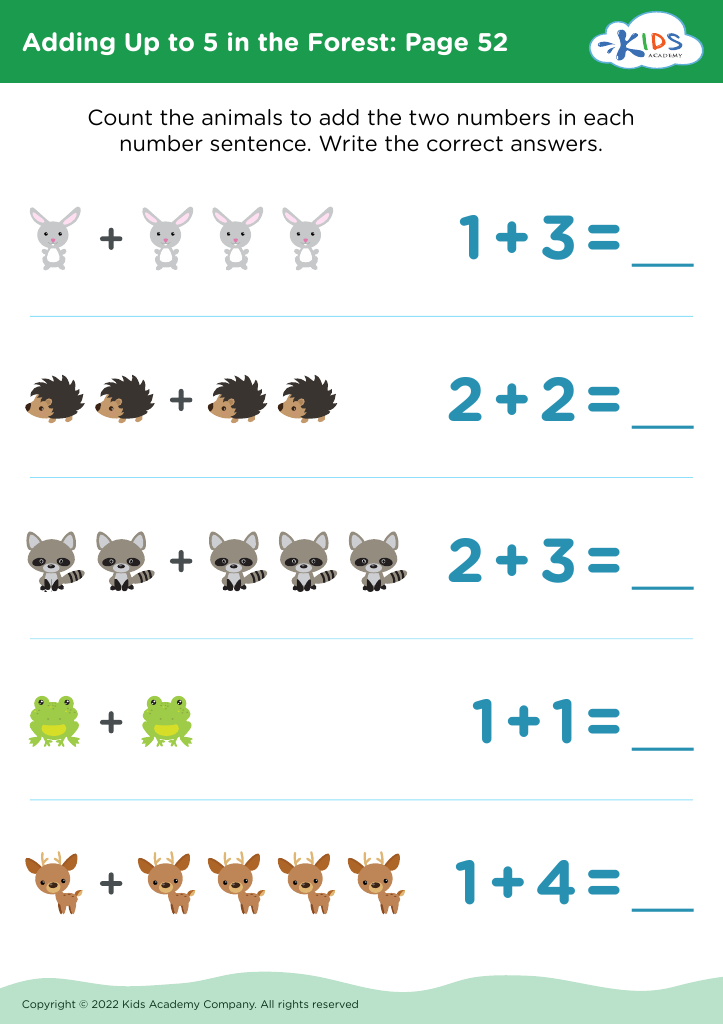
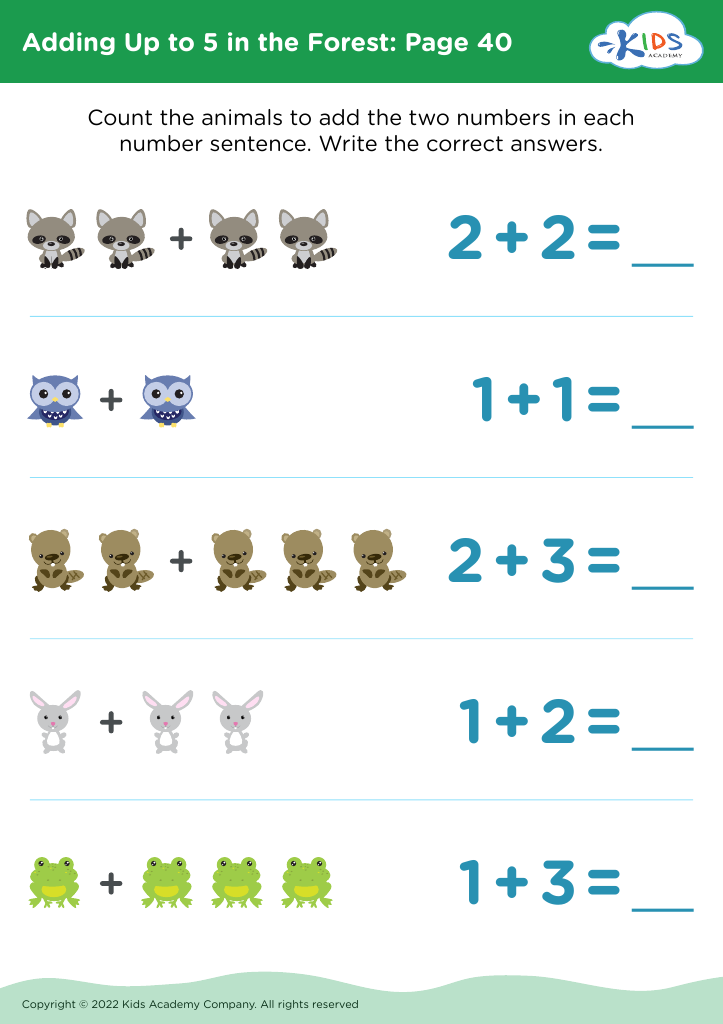
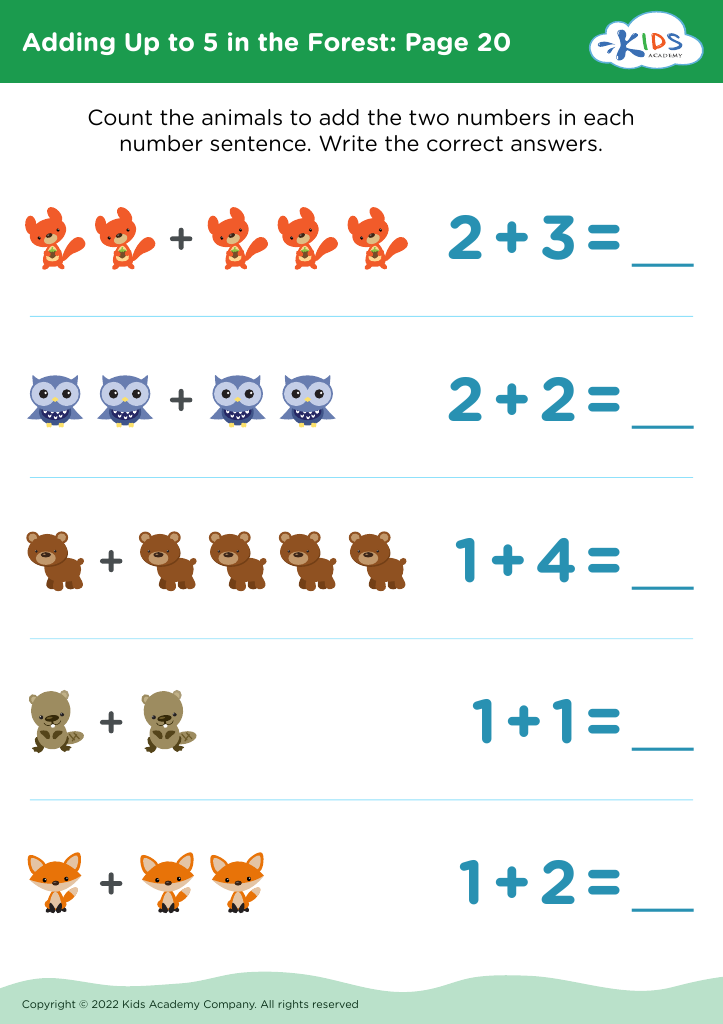
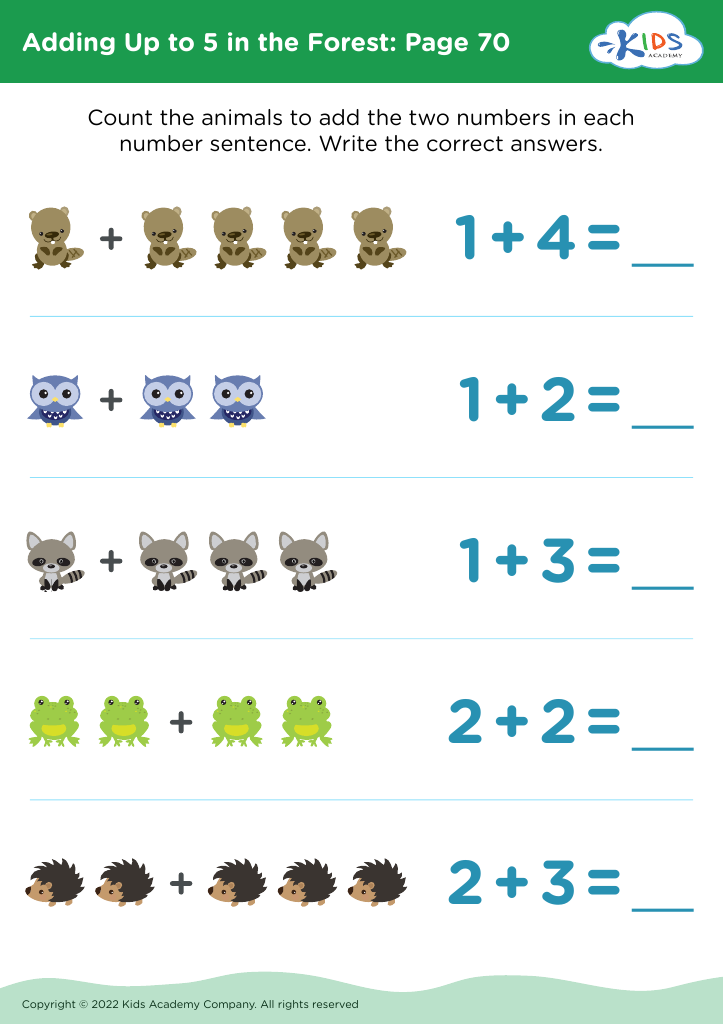
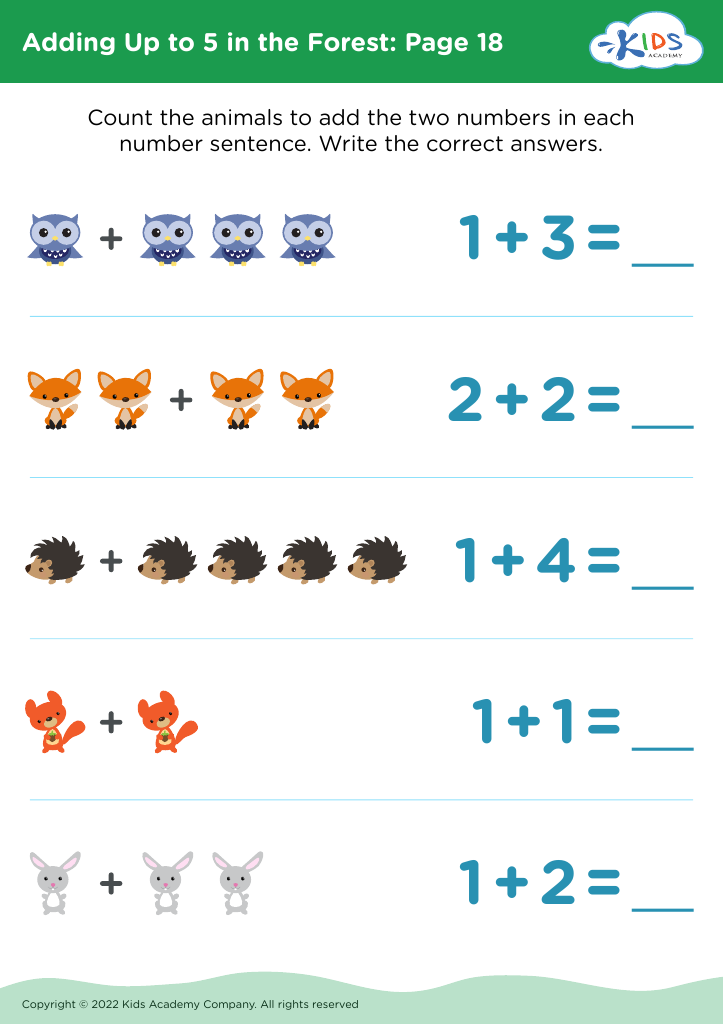
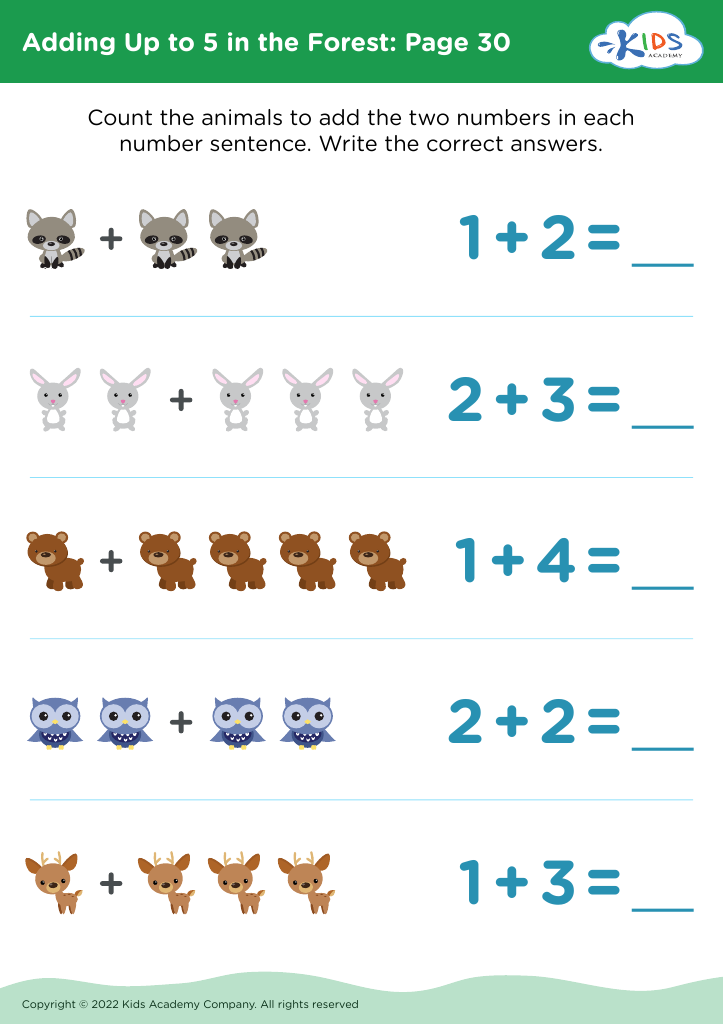
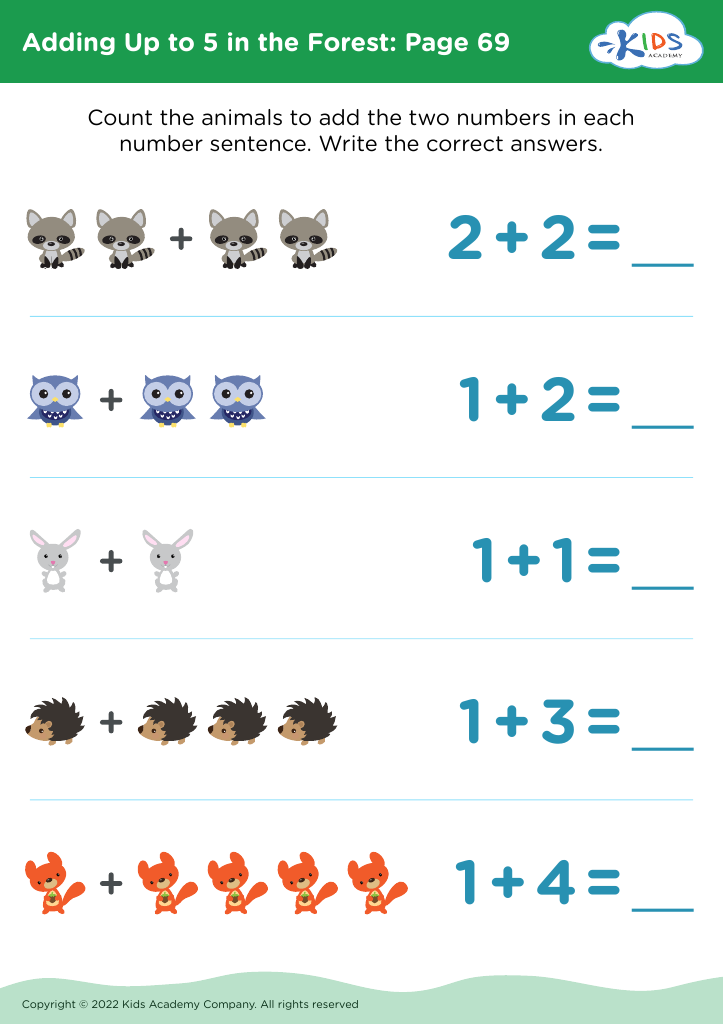
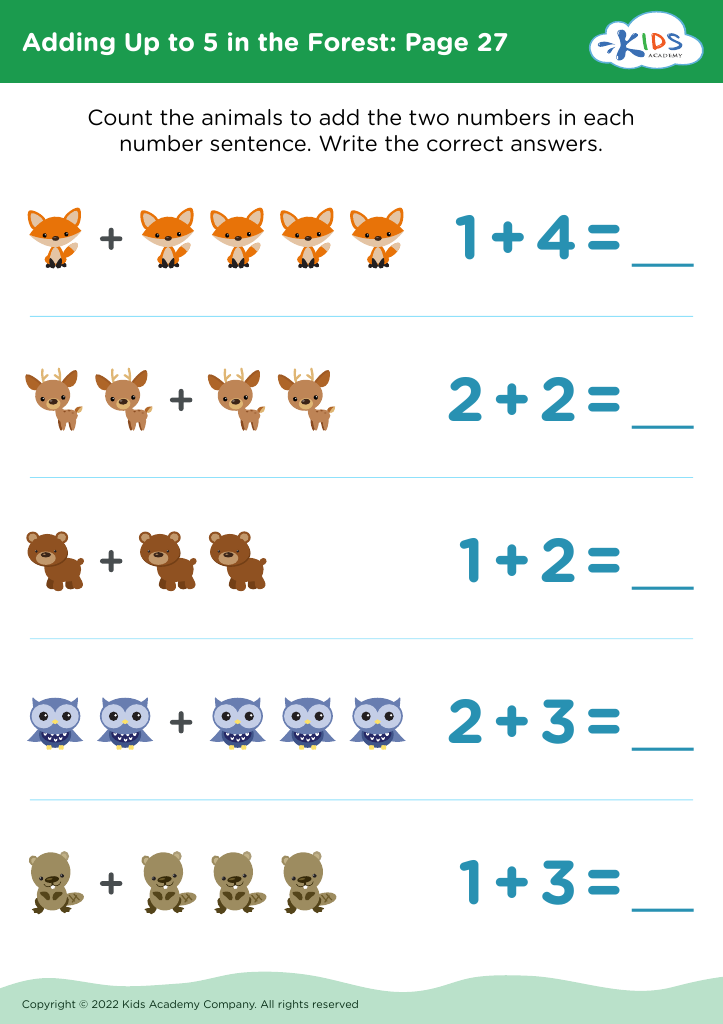
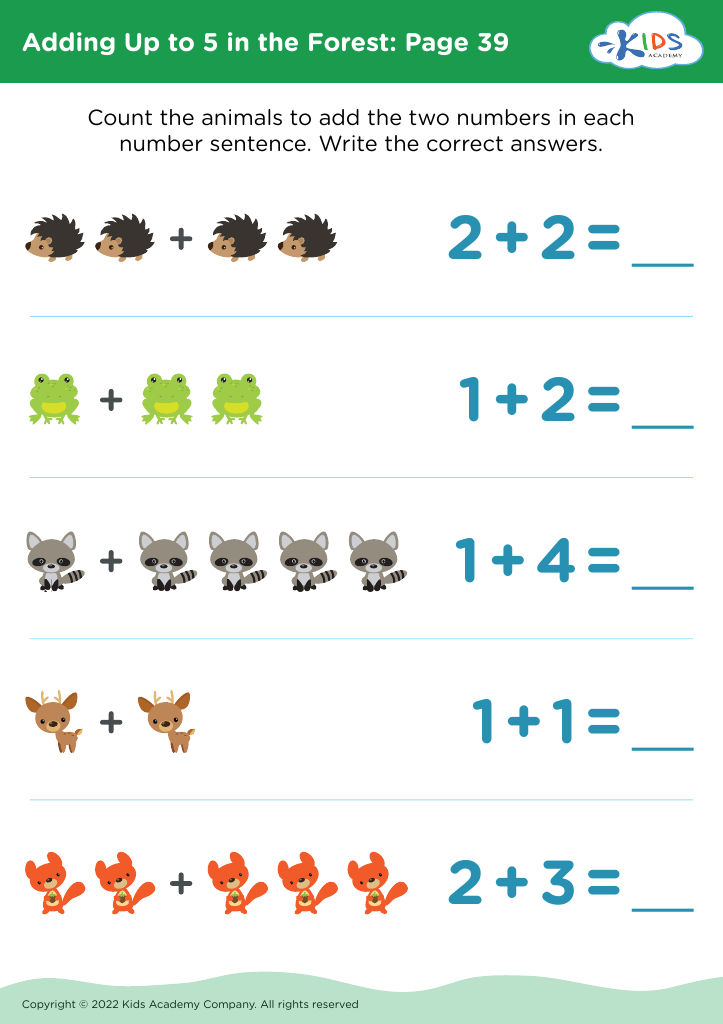
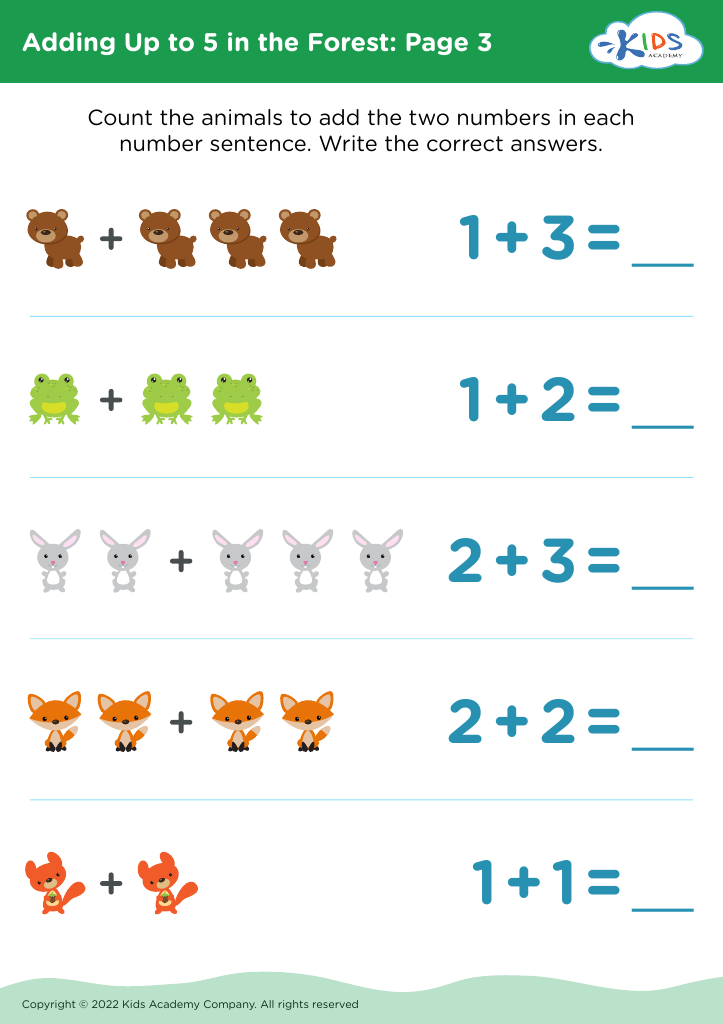
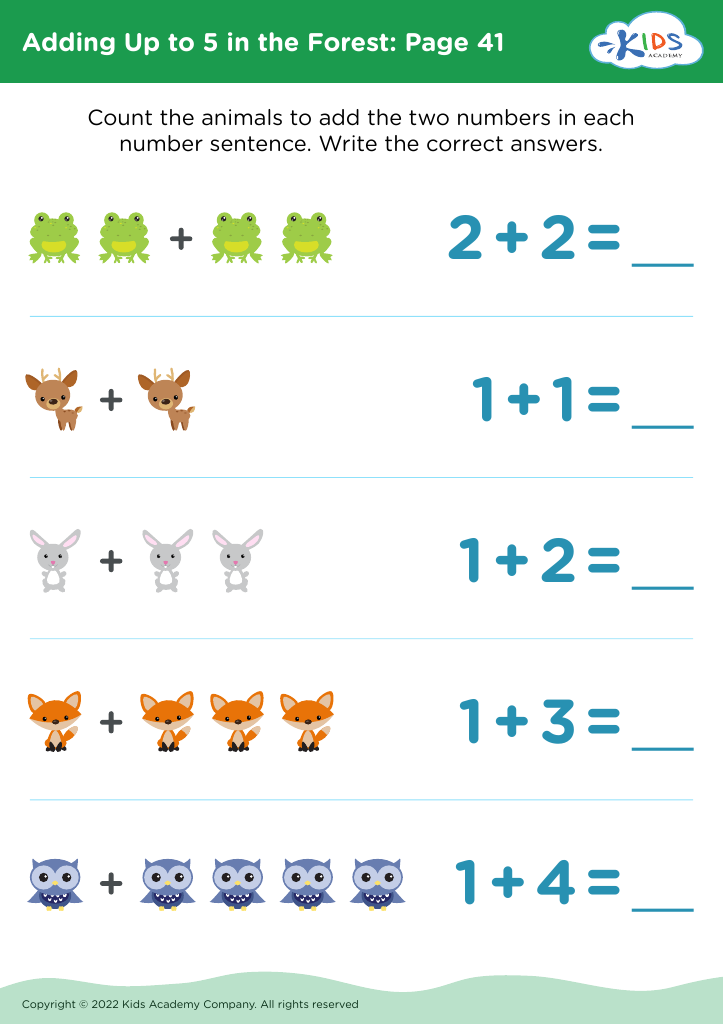




Counting practice and adding activities in natural settings, such as a forest, offer young children a rich and engaging educational experience. For parents and teachers of children aged 4-6, fostering an enthusiasm for math during these formative years is foundational for cognitive development. Incorporating nature into learning leverages a child’s innate curiosity about the world, making abstract mathematical concepts more concrete and accessible.
In a forest setting, children can count objects like leaves, acorns, and stones, transforming counting practice into a tactile and visual activity. This hands-on approach promotes active engagement and helps children understand the practical applications of math. When children add items from their environment, they can relate quantities to real-world objects, which enhances their comprehension and retention of basic arithmetic skills.
Moreover, combining counting and adding exercises with outdoor exploration nurtures several developmental domains simultaneously. It supports physical health through movement, encourages problem-solving and observational skills, and fosters an appreciation for nature. Social and emotional growth is also promoted as children work together, share discoveries, and build confidence through repeated practice and successful problem solving.
Therefore, parents and teachers should prioritize such activities because they cultivate a holistic learning environment that integrates math skills with broader developmental benefits, setting a solid foundation for future academic success.