Filters

19 filtered results

Clear all filters
Favorites
With answer key
Interactive

19 filtered results

Difficulty Level

Grade


Enhance your child's counting and addition skills with our engaging "Counting Skills Adding in the Forest" worksheets, designed specifically for ages 4 to 6. These colorful and interactive worksheets take young learners on an exciting adventure through the forest, where they will encounter charming characters and various nature-themed elements. As they explore, children will practice basic addition and counting through fun exercises, fostering their love for math while enhancing their cognitive development. Perfect for at-home learning or classroom activities, our worksheets make learning enjoyable and effective, helping little ones build a solid foundation in math with the help of enchanting woodland scenes.
Check out this FREE Trial Lesson on Adding in the Forest for age 4-6!

My Family

Favorites
With answer key
Interactive
  • 4-6
  • Counting skills
  • Adding in the Forest
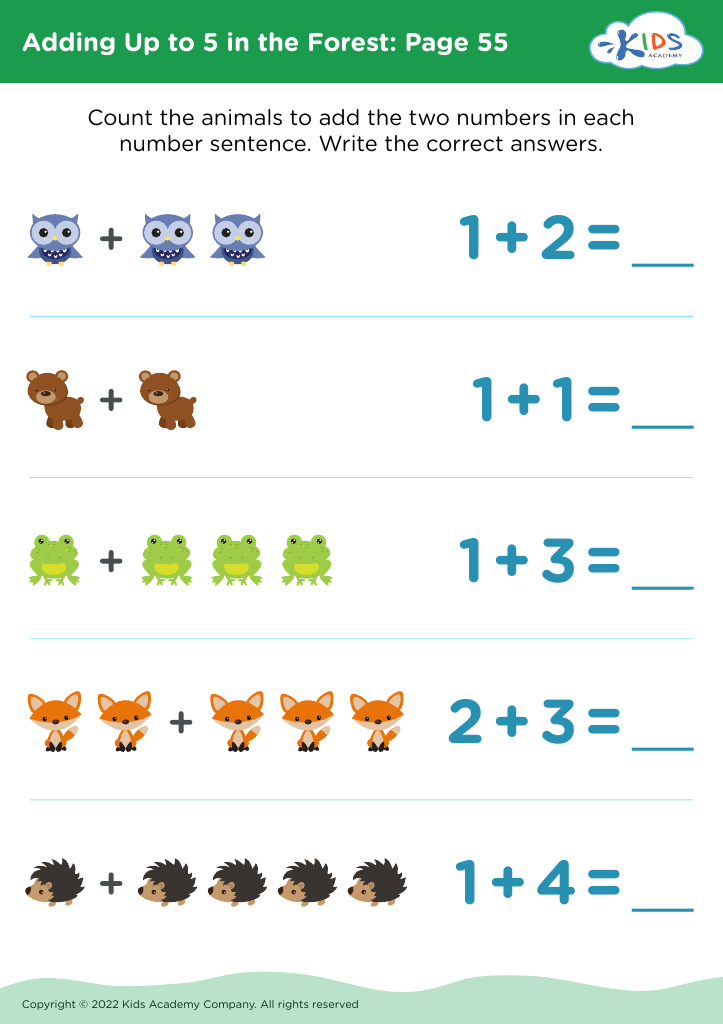
Adding Up to 5 in the Forest: Page 55
Worksheet
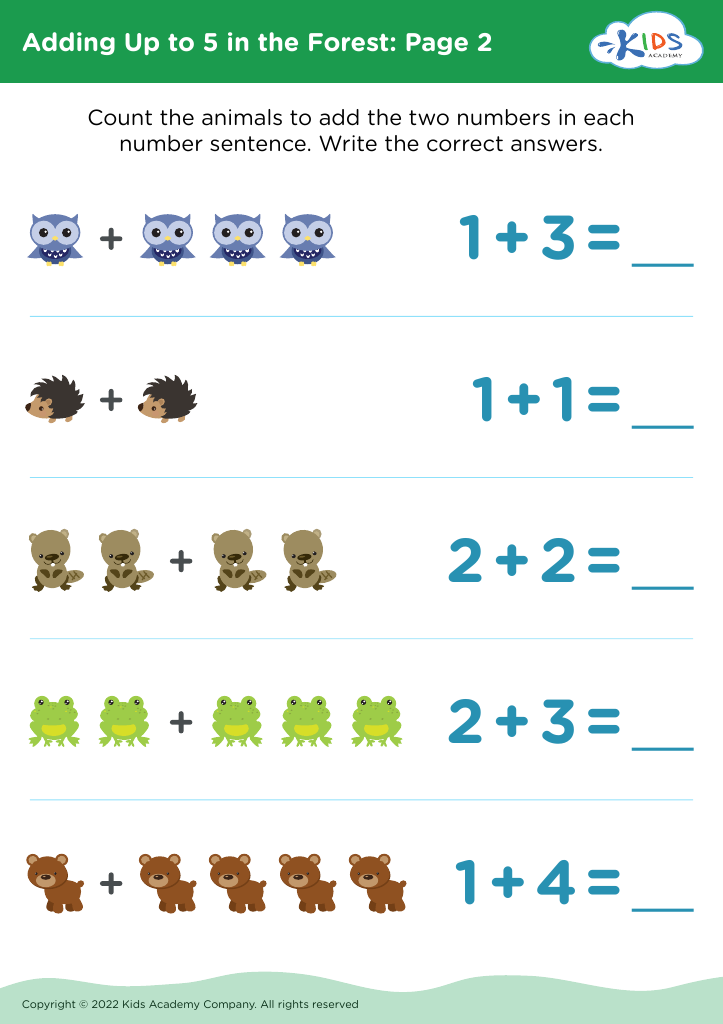
Adding Up to 5 in the Forest: Page 2
Worksheet
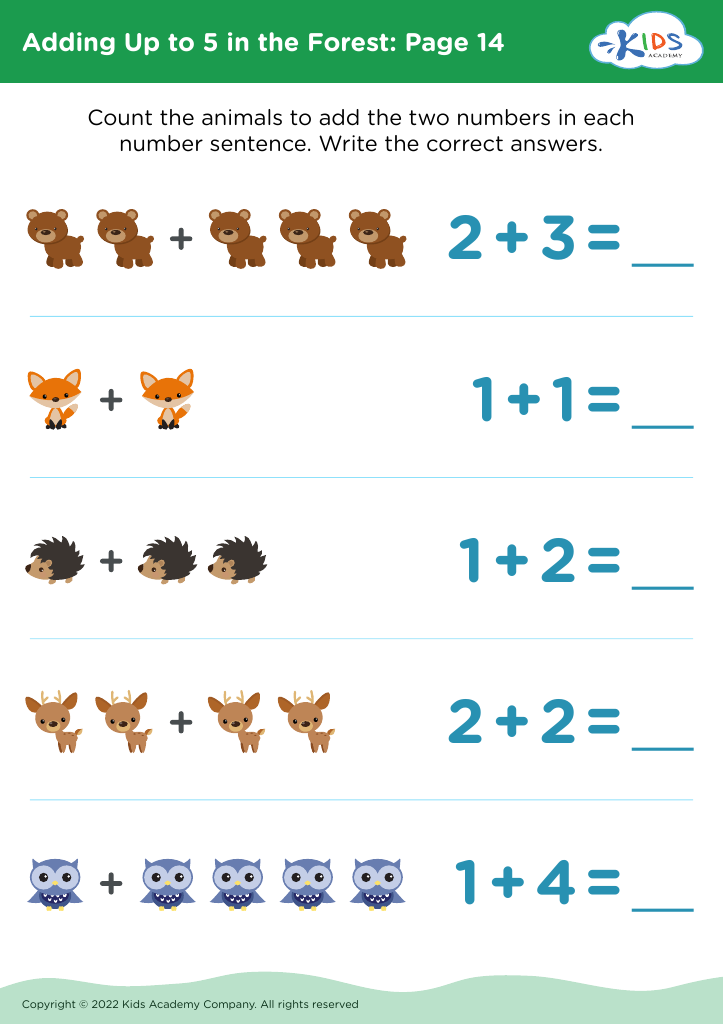
Adding Up to 5 in the Forest: Page 14
Worksheet
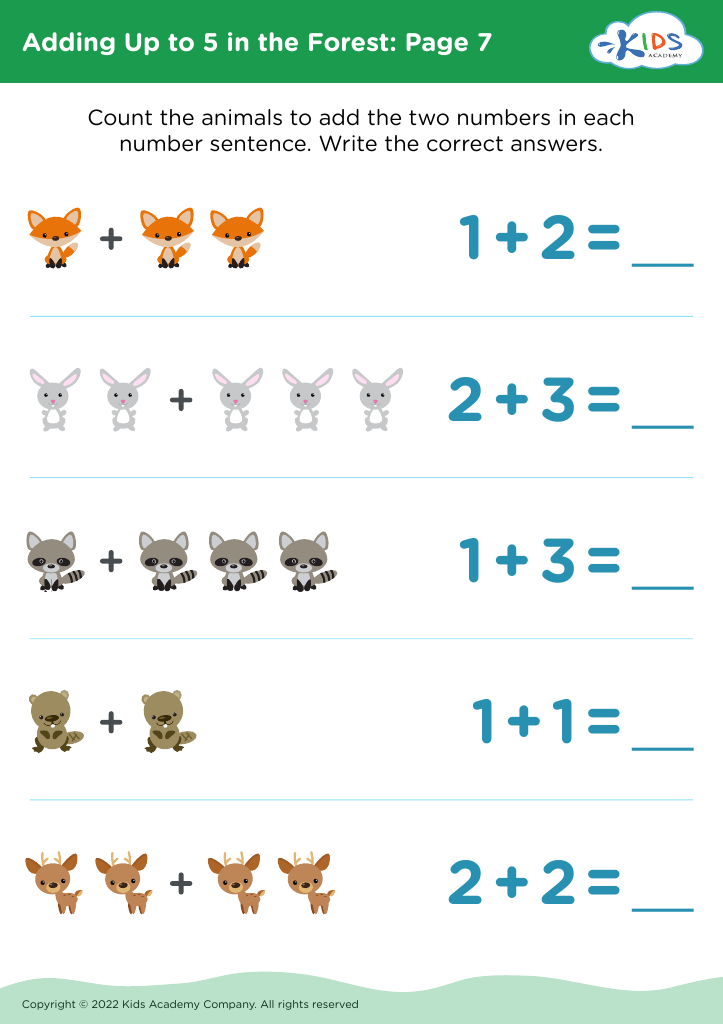
Adding Up to 5 in the Forest: Page 7
Worksheet
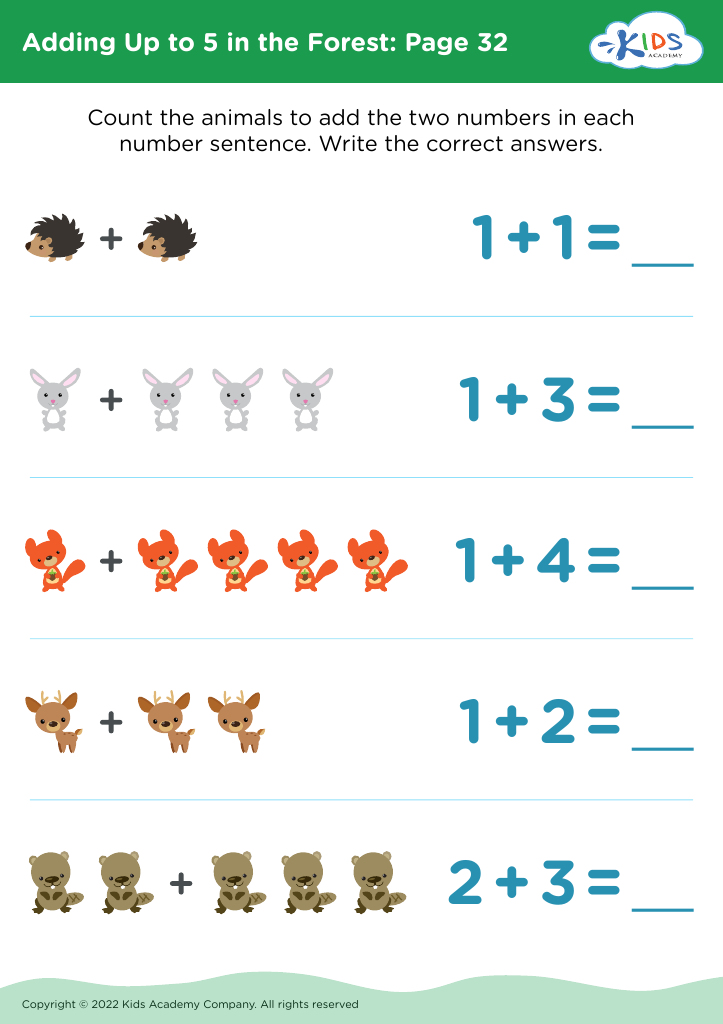
Adding Up to 5 in the Forest: Page 32
Worksheet
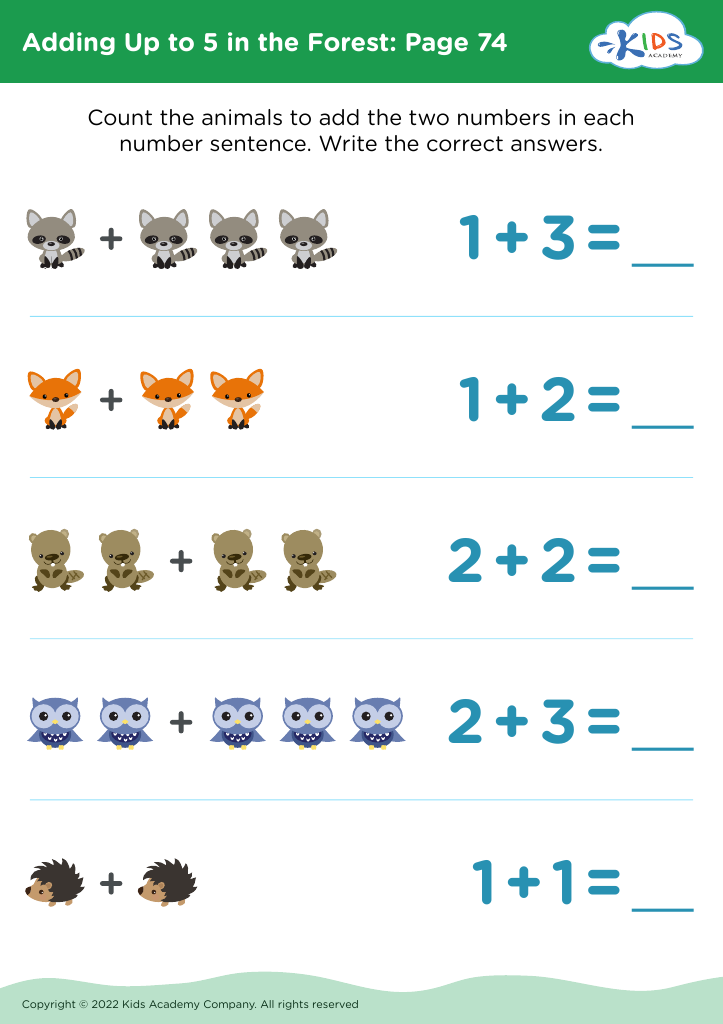
Adding Up to 5 in the Forest: Page 74
Worksheet
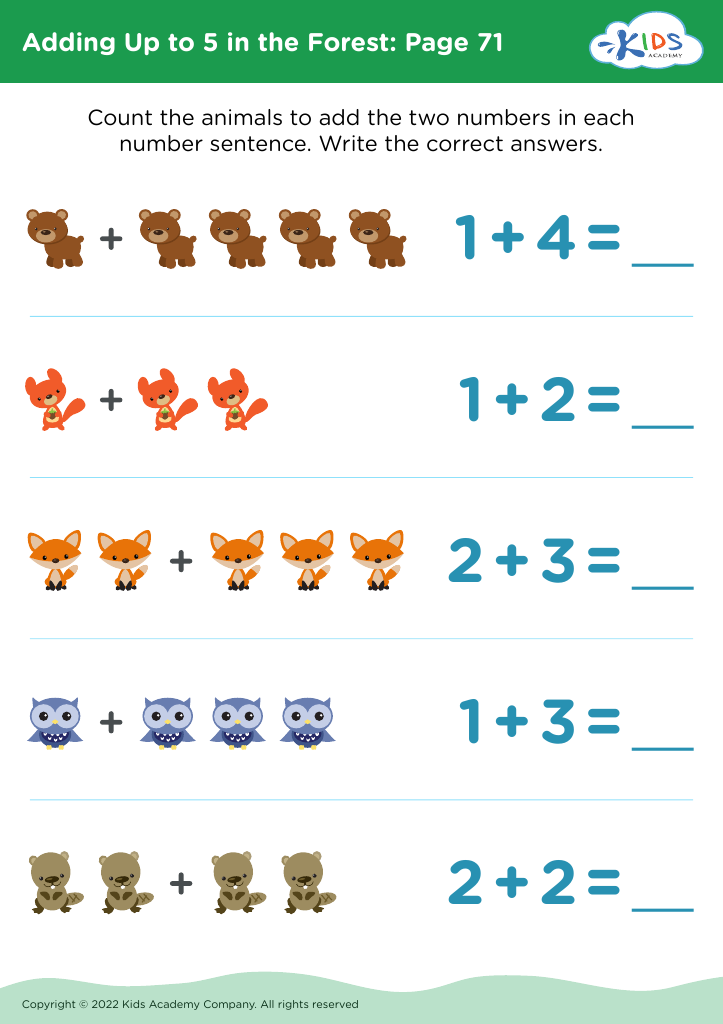
Adding Up to 5 in the Forest: Page 71
Worksheet
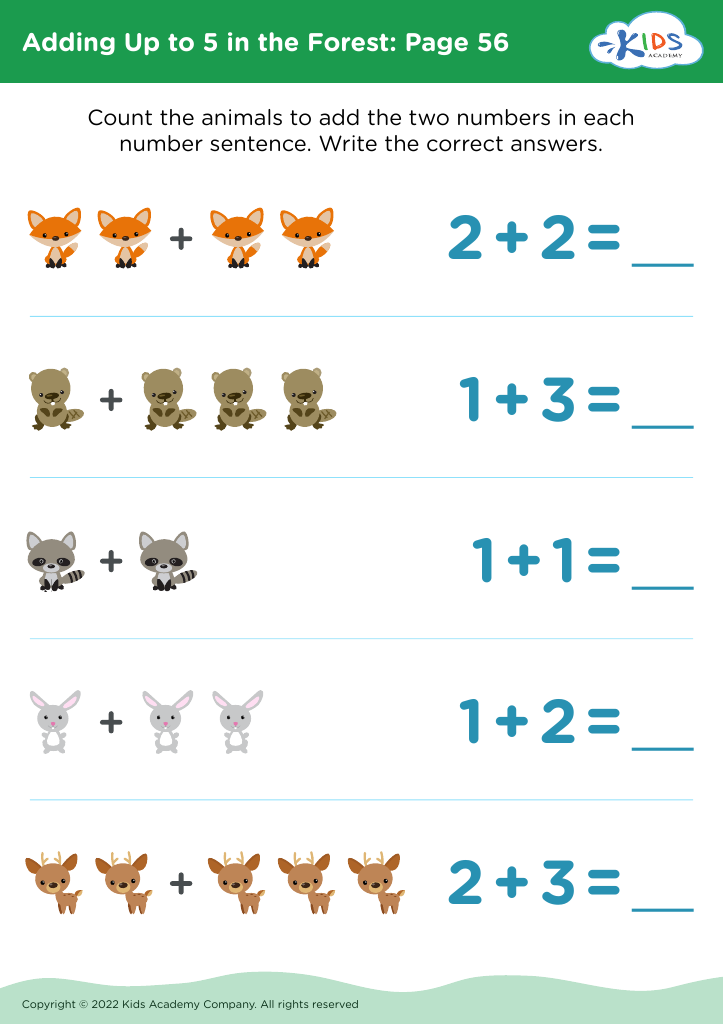
Adding Up to 5 in the Forest: Page 56
Worksheet
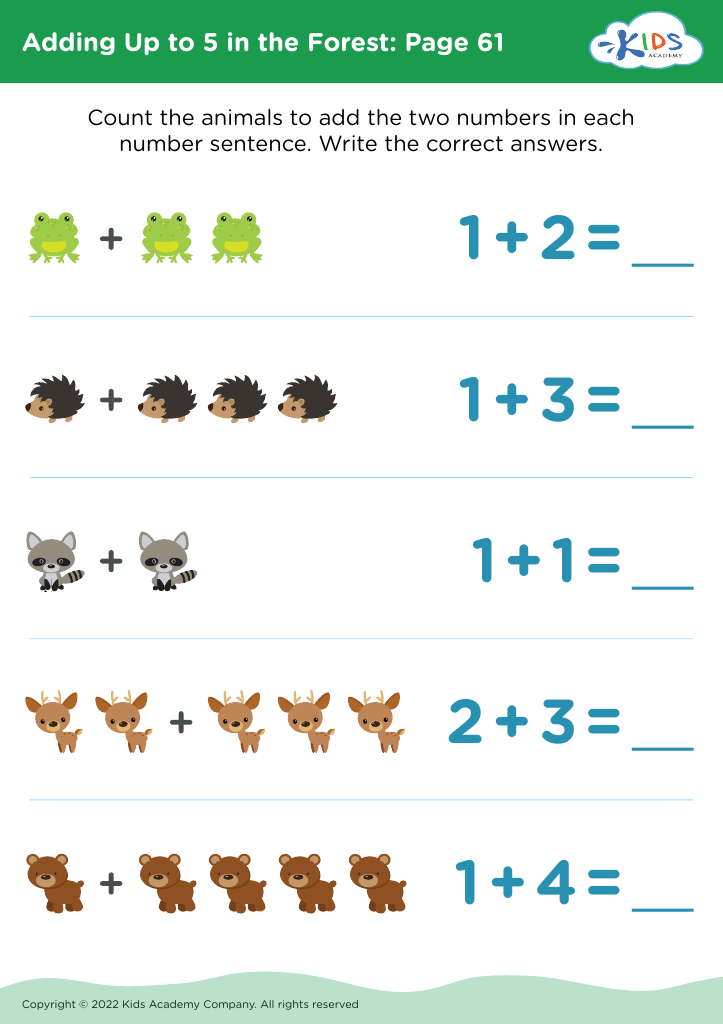
Adding Up to 5 in the Forest: Page 61
Worksheet
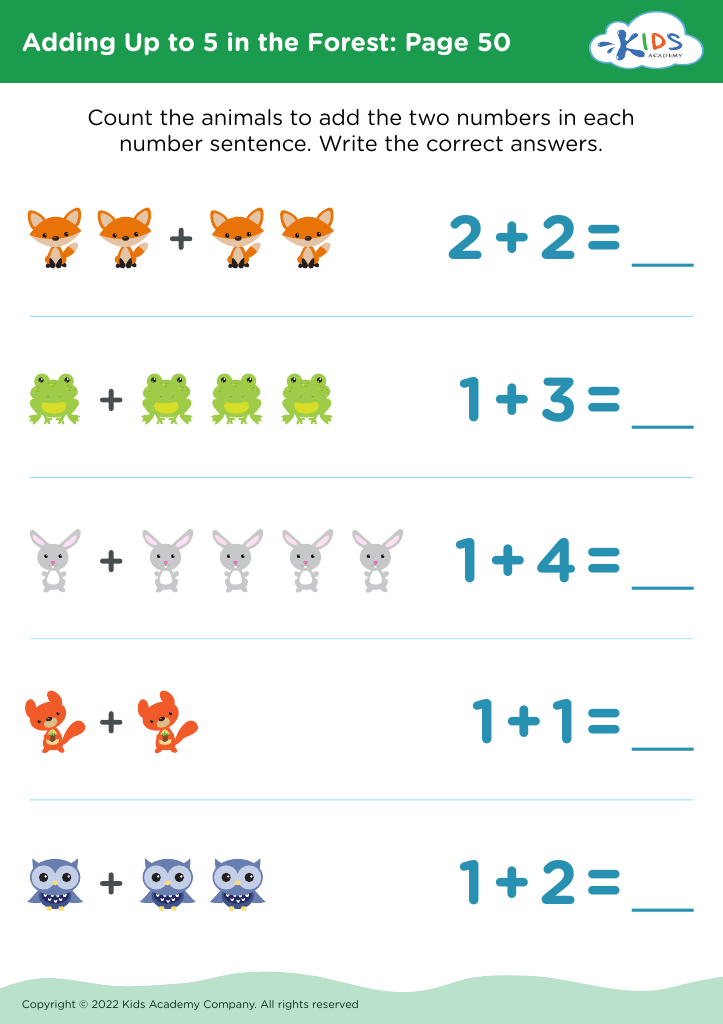
Adding Up to 5 in the Forest: Page 50
Worksheet
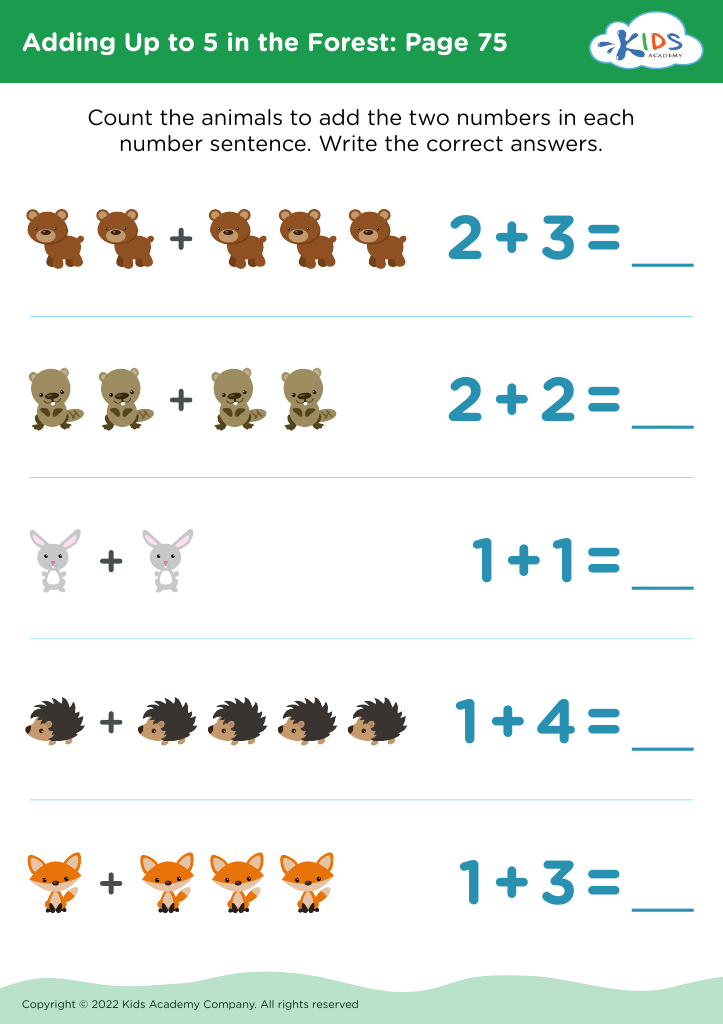
Adding Up to 5 in the Forest: Page 75
Worksheet
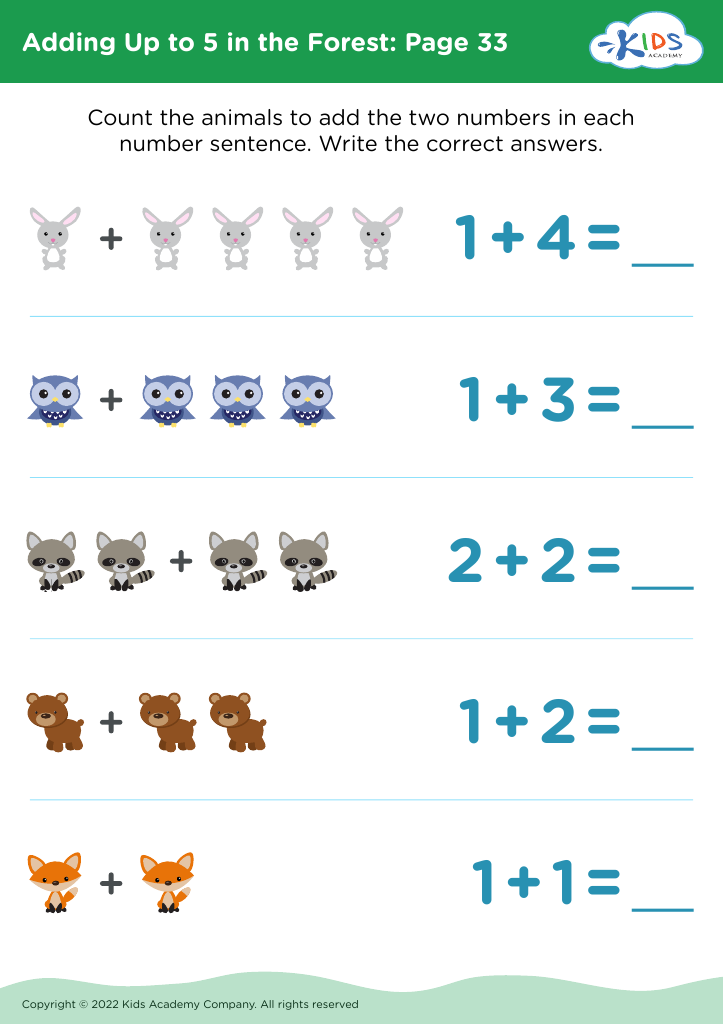
Adding Up to 5 in the Forest: Page 33
Worksheet
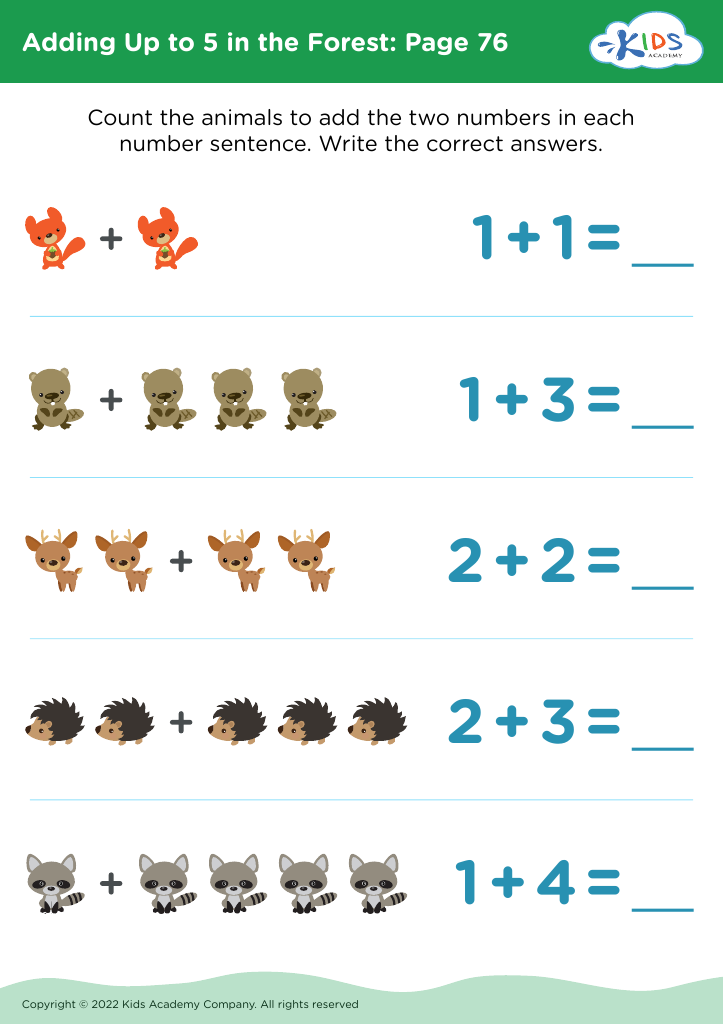
Adding Up to 5 in the Forest: Page 76
Worksheet
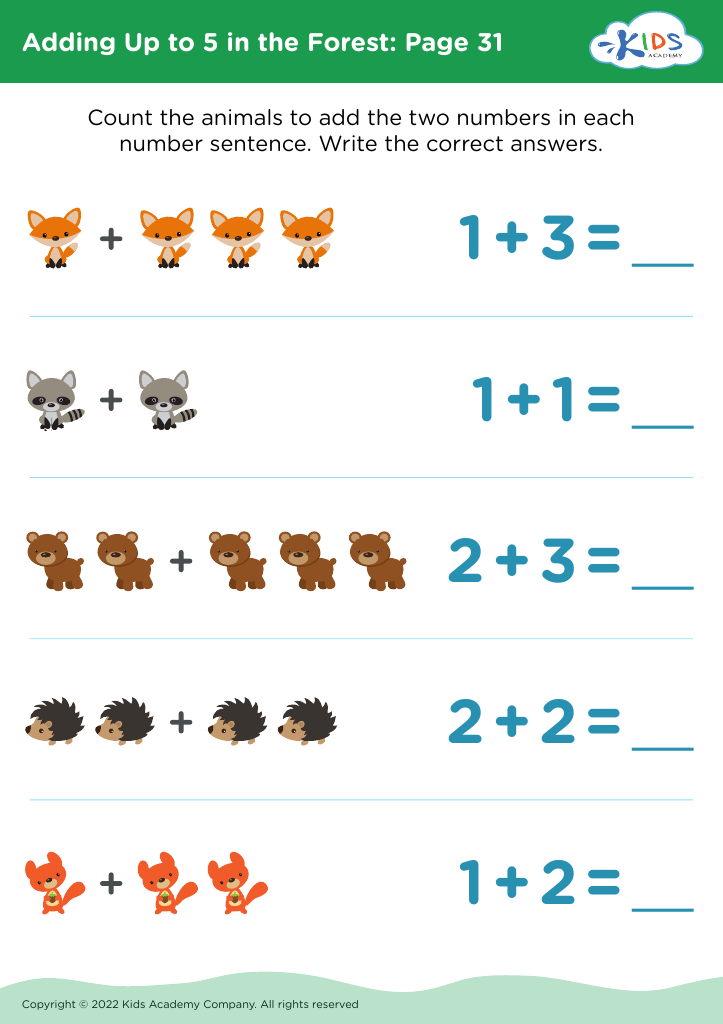
Adding Up to 5 in the Forest: Page 31
Worksheet
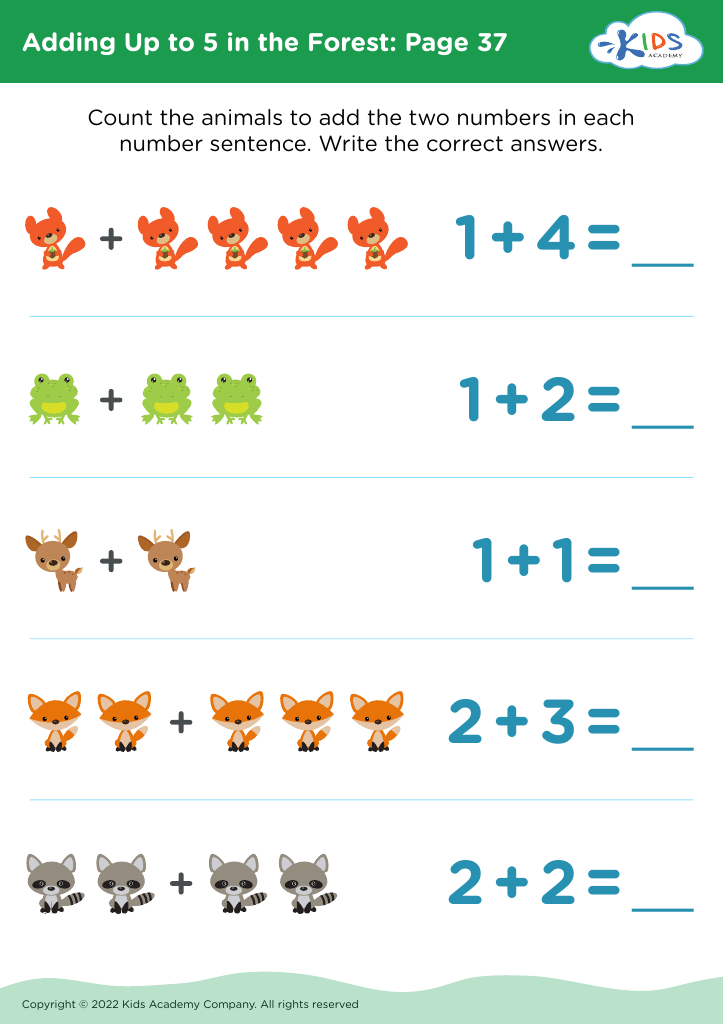
Adding Up to 5 in the Forest: Page 37
Worksheet
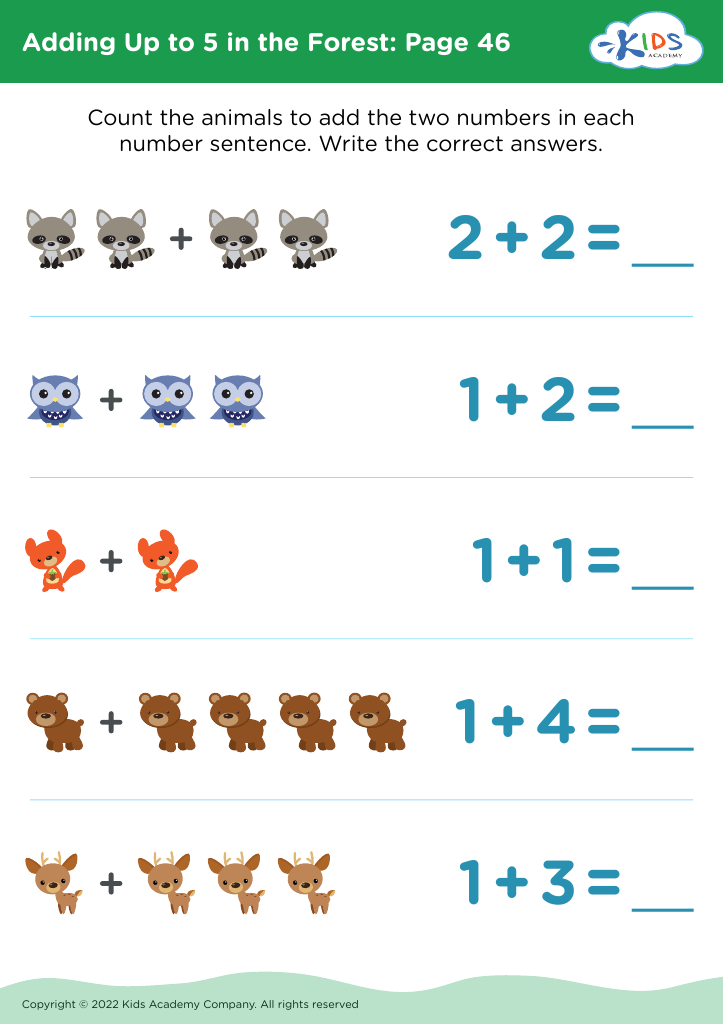
Adding Up to 5 in the Forest: Page 46
Worksheet
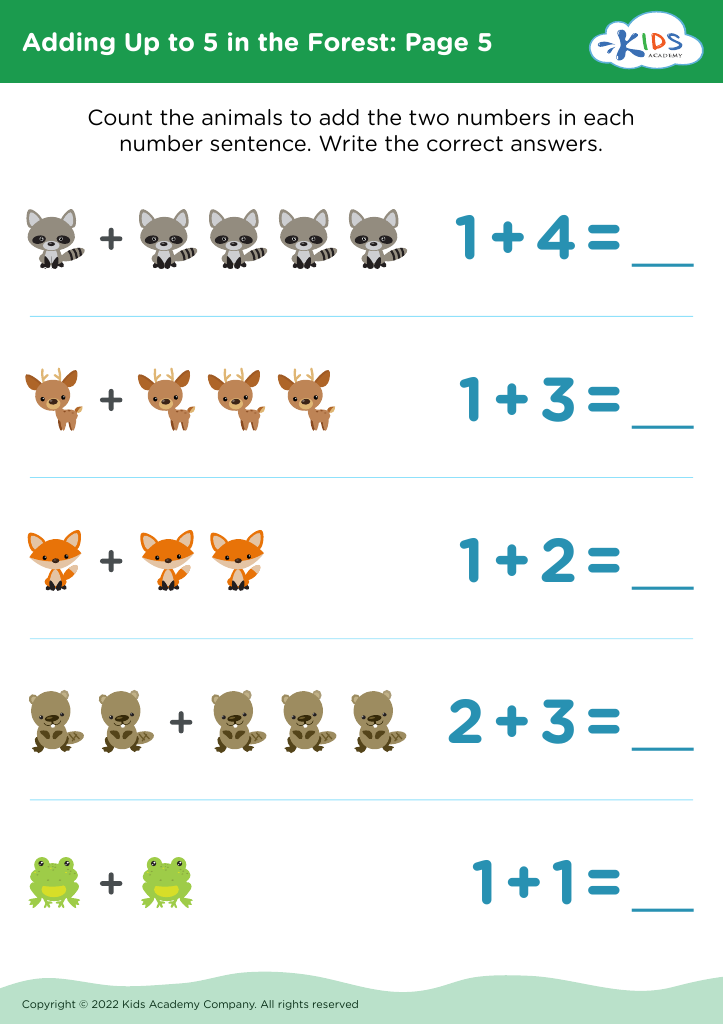
Adding Up to 5 in the Forest: Page 5
Worksheet
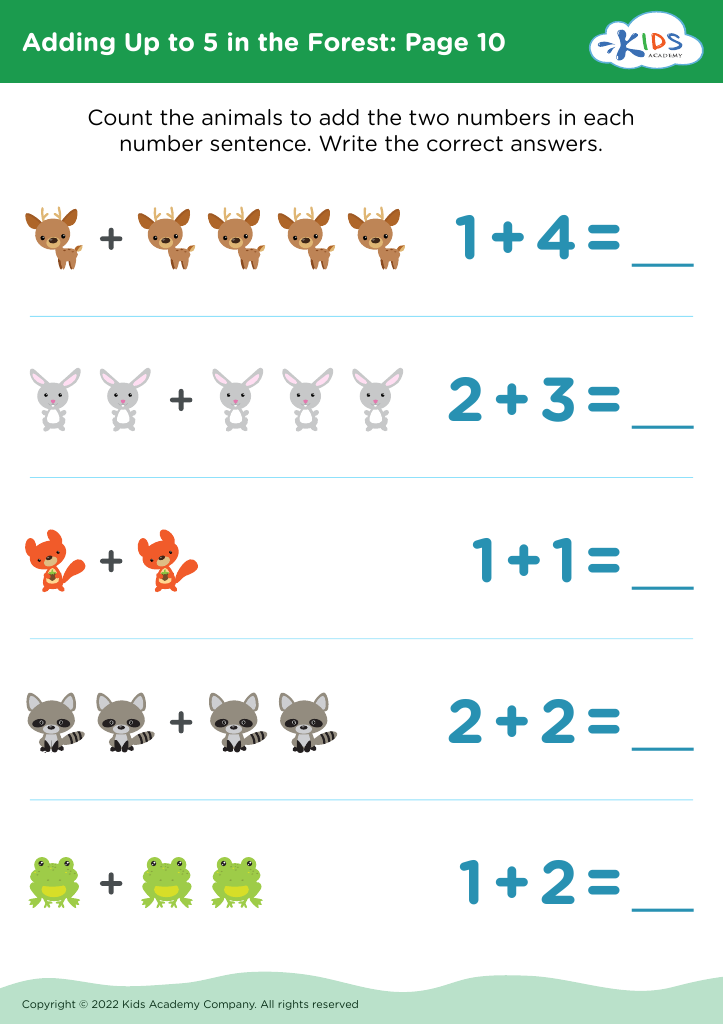
Adding Up to 5 in the Forest: Page 10
Worksheet
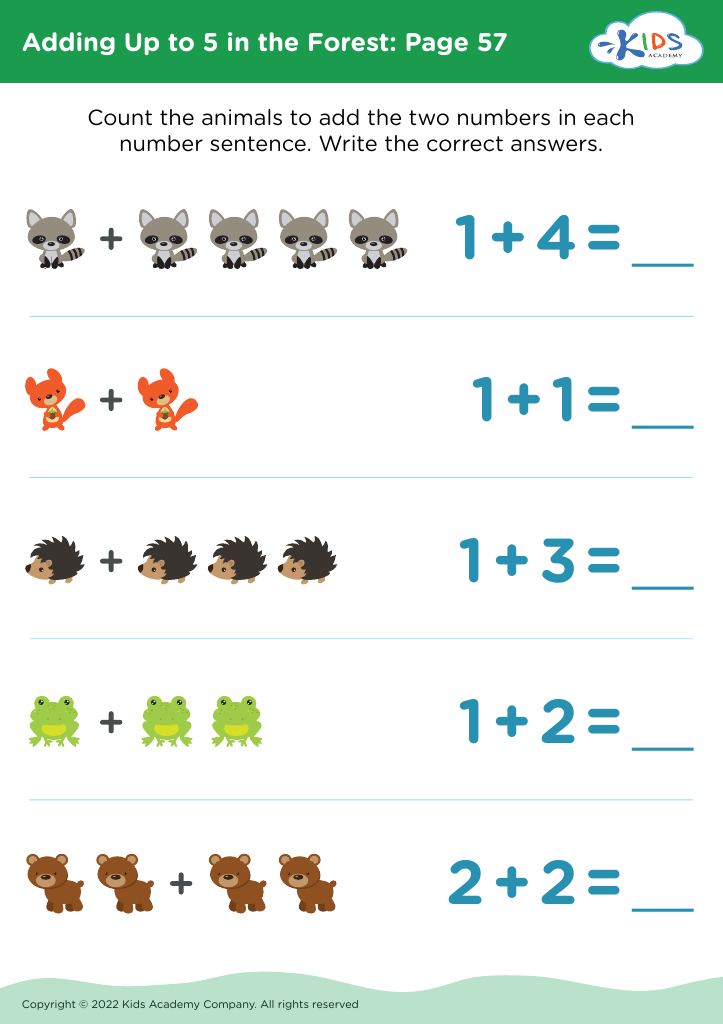
Adding Up to 5 in the Forest: Page 57
Worksheet


Counting skills are foundational for early learning, particularly for children ages 4-6. At this stage, children develop essential cognitive and social skills that lay the groundwork for future academic success. Integrating counting games, such as "Adding in the Forest," not only makes learning fun but also reinforces key mathematical concepts.

Engaging with interactive counting activities in a playful environment fosters a sense of curiosity and engagement. "Adding in the Forest" can involve counting natural objects, like leaves or rocks, which helps children connect math to the world around them. This relevance makes learning more enjoyable and meaningful.

Furthermore, counting skills enhance critical thinking and problem-solving abilities. As children encounter various counting challenges, they learn to analyze information, make decisions, and develop persistence—qualities that benefit them across disciplines.

Parents and teachers should care about counting skills because they serve as the building blocks for more complex mathematical operations. Encouraging early counting through fun, thematic activities nurtures a positive attitude toward math and education as a whole. By cultivating these skills early on, parents and teachers help ensure children build confidence in their abilities, paving the way for a lifelong love of learning and a strong foundation for future academic pursuits.