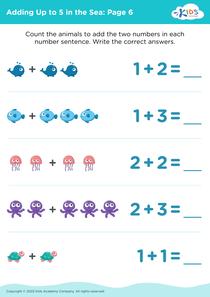
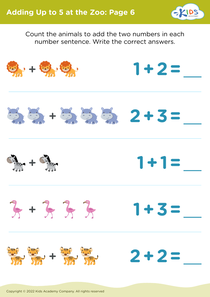
Fine Motor Skills Adding in the Forest Worksheets for Ages 4-6
5 filtered results
-
From - To
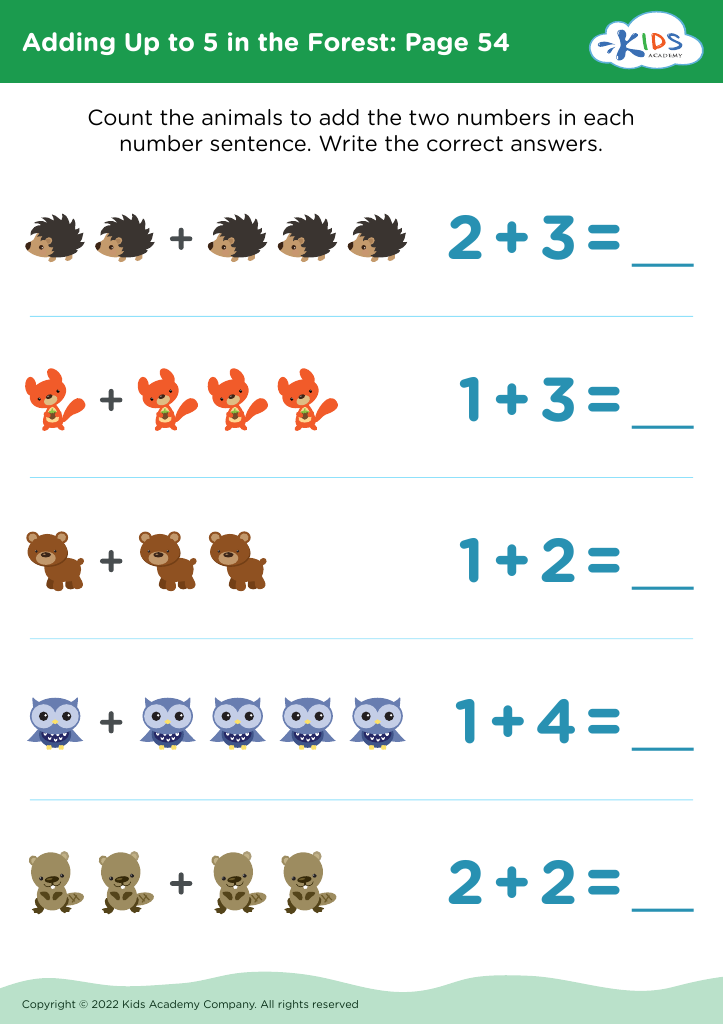
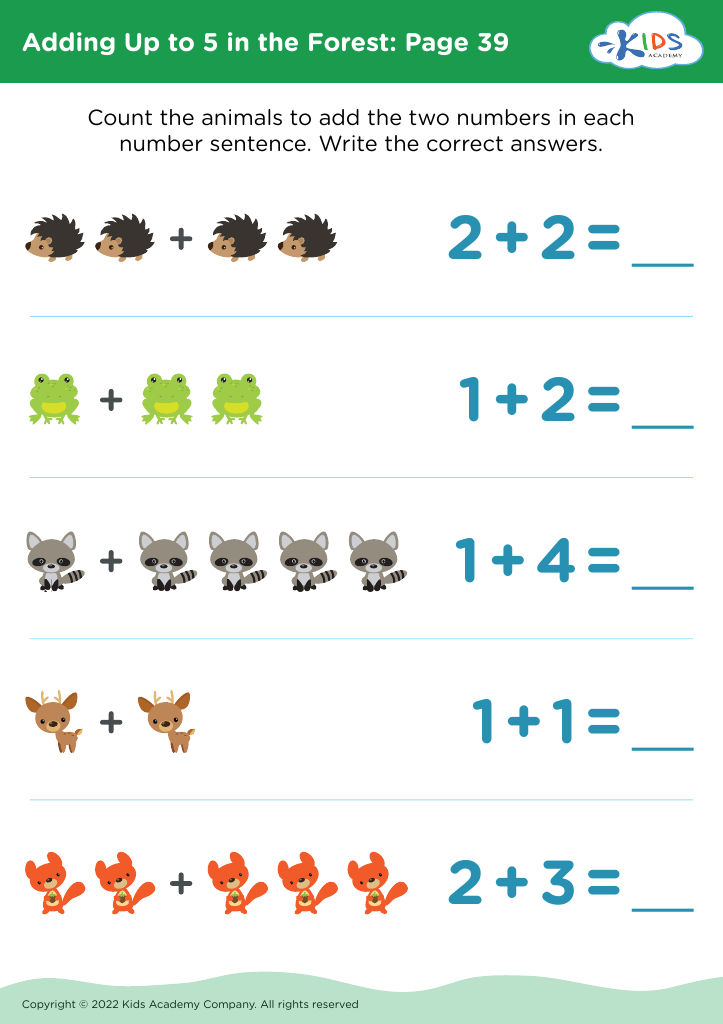
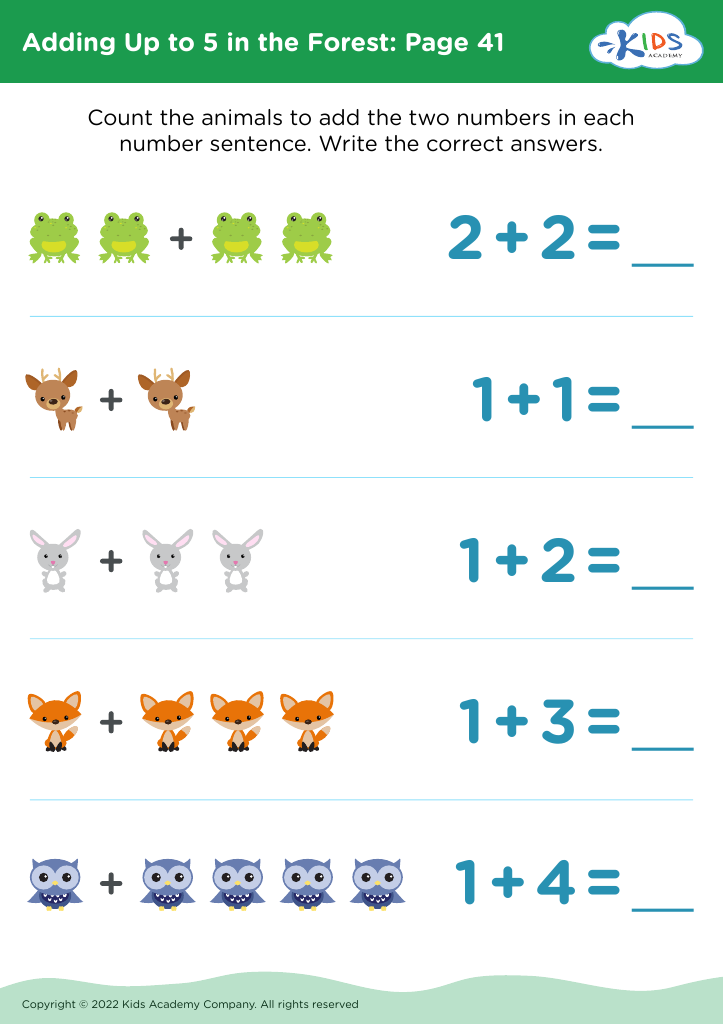
Discover our engaging "Fine Motor Skills Adding in the Forest Worksheets" designed specifically for children aged 4-6. These colorful and interactive worksheets seamlessly combine early math concepts and fine motor development, encouraging young learners to enhance their counting and addition skills while improving hand-eye coordination. Each worksheet features delightful forest-themed illustrations, making the addition experience enjoyable and relatable for little ones. As children draft, trace, and color, they strengthen their grip and precision. Perfect for preschool and kindergarten classrooms or at-home learning, these worksheets are a fantastic resource to foster foundational math abilities and fine motor control in an exciting way!
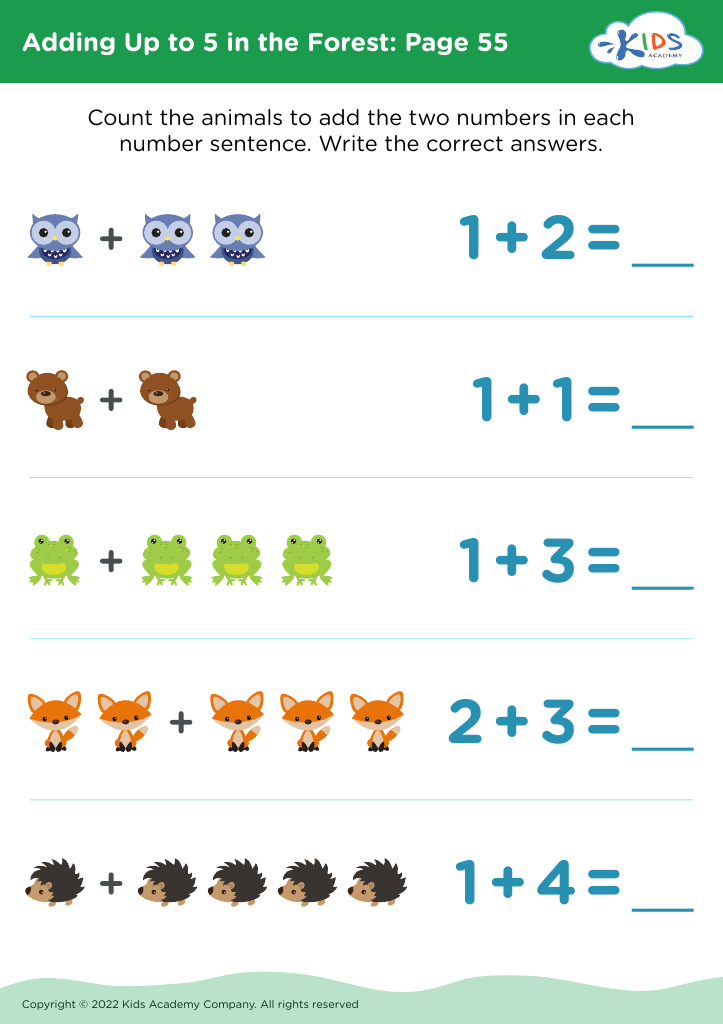
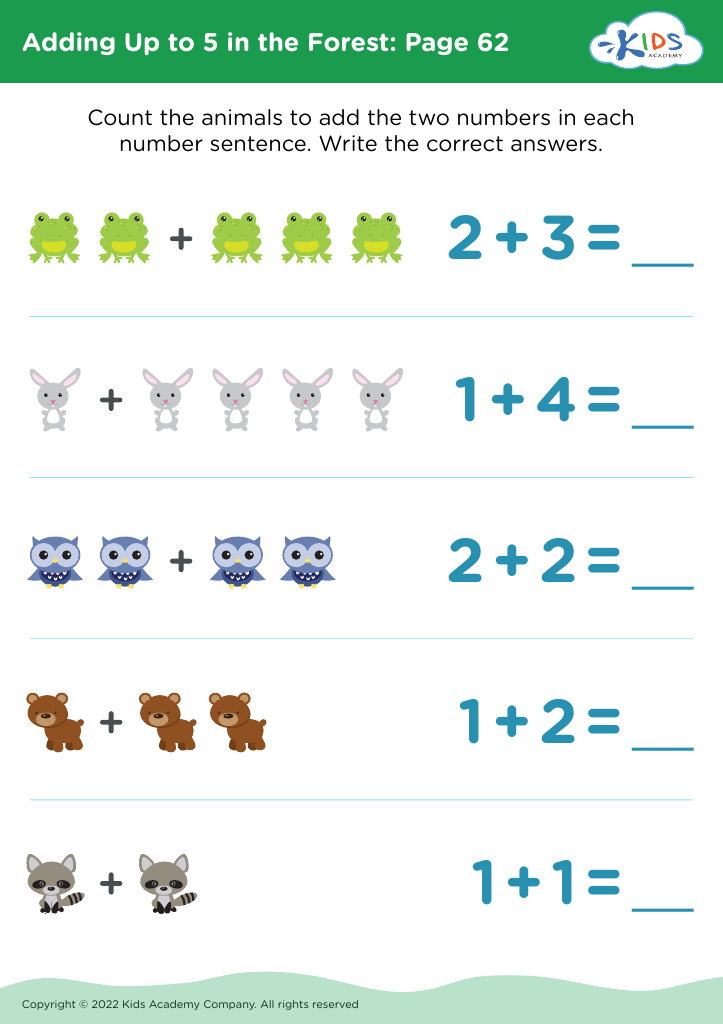



Fine motor skills are crucial for young children's development, especially for those aged 4-6. These skills involve the coordination of small muscles in the hands and fingers, enabling children to perform tasks such as grasping, drawing, and manipulating objects. Fostering fine motor skills through engaging activities, like "Fine Motor Skills Adding in the Forest," not only supports academic readiness but also enhances everyday functioning.
Incorporating nature into fine motor skill activities provides a rich sensory experience, making learning exciting and meaningful. Collecting natural items such as leaves, sticks, and stones can be transformed into counting and sorting games, where children practice basic math concepts while honing their dexterity.
Parents and teachers should care about these skills because they lay the foundation for later academic success. Proficiency in fine motor skills allows children to effectively utilize writing tools, engage in crafts, and manage daily self-care tasks, all of which build independence and confidence. Moreover, outdoor play encourages creativity and problem-solving, integral parts of a child’s cognitive development. By supporting fine motor skill development through engaging, natural activities, caregivers can help foster holistic growth in young children.