Filters

70 filtered results

Clear all filters
Favorites
With answer key
Interactive

70 filtered results

Difficulty Level

Grade


Check out this FREE Trial Lesson on Adding in the Forest for age 4-6!

Exactly the Same, or Not

Favorites
With answer key
Interactive
  • 4-6
  • Number Recognition
  • Adding in the Forest
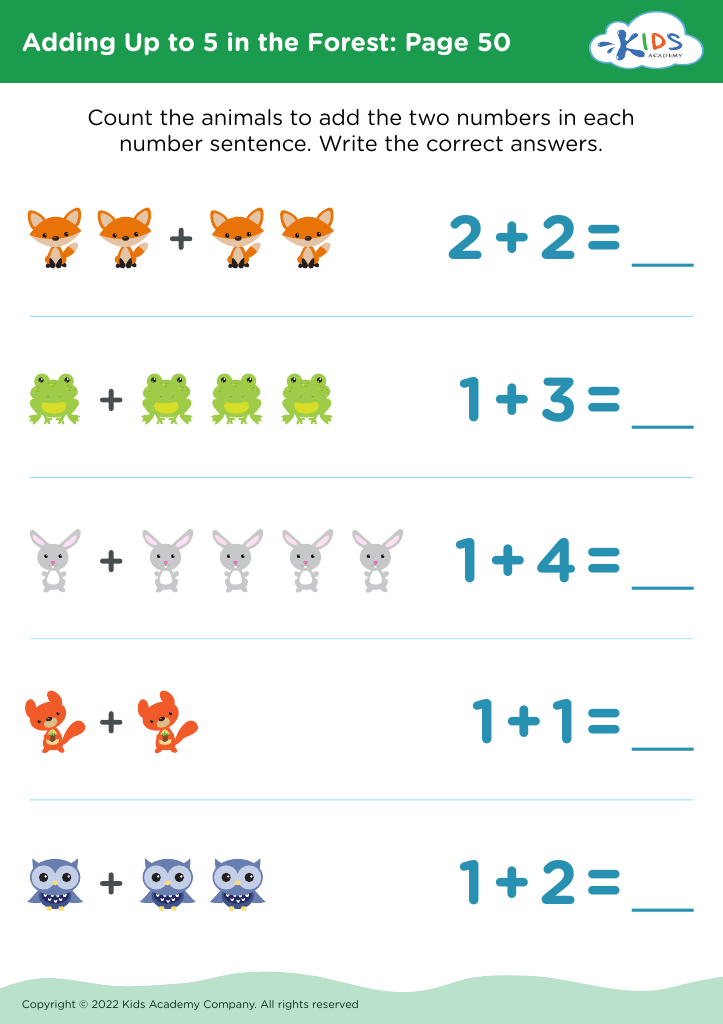
Adding Up to 5 in the Forest: Page 50
Worksheet
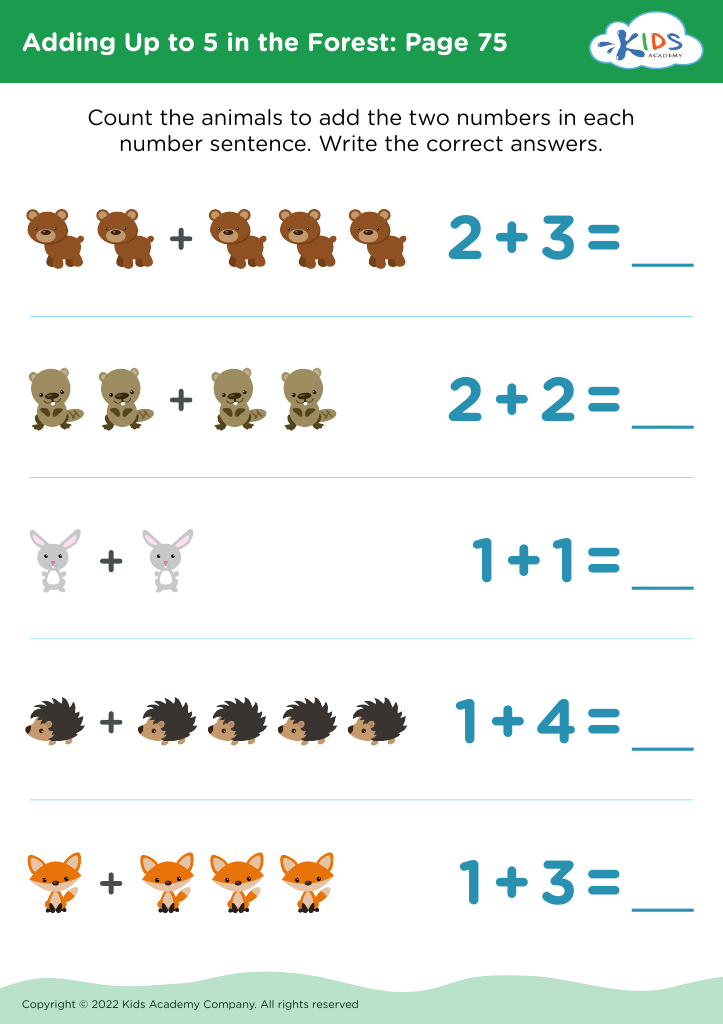
Adding Up to 5 in the Forest: Page 75
Worksheet
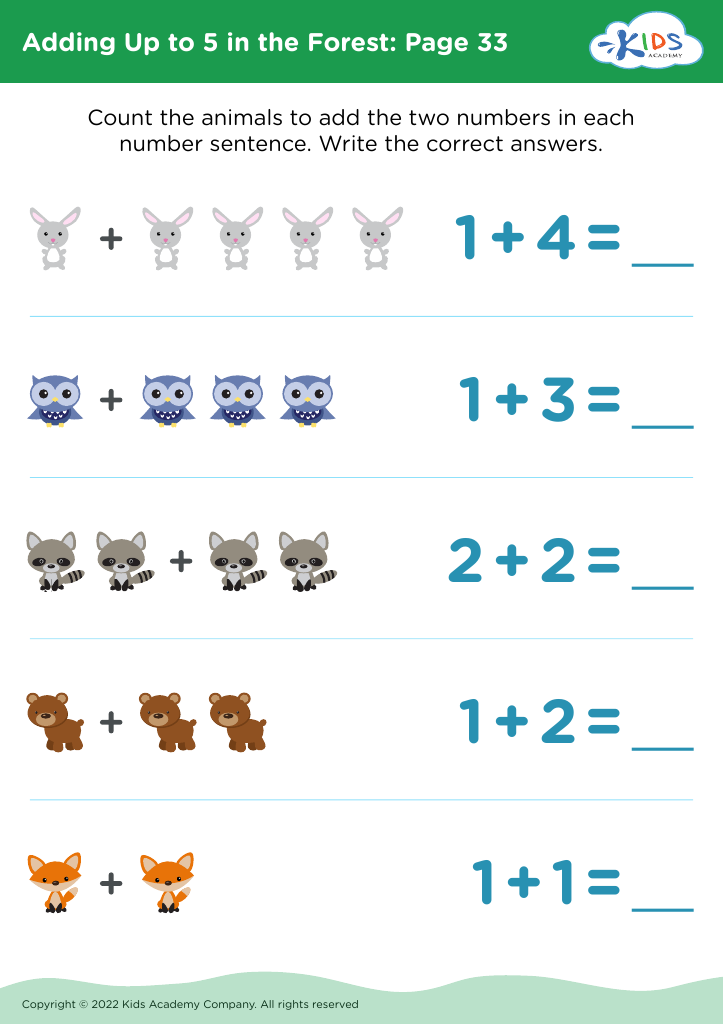
Adding Up to 5 in the Forest: Page 33
Worksheet
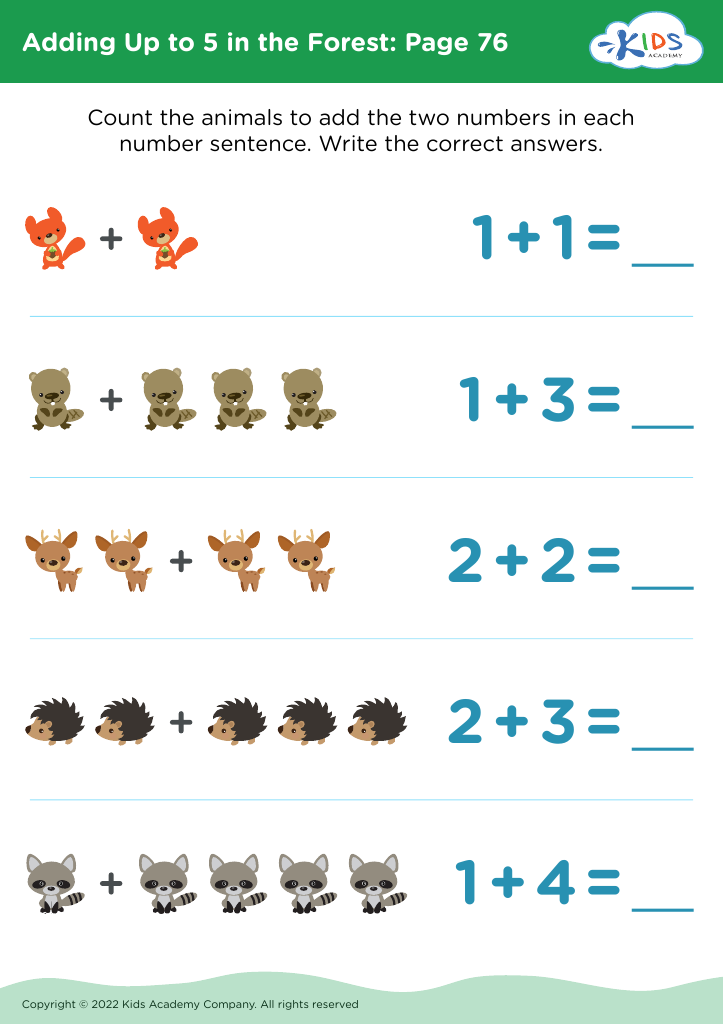
Adding Up to 5 in the Forest: Page 76
Worksheet
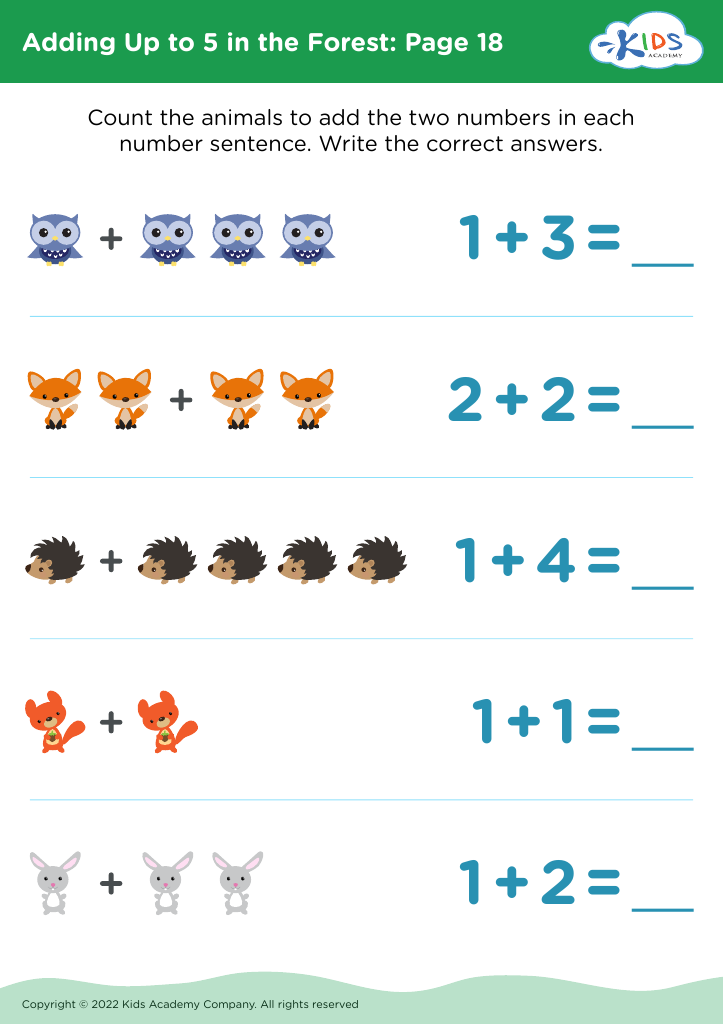
Adding Up to 5 in the Forest: Page 18
Worksheet
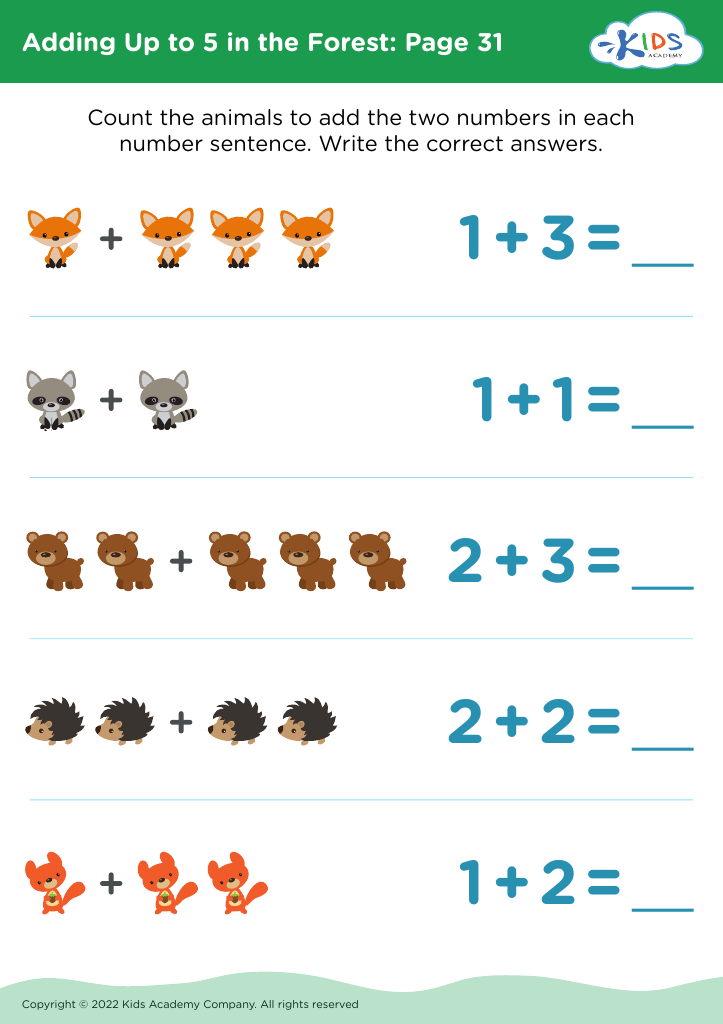
Adding Up to 5 in the Forest: Page 31
Worksheet
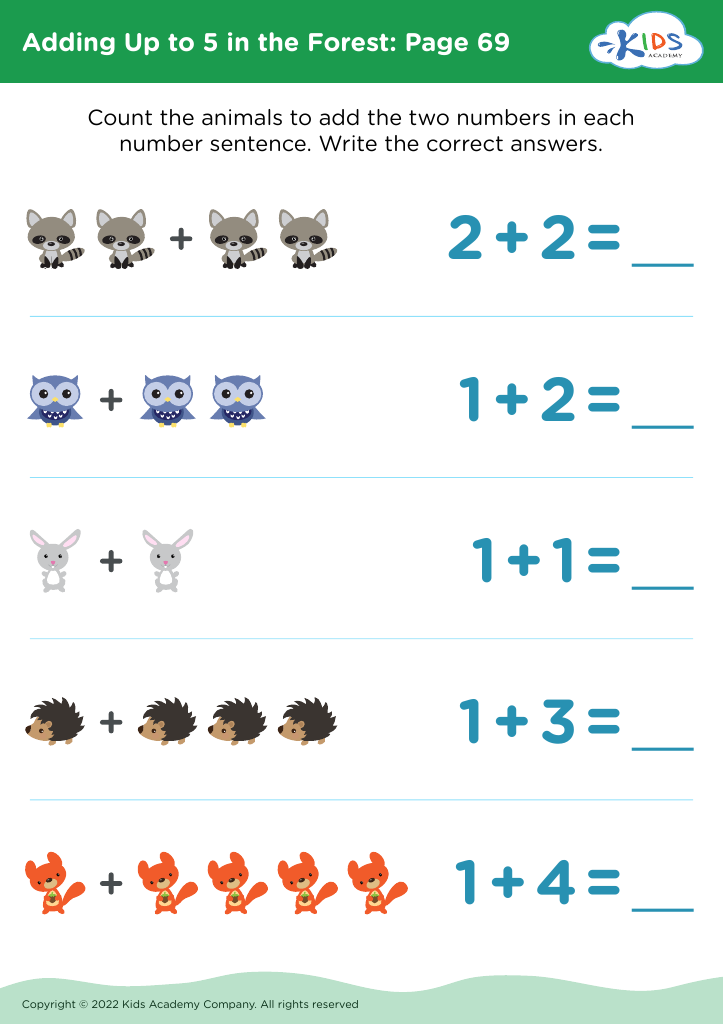
Adding Up to 5 in the Forest: Page 69
Worksheet
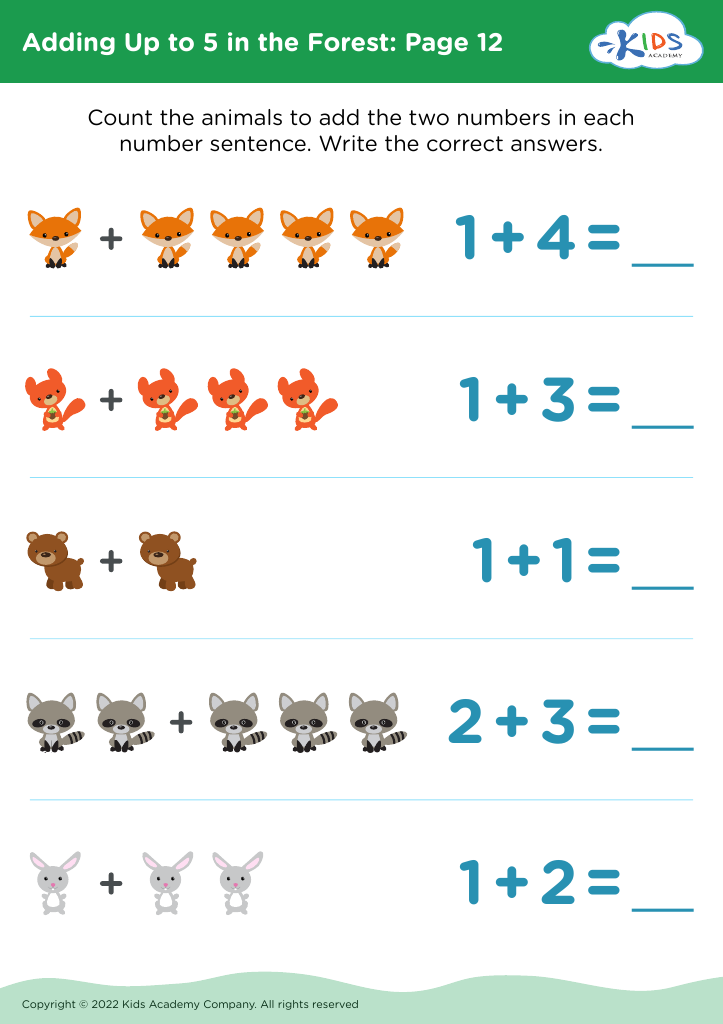
Adding Up to 5 in the Forest: Page 12
Worksheet
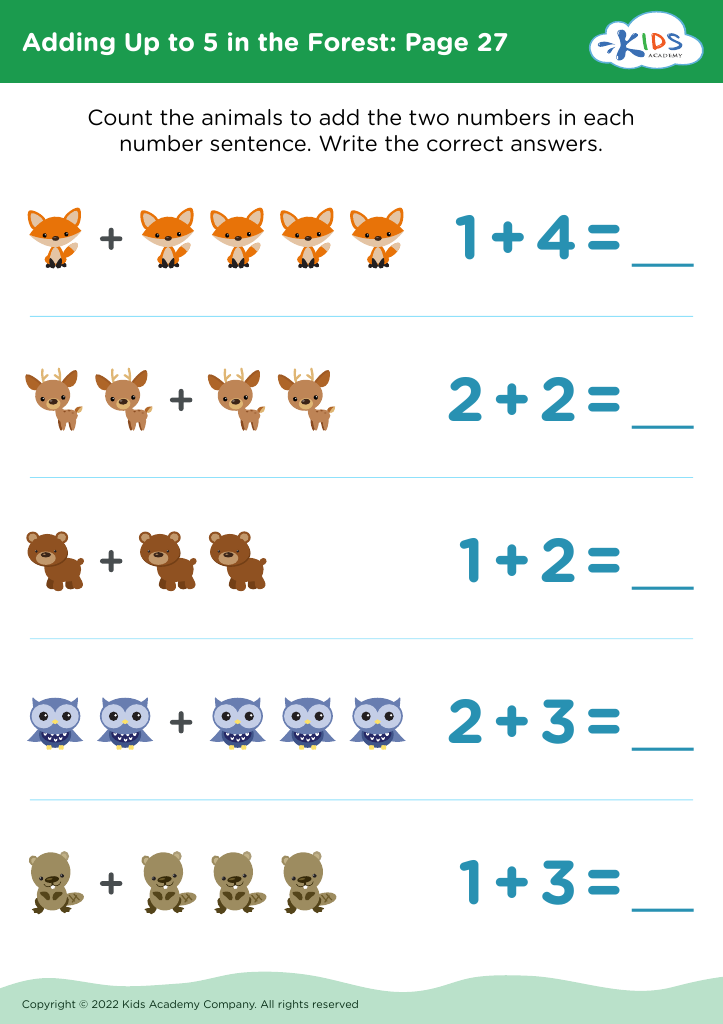
Adding Up to 5 in the Forest: Page 27
Worksheet
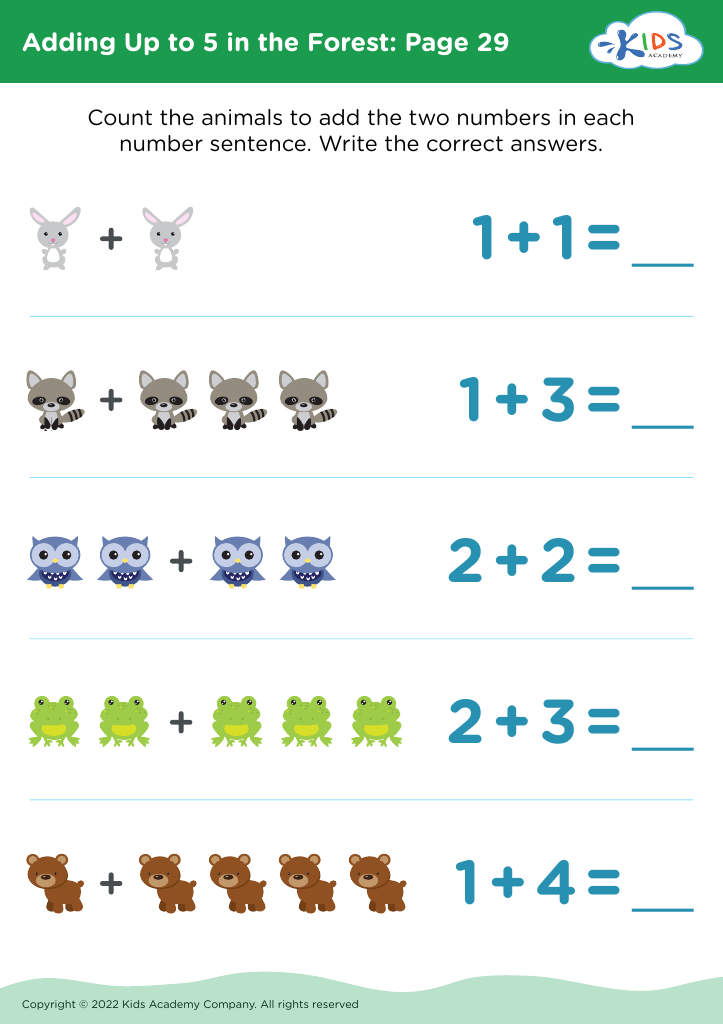
Adding Up to 5 in the Forest: Page 29
Worksheet
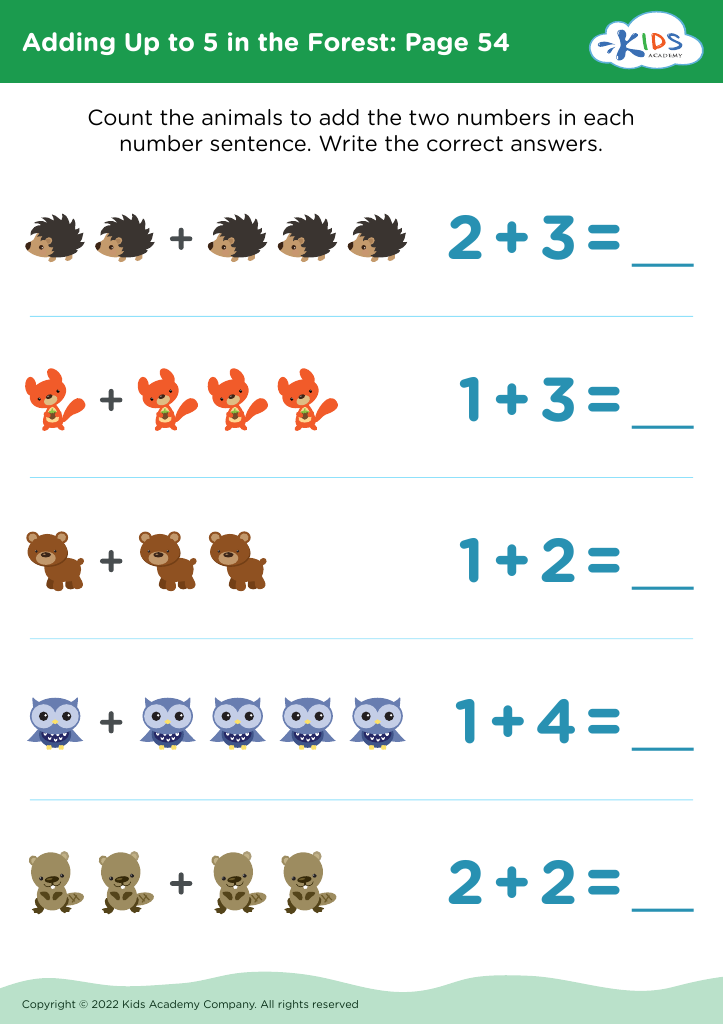
Adding Up to 5 in the Forest: Page 54
Worksheet
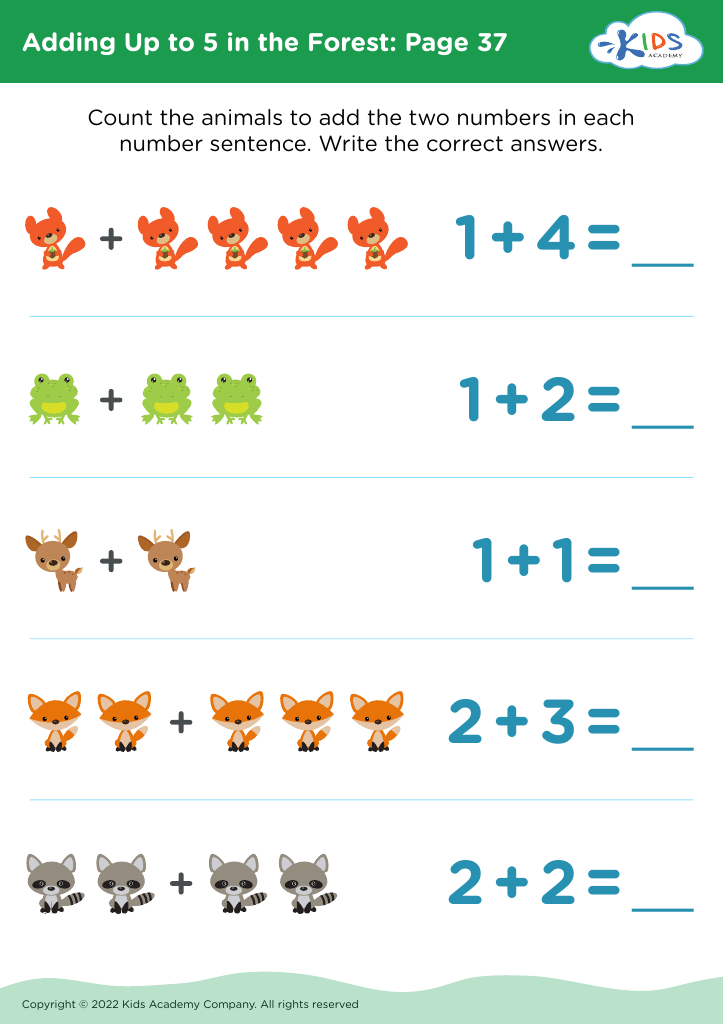
Adding Up to 5 in the Forest: Page 37
Worksheet
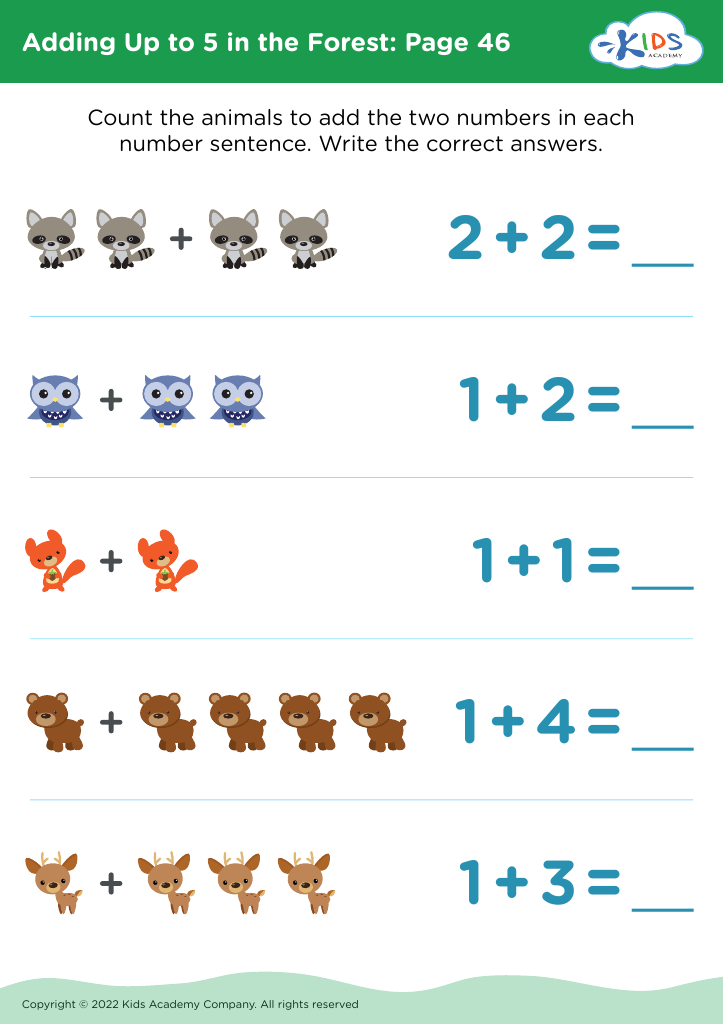
Adding Up to 5 in the Forest: Page 46
Worksheet
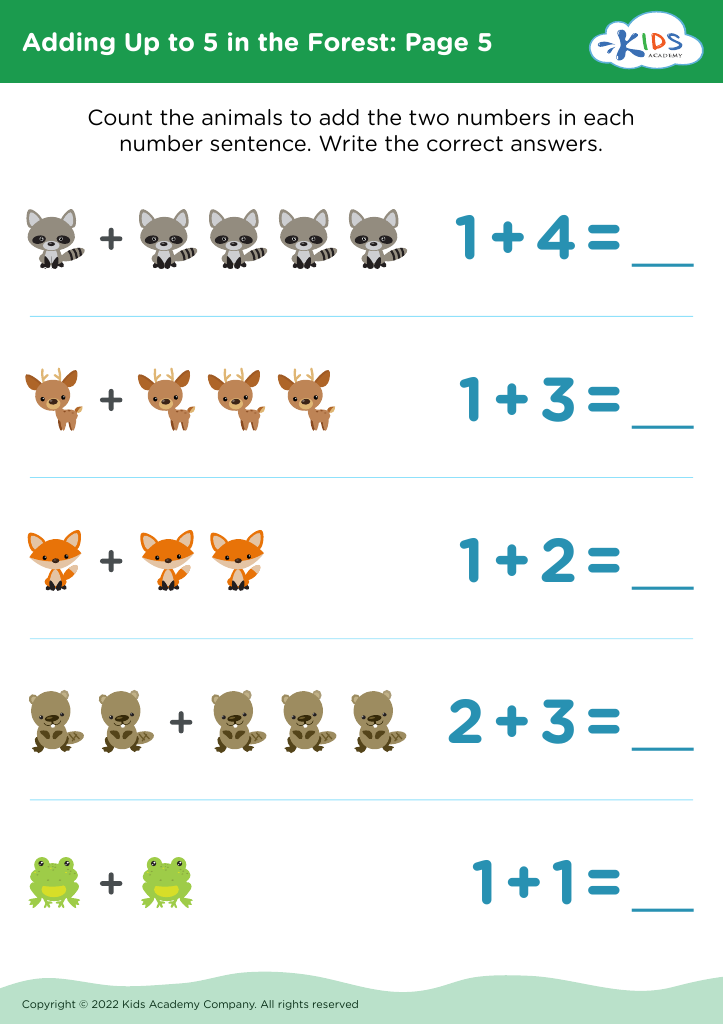
Adding Up to 5 in the Forest: Page 5
Worksheet
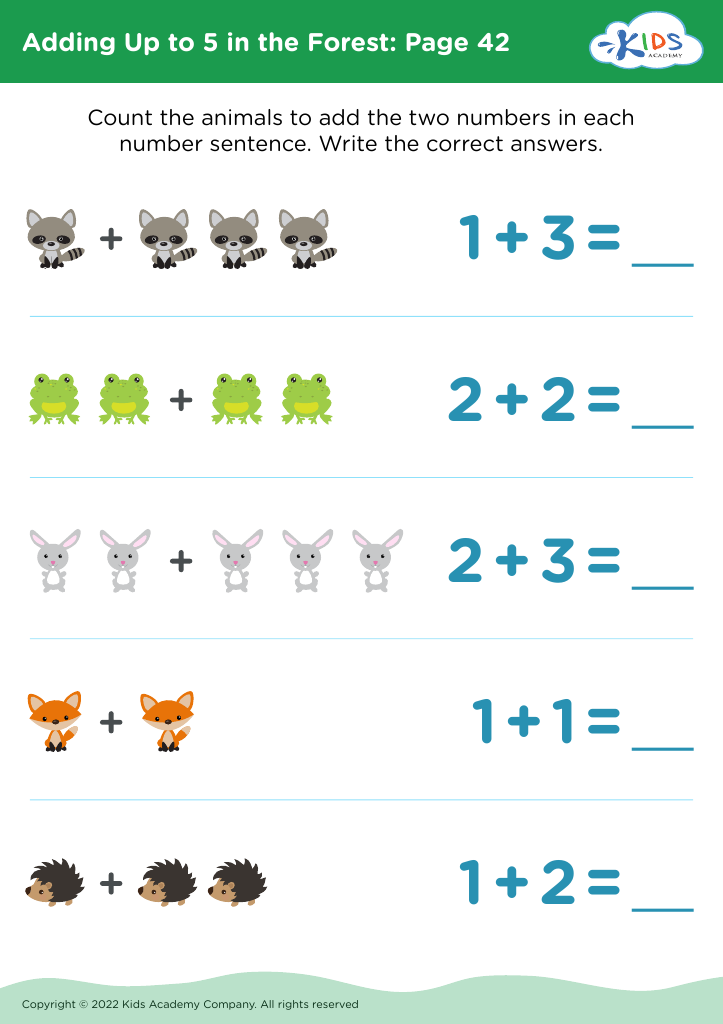
Adding Up to 5 in the Forest: Page 42
Worksheet
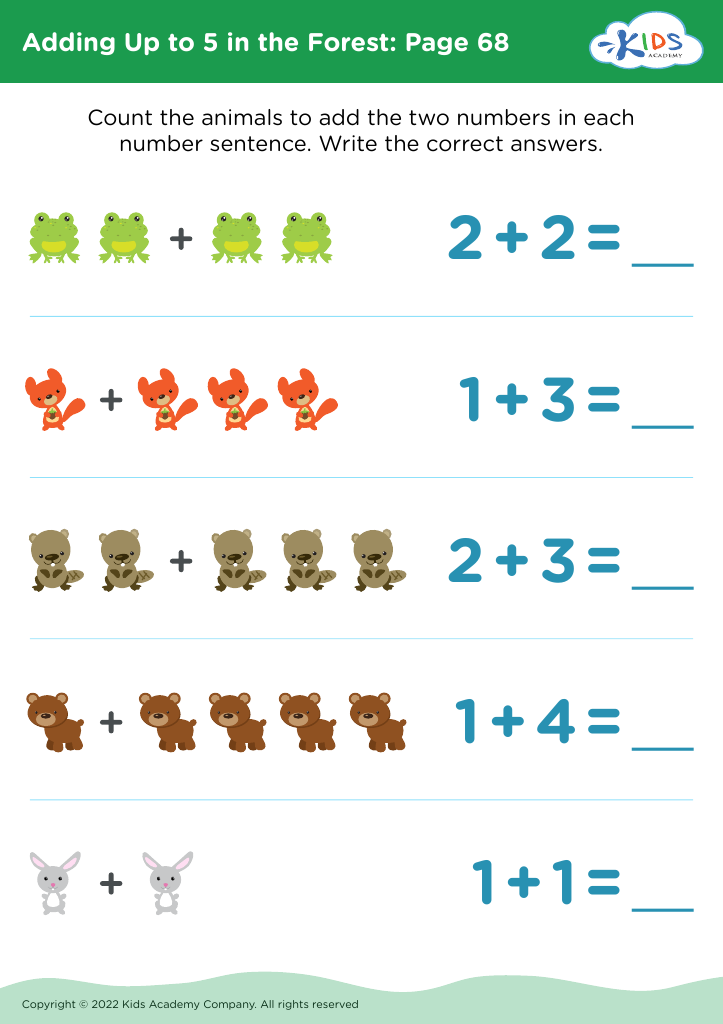
Adding Up to 5 in the Forest: Page 68
Worksheet
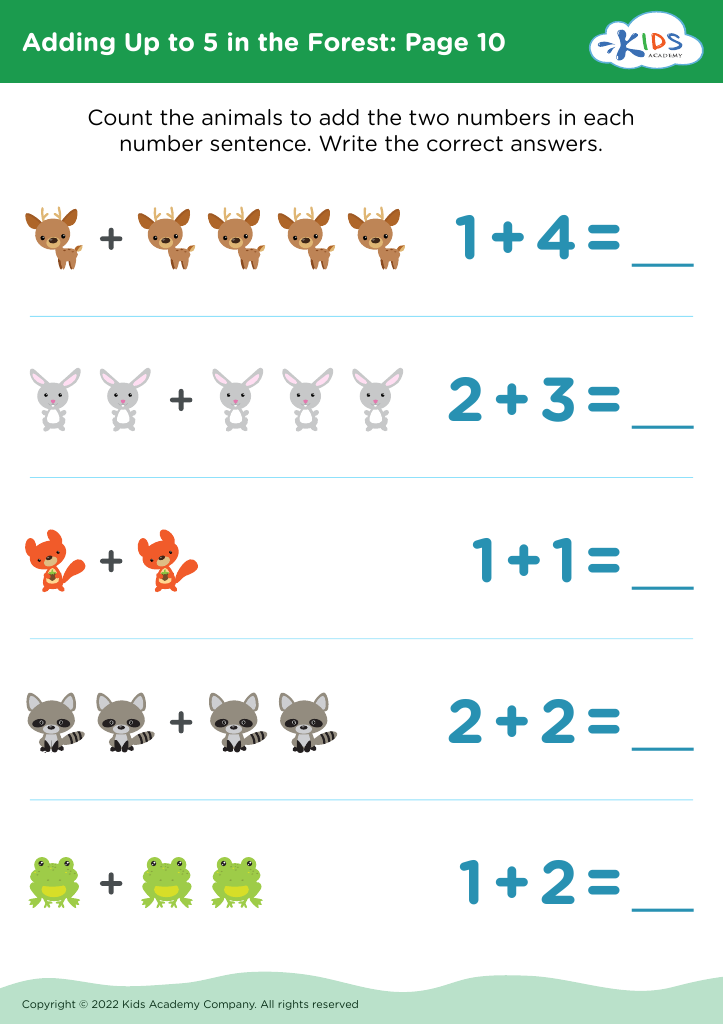
Adding Up to 5 in the Forest: Page 10
Worksheet
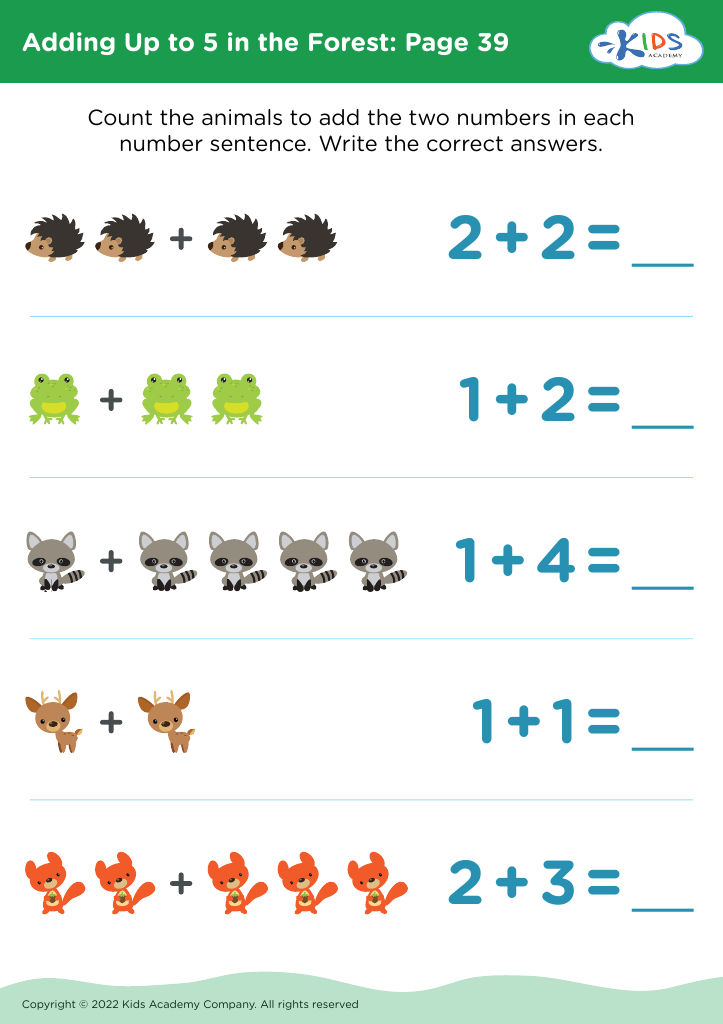
Adding Up to 5 in the Forest: Page 39
Worksheet
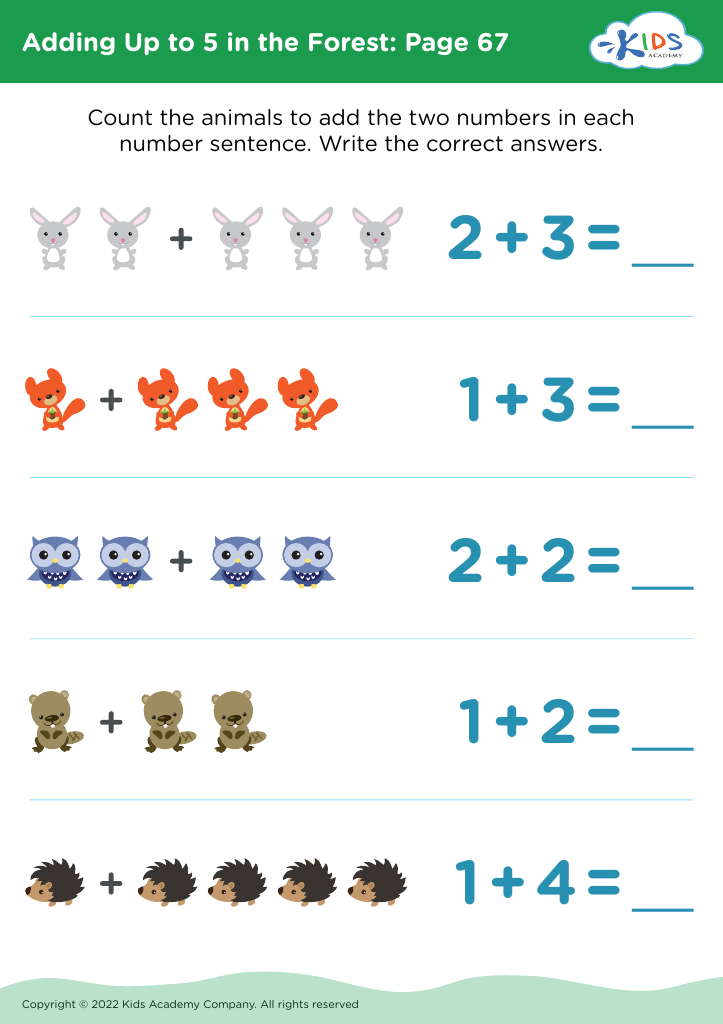
Adding Up to 5 in the Forest: Page 67
Worksheet
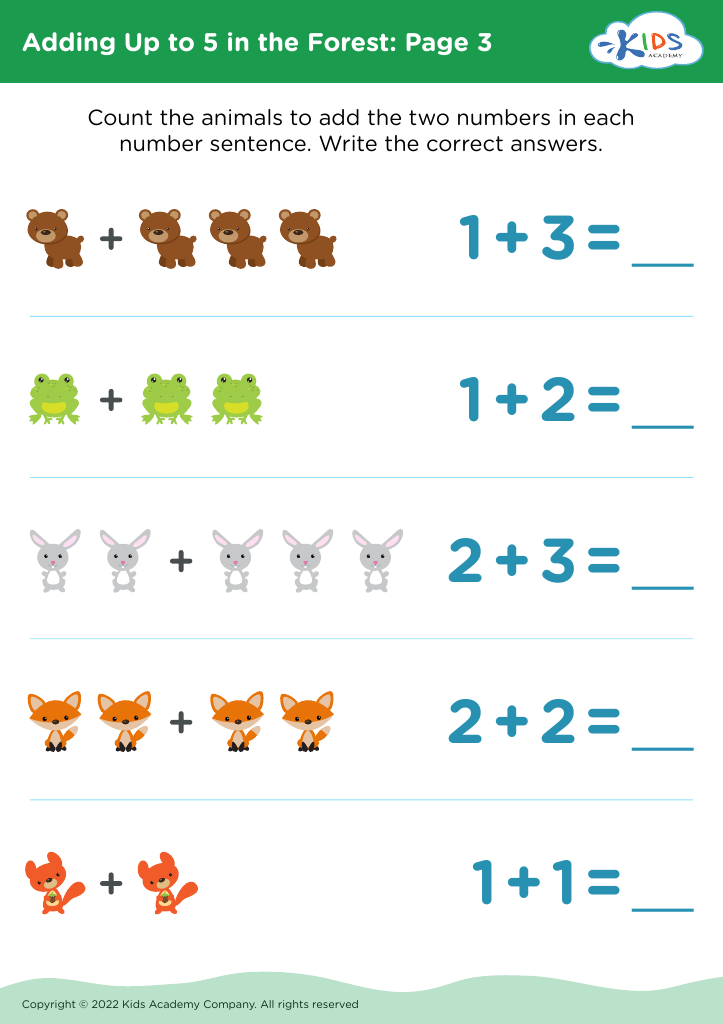
Adding Up to 5 in the Forest: Page 3
Worksheet
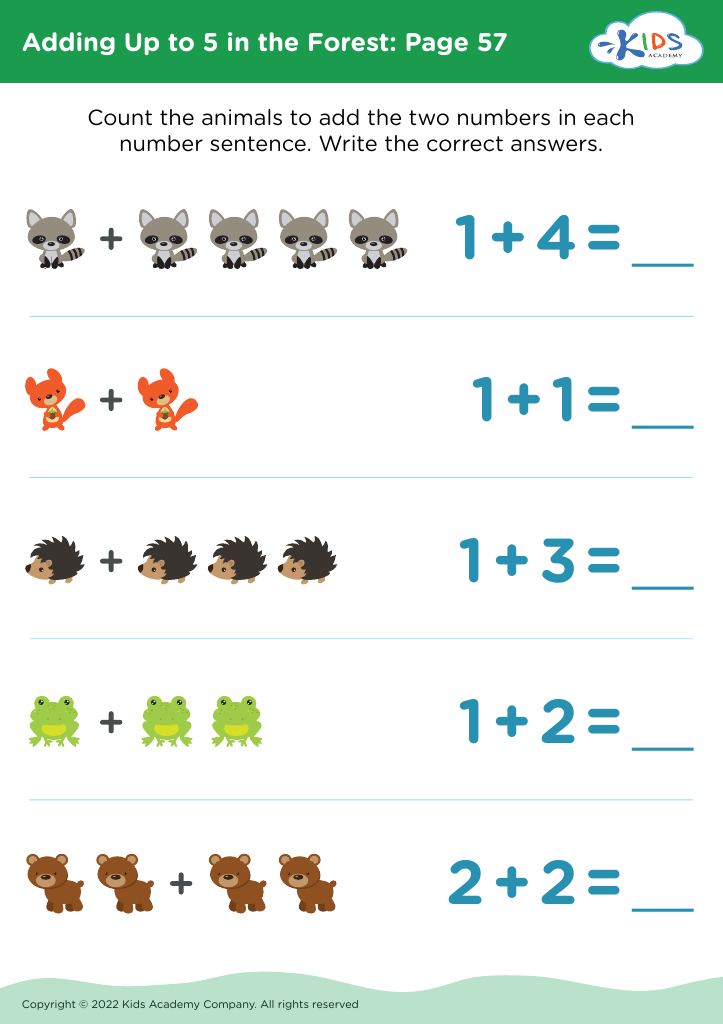
Adding Up to 5 in the Forest: Page 57
Worksheet
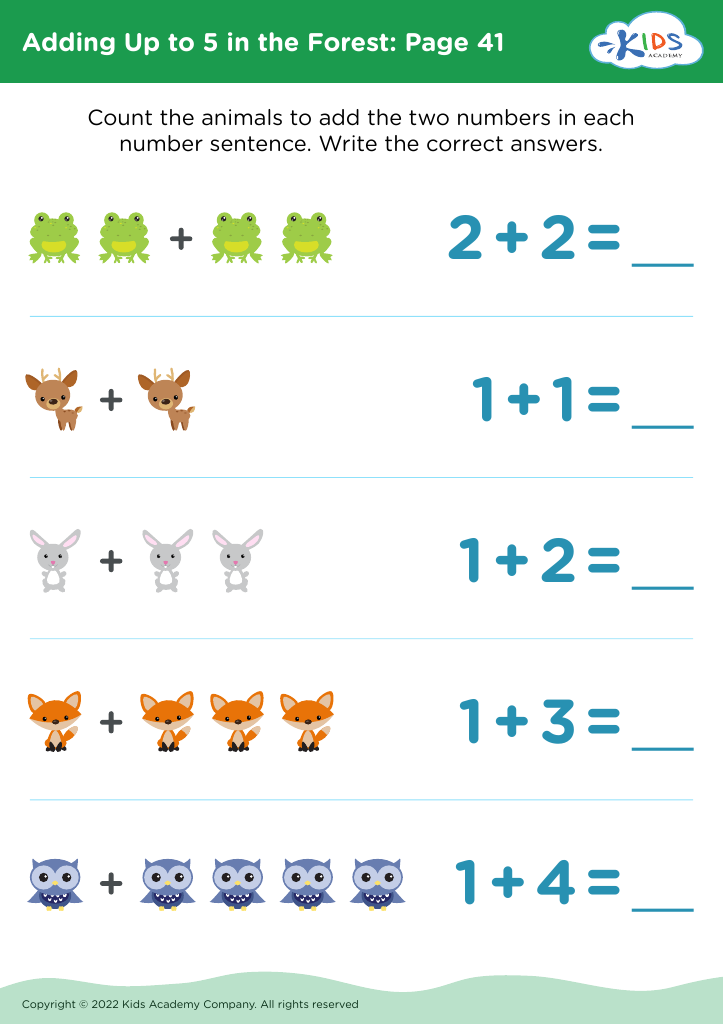
Adding Up to 5 in the Forest: Page 41
Worksheet


... 2 3

Number recognition and early arithmetic skills form the foundation for mathematical learning and problem-solving. "Number Recognition Adding in the Forest" for ages 4-6 is an engaging method to introduce these crucial concepts. Parents and teachers should care about this educational activity because it combines play with learning in a natural, inviting context. Children at this age learn best through play and hands-on experiences, and a forest setting can add an element of adventure and exploration, which boosts engagement and retention.

Number recognition is fundamental because it allows children to identify, name, and understand numbers, crucial steps before they can manipulate numbers meaningfully. In the setting of a forest, children can count objects such as leaves, acorns, or stones, thus learning to associate numerical symbols with quantities. Adding within this context teaches basic arithmetic in a relatable and enjoyable way.

This activity also promotes physical movement, curiosity, and a love of nature, contributing to overall well-being. It encourages critical thinking as children solve problems and become creative while mastering early math skills. Parents and teachers can leverage this approach to provide a balanced educational experience that nurtures cognitive, physical, and emotional development in young learners. Consequently, children develop a positive attitude towards learning and mathematics from an early age.