Problem-solving abilities Adding in the Forest Worksheets for Ages 4-6
7 filtered results
-
From - To
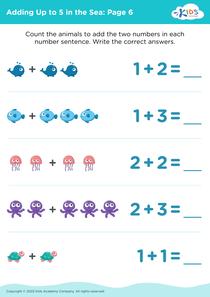
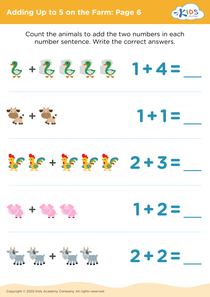
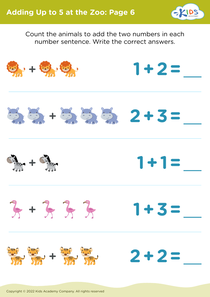
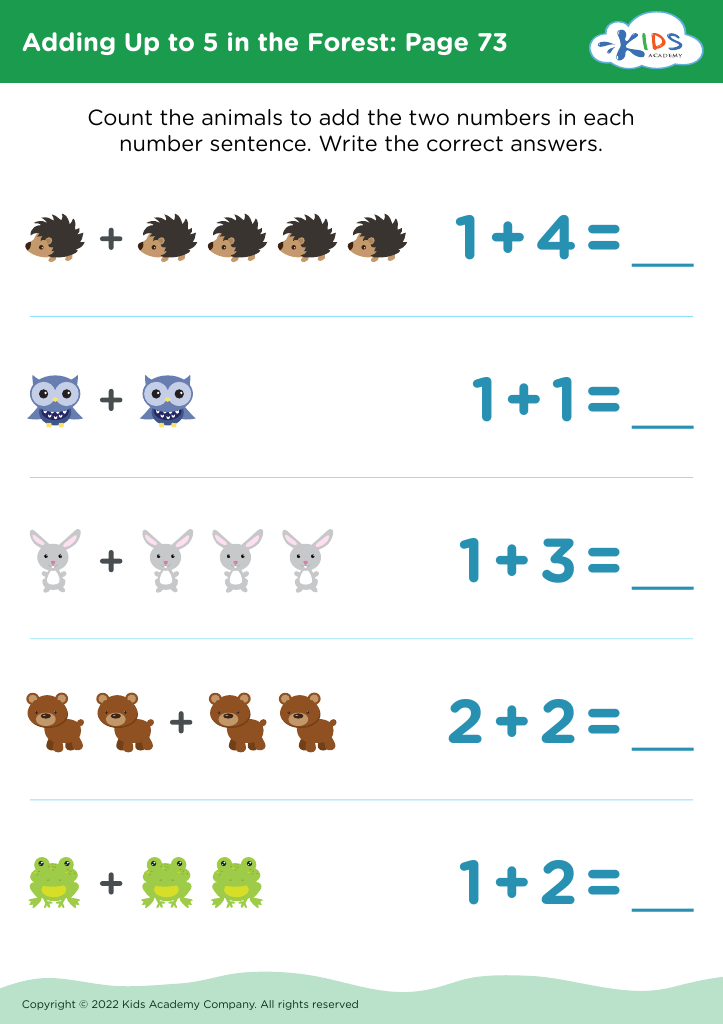
Discover the "Adding in the Forest Worksheets," designed for ages 4-6, to boost your child's problem-solving abilities. These engaging worksheets blend fun forest themes with math exercises, guiding young learners through fundamental addition concepts. Your child will enjoy solving whimsical problems that improve critical thinking and arithmetic skills. Perfect for enhancing classroom learning or homeschooling environments, our worksheets make math entertaining and approachable. Ensure your child's progress with our well-structured activities that foster intellectual growth and confidence. Visit Kids Academy and enrich your child's educational journey with our expertly crafted, forest-themed problem-solving worksheets!
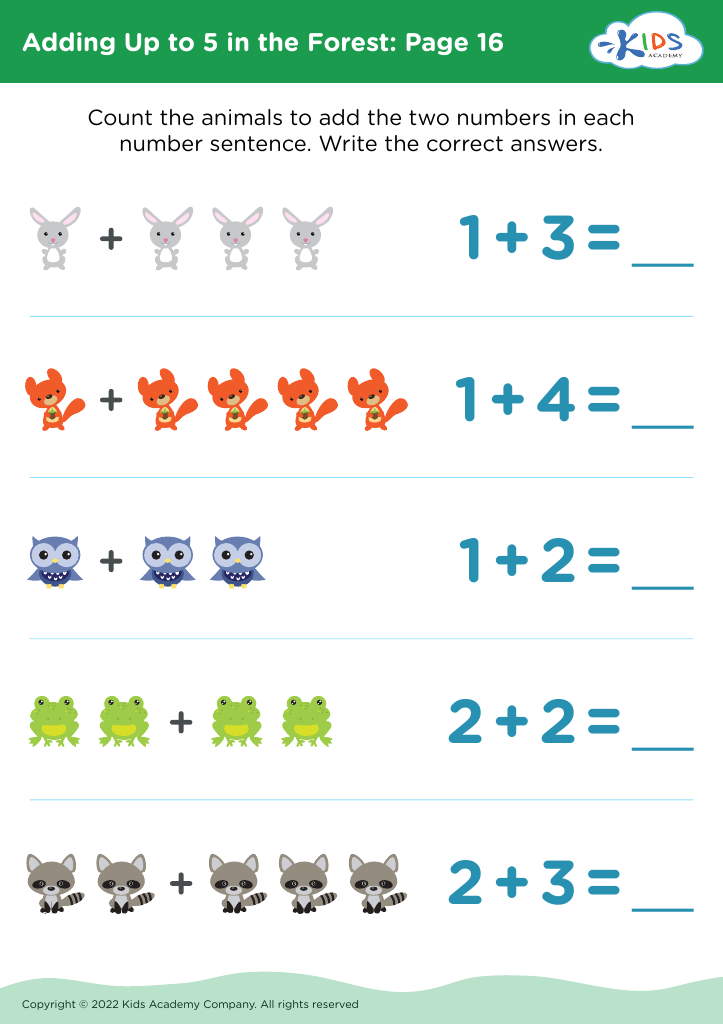
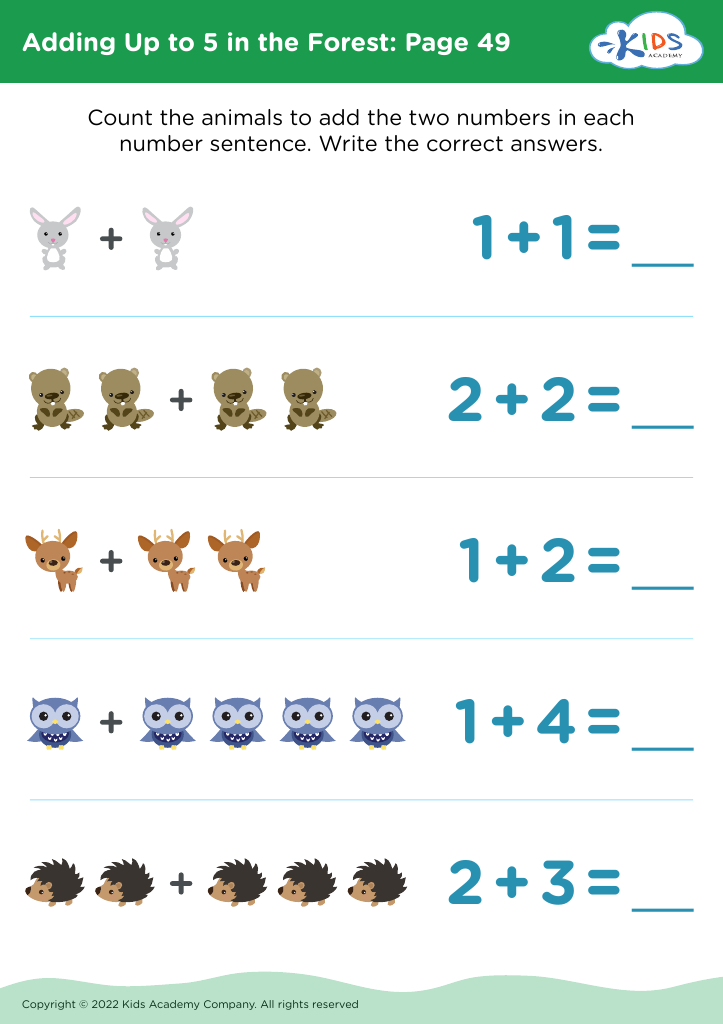
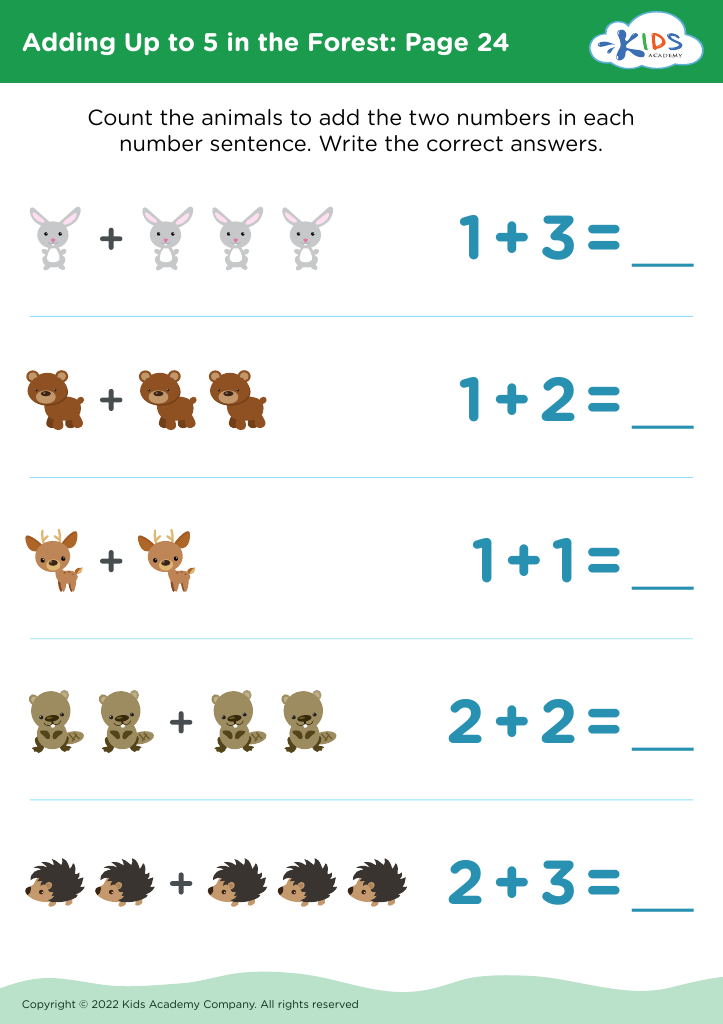
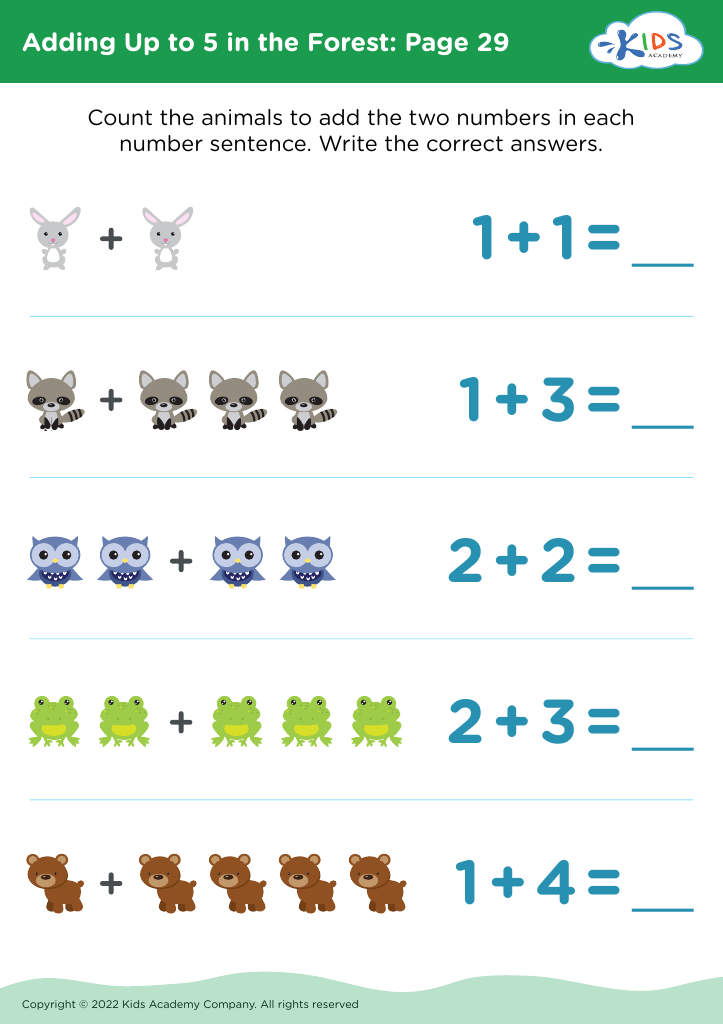
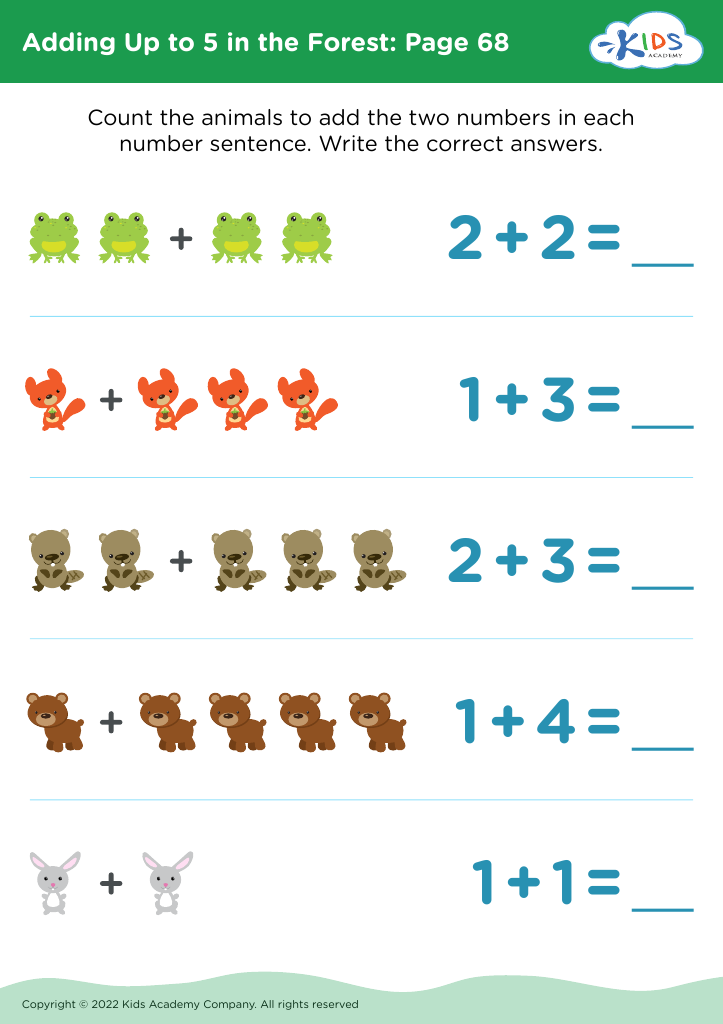
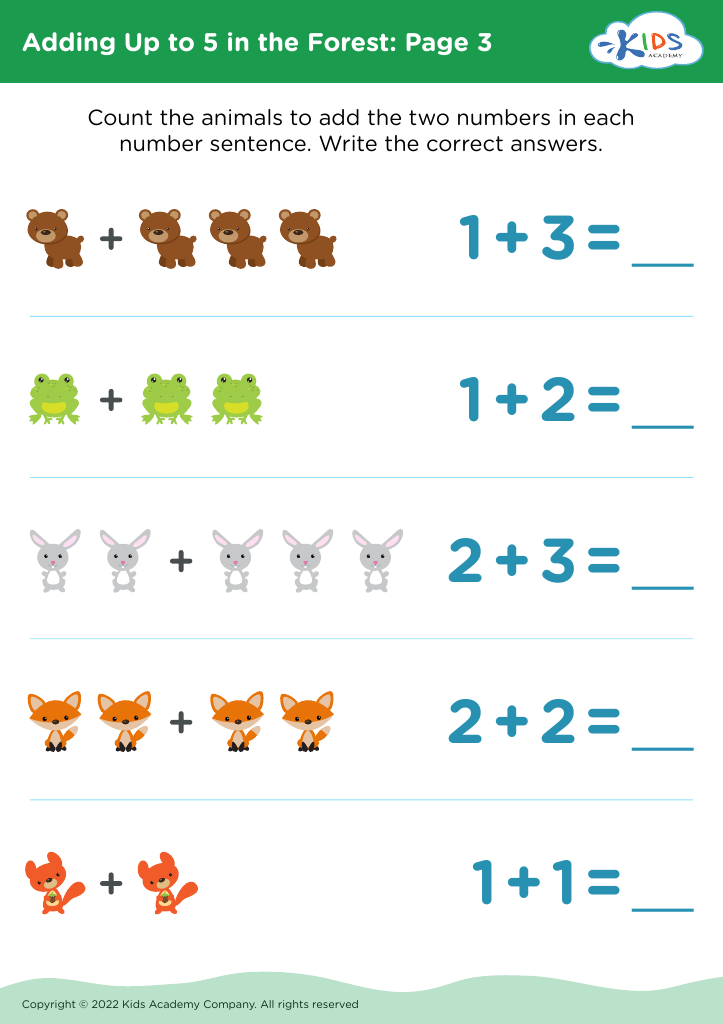



Parents and teachers should care deeply about cultivating problem-solving abilities in children ages 4-6 through activities such as "Adding in the Forest" because these skills are foundational for overall cognitive development and future success. At this crucial early childhood stage, children's brains are highly plastic, meaning they are particularly receptive to learning new concepts and skills. Problem-solving exercises help enhance critical thinking, a skill that is indispensable not only in academic settings but in everyday life.
"Adding in the Forest," for instance, can turn a fundamental math skill into an adventurous narrative that children find engaging. By incorporating natural elements such as counting acorns or animals, young learners can better understand abstract concepts like addition in a real-world context. This approach bolsters mathematical skills, logical reasoning, and the ability to approach problems methodically. Moreover, tackling these problems builds resilience and persistence, boosting children's confidence in their abilities to solve challenges independently.
Integrating problem-solving exercises at an early age prepares children for more complex tasks later on, laying a solid foundation for lifelong learning. By embedding these experiences in appealing activities, parents and teachers can foster a love for learning and cultivate a growth mindset, turning each small accomplishment into a stepping stone for future achievements.