Understanding number values Adding Up to 5 Worksheets for Ages 4-6
3 filtered results
-
From - To
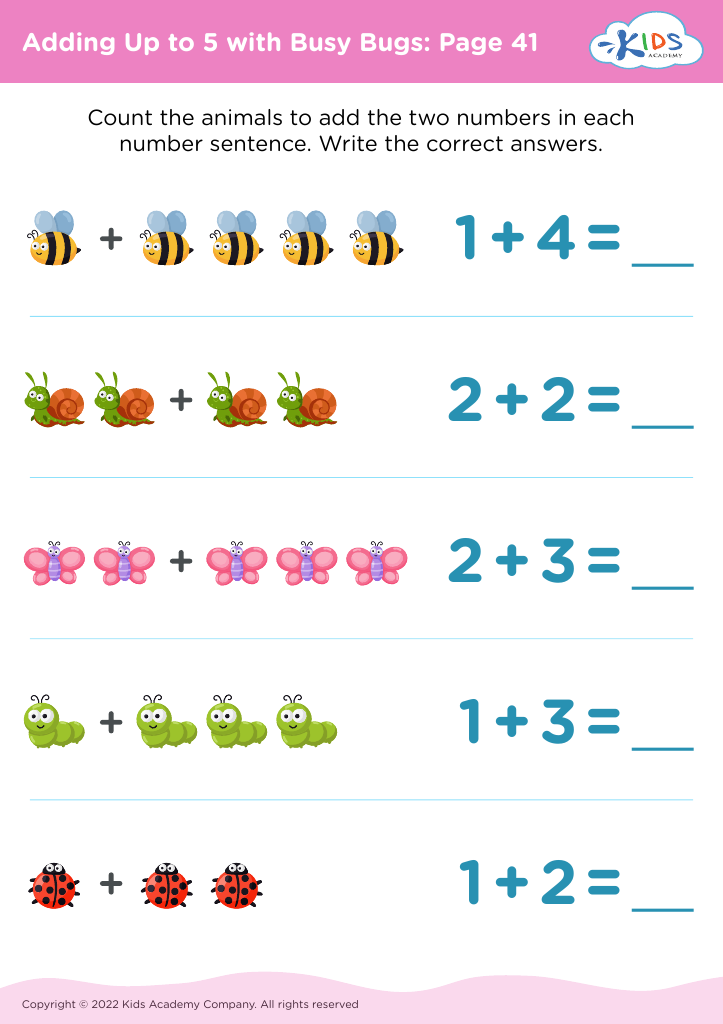
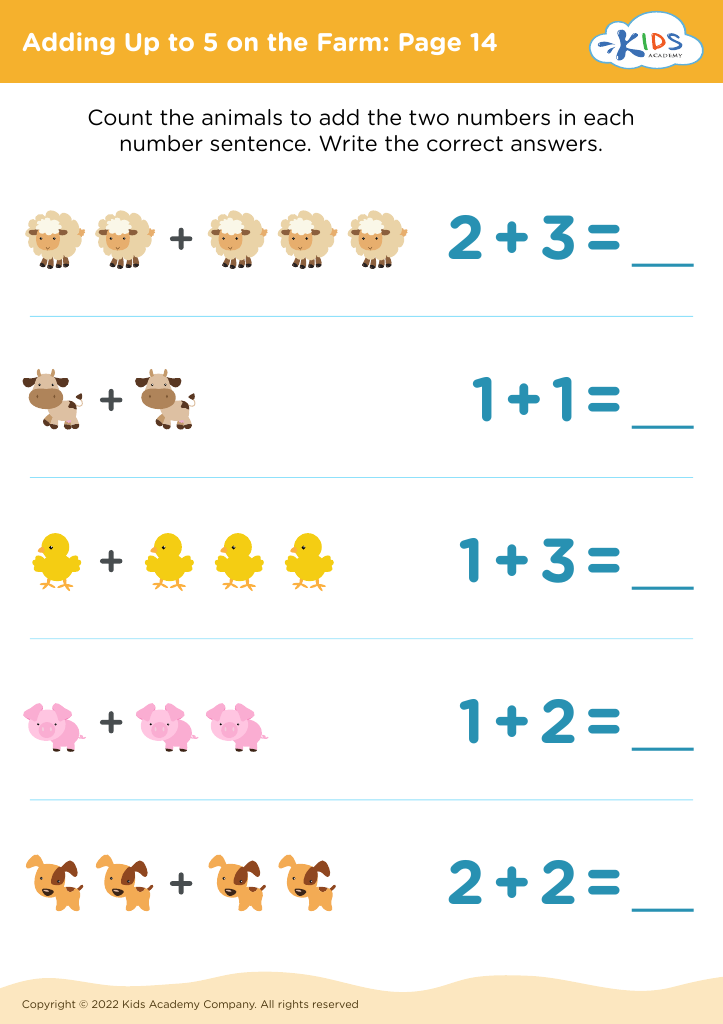
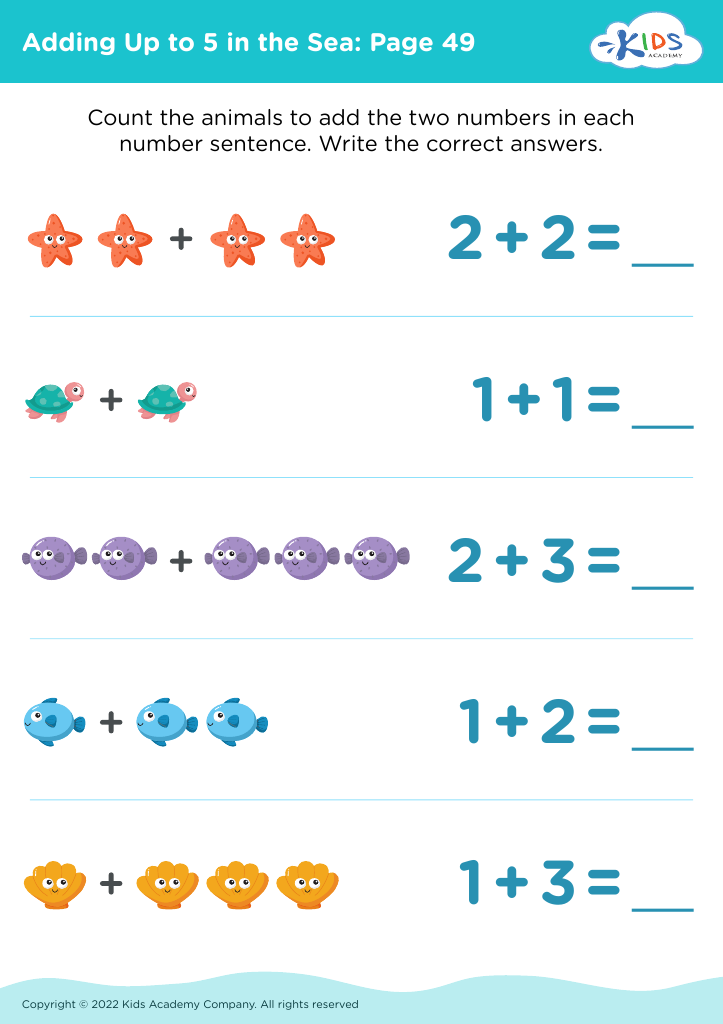
Help your young learners master the basics of number values with our "Understanding Number Values: Adding Up to 5" worksheets designed specifically for ages 4-6. This engaging collection offers interactive exercises that introduce the concept of addition in a fun and age-appropriate way. As children explore guiding visuals and relatable scenarios, they will clearly understand how numbers combine to create sums up to 5. The worksheets provide a hands-on opportunity for kids to practice counting, problem-solving, and numerical recognition, setting the foundation for future math skills. Encourage confidence in your child's abilities with these delightful and educational resources!



.jpg)




Understanding number values, especially adding up to 5, is fundamental for children aged 4-6. This early stage in mathematics forms the basis for all future numeracy skills, influencing academic success and everyday problem-solving. Mastering the concept of addition within this range helps children grasp the idea of quantity and the relationships between numbers, which is crucial for cognitive development.
Parents and teachers should care because a strong foundational understanding allows children to develop confidence in their mathematical abilities. Engaging in activities like counting, using visual aids, or interactive games not only makes learning fun but also strengthens these concepts. Young children who can readily identify and manipulate small numbers will find it easier to proceed to more complex math in later years.
Moreover, this knowledge fosters critical thinking and boosts basic communication skills. By discussing numbers in everyday contexts—such as during shopping or playing games—children learn to value math as part of life, not just an isolated subject. Ultimately, a solid grasp of adding up to 5 nurtures a positive attitude towards learning and equips children with essential skills they will use throughout their educational journey and beyond.








