Understanding numbers Adding Up to 5 Worksheets for Ages 4-6
3 filtered results
-
From - To
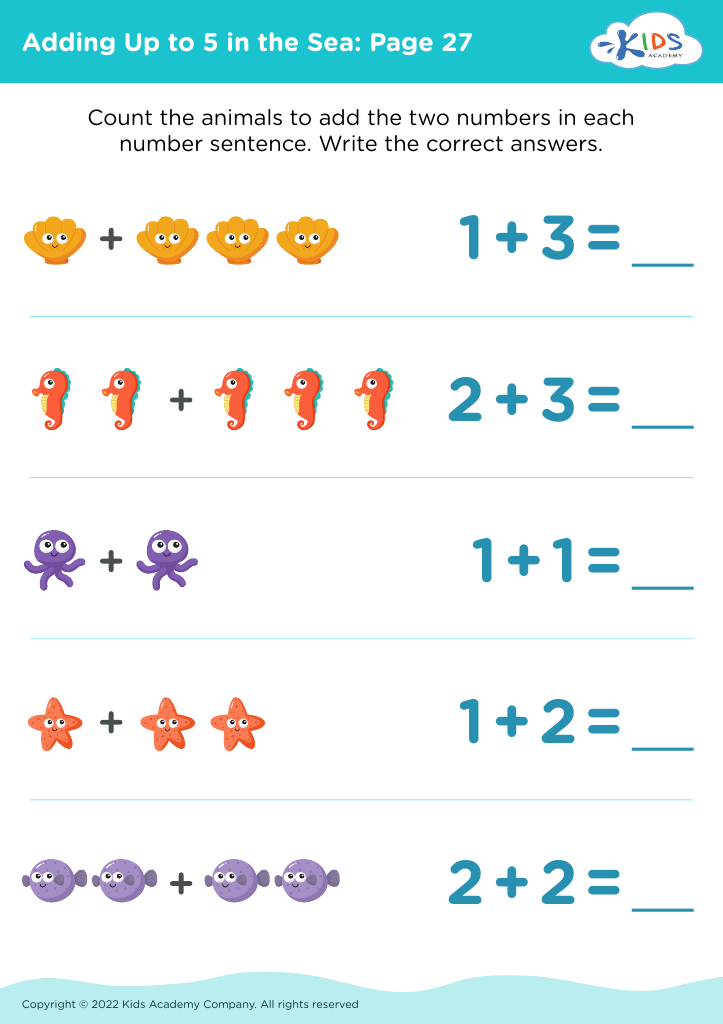
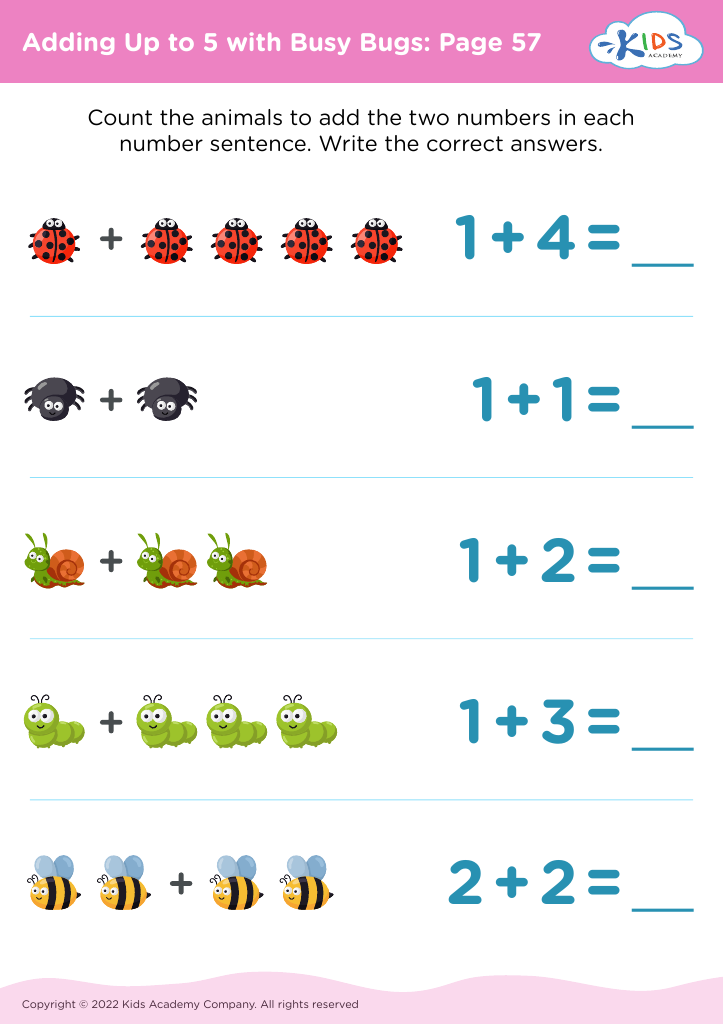
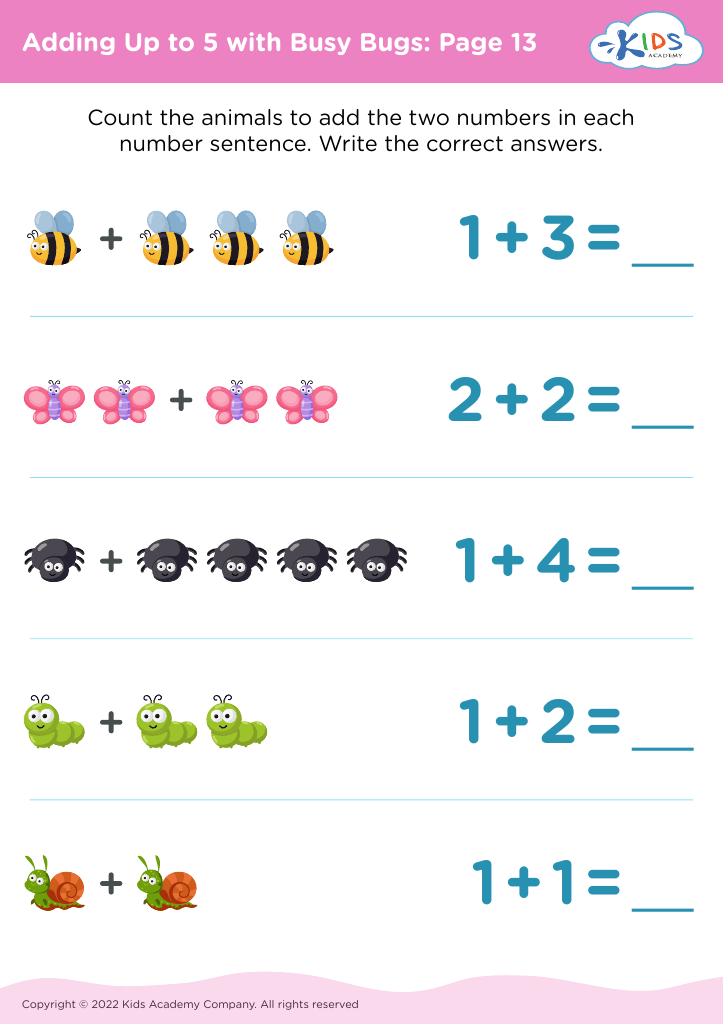
Unlock your child's mathematical potential with our "Understanding Numbers: Adding Up to 5 Workbook" designed for ages 4-6! These engaging worksheets foster early math skills through interactive exercises that help little learners grasp the concept of addition. Each activity promotes number recognition, counting skills, and a strong foundational understanding of addition through fun visuals and relatable scenarios. Perfect for both classroom and home use, our worksheets encourage independent learning and problem-solving. Watch as your child gains confidence and excitement for math, paving the way for future success. Explore our collection and turn learning into an enjoyable adventure today!


.jpg)





Understanding numbers and the concept of adding up to 5 is crucial for young learners, particularly for children aged 4 to 6. At this age, children are developing foundational mathematical concepts that will shape their future learning. Mastering these early number skills not only enhances their problem-solving abilities but also builds their confidence in handling more complex mathematics later on.
When children learn to add numbers up to 5, they engage with counting, number recognition, and basic addition—all critical components of early numeracy. This foundational understanding helps them develop logical reasoning and critical thinking skills. Moreover, recognizing the concept of "number sense" facilitates their ability to make connections between quantities and encourages flexibility in thinking.
Teachers and parents play an essential role in creating a supportive environment where children can practice and explore these concepts. Incorporating fun and engaging activities, such as interactive games or hands-on manipulatives, can make math enjoyable.
Ultimately, nurturing these early mathematical skills sets the stage for academic success. By emphasizing the significance of adding up to 5, parents and educators help children establish a love for learning and empower them to become confident learners in mathematics and beyond.








