Understanding numerical values Adding Up to 5 Worksheets for Ages 4-6
4 filtered results
-
From - To
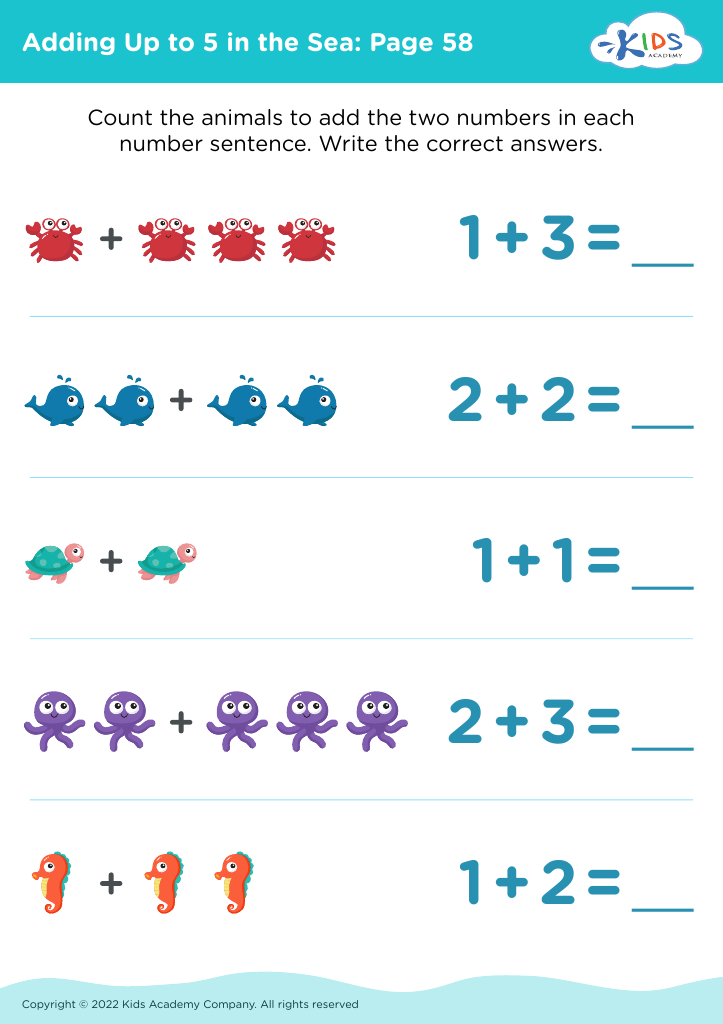
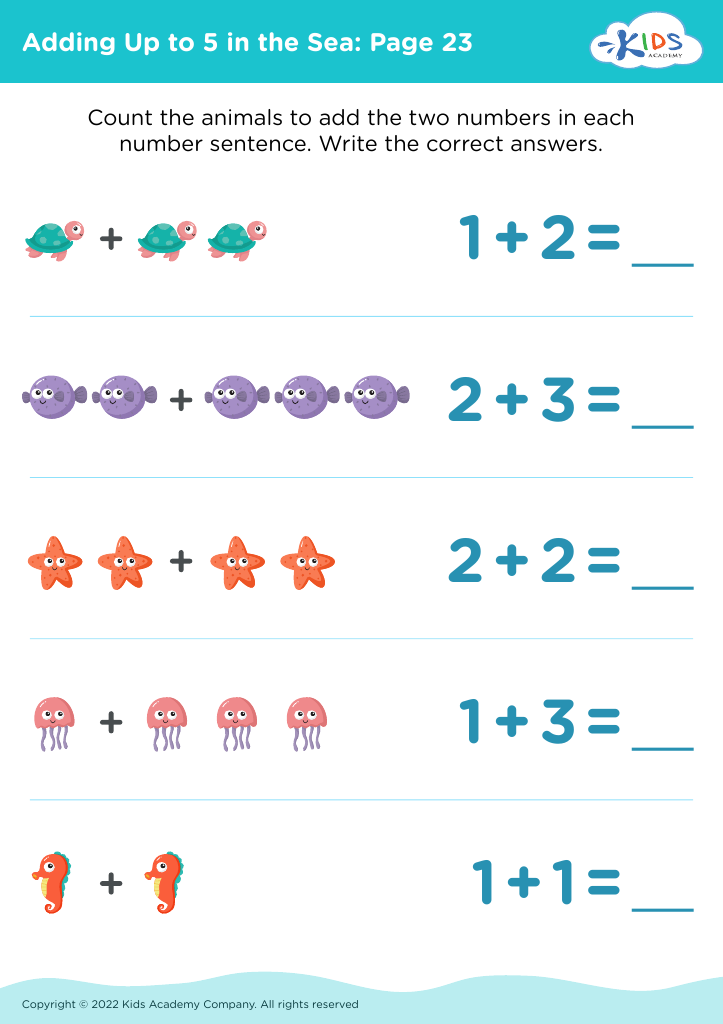
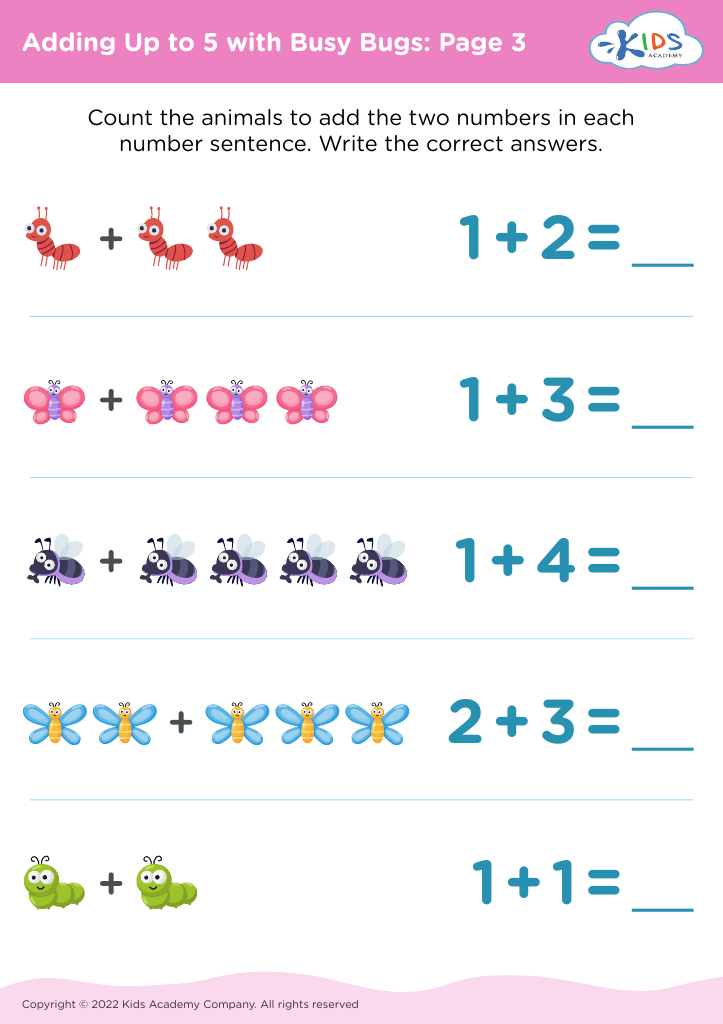
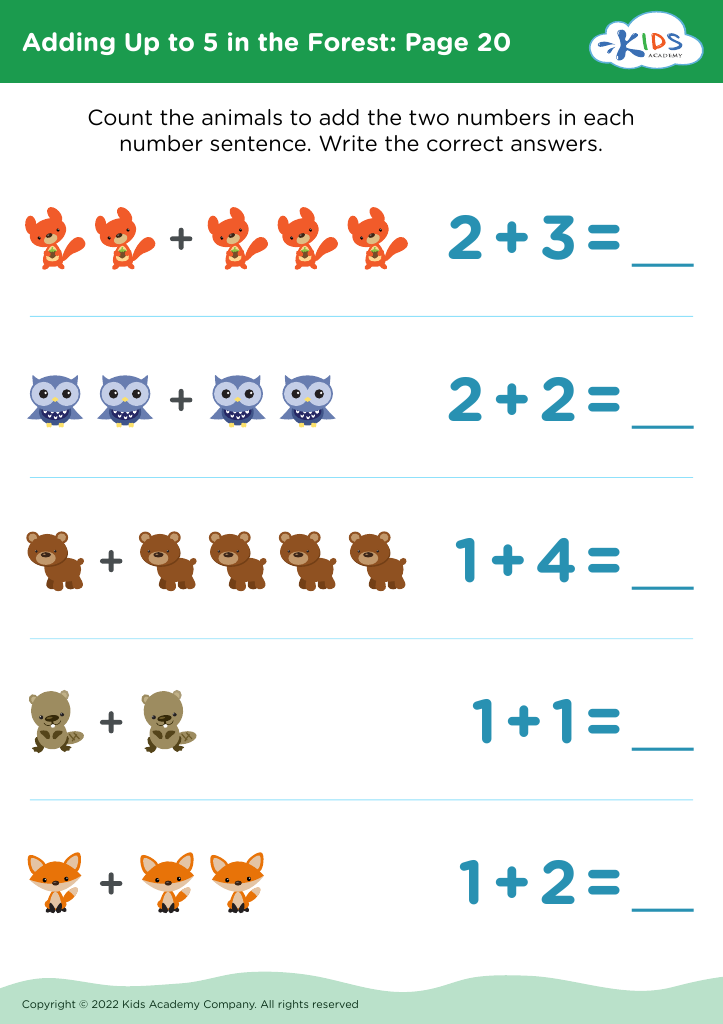
Discover our "Understanding Numerical Values: Adding Up to 5 Worksheets" tailored for young learners aged 4-6. These engaging and colorful worksheets are designed to help children grasp the concept of numerical values through fun and interactive activities. With exercises focusing on addition up to 5, students will develop essential math skills, boost their confidence, and enhance their ability to recognize numbers. The worksheets feature relatable visuals that make learning enjoyable, and they are perfect for both classroom use and at-home practice. Empower your child's math journey with resources that promote understanding and enjoyment of numerical values today!





.jpg)


Understanding numerical values and mastering the concept of adding up to 5 is crucial for children ages 4-6 as it lays the foundation for their mathematical development. At this early stage, children are naturally curious and eager to explore numbers, making it the perfect time to instill a solid understanding of basic arithmetic.
Learning to add up to 5 helps young learners develop number sense, which is essential for recognizing patterns, distinguishing between quantities, and building confidence in problem-solving. This foundational skill fosters cognitive development and prepares students for more complex mathematical concepts in later grades. Additionally, integrating games and engaging activities into learning can transform the process, making it enjoyable and stimulating.
Moreover, when parents and teachers focus on these early numerical skills, they play a pivotal role in establishing positive attitudes towards mathematics. This early encouragement not only boosts children's self-esteem and motivation but also promotes critical thinking and logical reasoning skills necessary for academic success. In short, nurturing an understanding of numerical values and addition to 5 is essential as it sets the groundwork for lifelong learning and proficiency in mathematics. By investing time and effort in these critical early stages, caregivers ultimately cultivate a strong mathematical foundation in the children they nurture.








