Visual learning enhancement Adding Up to 5 Worksheets for Ages 4-6
4 filtered results
-
From - To
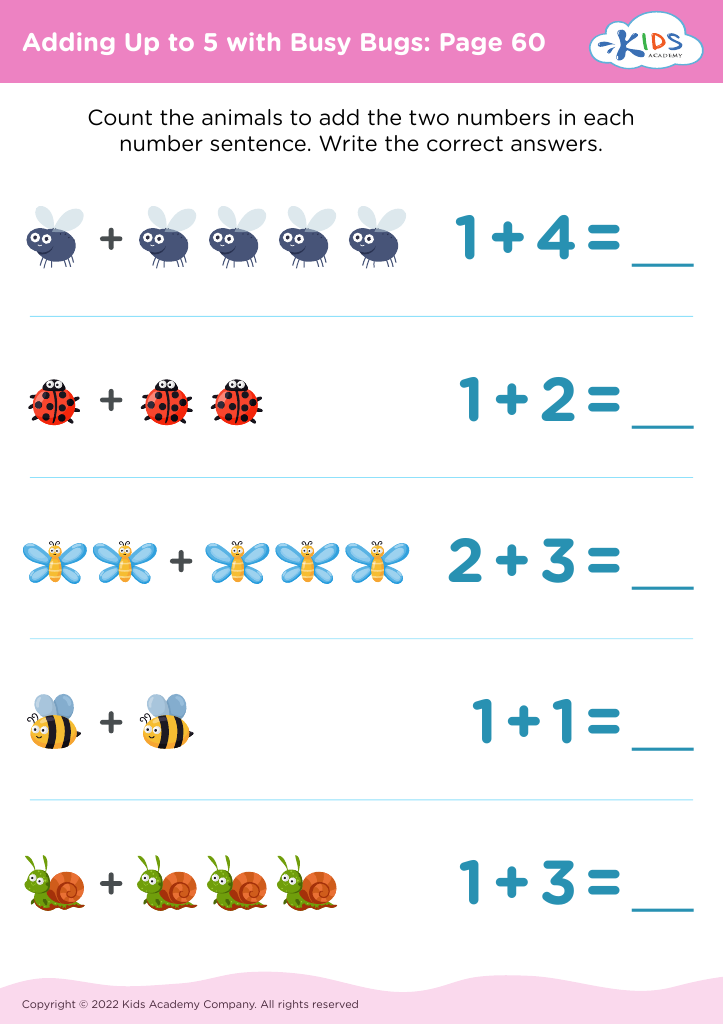
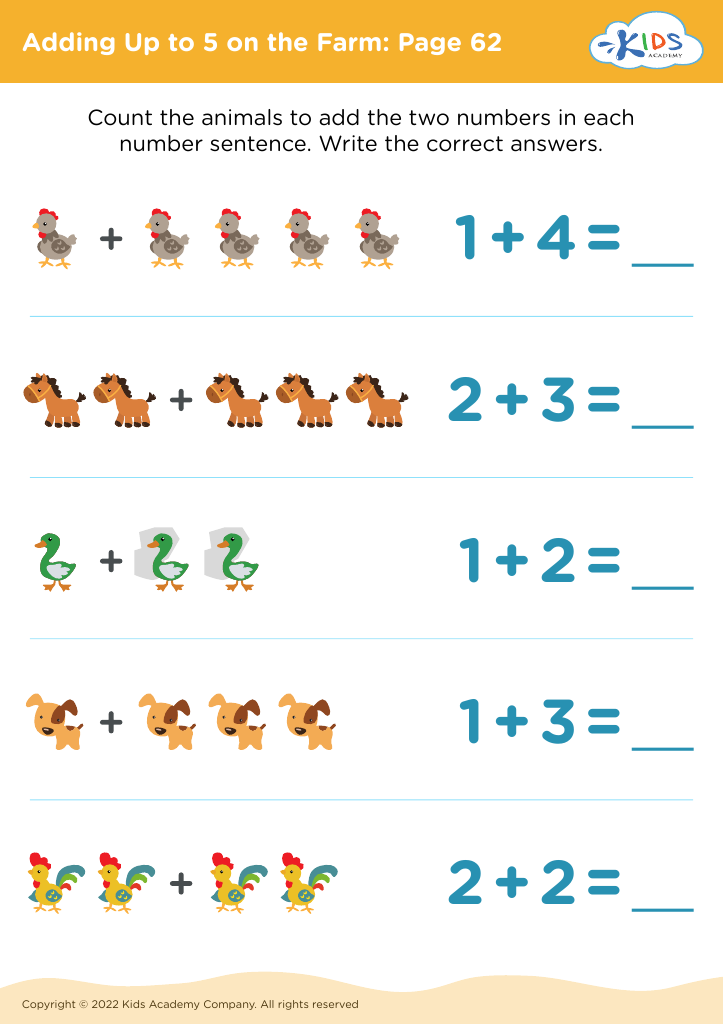
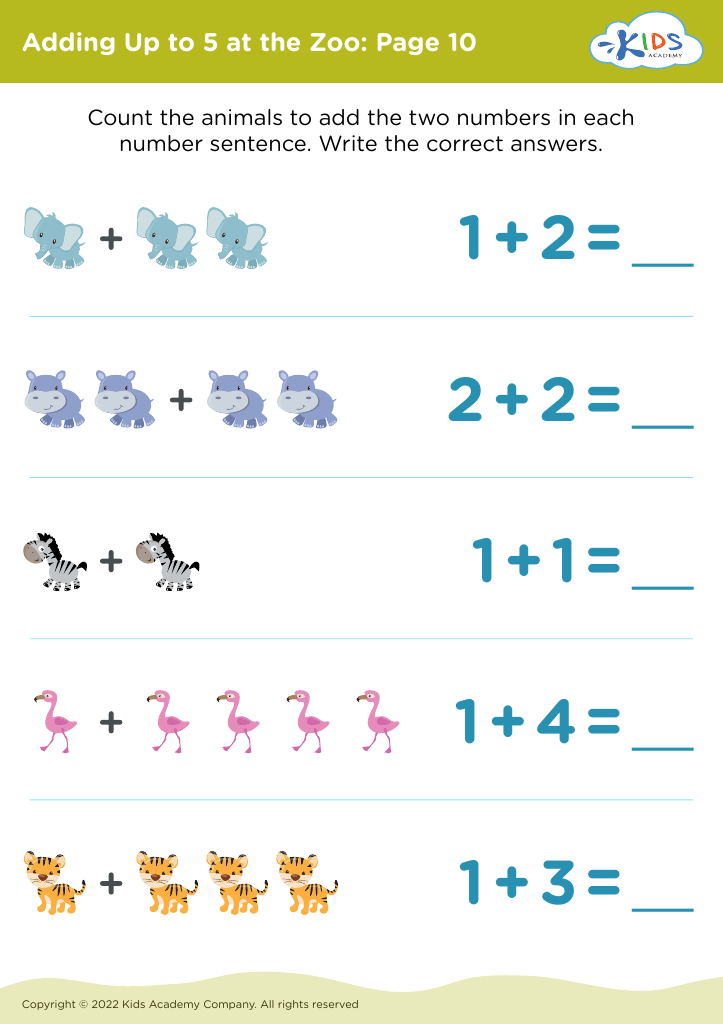
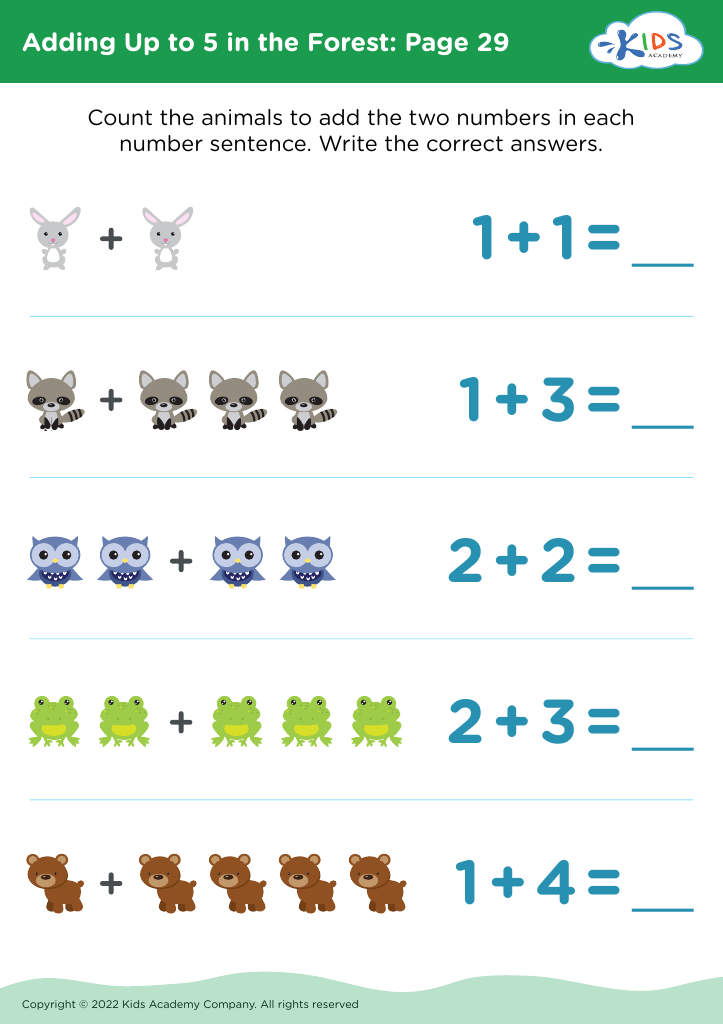
Unlock your child’s potential with our "Visual Learning Enhancement: Adding Up to 5 Worksheets" designed for ages 4-6. These engaging worksheets incorporate visuals to make math concepts simple and fun. Bright images and relatable themes help children grasp the idea of addition while developing critical thinking skills. Tailored to strengthen foundational math abilities, each worksheet offers hands-on activities that promote interactive learning. Perfect for both classroom and home use, these resources ensure children build confidence as they explore numbers. Make learning a joyful adventure with our carefully crafted visual aids that promote understanding and retention, laying a strong groundwork for future math success!



%20(1).jpg)




Visual learning enhancement is essential for young learners, particularly ages 4-6, when cognitive skills and perceptual development are rapidly evolving. Parents and teachers should care about this approach because children in this age group often learn best through concrete visual representations that help them grasp abstract concepts like numbers.
Using visual aids, such as counting blocks, number charts, or interactive games, can engage students in a stimulating way. This not only strengthens their counting skills but also fosters an understanding of foundational math concepts like addition. When kids can associate quantities with visual representations, they are more likely to retain information and build a strong mathematical foundation.
Moreover, visual learning caters to different learning styles, ensuring inclusivity and boosting confidence for visual learners who may struggle with traditional methods. It encourages active participation and interaction in the learning process, making it enjoyable.
Investing in visual learning techniques, like "Adding Up to 5," equips young children with critical thinking skills essential for future academic success. By supporting this method, parents and teachers empower students to explore math in a meaningful, engaging, and effective manner, setting the stage for a lifelong love of learning.








