Check out this FREE Trial Lesson on Addition & Subtraction for age 4-6!

My Family

Favorites
With answer key
Interactive
  • 4-6
  • Basic Addition Skills
  • Addition & Subtraction
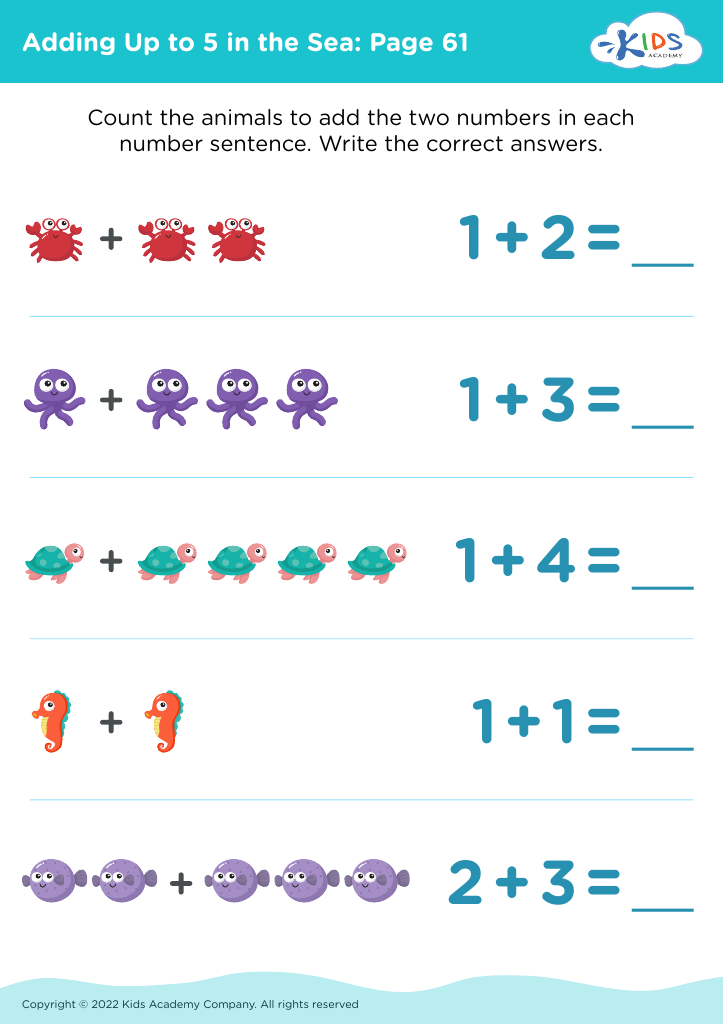
Adding Up to 5 in the Sea: Page 61
Worksheet
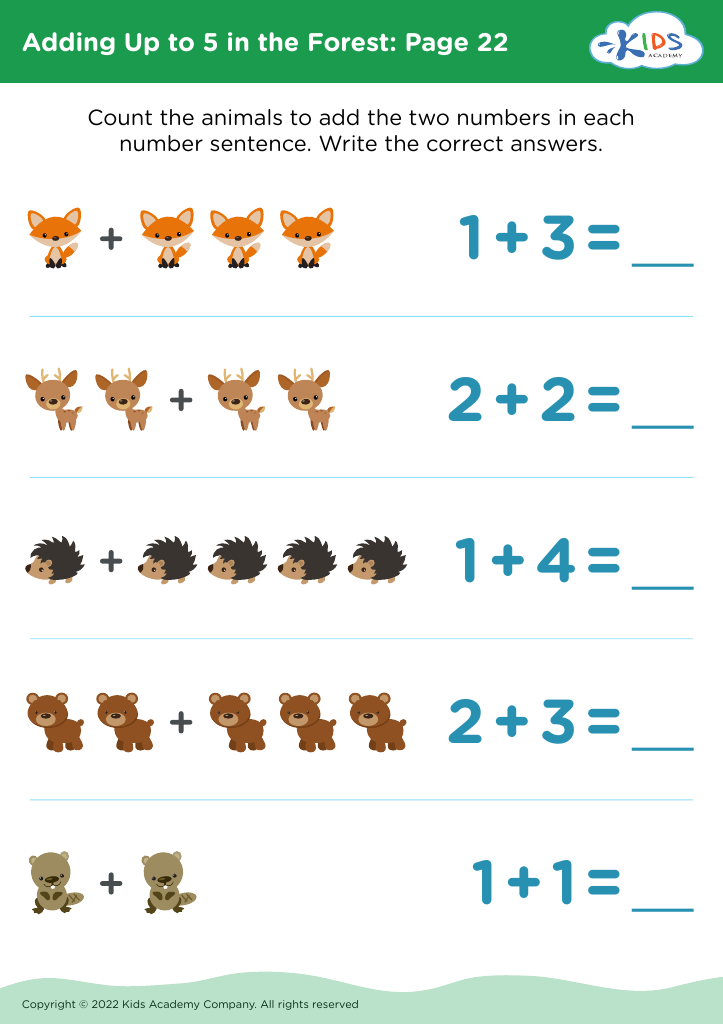
Adding Up to 5 in the Forest: Page 22
Worksheet
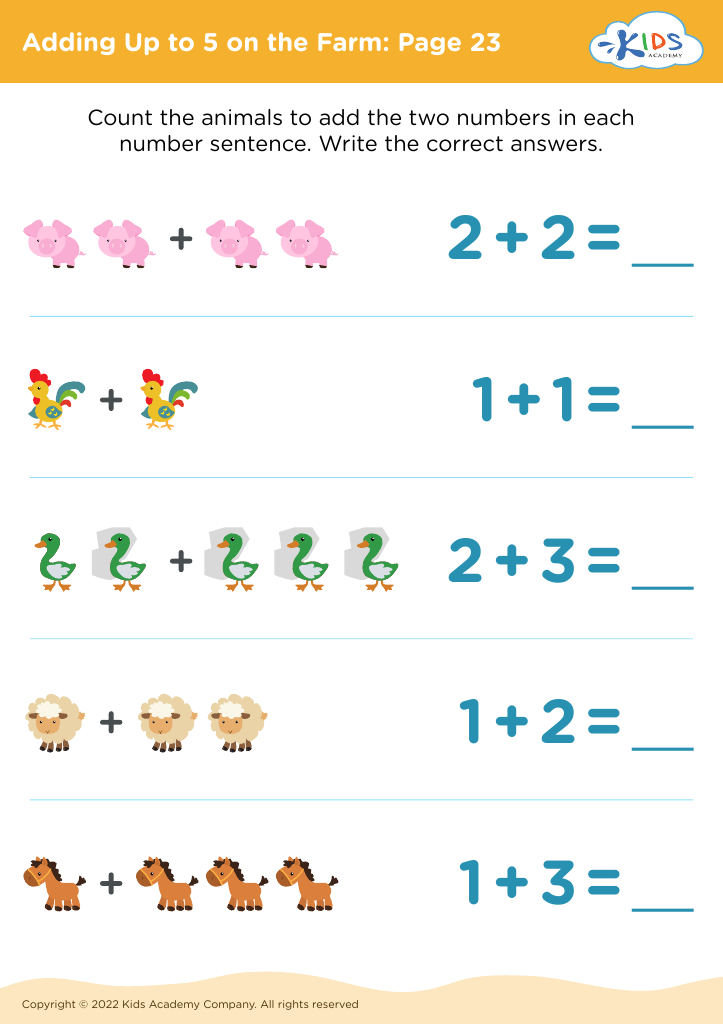
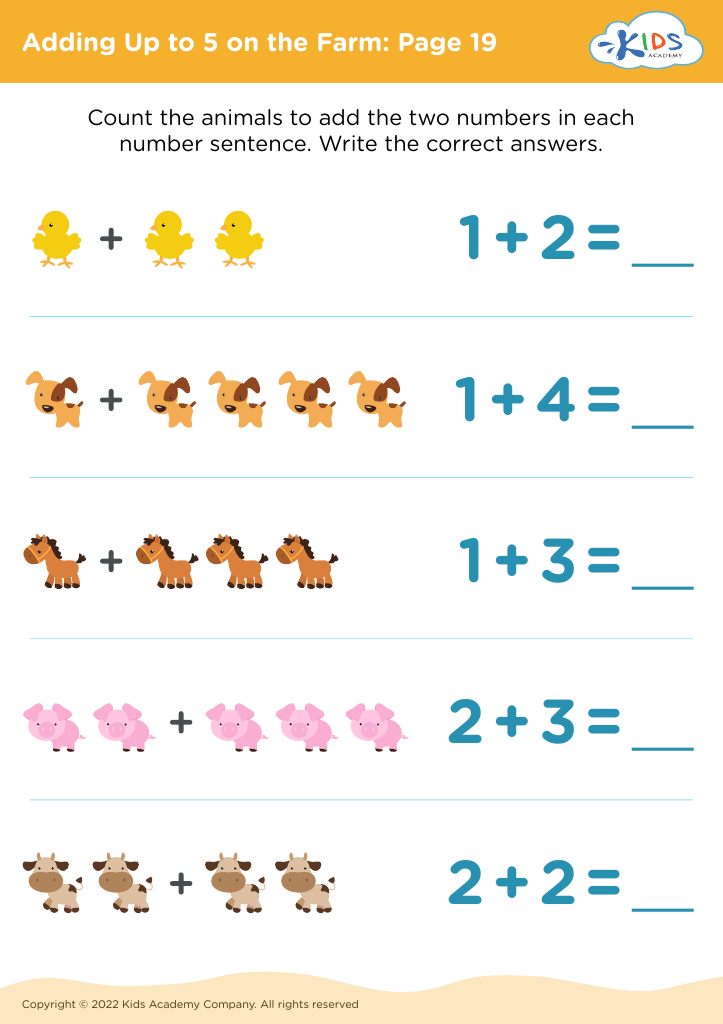
Adding Up to 5 on the Farm: Page 23
Worksheet
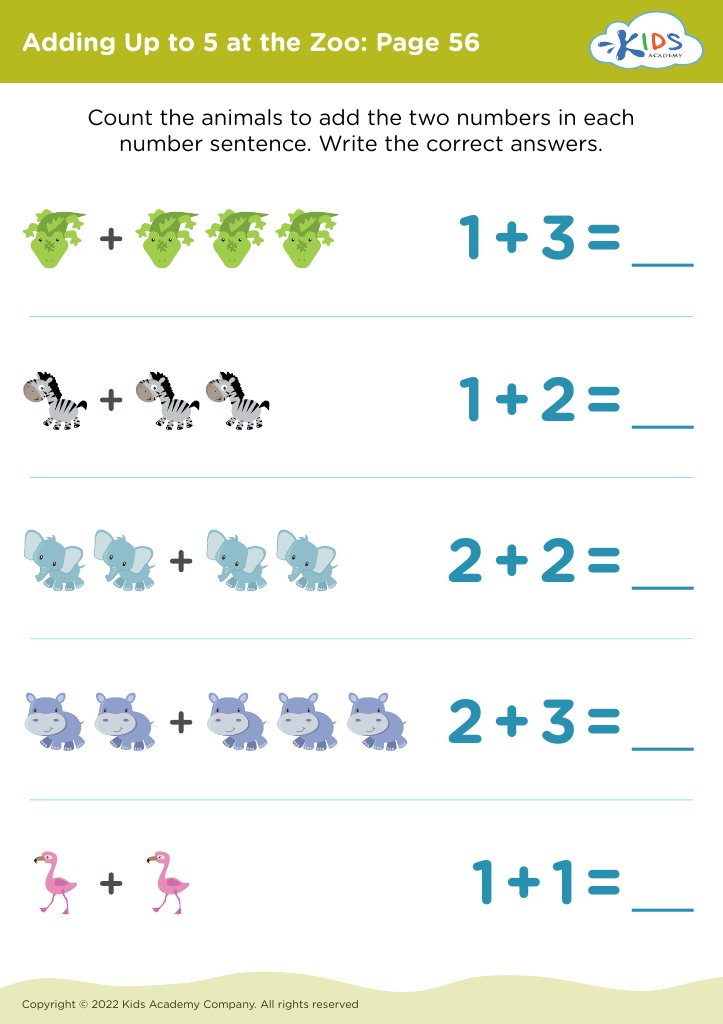
Adding Up to 5 at the Zoo: Page 56
Worksheet
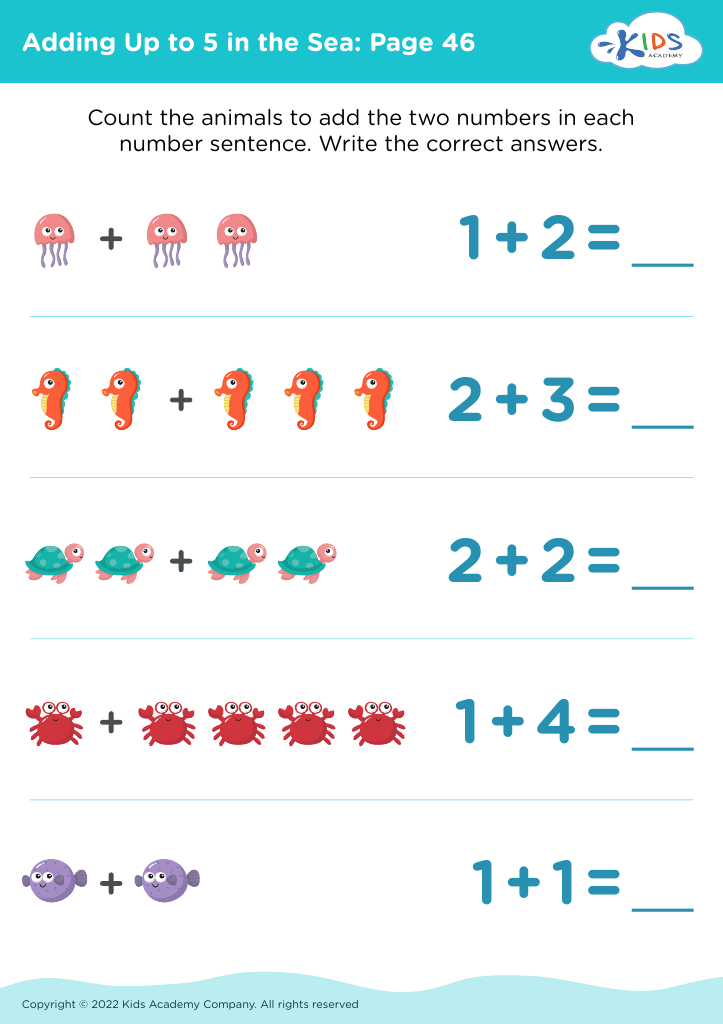
Adding Up to 5 in the Sea: Page 46
Worksheet
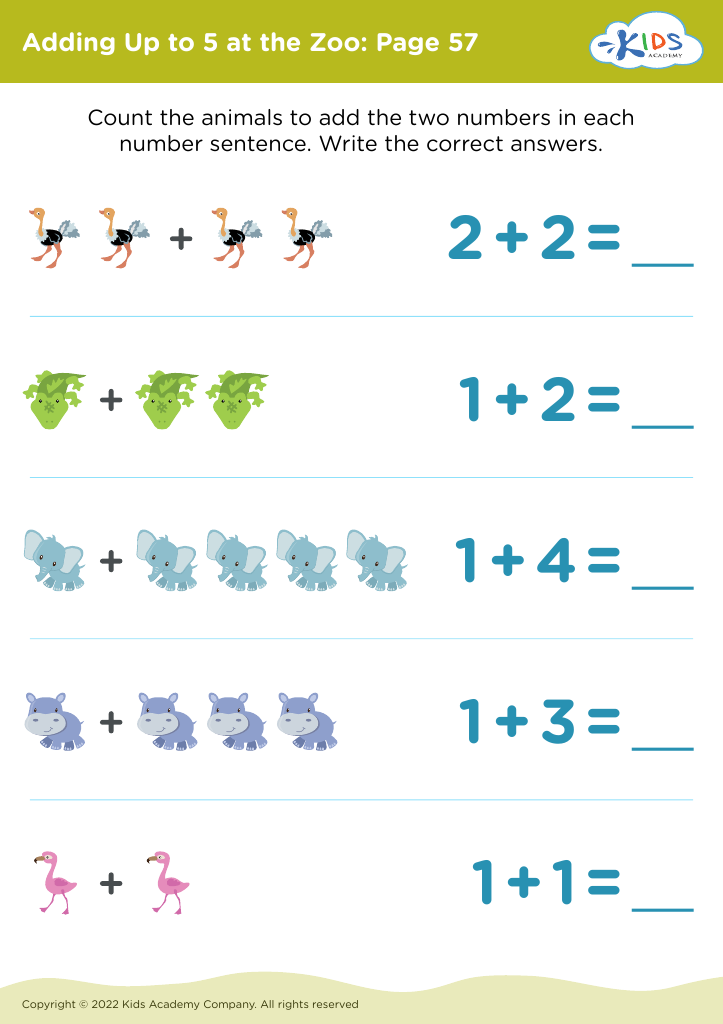
Adding Up to 5 at the Zoo: Page 57
Worksheet
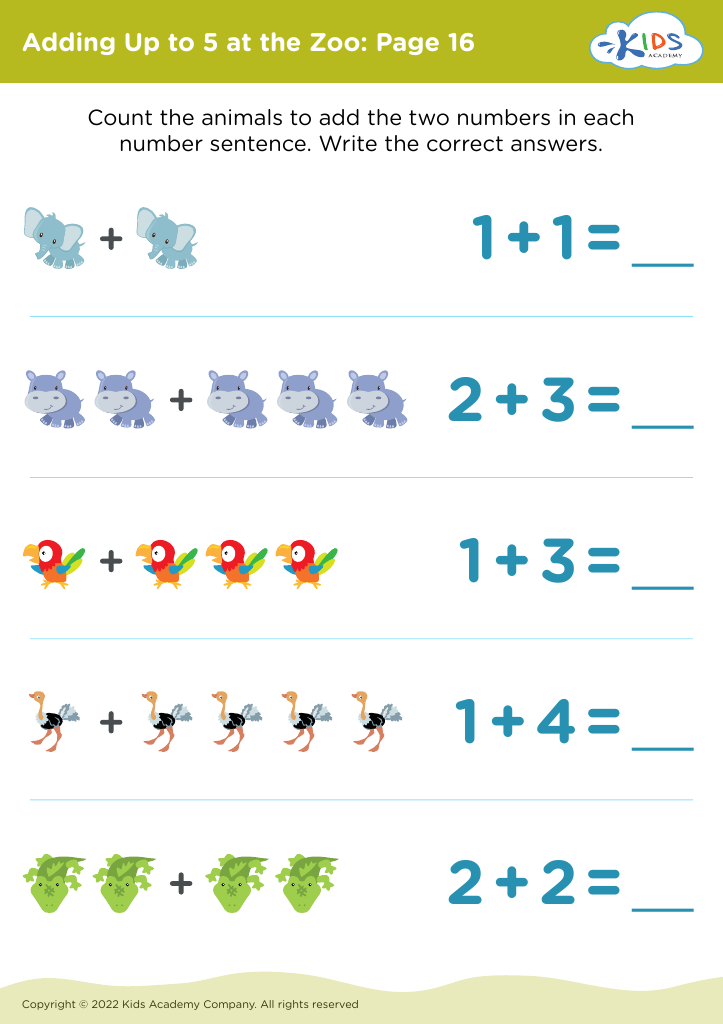
Adding Up to 5 at the Zoo: Page 16
Worksheet
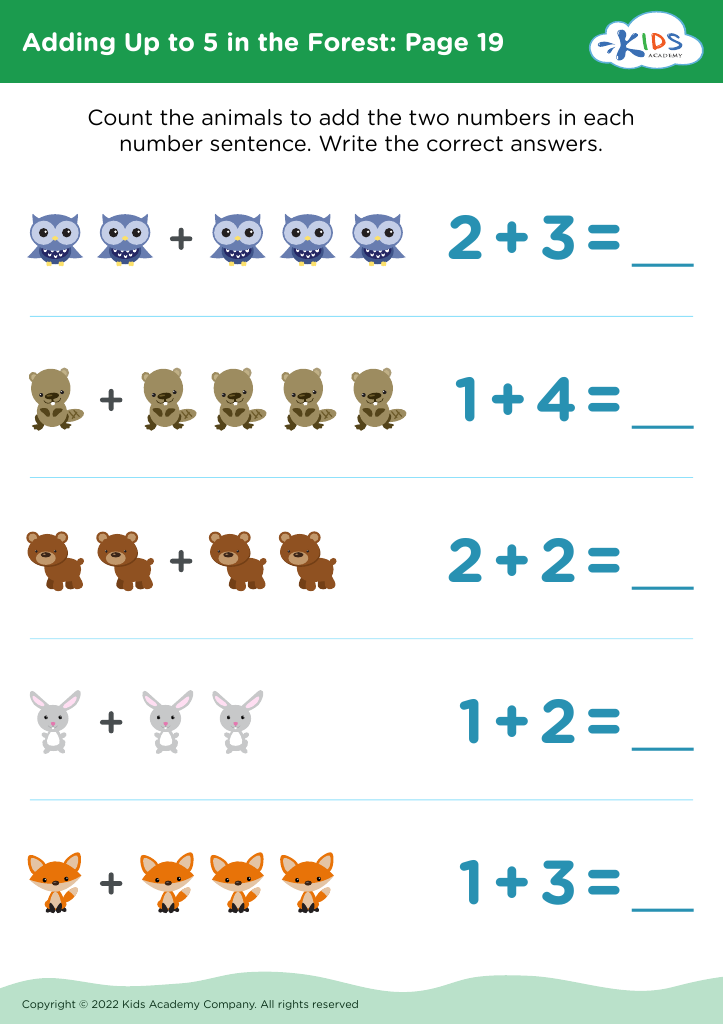
Adding Up to 5 in the Forest: Page 19
Worksheet
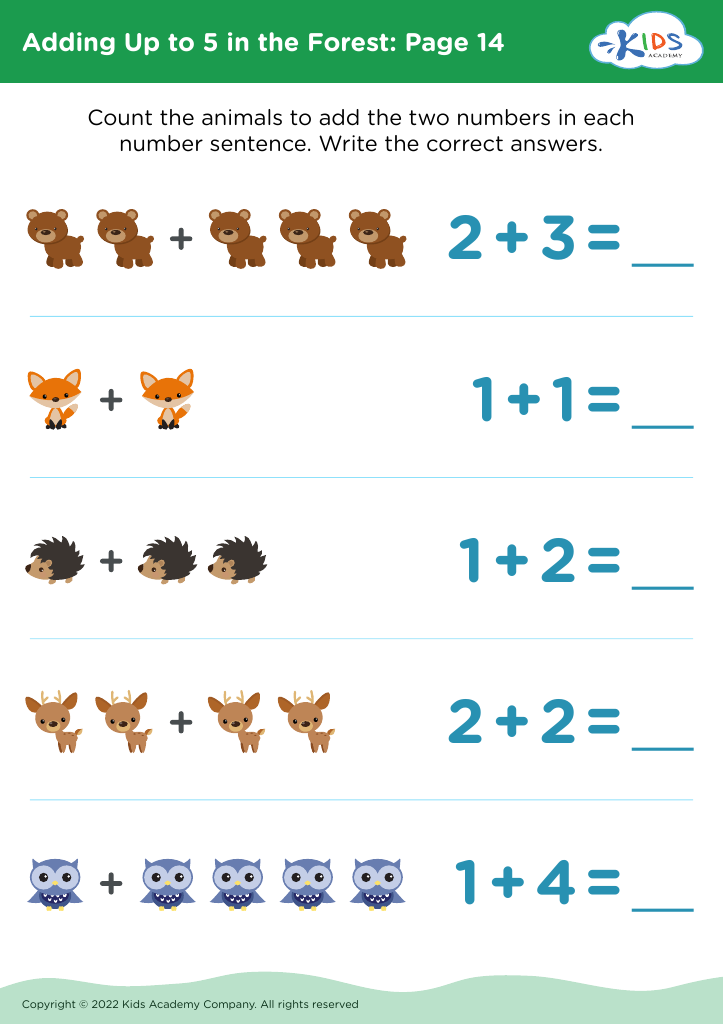
Adding Up to 5 in the Forest: Page 14
Worksheet
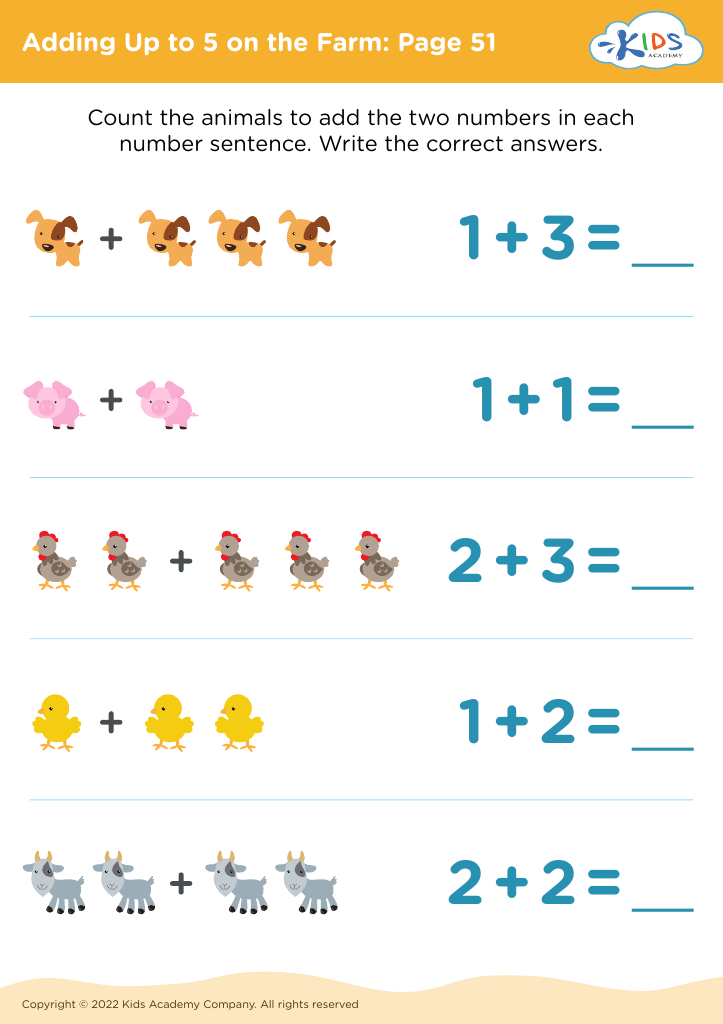
Adding Up to 5 on the Farm: Page 51
Worksheet
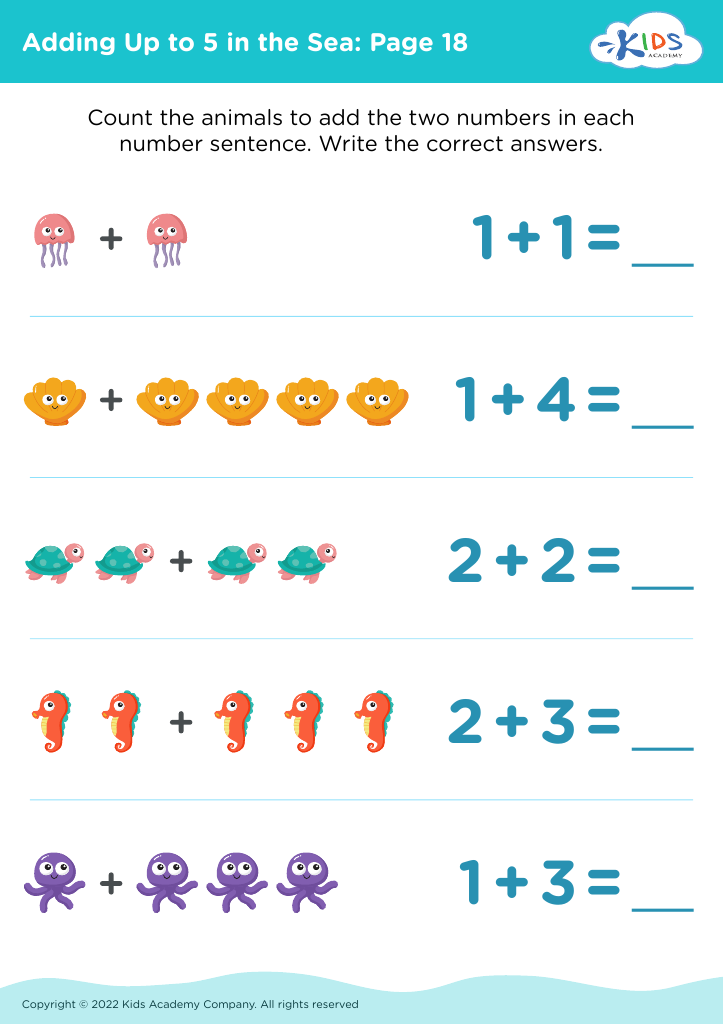
Adding Up to 5 in the Sea: Page 18
Worksheet
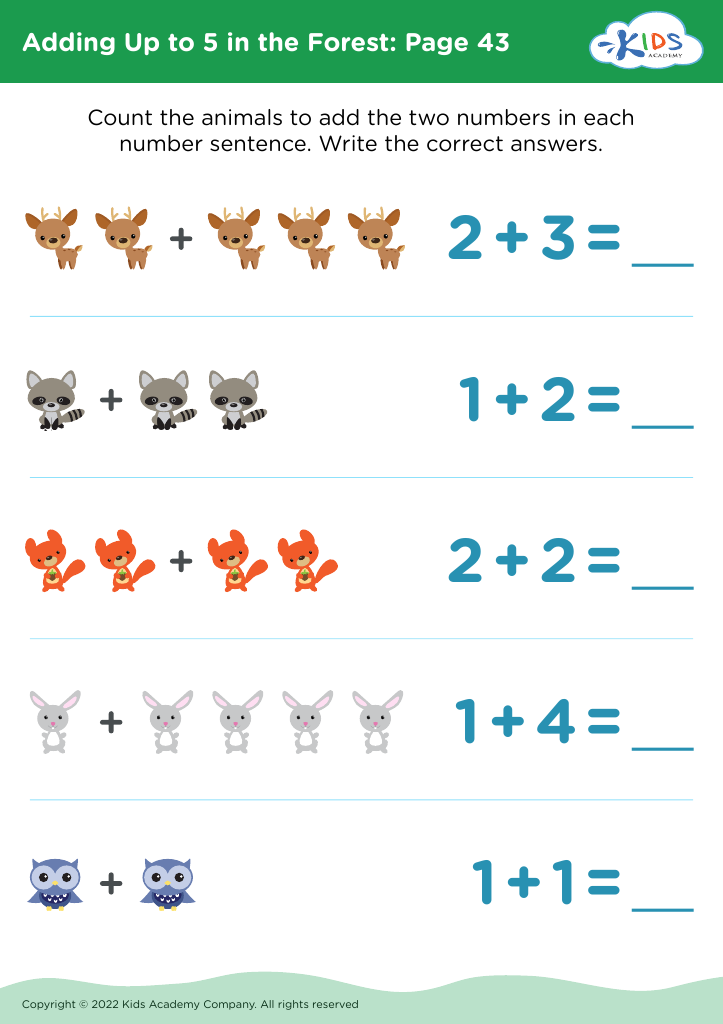
Adding Up to 5 in the Forest: Page 43
Worksheet
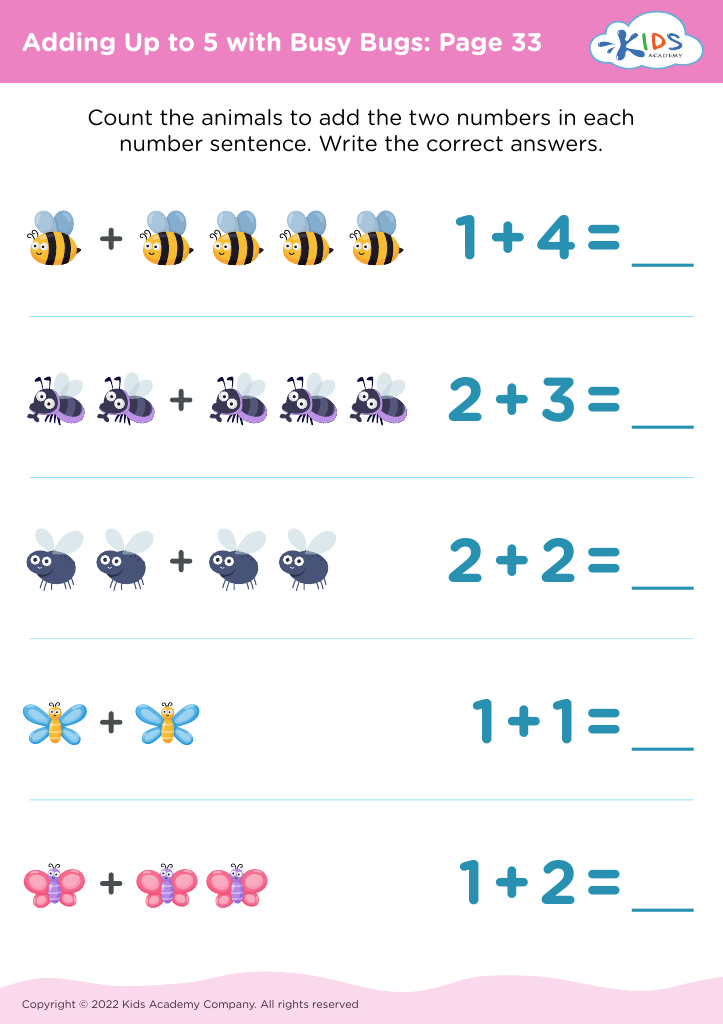
Adding Up to 5 with Busy Bugs: Page 33
Worksheet
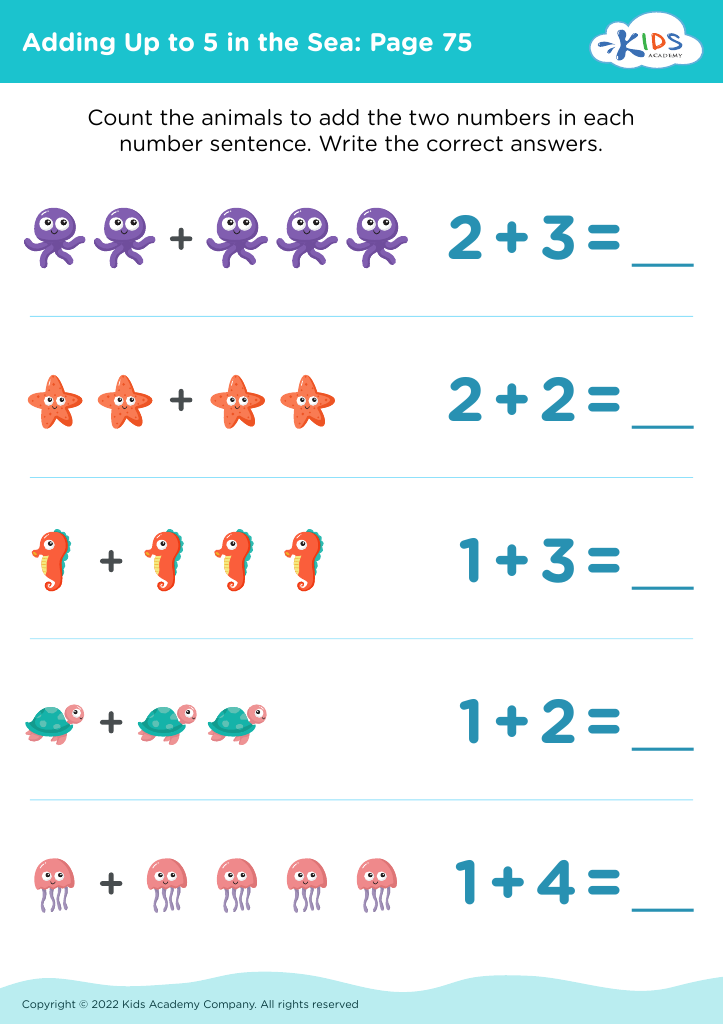
Adding Up to 5 in the Sea: Page 75
Worksheet
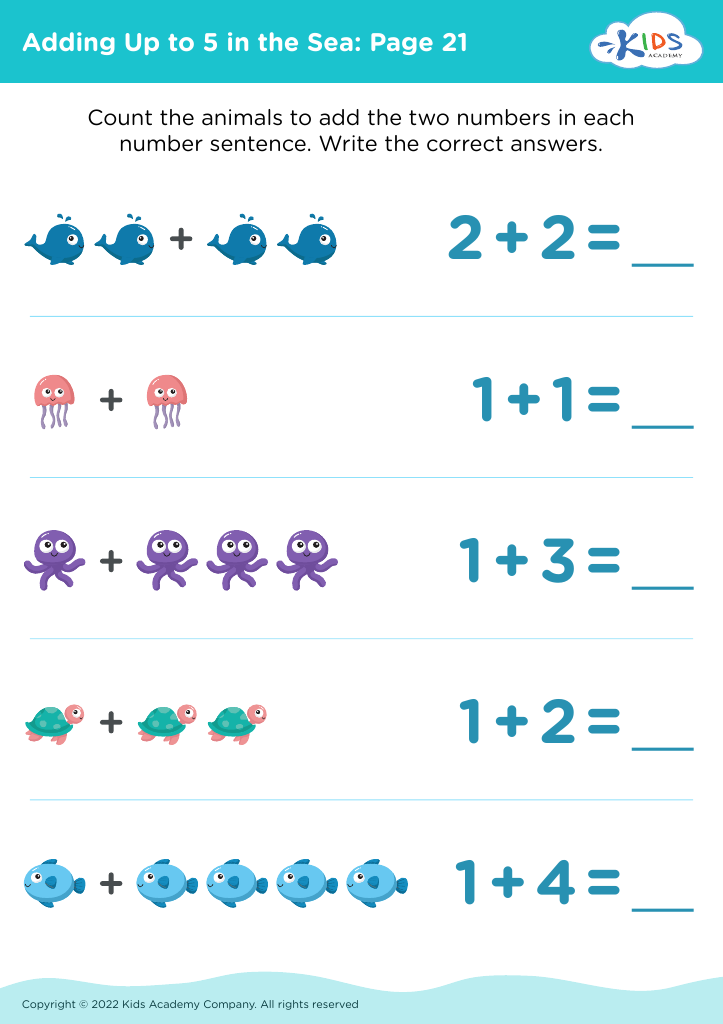
Adding Up to 5 in the Sea: Page 21
Worksheet
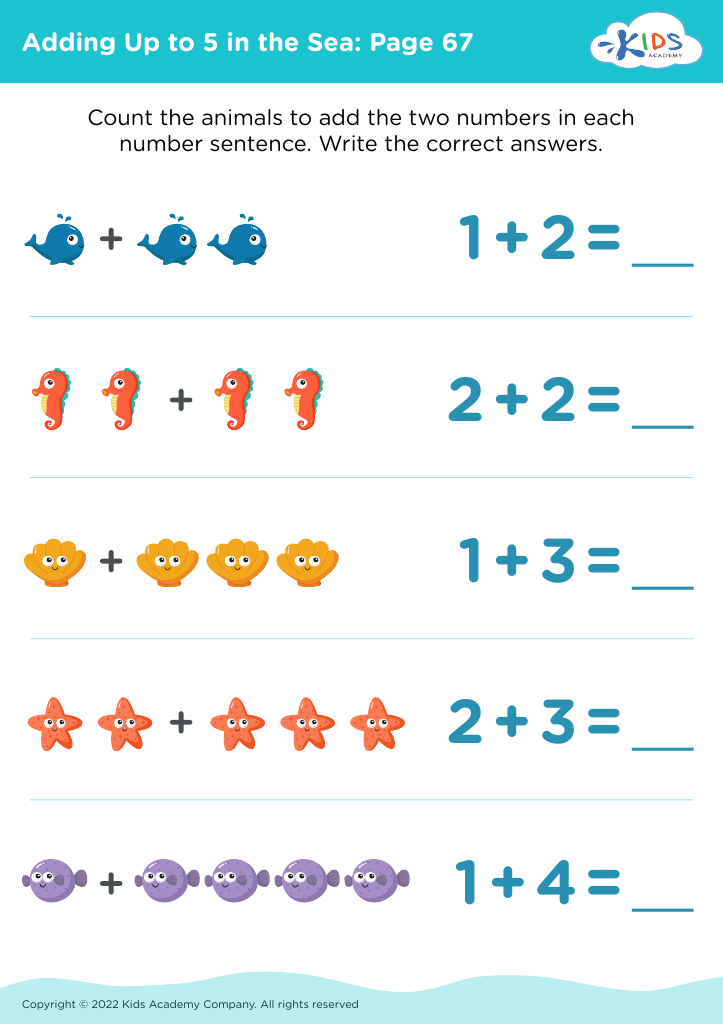
Adding Up to 5 in the Sea: Page 67
Worksheet
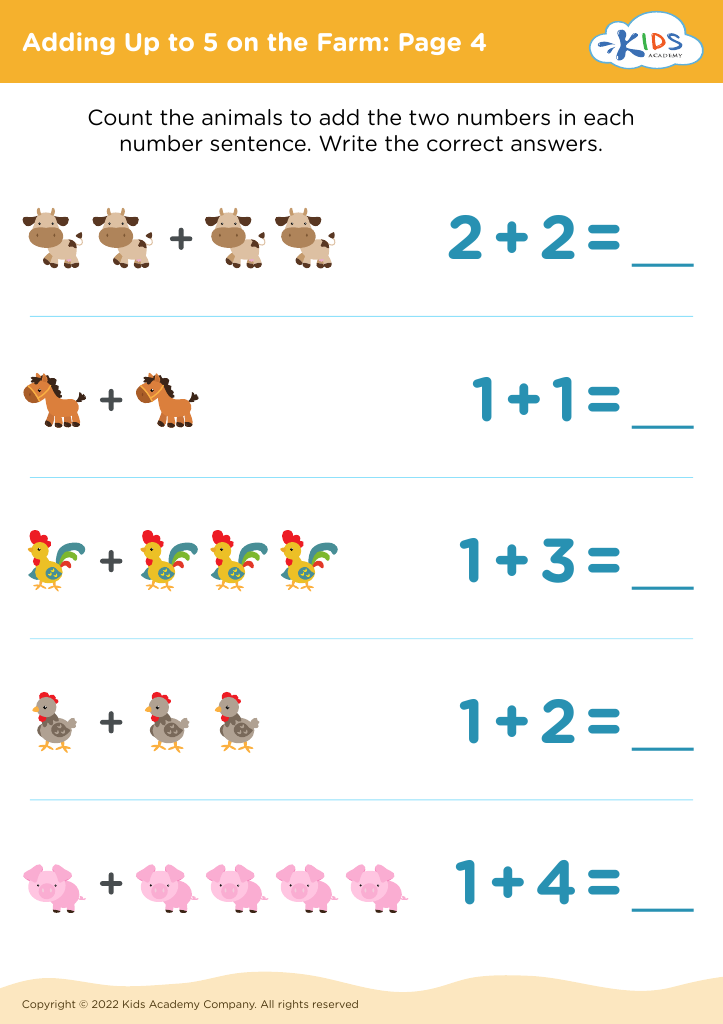
Adding Up to 5 on the Farm: Page 4
Worksheet
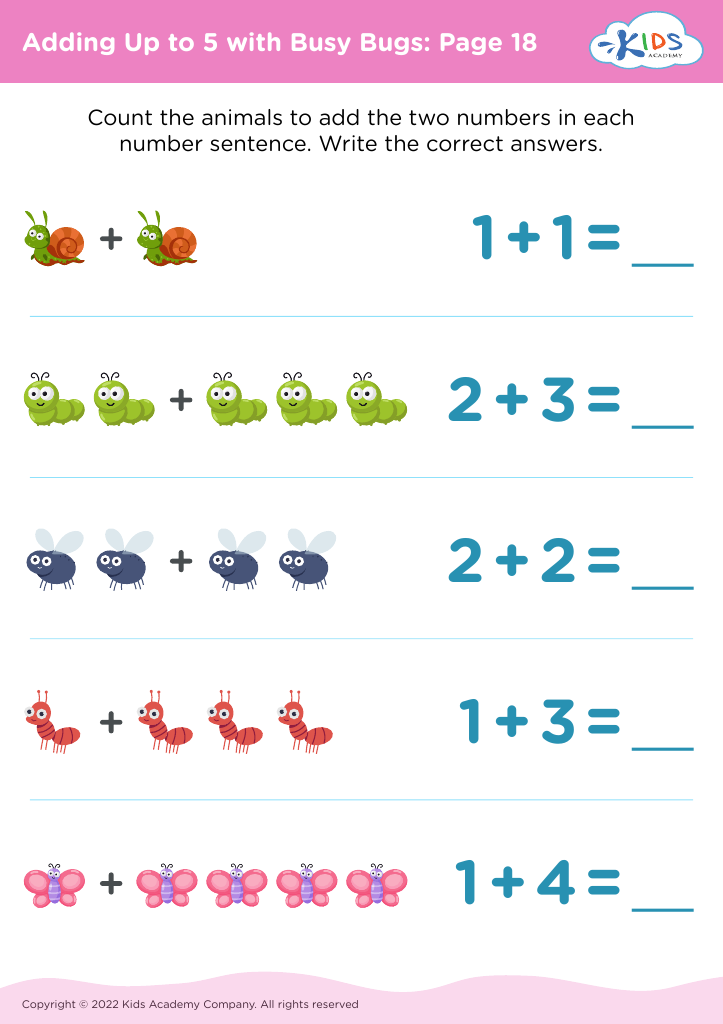
Adding Up to 5 with Busy Bugs: Page 18
Worksheet
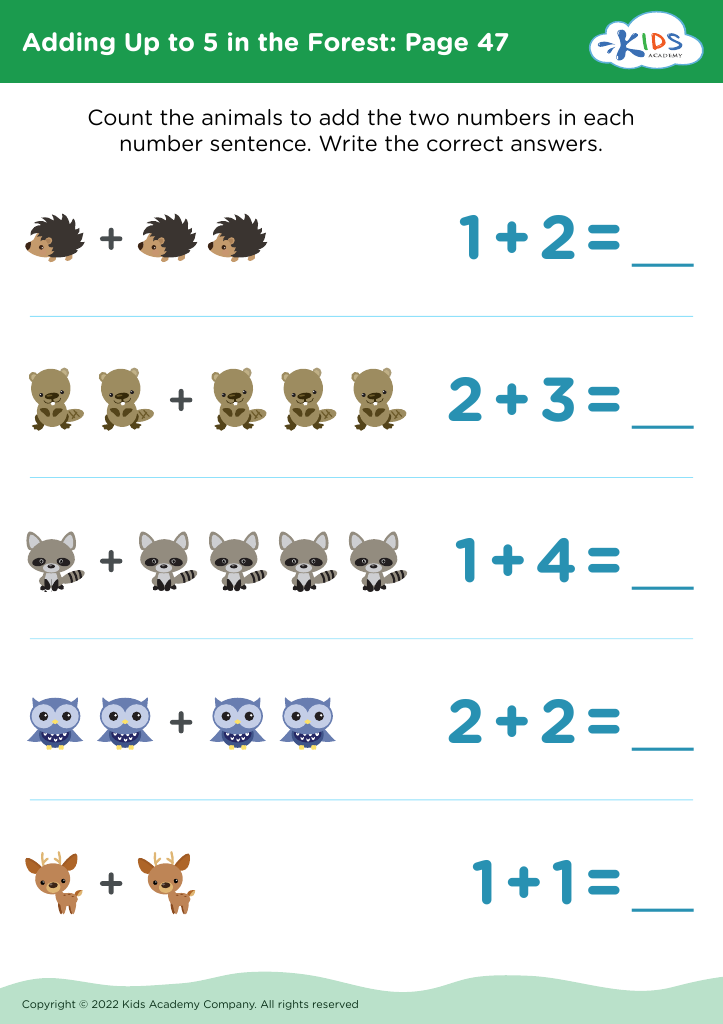
Adding Up to 5 in the Forest: Page 47
Worksheet
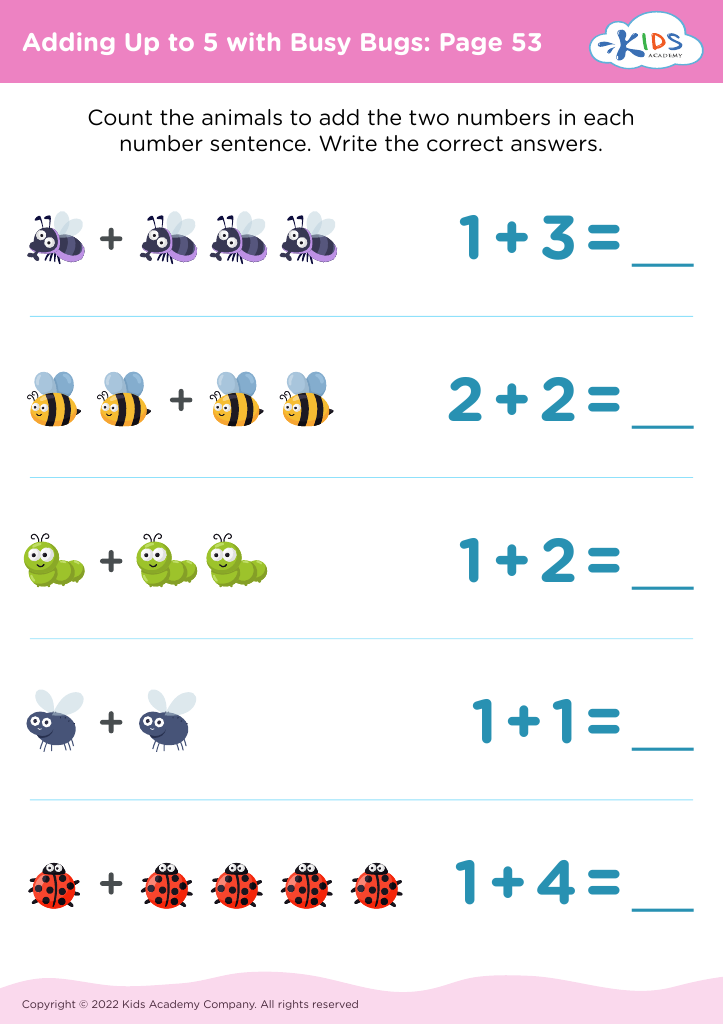
Adding Up to 5 with Busy Bugs: Page 53
Worksheet
Adding Up to 5 on the Farm: Page 19
Worksheet
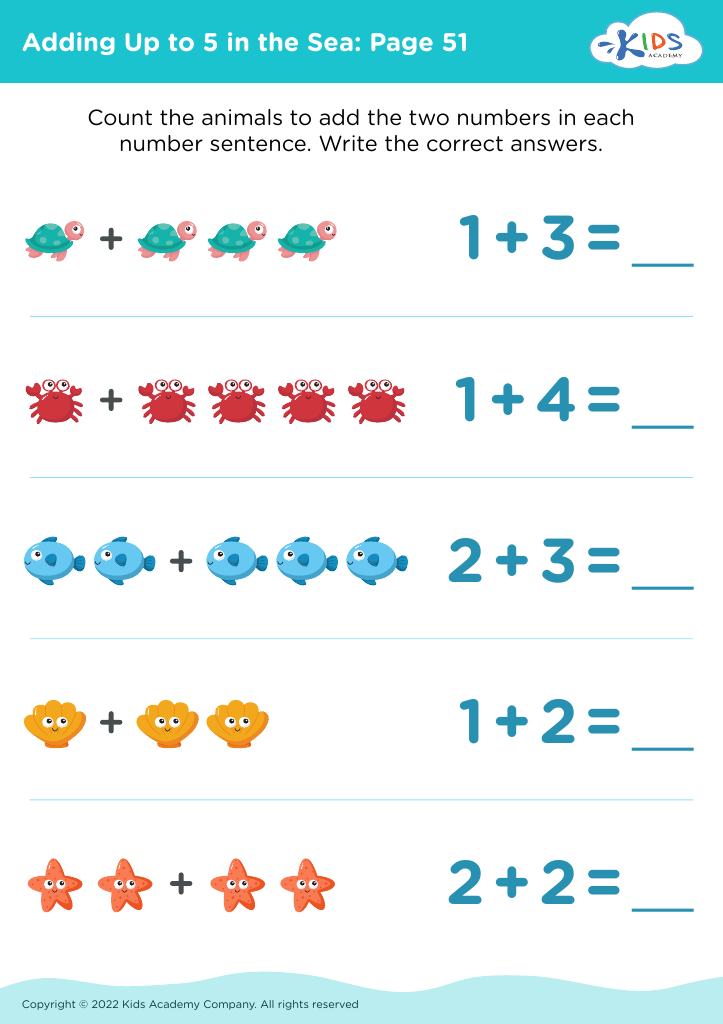
Adding Up to 5 in the Sea: Page 51
Worksheet
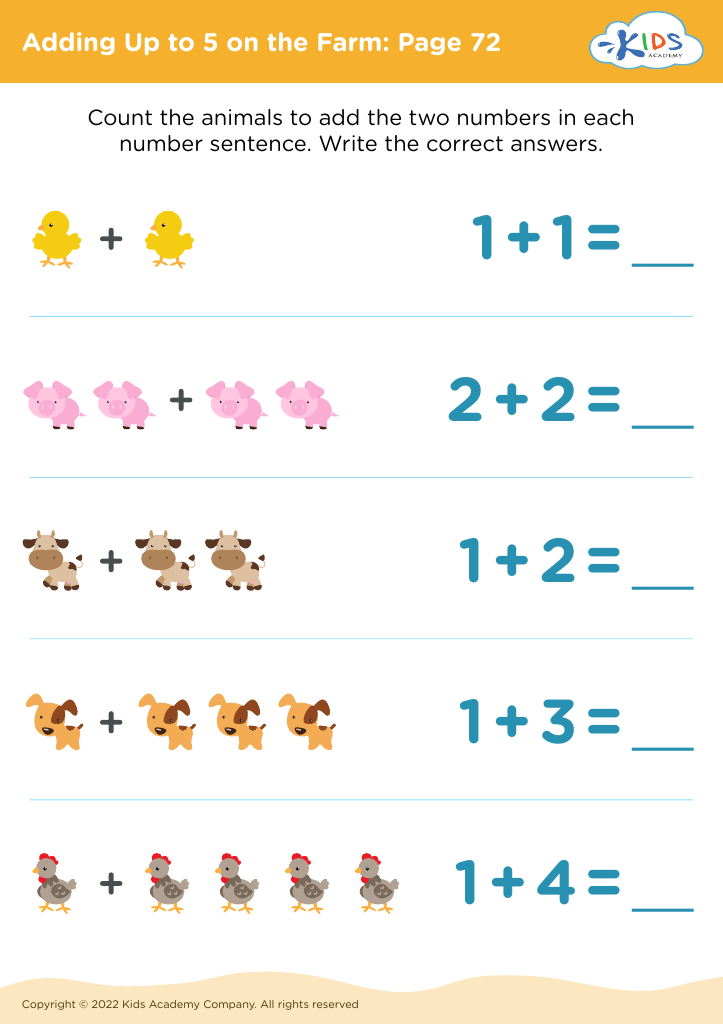
Adding Up to 5 on the Farm: Page 72
Worksheet
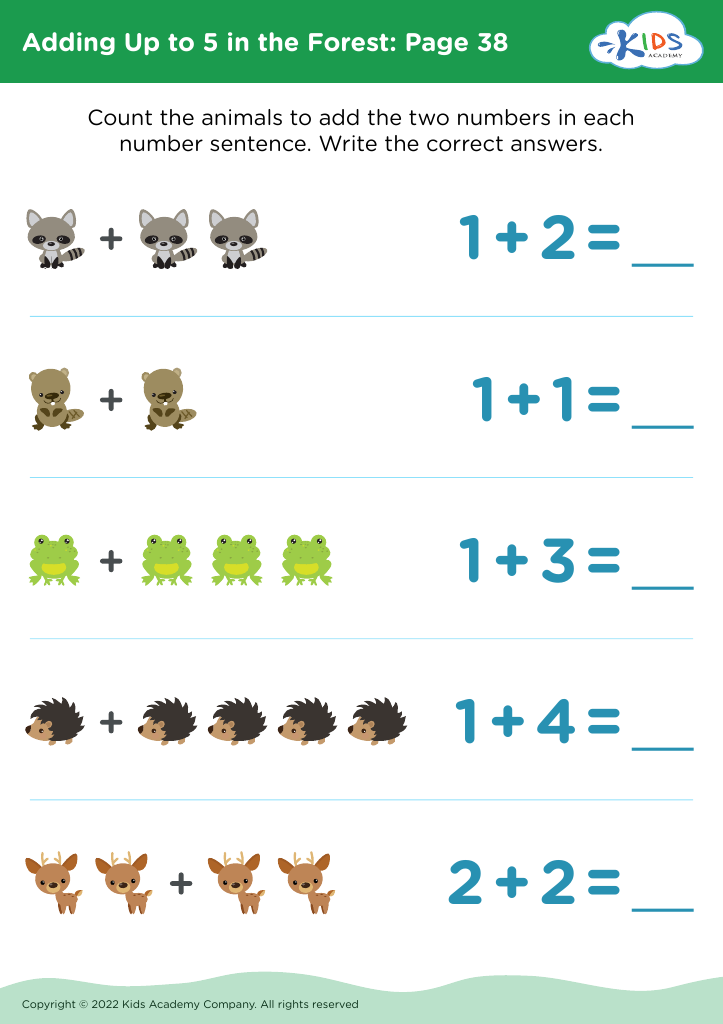
Adding Up to 5 in the Forest: Page 38
Worksheet


Basic addition and subtraction skills are foundational to a child's mathematical development and overall academic success. For parents and teachers, fostering these skills in children aged 4 to 6 is crucial as this is a formative time for cognitive growth. These foundational skills not only introduce children to problem-solving and critical thinking but also enhance their confidence in handling numbers, which can set the stage for future learning.

Moreover, early mastery of addition and subtraction contributes to everyday skills, helping children understand concepts like sharing, deciding on how many things they can have, and even basic budgeting as they grow older. Engaging children in fun, interactive activities related to these operations, such as games and storytelling, can make learning enjoyable and memorable.

Additionally, children’s early interactions with math can influence their attitudes toward the subject later in life. A strong grasp of basic addition and subtraction can diminish math anxiety and promote a positive mindset about numbers. As both parents and educators play an essential role in shaping these experiences, they should emphasize fun, encouragement, and consistency when introducing basic mathematical concepts, as this will create a solid groundwork for deeper learning in the years to come.