Filters

442 filtered results

Clear all filters
Favorites
With answer key
Interactive

442 filtered results

Difficulty Level

Grade


Check out this FREE Trial Lesson on Addition & Subtraction for age 4-6!

Subtracting with 5's

Favorites
With answer key
Interactive
  • 4-6
  • Number Recognition
  • Addition & Subtraction
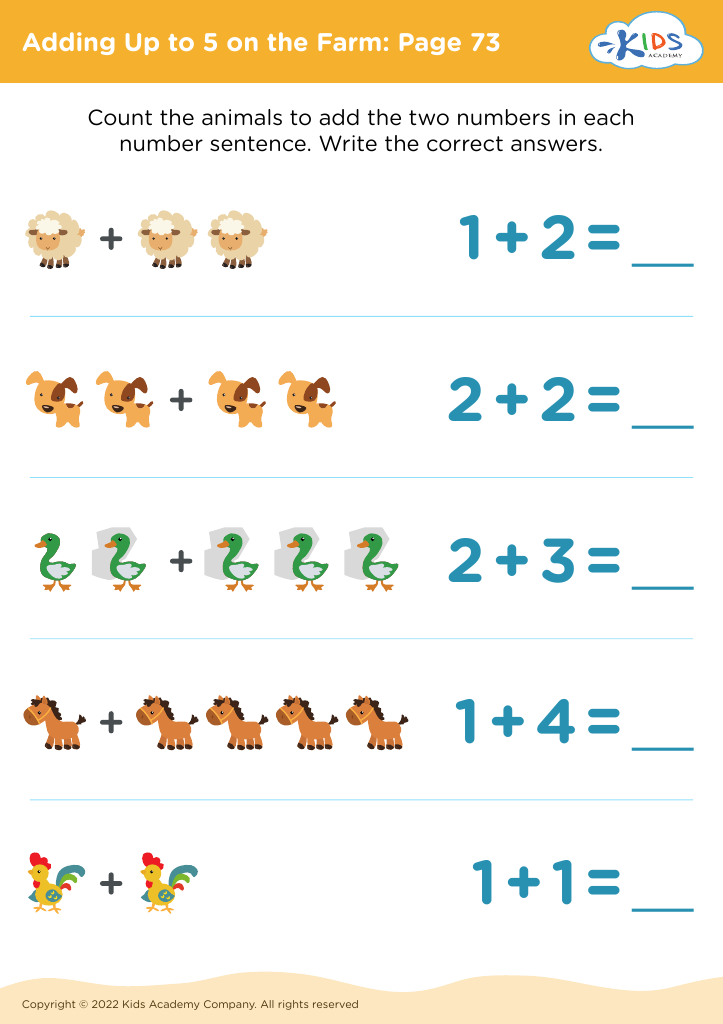
Adding Up to 5 on the Farm: Page 73
Worksheet
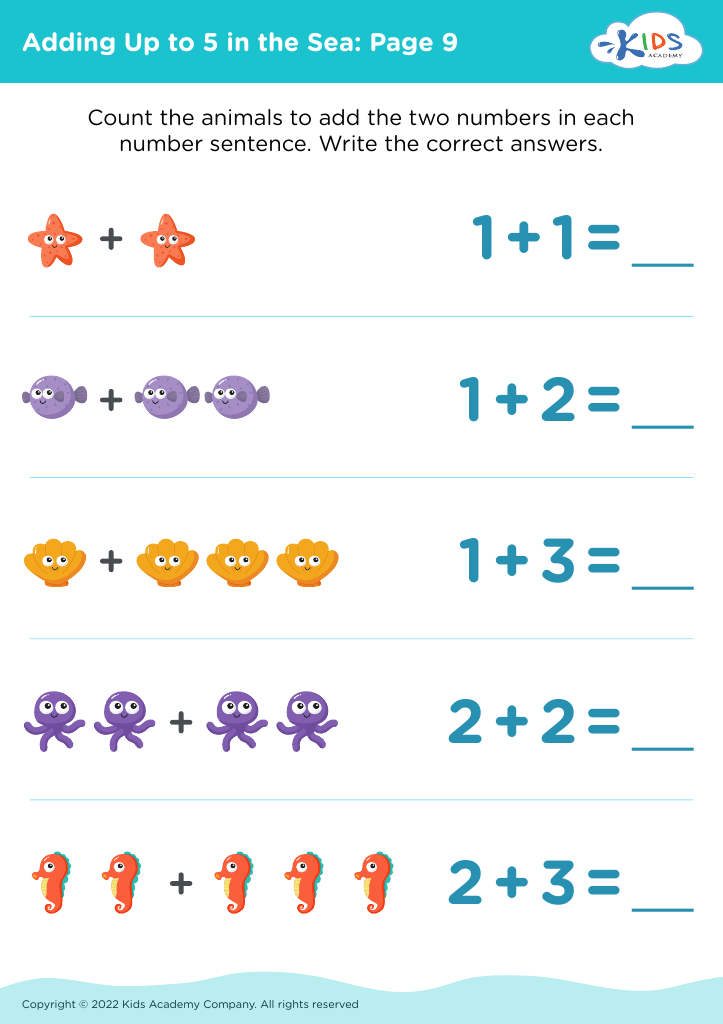
Adding Up to 5 in the Sea: Page 9

Adding Up to 5 in the Sea: Page 9

Adding Up to 5 in the Sea: Page 9
Worksheet
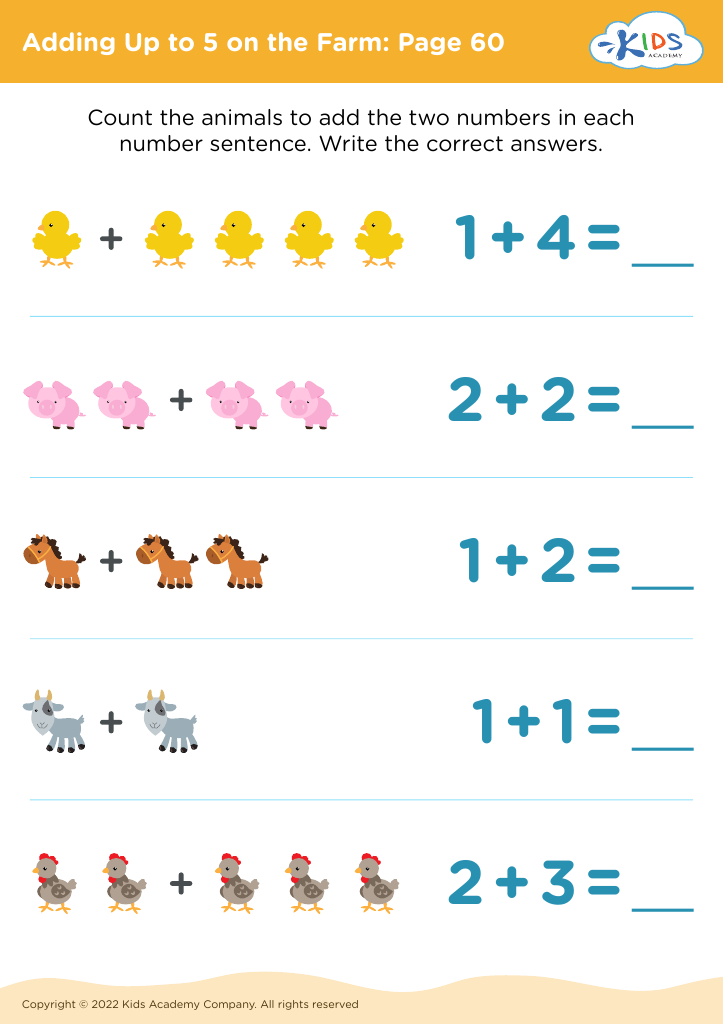
Adding Up to 5 on the Farm: Page 60
Worksheet
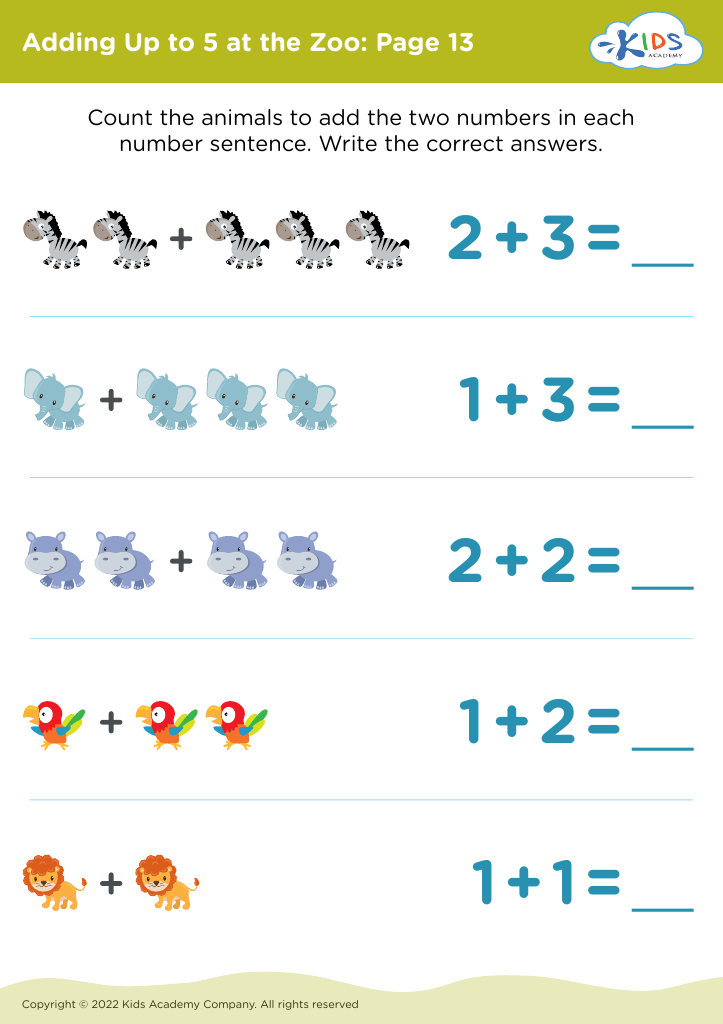
Adding Up to 5 at the Zoo: Page 13
Worksheet
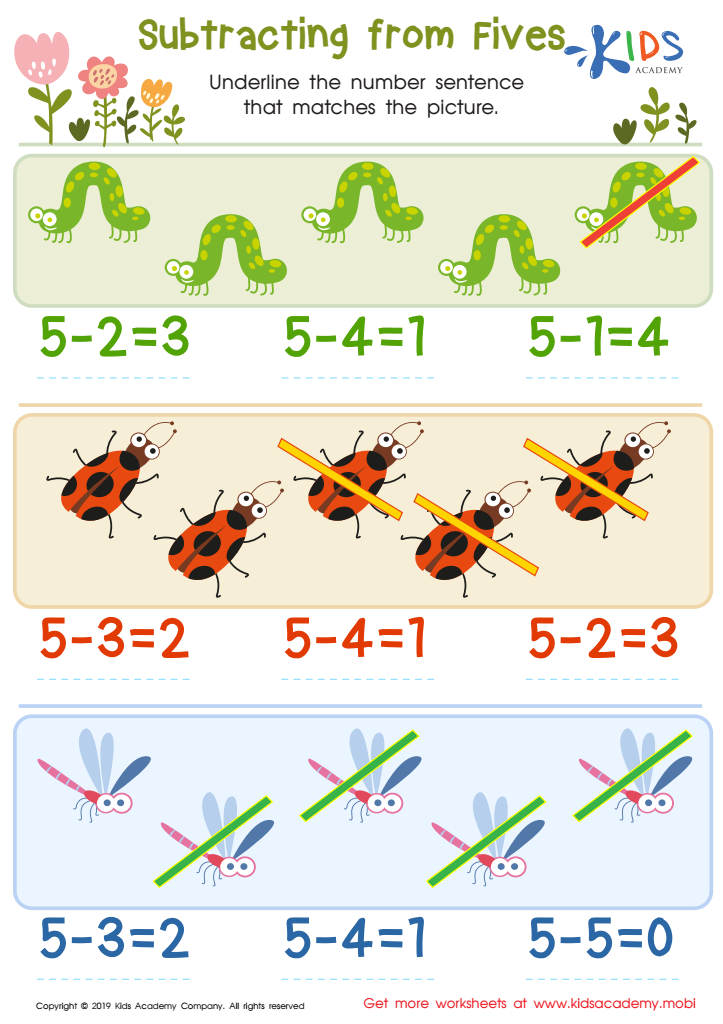
Subtracting From Fives Worksheet

Subtracting From Fives Worksheet

Help your kids practice subtraction with this fun worksheet! Have them identify the insects, then solve the equations and find the matching number sentence. It's a great way to give them an edge in math and enjoy doing it!
Subtracting From Fives Worksheet
Worksheet
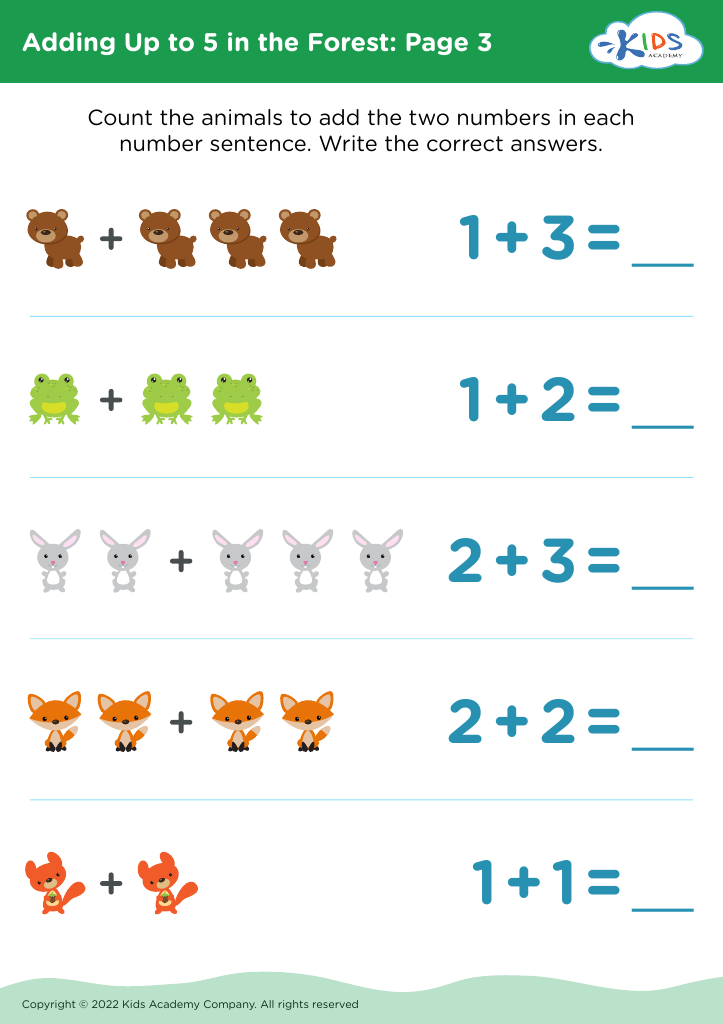
Adding Up to 5 in the Forest: Page 3
Worksheet
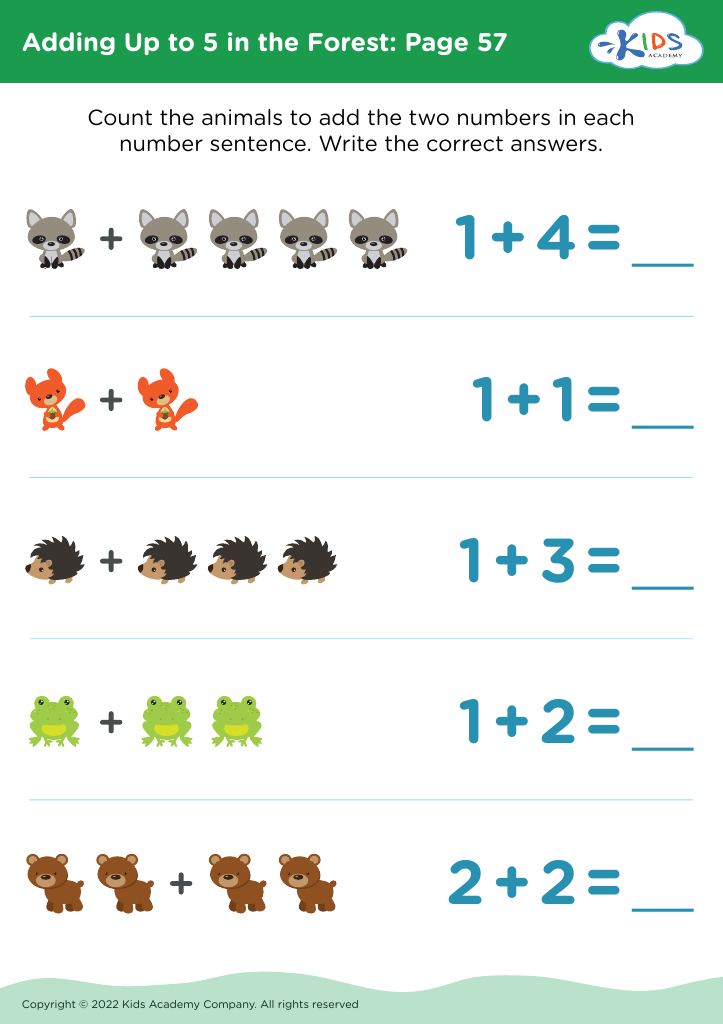
Adding Up to 5 in the Forest: Page 57
Worksheet
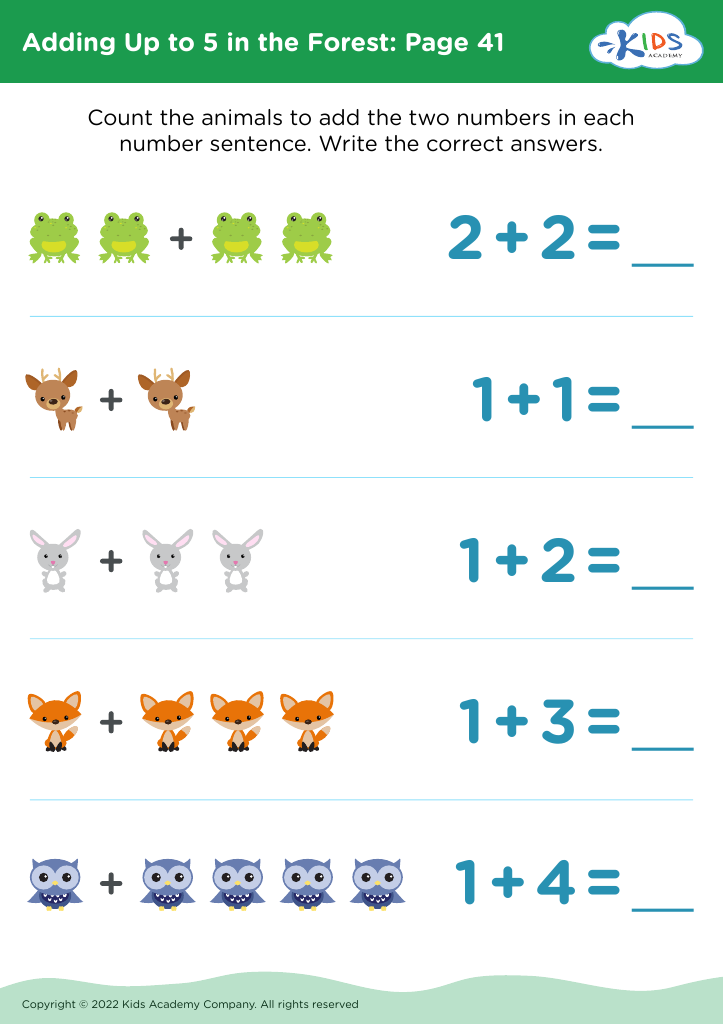
Adding Up to 5 in the Forest: Page 41
Worksheet
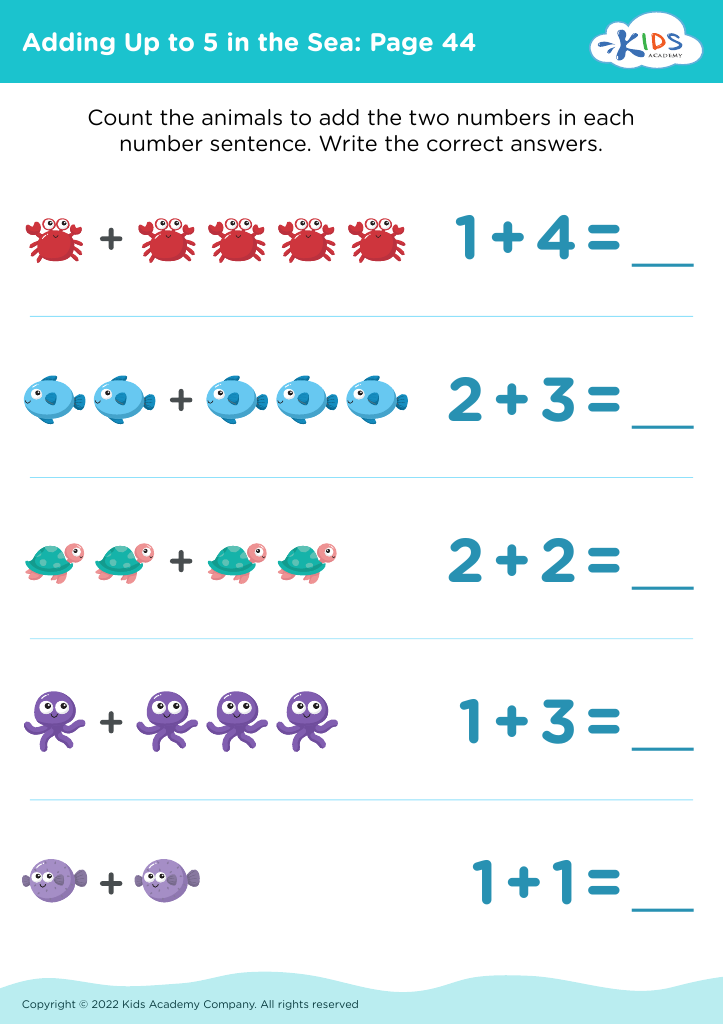
Adding Up to 5 in the Sea: Page 44
Worksheet
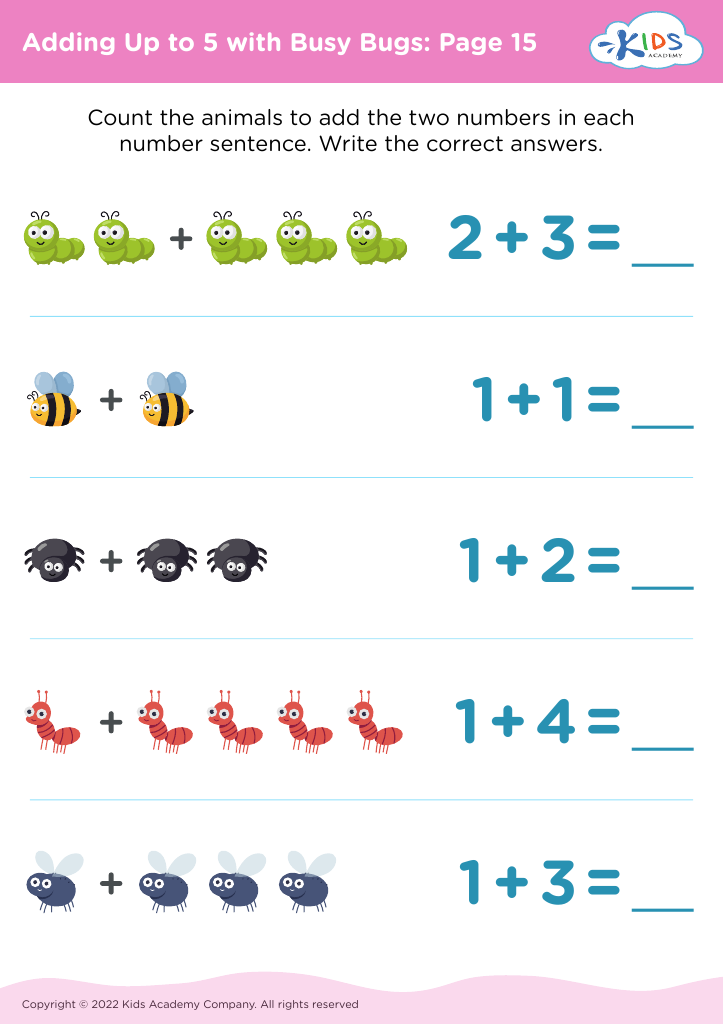
Adding Up to 5 with Busy Bugs: Page 15
Worksheet


... 18 19

Number recognition, along with basic addition and subtraction, forms the foundation of mathematical literacy in early learners aged 4 to 6. During these critical years, children develop essential cognitive skills and intuitive understanding of numbers, which sets the stage for more complex concepts in mathematics and beyond.

Parents and teachers should prioritize these skills, as they enhance children's problem-solving capabilities and boost their confidence in handling numbers. Recognition of numbers allows kids to identify and understand the world around them—from counting objects to recognizing patterns in their environment. Addition and subtraction offer them the tools to quantify their experiences and express ideas like sharing or taking away, crucial social concepts at this age.

Moreover, early exposure to these mathematical concepts helps strengthen children's broader critical thinking abilities. Engaging children in playful activities—like counting items during shopping or incorporating number games—reinforces learning and fosters a positive attitude toward math. Also, solid number skills link to later success in academic achievement, paving the way for higher-level math understanding. Ultimately, building a strong foundation in number recognition and basic operations cultivates not only skilled mathematicians but also well-rounded, confident learners.