Understanding number relationships Addition & Subtraction Worksheets for Ages 4-6
6 filtered results
-
From - To
Explore our "Understanding Number Relationships: Addition & Subtraction Worksheets" designed specifically for children ages 4-6. These engaging and interactive worksheets help young learners grasp fundamental math concepts through fun activities that promote essential skills. Students will develop an understanding of addition and subtraction while exploring number relationships, improving their ability to solve problems confidently. Each worksheet encourages critical thinking and boosts mathematical fluency, catering to different learning styles. Foster your child's early math journey with these vibrant and accessible resources, ensuring they build a strong foundation for future learning in mathematics. Perfect for homeschooling, classrooms, or supplemental practice at home!
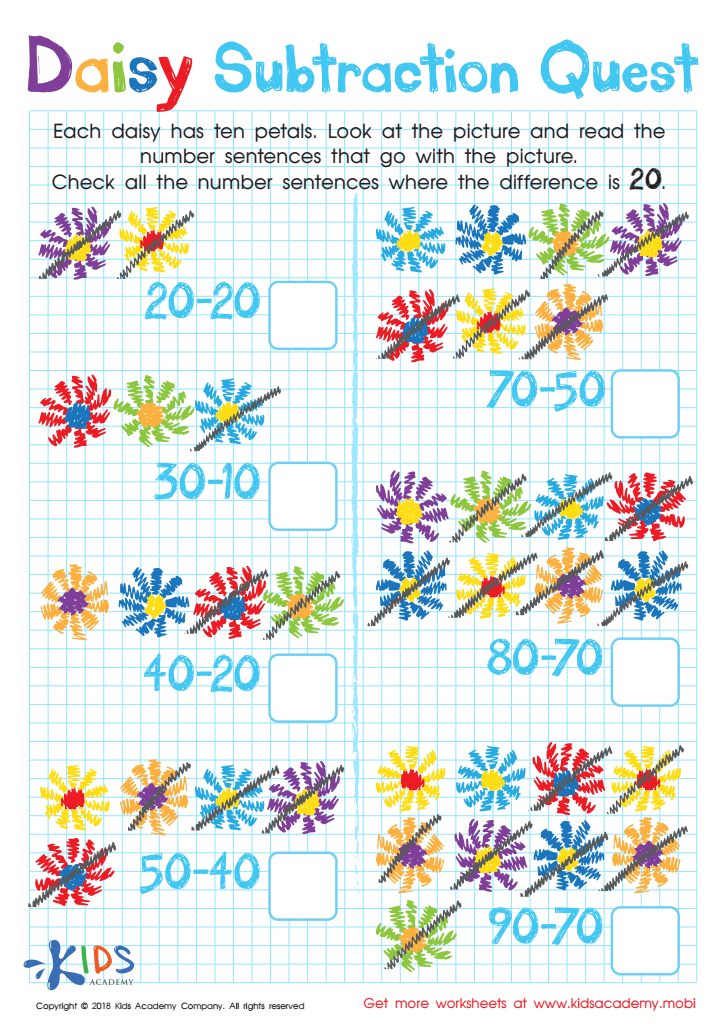
Daisy Subtraction Quest Worksheet
 Assign to My Students
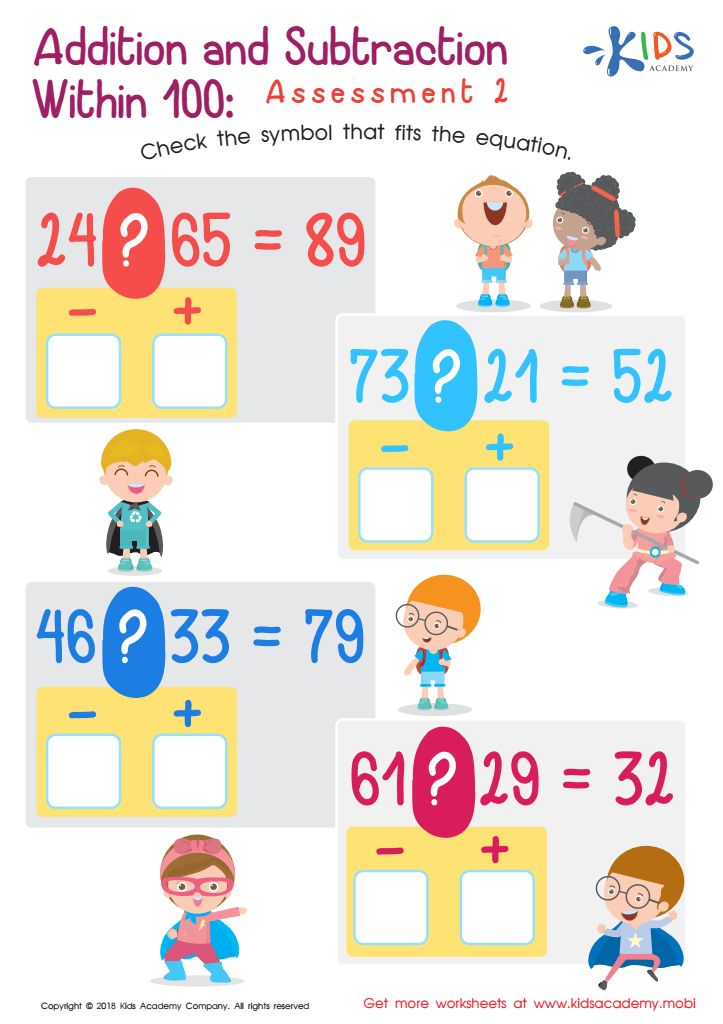
Addition and Subtraction Within 1: Assessment 2 Worksheet
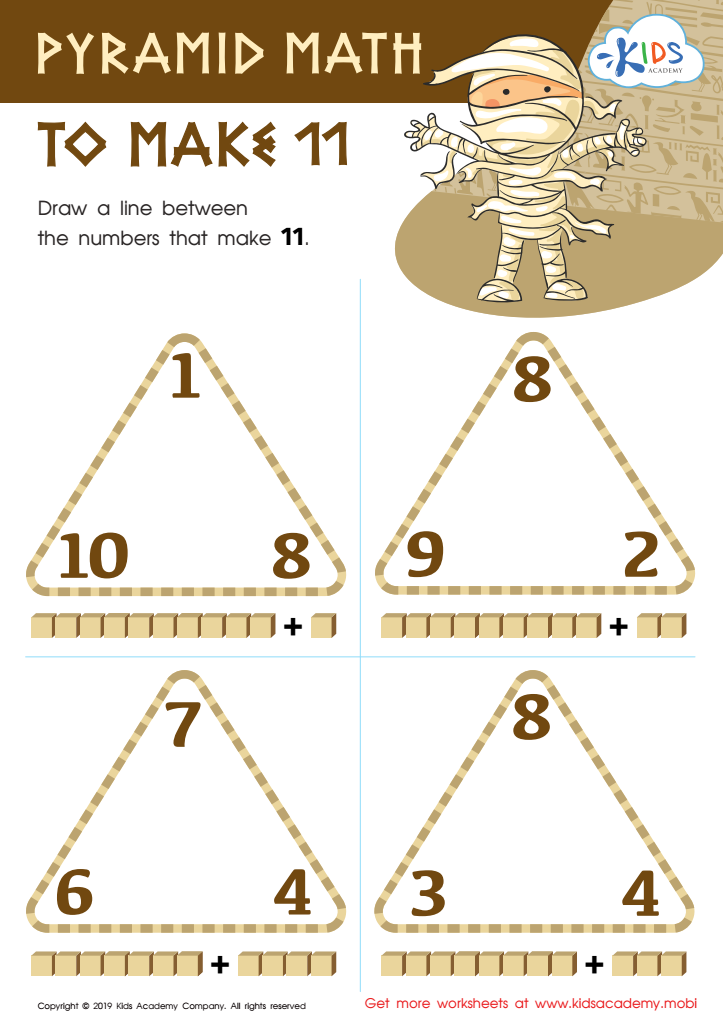
Pyramid Math to Make 11 Worksheet








Understanding number relationships, especially in the context of addition and subtraction, is foundational for children aged 4-6. At this stage in their development, children are beginning to form critical mathematical concepts that will serve as the building blocks for their future learning. When parents and teachers emphasize these concepts, they provide children with a framework to explore how numbers relate to one another, which fosters logical thinking and problem-solving skills.
Learning addition and subtraction, and the relationships between these operations, helps children grasp the idea of "part-whole" relationships. For example, knowing that 3 + 2 = 5 also means that 5 - 2 = 3 creates a deeper understanding of numbers as interconnected rather than isolated entities. This conceptual grounding in number relationships promotes children’s ability to manipulate numbers confidently and effectively, laying the groundwork for more complex mathematical operations later on.
Moreover, facilitating games and activities that encourage children to explore numbers enhances engagement and enjoyment in learning. This playful yet educational approach not only cultivates a love for math but also supports essential social skills as children collaborate and communicate their strategies. Thus, understanding number relationships is critical for optimal cognitive and emotional development during these formative years.








