Visual learning reinforcement Addition & Subtraction Worksheets for Ages 4-6
6 filtered results
-
From - To
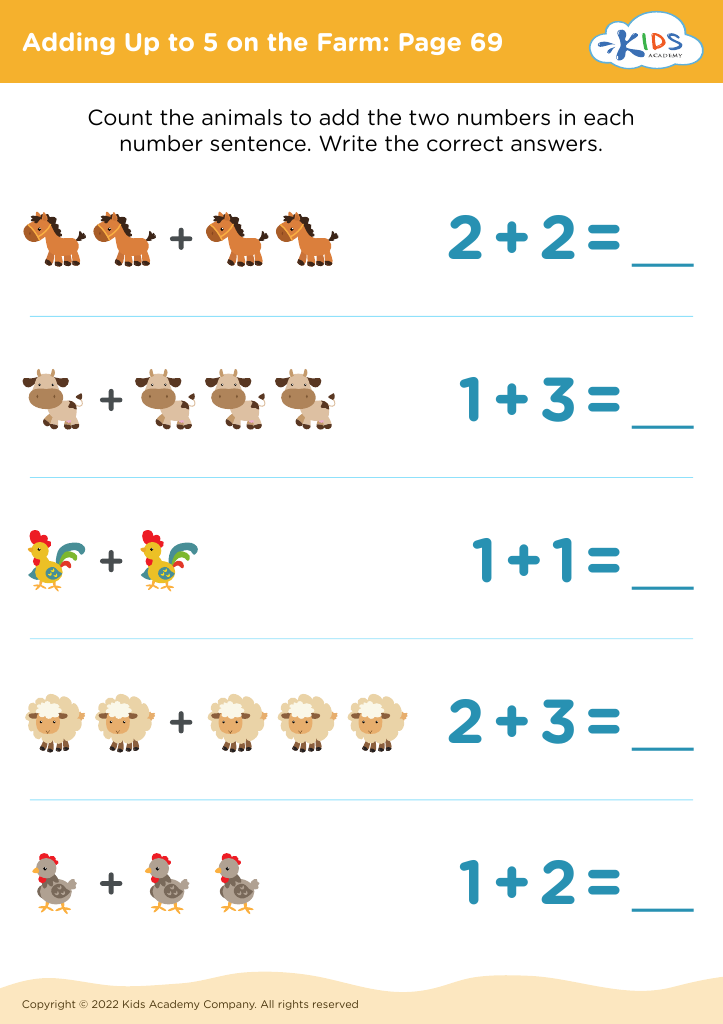
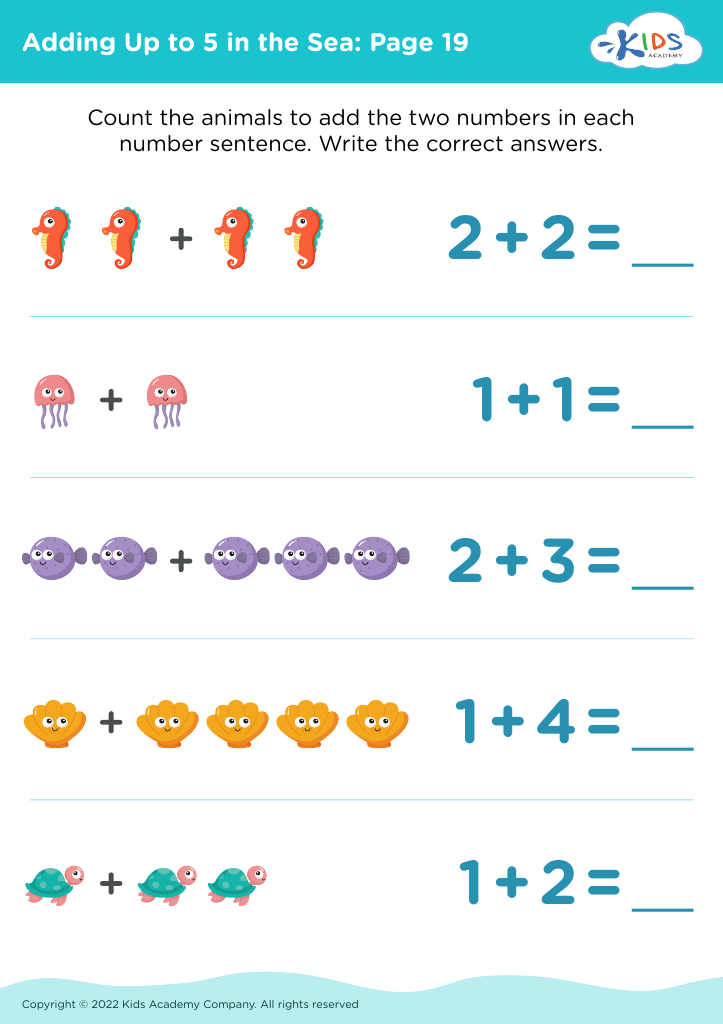
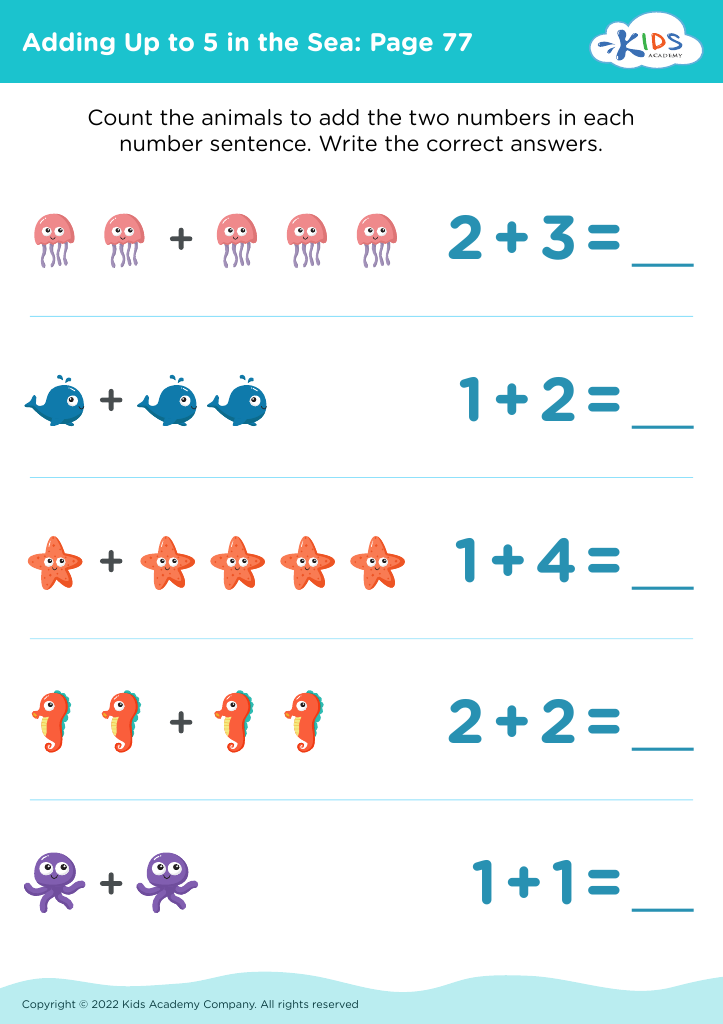
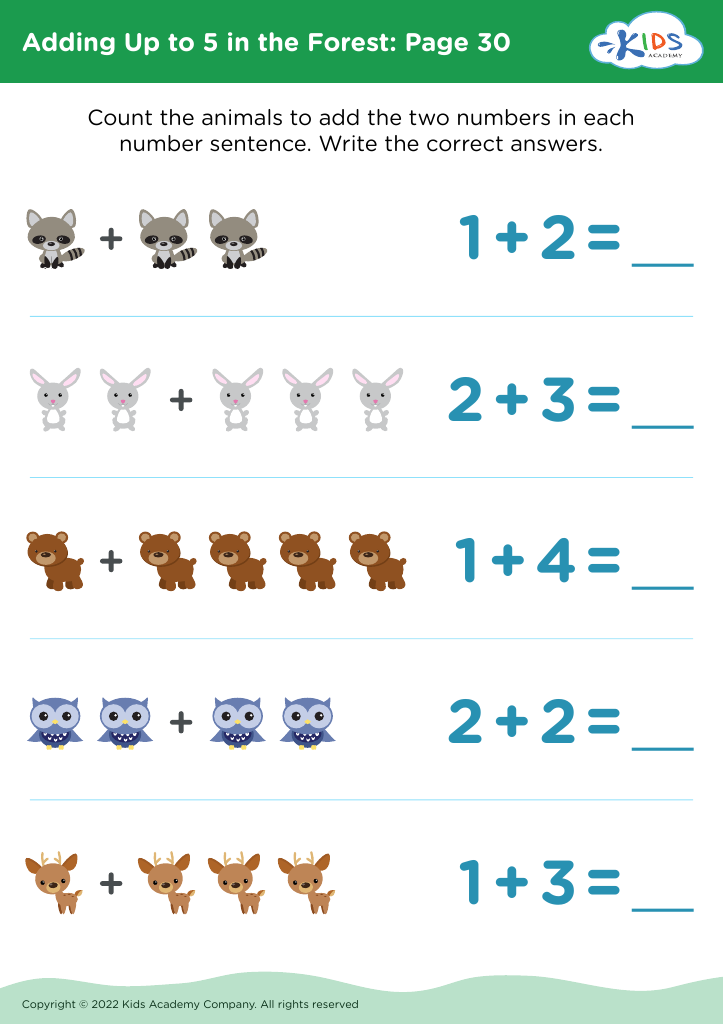
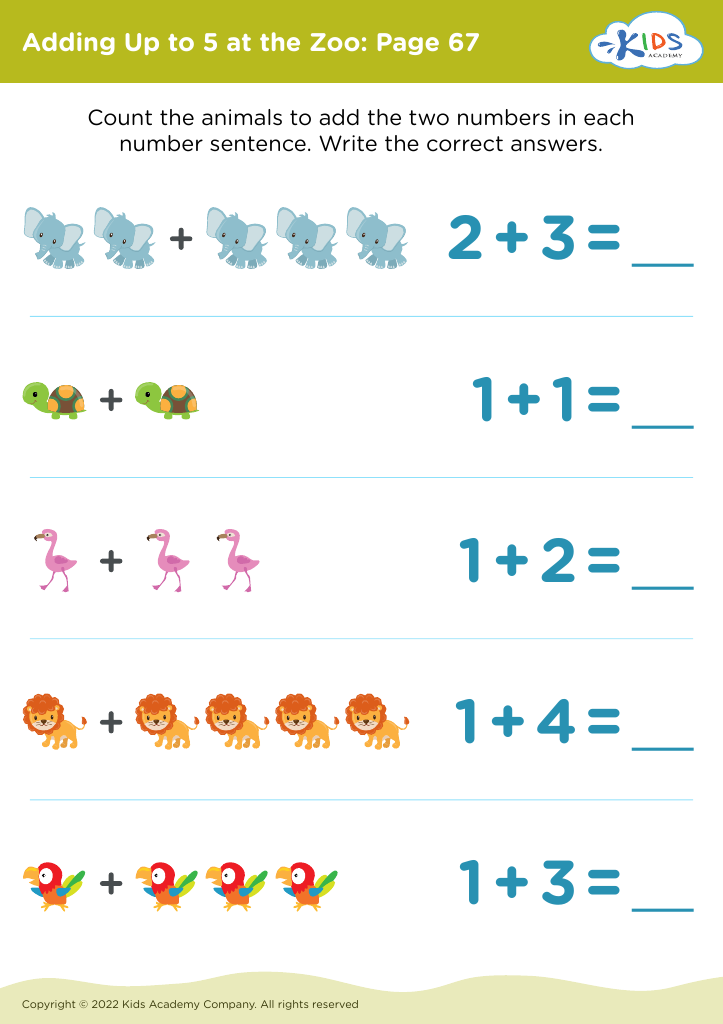
Explore our engaging Visual Learning Reinforcement Addition & Subtraction Worksheets, tailored specifically for children ages 4-6. These worksheets utilize vibrant images and interactive activities to help young learners grasp essential math concepts. By combining visual aids with playful exercises, we make math enjoyable and accessible, encouraging children to solve addition and subtraction problems with confidence. Perfect for enhancing classroom learning or supporting homeschooling efforts, our resources promote critical thinking and retention skills. Discover a variety of themes and difficulty levels that cater to different learning styles, ensuring each child's unique needs are met. Start your child's mathematical journey today with our exciting worksheets!
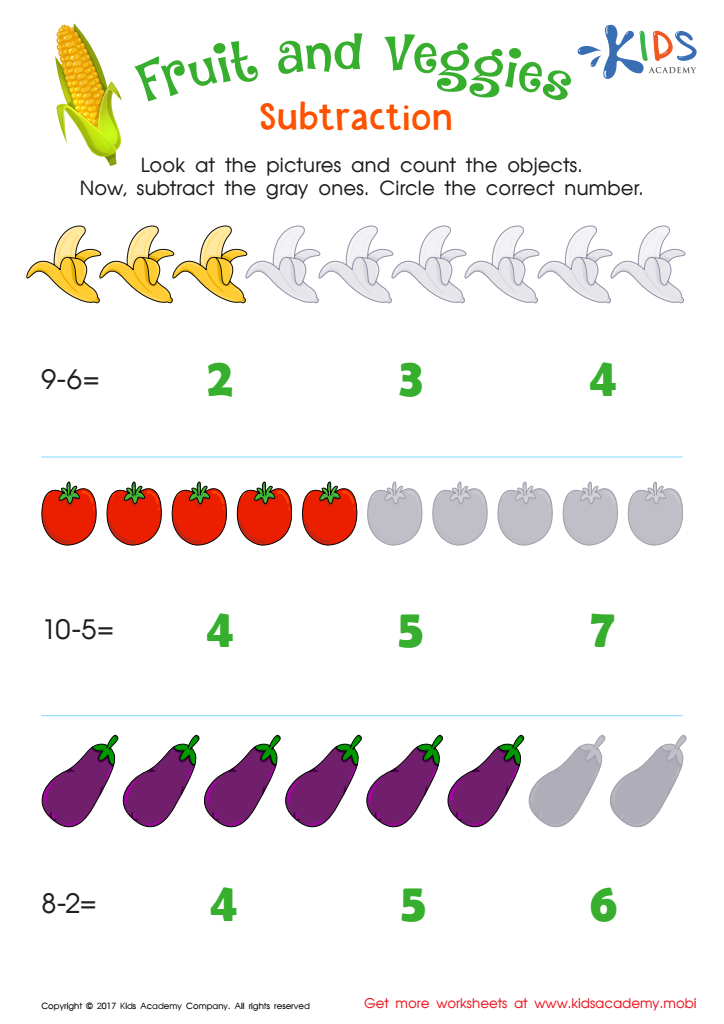
Fruit and Veggies Subtraction Worksheet
 Assign to My Students








Visual learning reinforcement for addition and subtraction is crucial for children aged 4-6 as it taps into their natural ways of understanding the world. At this developmental stage, children are highly visual and often process information through pictures, shapes, and colors. By incorporating visual aids—such as manipulatives, drawings, or visual charts—teachers and parents can make abstract concepts like numbers and operations more concrete and relatable.
Visual reinforcement helps to solidify foundational math skills while fostering engagement and motivation. Children are more likely to retain information when they can see and interact with it, paving the way for a positive attitude toward learning. Moreover, using visuals reduces anxiety that children may feel about math, encouraging them to explore and experiment with numbers without fear of making mistakes.
Additionally, interactive visual activities promote critical thinking and problem-solving skills, as children learn to associate numbers with visual representations. This “seeing” aspect in learning can bridge the gap between understanding and application, ensuring that math concepts are internalized effectively. Ultimately, when parents and teachers prioritize visual learning, they lay the groundwork for strong mathematical abilities, setting children up for future academic success and confidence.








