Basic counting skills Addition Worksheets for Ages 4-6
3 filtered results
-
From - To
Discover our "Basic Counting Skills Addition Worksheets for Ages 4-6" and help your child build a solid math foundation! Designed for young learners, these printable worksheets make adding fun with colorful images and engaging activities. Each sheet encourages children to practice counting and basic addition, enhancing their numerical understanding and boosting confidence. Ideal for home or classroom use, our worksheets support developmental milestones and make learning enjoyable. Set your child on the path to math success with our expertly crafted resources. Visit Kids Academy now to explore and download your free worksheets!
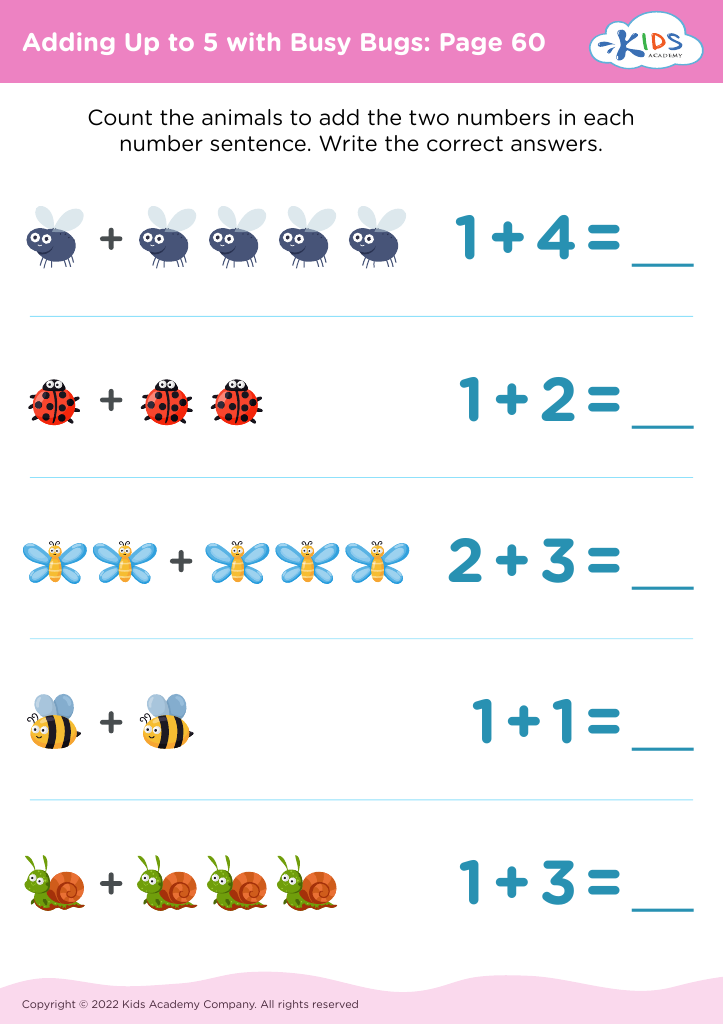
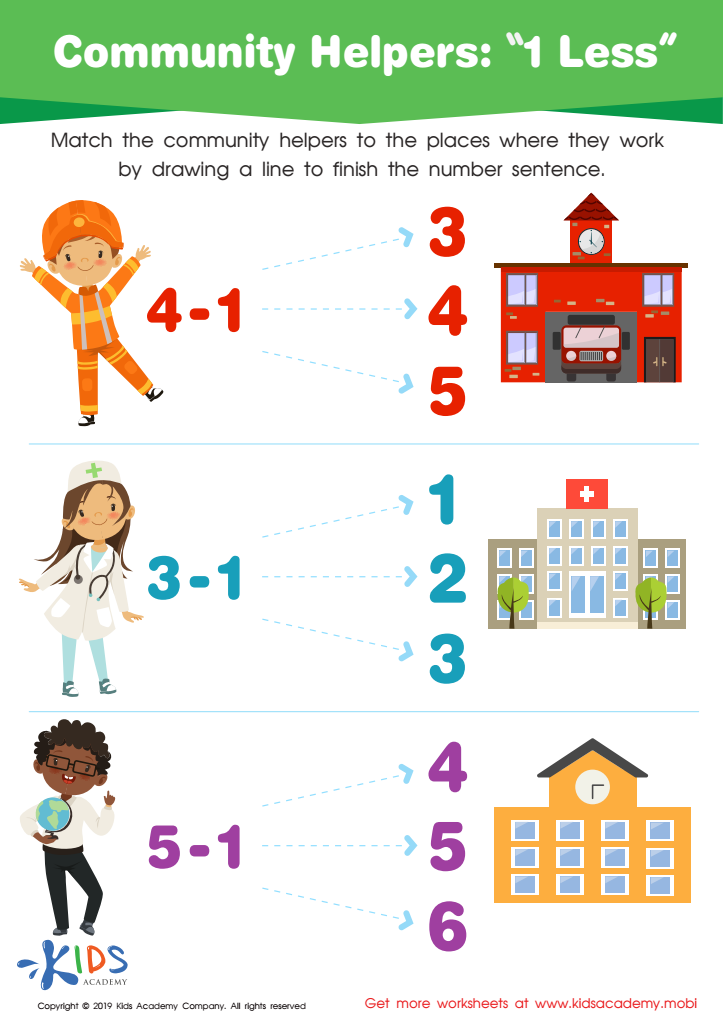
Community Helpers: 1 less Worksheet
 Assign to My Students
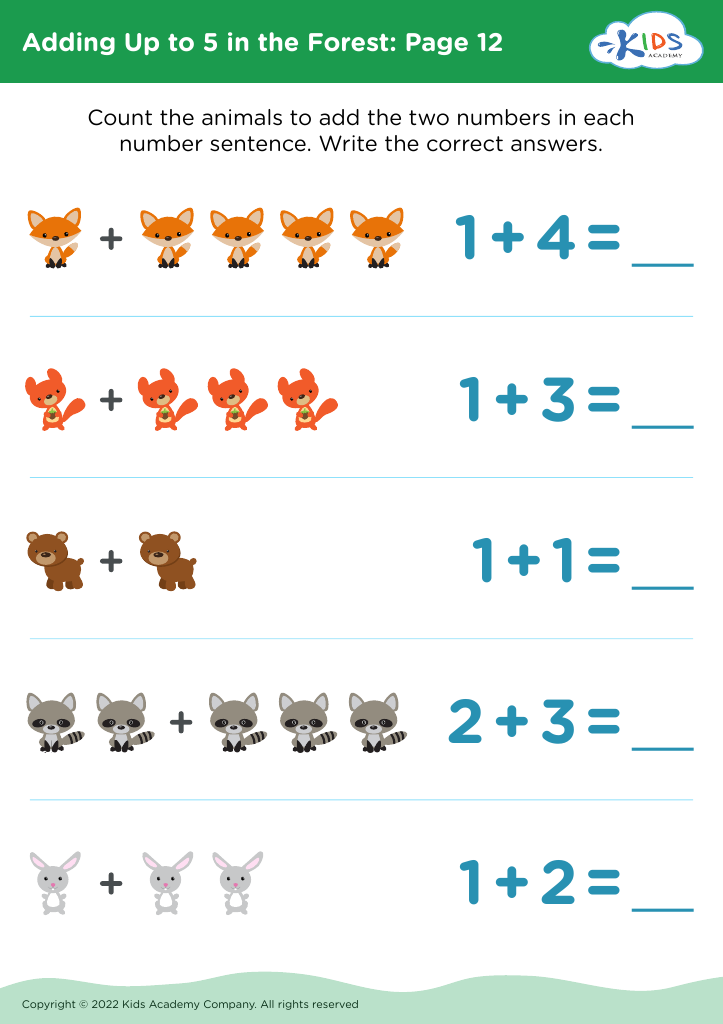








Basic counting skills and understanding addition for ages 4-6 are crucial for several reasons. At this developmental stage, children's brains are incredibly malleable and primed for learning foundational concepts that they will build upon in the future. Counting teaches children number recognition, importance of number order, and provides a framework for basic arithmetic.
Knowing how to add doesn’t just support mathematical thinking; it enhances critical cognitive skills such as problem solving and logical reasoning. Furthermore, early math skills are often predictive of future academic success, not just in mathematics but across the curriculum.
Developing proficiency in counting and addition also builds confidence. Children who have strong foundational math skills often feel more secure in their learning environment, and this confidence carries into other areas of study. Additionally, these skills are crucial for everyday tasks and general problem-solving capabilities, such as sharing objects equally or understanding time.
Moreover, early development in these areas fosters a positive relationship with math, reducing the likelihood of math anxiety later. Therefore, nurturing these skills isn't merely about learning numbers; it's about setting the stage for lifelong analytical and academic skills, smoothing a pathway for future success and confidence in many areas of life.








