Filters

35 filtered results

Clear all filters
Favorites
With answer key
Interactive

35 filtered results

Difficulty Level

Grade


Subject

    Enhance your child’s fine motor skills while mastering basic addition with our Fine Motor Skills Addition Worksheets designed for ages 4-6. Perfectly tailored to young learners, these engaging worksheets combine fun, colorful activities with educational benefits. They help improve hand-eye coordination, pencil grip, and precise movement through easy-to-follow, enjoyable tasks. Great for both classroom and home use, they ensure foundational math skills are developed in a playful, stress-free environment. Visit Kids Academy to integrate these worksheets into your child’s learning routine and watch their proficiency grow, preparing them for future academic success.
    Check out this FREE Trial Lesson on Addition for age 4-6!

    X

    Favorites
    With answer key
    Interactive
    • 4-6
    • Fine Motor Skills
    • Addition
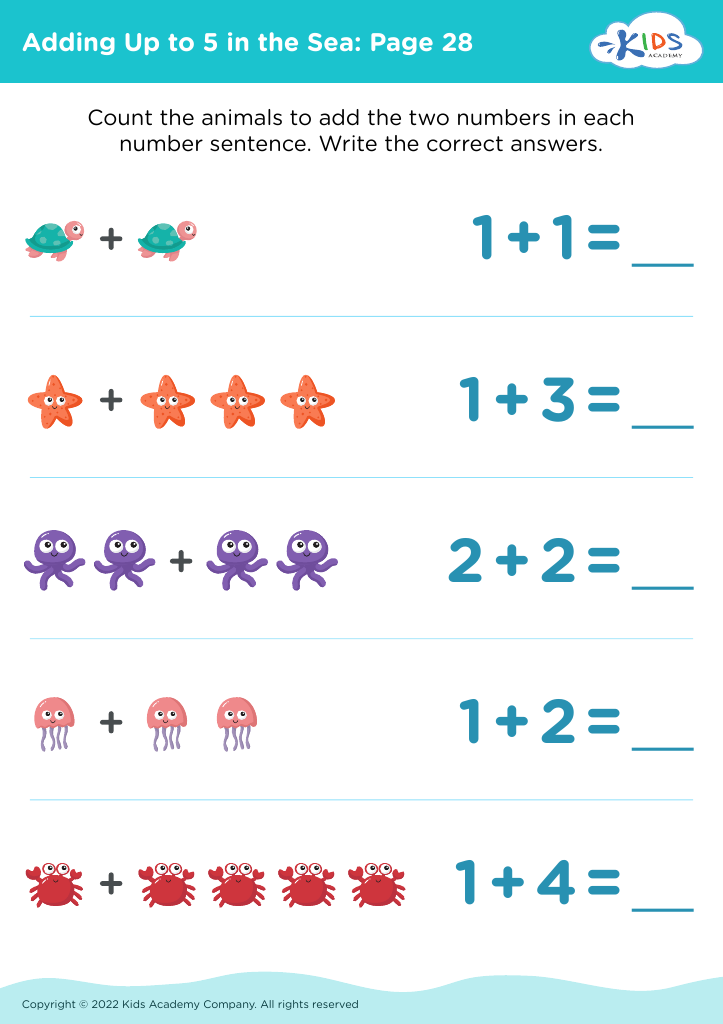
    Adding Up to 5 in the Sea: Page 28
    Adding Up to 5 in the Sea: Page 28
    Adding Up to 5 in the Sea: Page 28
    Worksheet
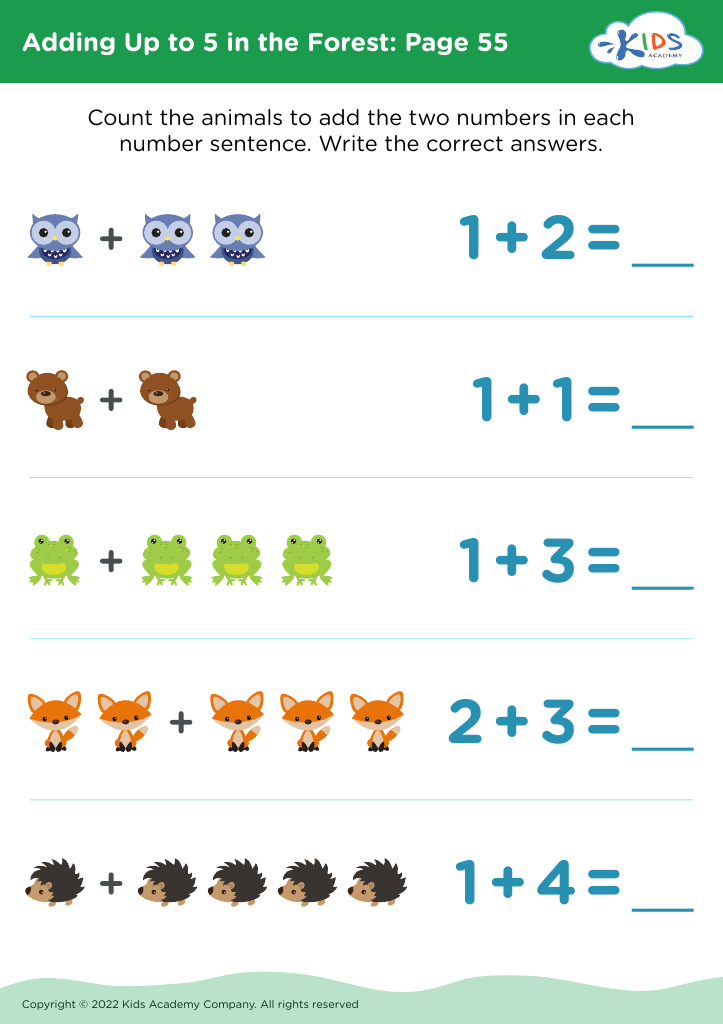
    Adding Up to 5 in the Forest: Page 55
    Adding Up to 5 in the Forest: Page 55
    Adding Up to 5 in the Forest: Page 55
    Worksheet
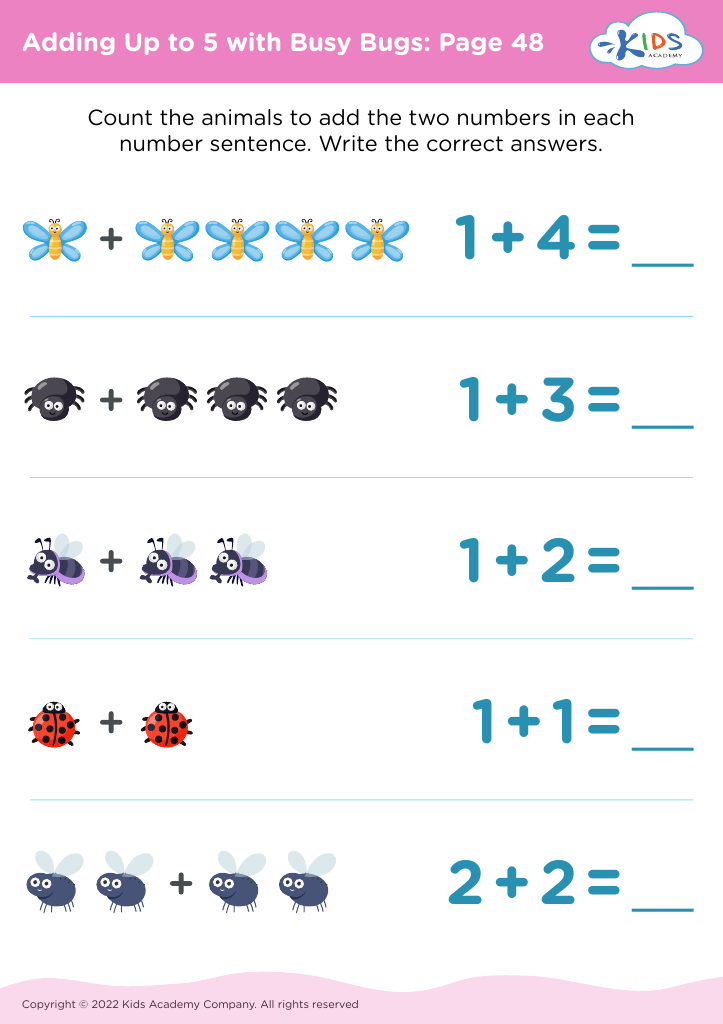
    Adding Up to 5 with Busy Bugs: Page 48
    Adding Up to 5 with Busy Bugs: Page 48
    Adding Up to 5 with Busy Bugs: Page 48
    Worksheet
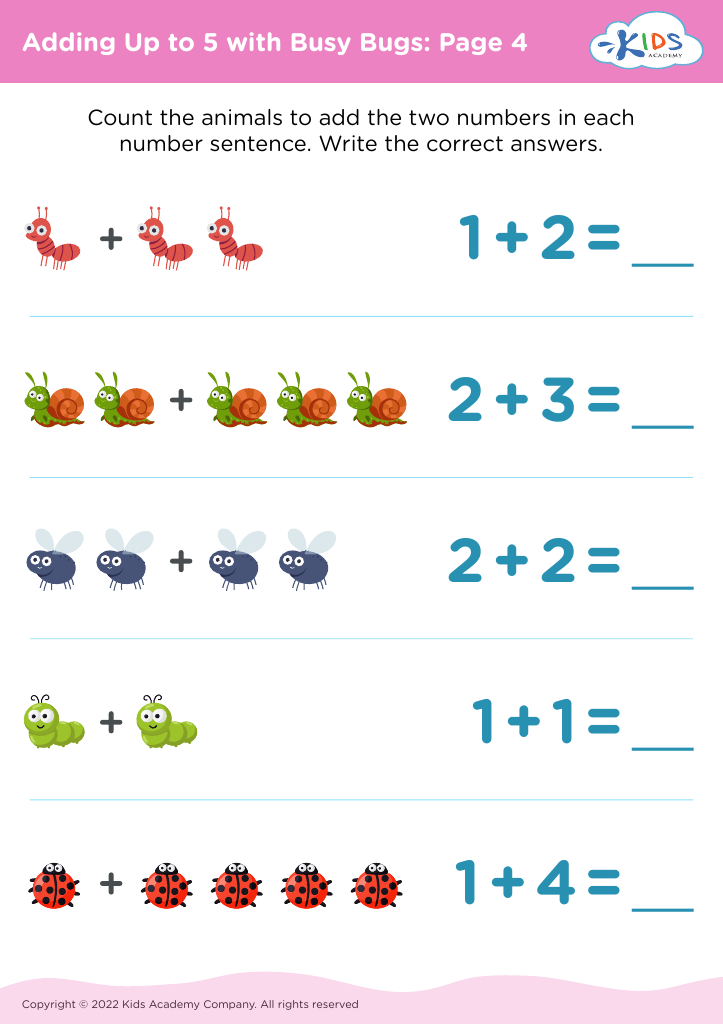
    Adding Up to 5 with Busy Bugs: Page 4
    Adding Up to 5 with Busy Bugs: Page 4
    Adding Up to 5 with Busy Bugs: Page 4
    Worksheet
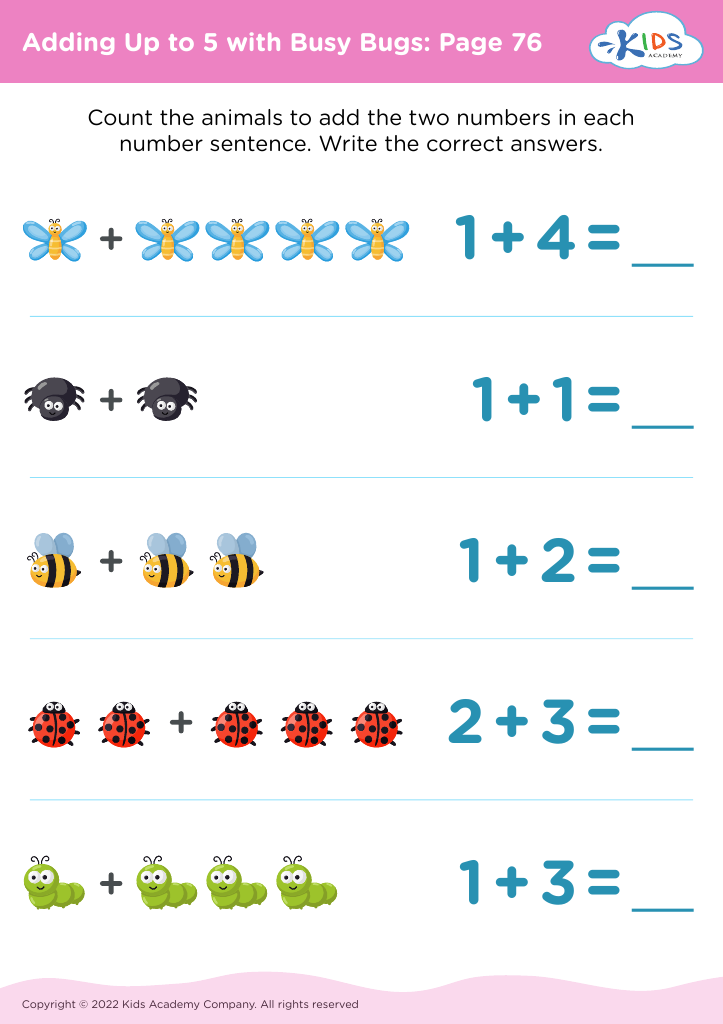
    Adding Up to 5 with Busy Bugs: Page 76
    Adding Up to 5 with Busy Bugs: Page 76
    Adding Up to 5 with Busy Bugs: Page 76
    Worksheet
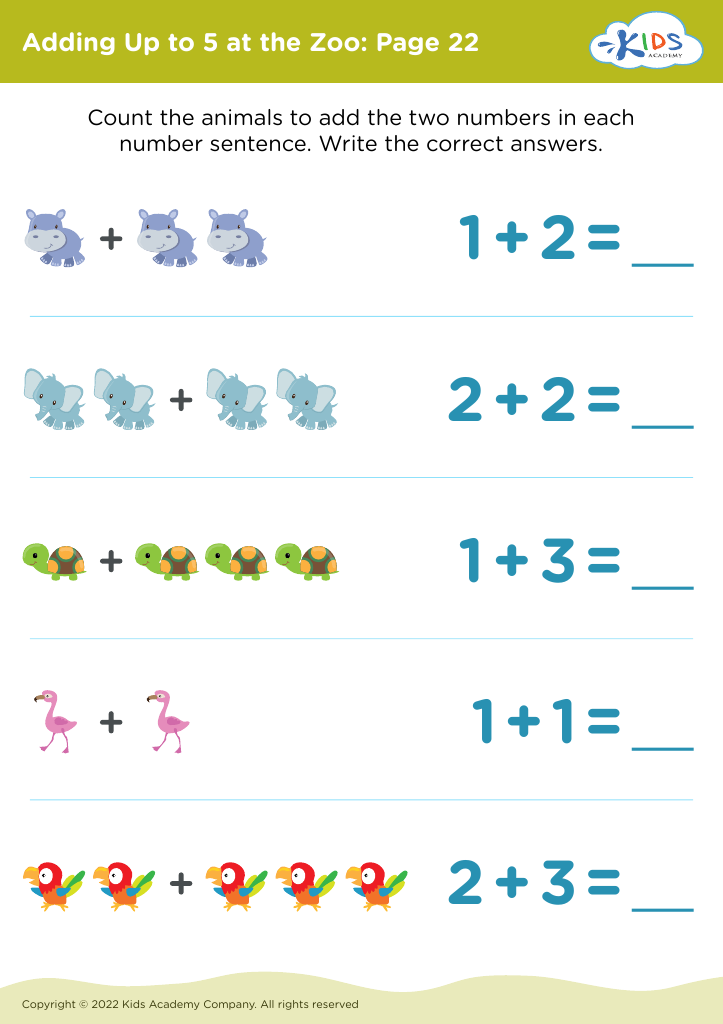
    Adding Up to 5 at the Zoo: Page 22
    Adding Up to 5 at the Zoo: Page 22
    Adding Up to 5 at the Zoo: Page 22
    Worksheet
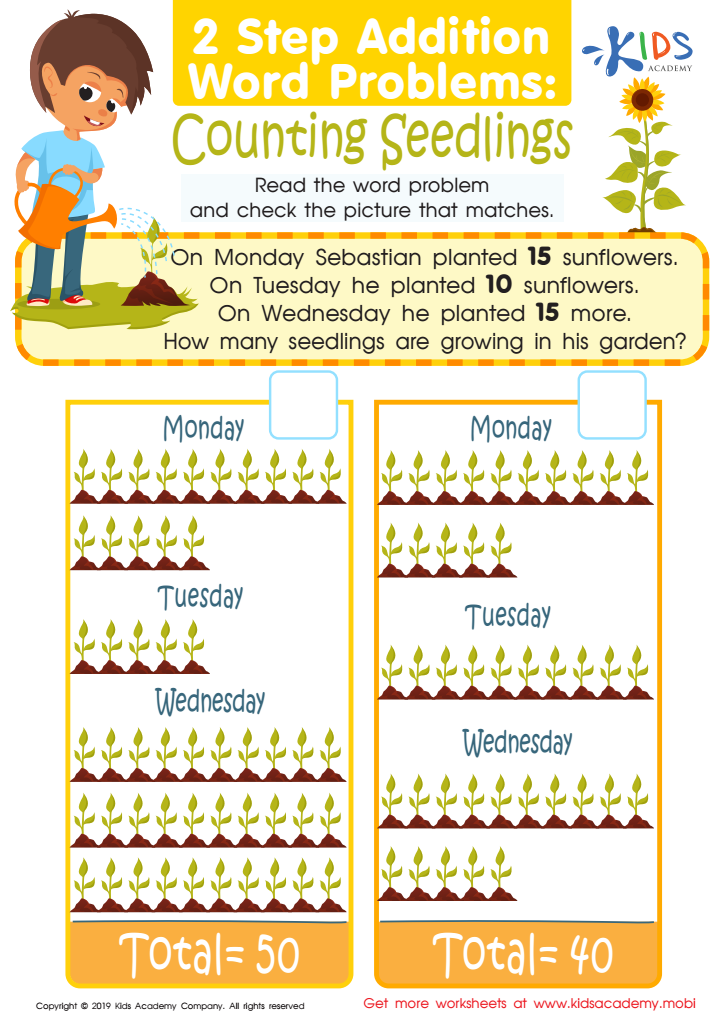
    Counting Seedlings Worksheet
    Counting Seedlings Worksheet

    Counting Seedlings Worksheet

    Understanding math word problems is key. Multiple steps can prove challenging - this free worksheet provides one-to-one picture representation to help kids solve multi-step addition word problems. Strengthen addition skills by choosing the matching picture to the answer.
    Counting Seedlings Worksheet
    Worksheet
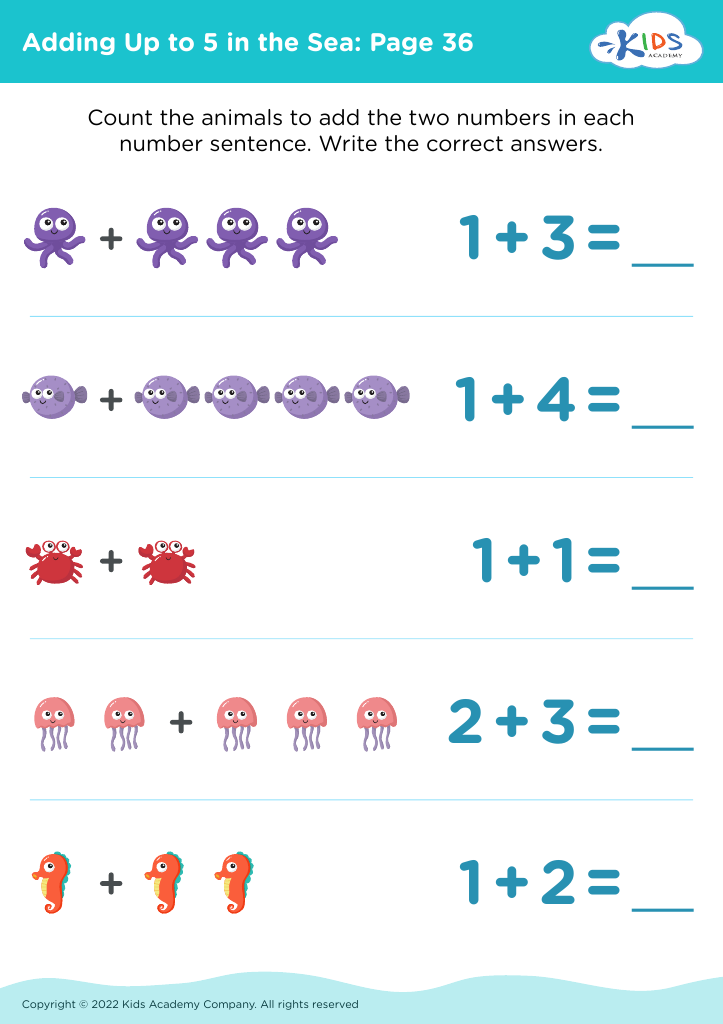
    Adding Up to 5 in the Sea: Page 36
    Adding Up to 5 in the Sea: Page 36
    Adding Up to 5 in the Sea: Page 36
    Worksheet
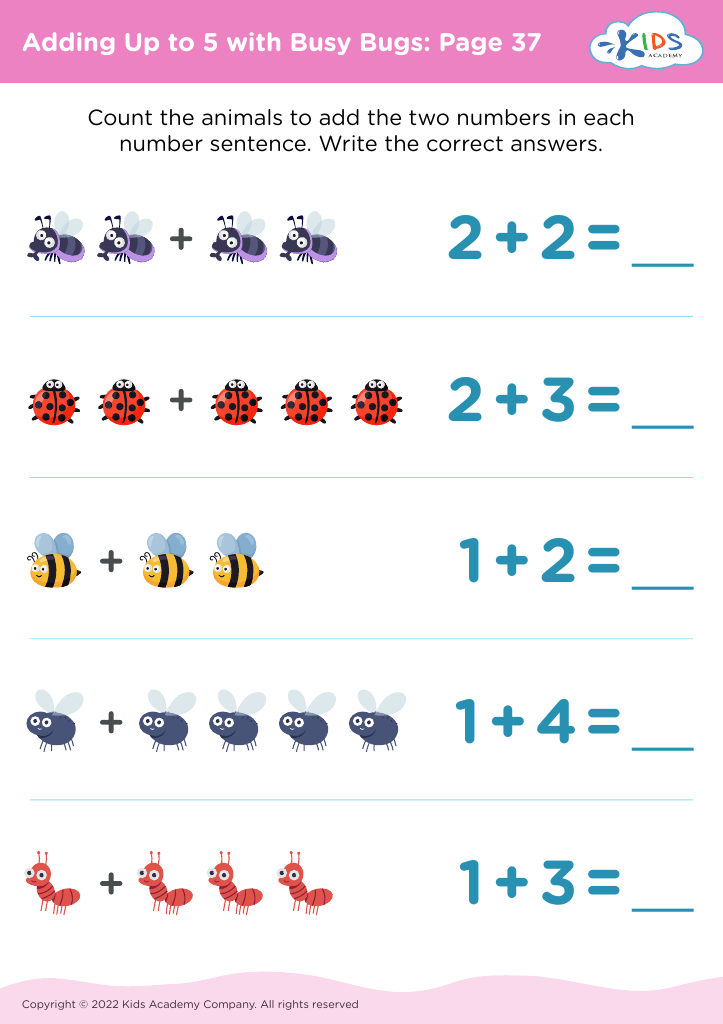
    Adding Up to 5 with Busy Bugs: Page 37
    Adding Up to 5 with Busy Bugs: Page 37
    Adding Up to 5 with Busy Bugs: Page 37
    Worksheet
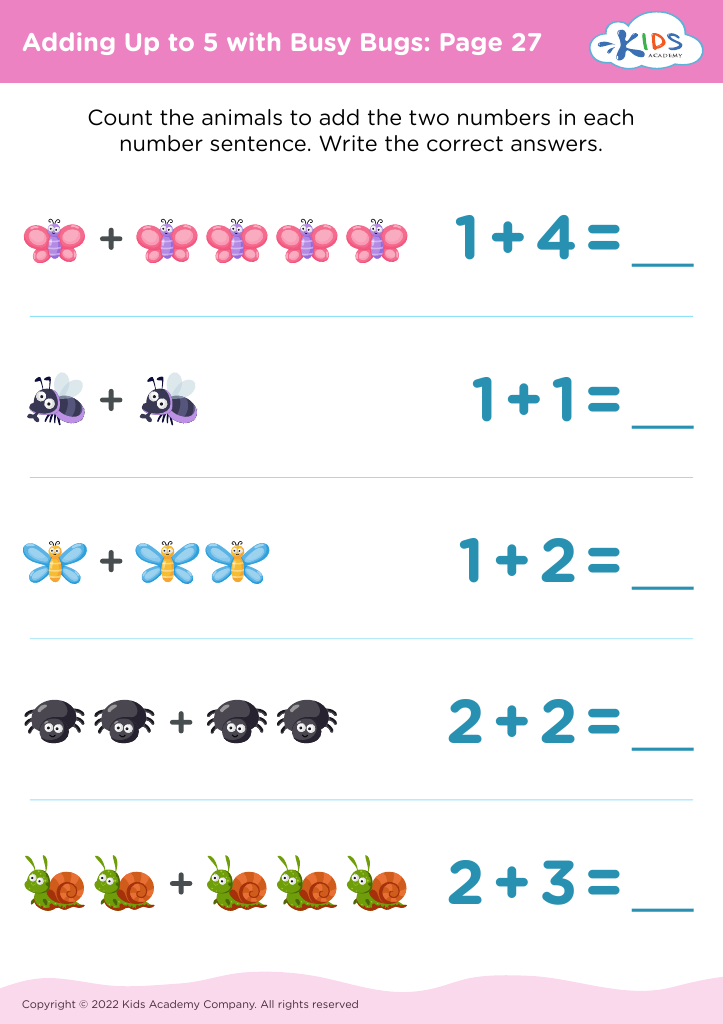
    Adding Up to 5 with Busy Bugs: Page 27
    Adding Up to 5 with Busy Bugs: Page 27
    Adding Up to 5 with Busy Bugs: Page 27
    Worksheet
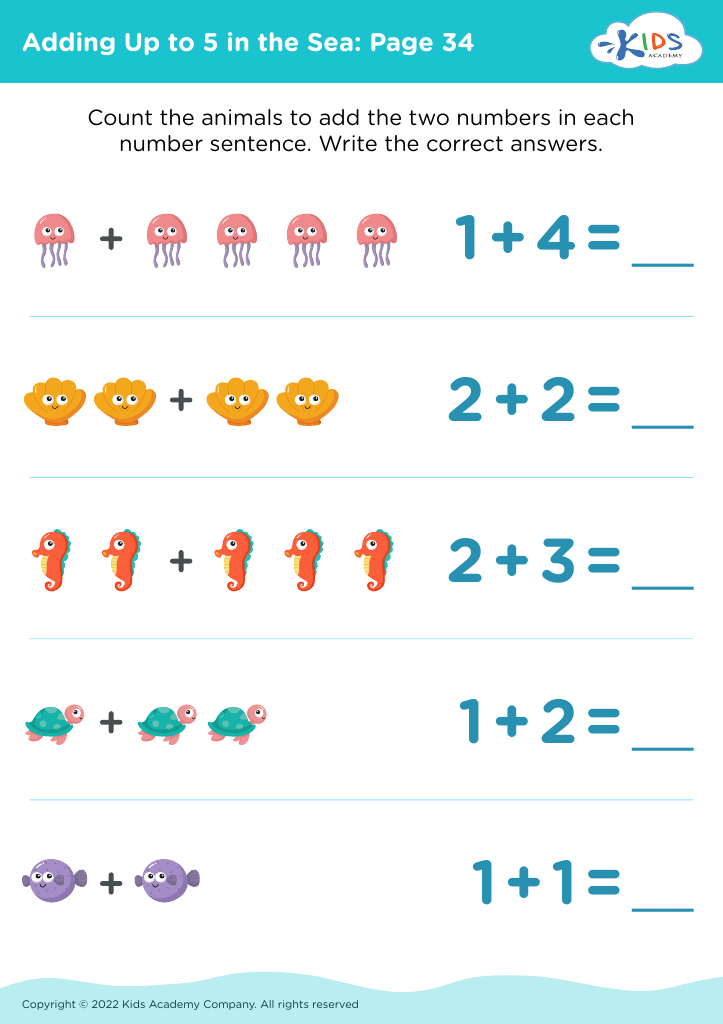
    Adding Up to 5 in the Sea: Page 34
    Adding Up to 5 in the Sea: Page 34
    Adding Up to 5 in the Sea: Page 34
    Worksheet
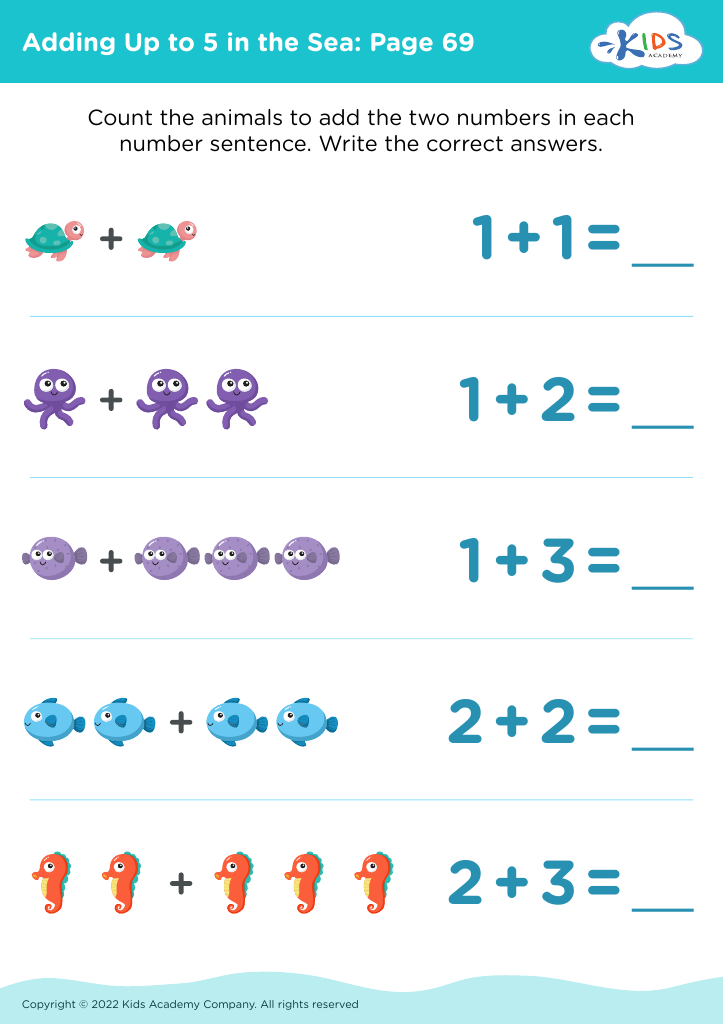
    Adding Up to 5 in the Sea: Page 69
    Adding Up to 5 in the Sea: Page 69
    Adding Up to 5 in the Sea: Page 69
    Worksheet
    18 Candles Worksheet
    18 Candles Worksheet

    18 Candles Worksheet

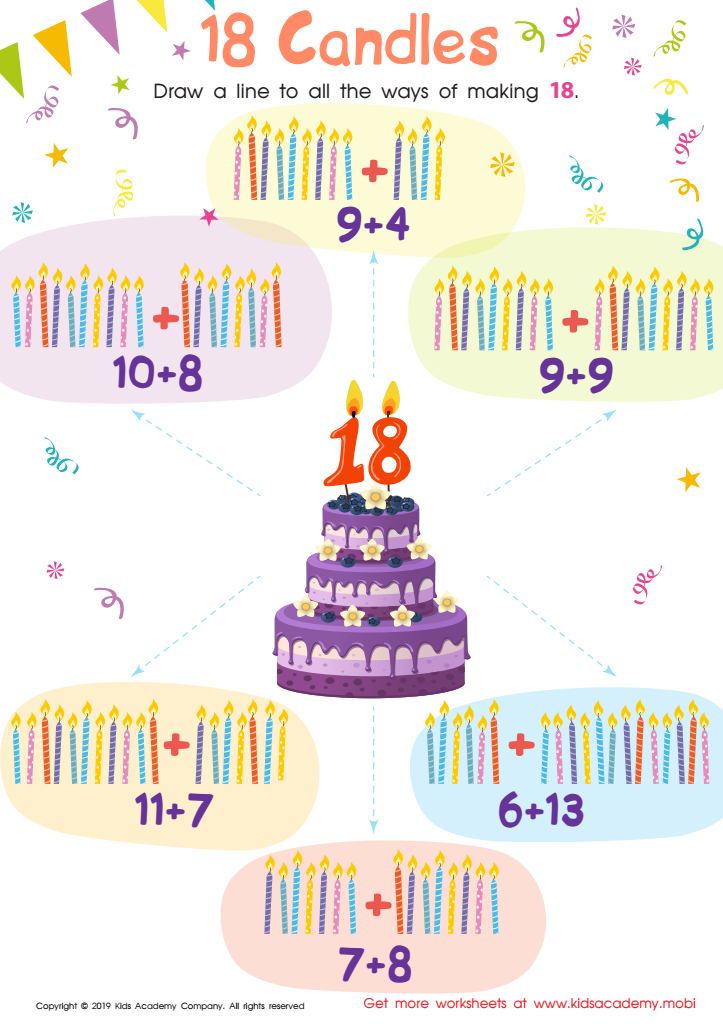
    This worksheet is great for introducing your students to addition and subtraction. Help your kids solve the simple equations on it and draw a line from the birthday cake with 18 on it to all the solutions. Practice like this will prepare them to tackle more complex math problems.
    18 Candles Worksheet
    Worksheet
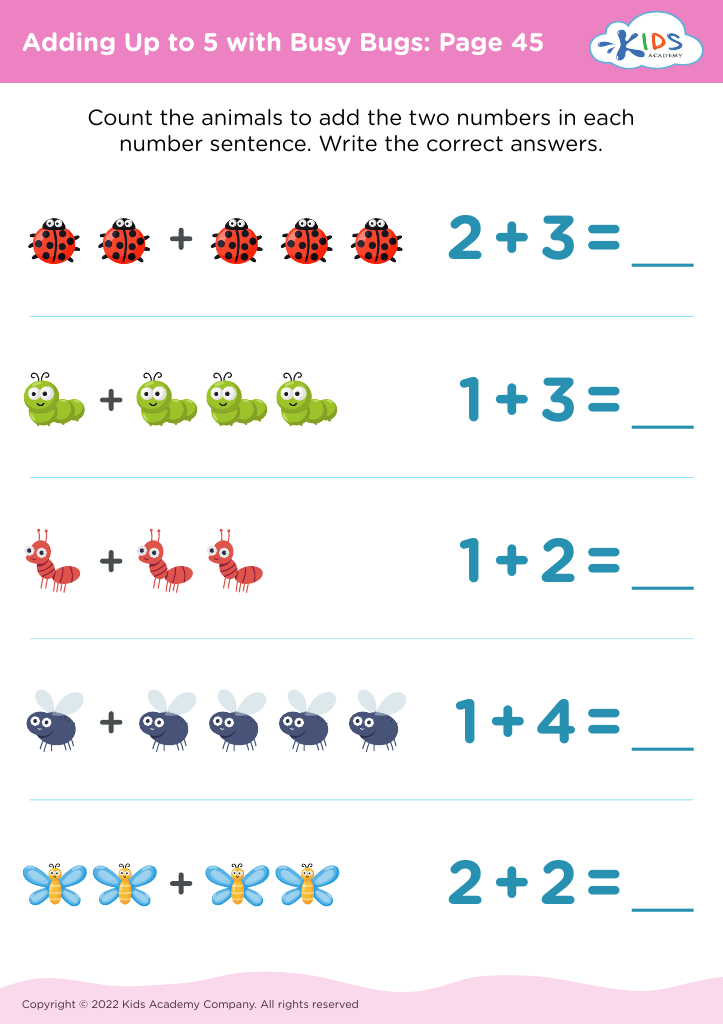
    Adding Up to 5 with Busy Bugs: Page 45
    Adding Up to 5 with Busy Bugs: Page 45
    Adding Up to 5 with Busy Bugs: Page 45
    Worksheet
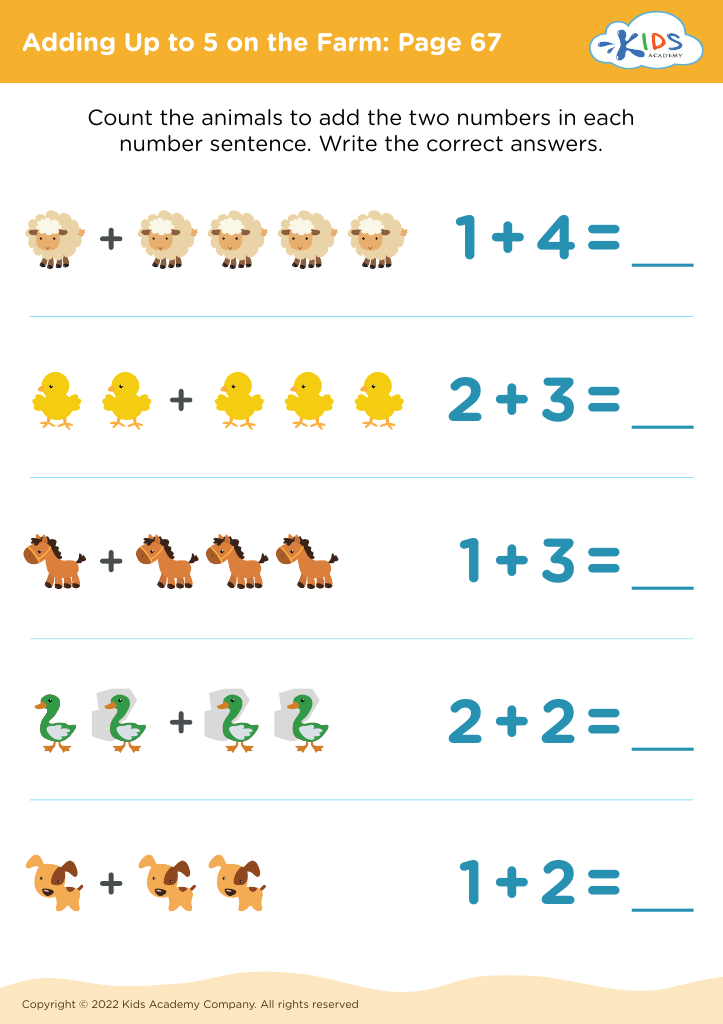
    Adding Up to 5 on the Farm: Page 67
    Adding Up to 5 on the Farm: Page 67
    Adding Up to 5 on the Farm: Page 67
    Worksheet
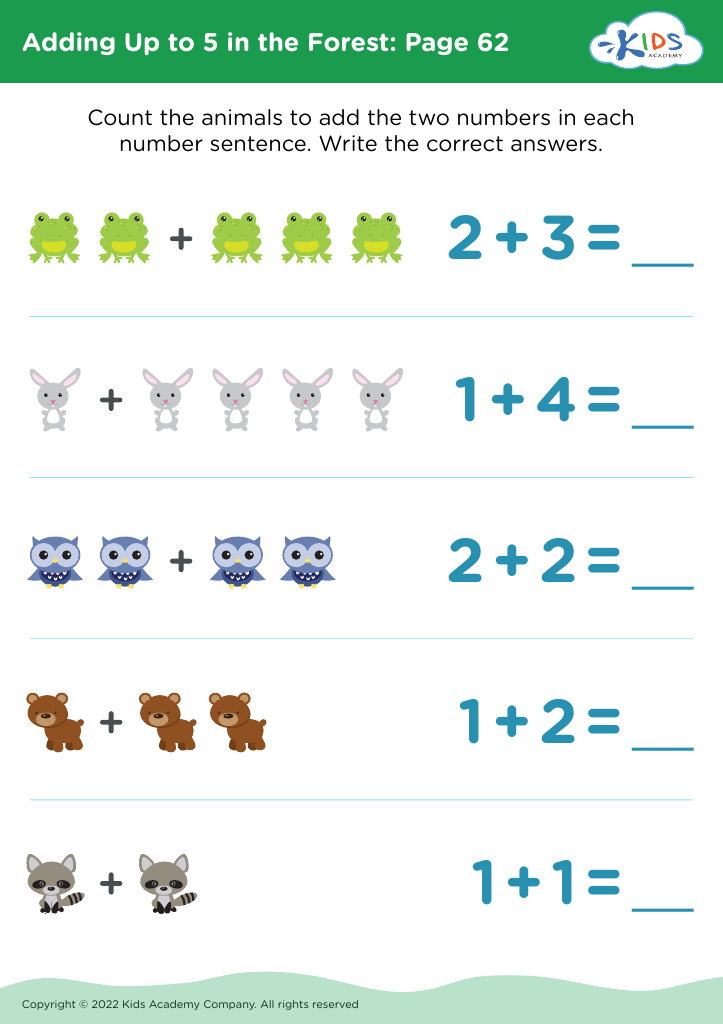
    Adding Up to 5 in the Forest: Page 62
    Adding Up to 5 in the Forest: Page 62
    Adding Up to 5 in the Forest: Page 62
    Worksheet
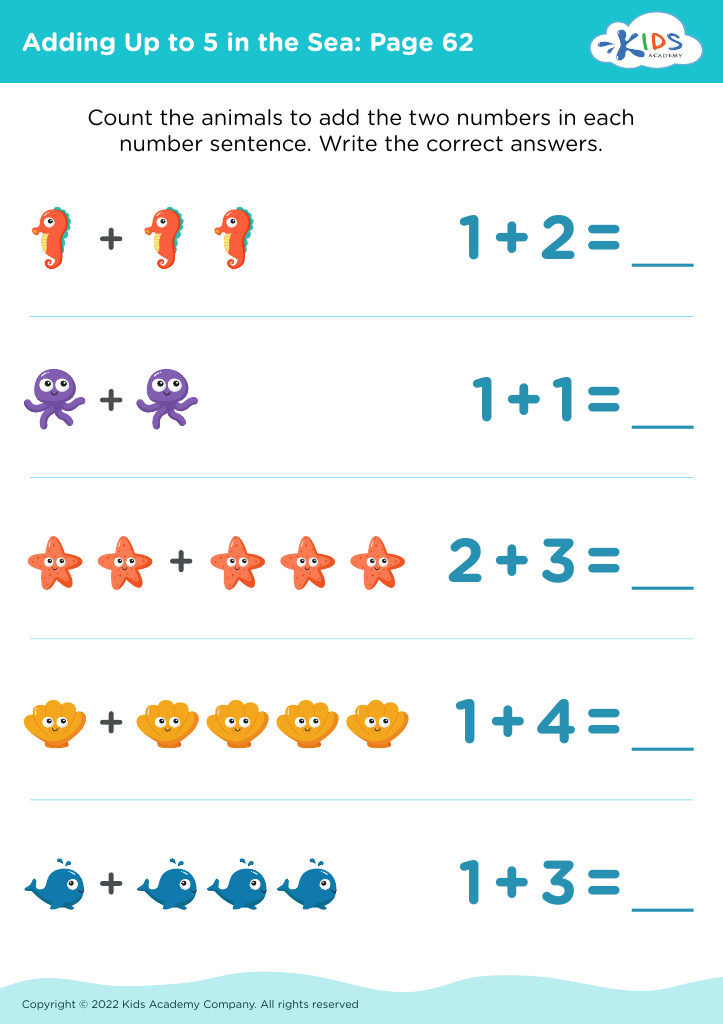
    Adding Up to 5 in the Sea: Page 62
    Adding Up to 5 in the Sea: Page 62
    Adding Up to 5 in the Sea: Page 62
    Worksheet
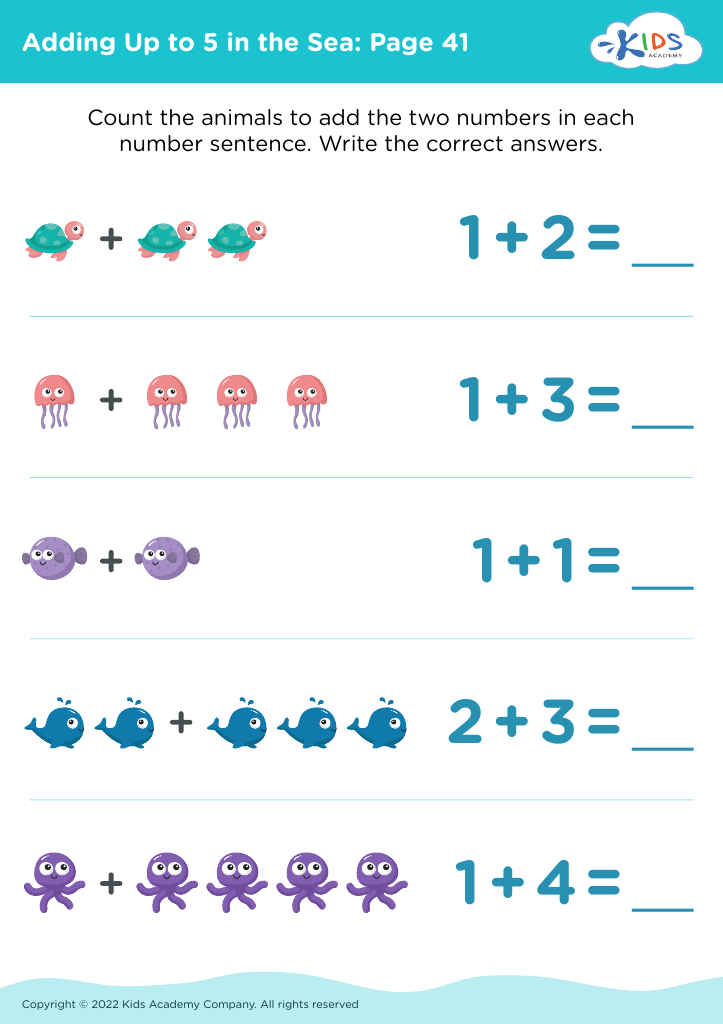
    Adding Up to 5 in the Sea: Page 41
    Adding Up to 5 in the Sea: Page 41
    Adding Up to 5 in the Sea: Page 41
    Worksheet
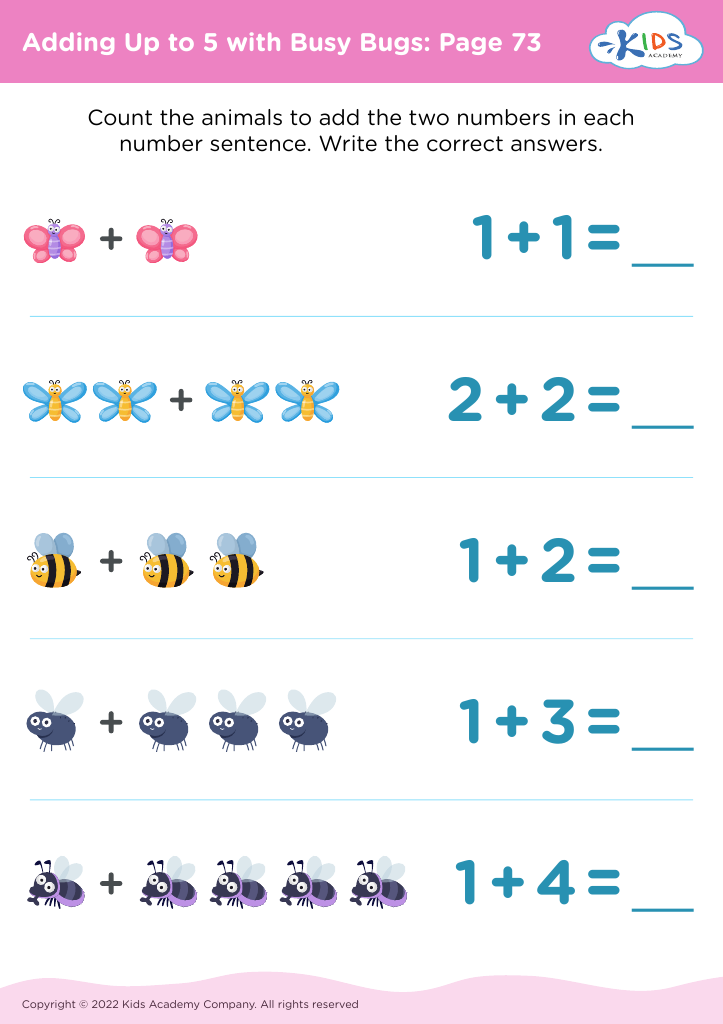
    Adding Up to 5 with Busy Bugs: Page 73
    Adding Up to 5 with Busy Bugs: Page 73
    Adding Up to 5 with Busy Bugs: Page 73
    Worksheet
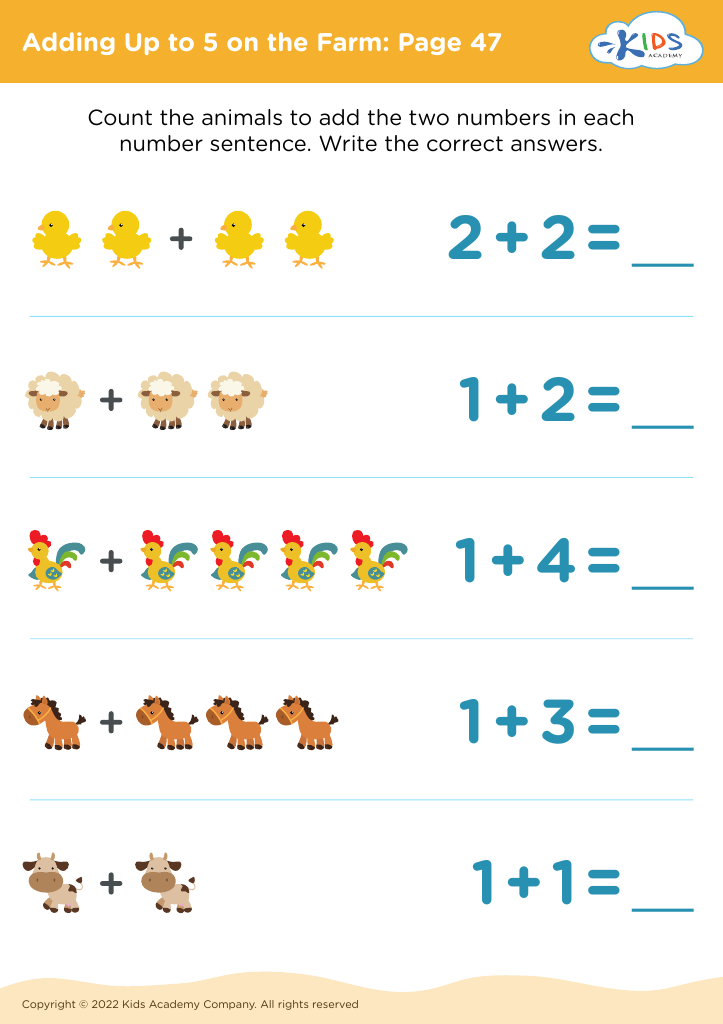
    Adding Up to 5 on the Farm: Page 47
    Adding Up to 5 on the Farm: Page 47
    Adding Up to 5 on the Farm: Page 47
    Worksheet
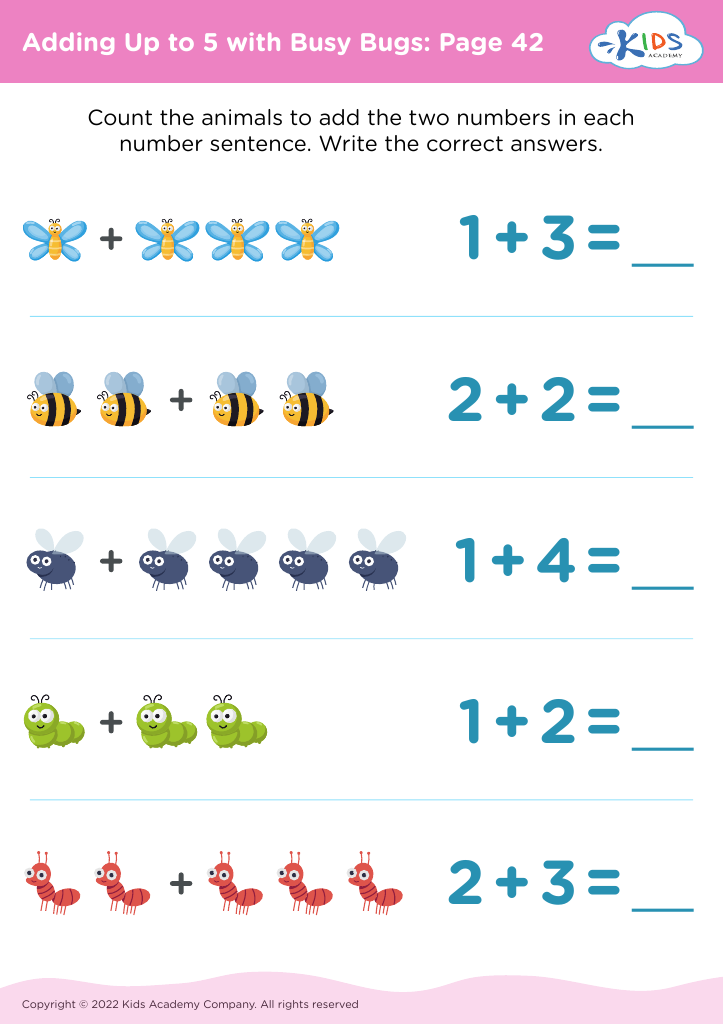
    Adding Up to 5 with Busy Bugs: Page 42
    Adding Up to 5 with Busy Bugs: Page 42
    Adding Up to 5 with Busy Bugs: Page 42
    Worksheet
    6 Parrots Worksheet
    6 Parrots Worksheet
    6 Parrots Worksheet

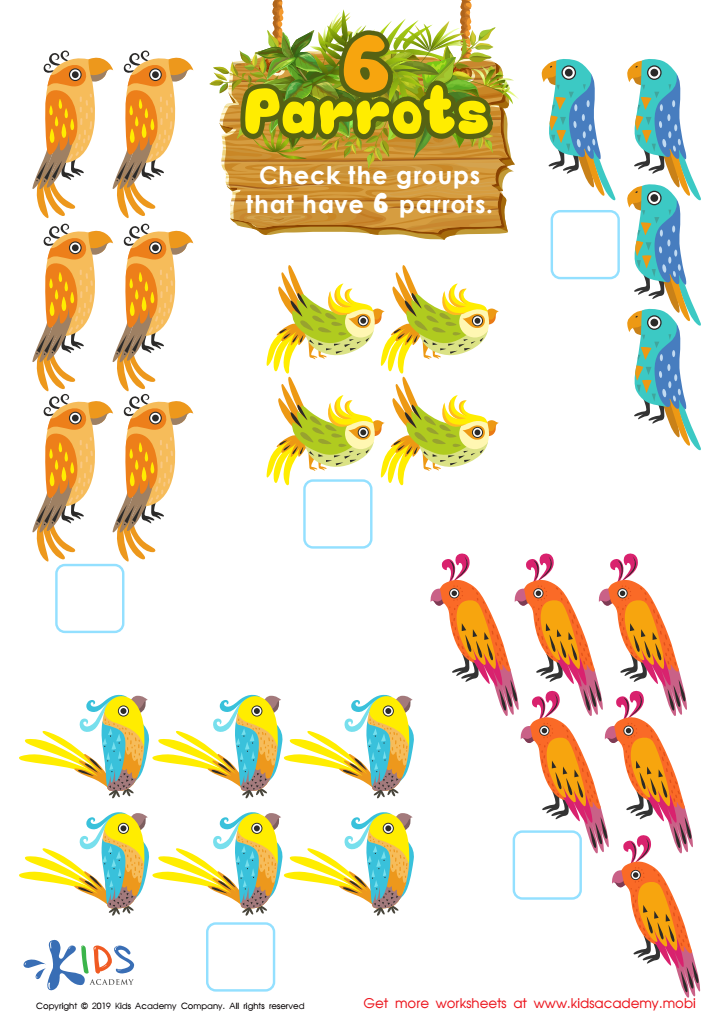
    Love parrots? Here's a free worksheet to help your children practice counting to six with colorful parrot representations! Kids will adore counting the parrots and checking off groups of six - and it won't even feel like math! Just a fun way to make some new and exciting friends.
    6 Parrots Worksheet
    Worksheet
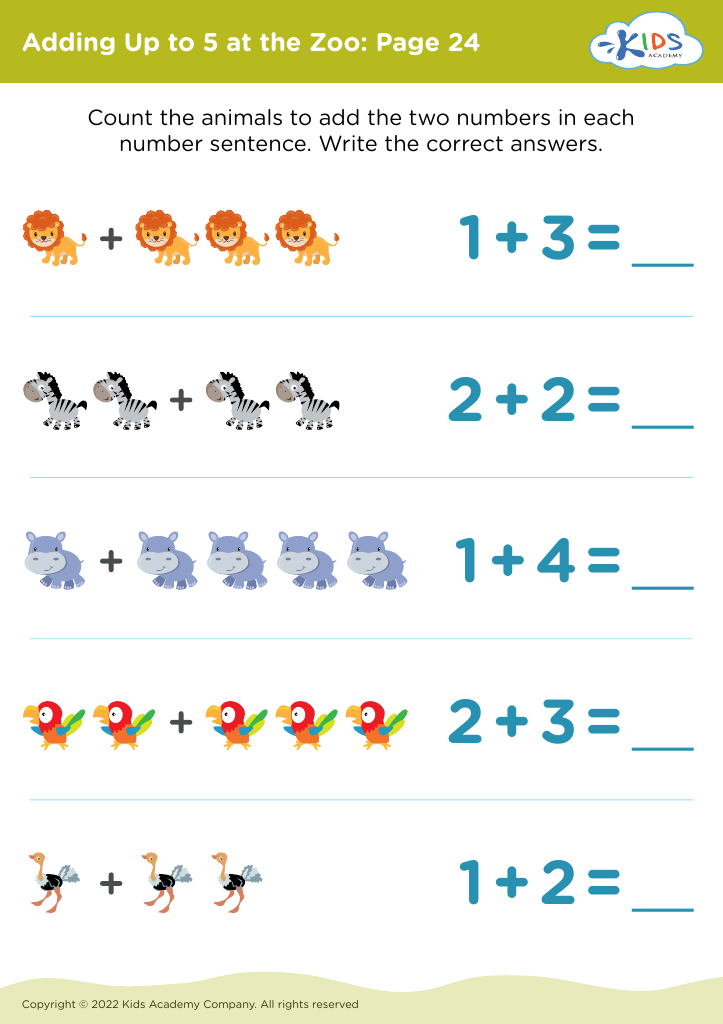
    Adding Up to 5 at the Zoo: Page 24
    Adding Up to 5 at the Zoo: Page 24
    Adding Up to 5 at the Zoo: Page 24
    Worksheet
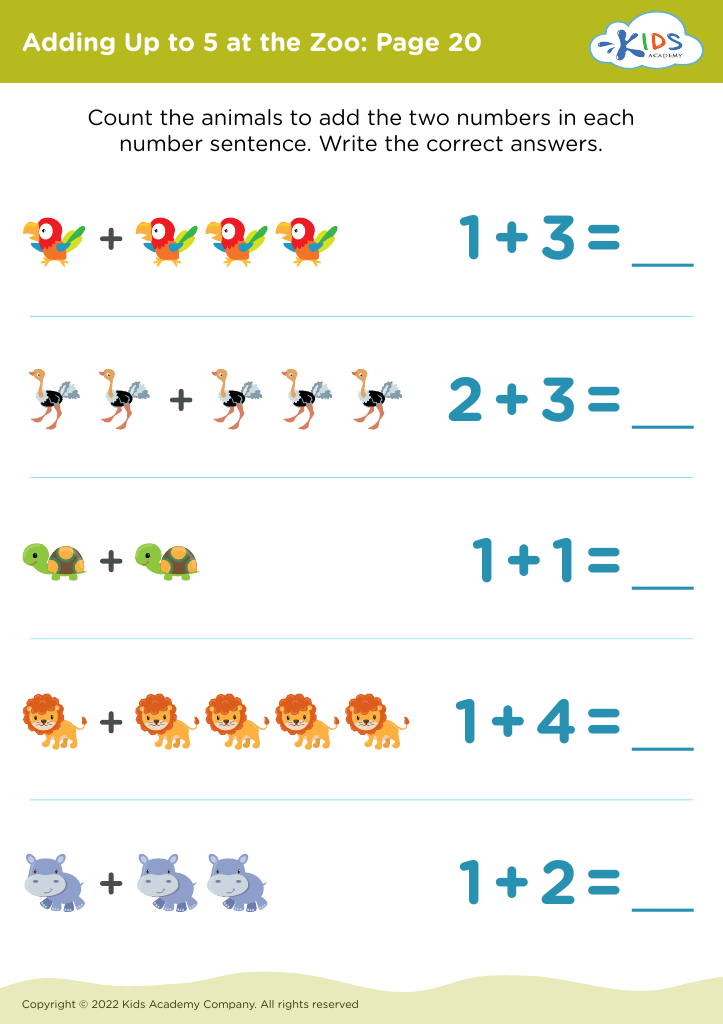
    Adding Up to 5 at the Zoo: Page 20
    Adding Up to 5 at the Zoo: Page 20
    Adding Up to 5 at the Zoo: Page 20
    Worksheet


    Fine motor skills are crucial for children aged 4-6, as they lay the foundational groundwork for both academic success and daily life activities. These skills involve the coordination of small muscles in the hands and fingers, which are essential for tasks such as writing, cutting, and buttoning clothes. When teachers and parents focus on fine motor skill development, they help children become more independent and confident in their abilities.

    Enhancing fine motor skills can improve hand-eye coordination, dexterity, and overall muscle control, which contributes to better performance in school-related activities like drawing, coloring, and using a computer mouse. These skills are stepping stones to more complex tasks like forming letters and numbers properly, which are integral to early literacy and numeracy development. Moreover, children develop perseverance, attention to detail, and the ability to follow instructions — all of which are invaluable traits for their educational journey and beyond.

    Early intervention helps identify difficulties a child may be experiencing, allowing for timely support and tailored activities. In summary, nurturing fine motor skills during these formative years sets the stage for academic success and personal independence, making it essential for parents and teachers to prioritize this aspect of development.