Math problem-solving Addition Worksheets for Ages 4-6
4 filtered results
-
From - To
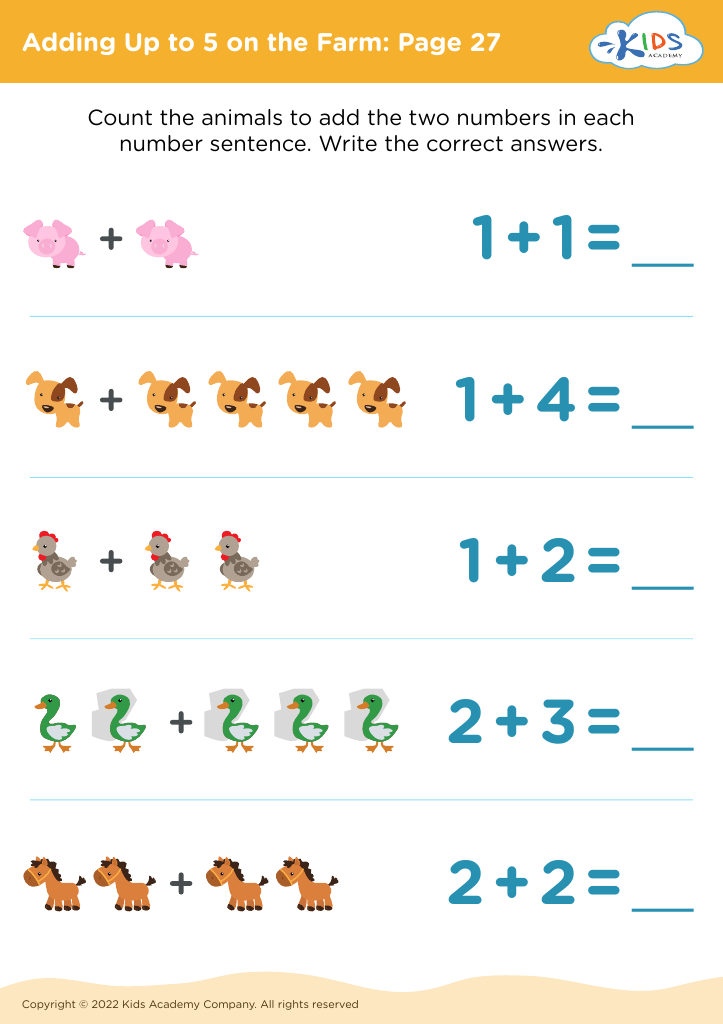
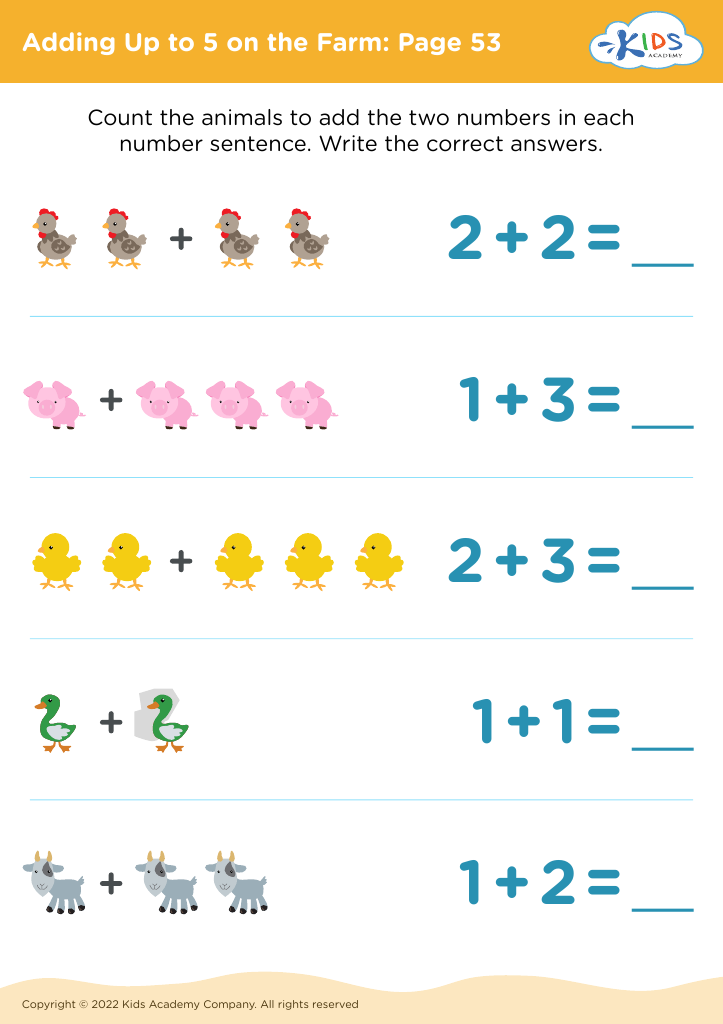
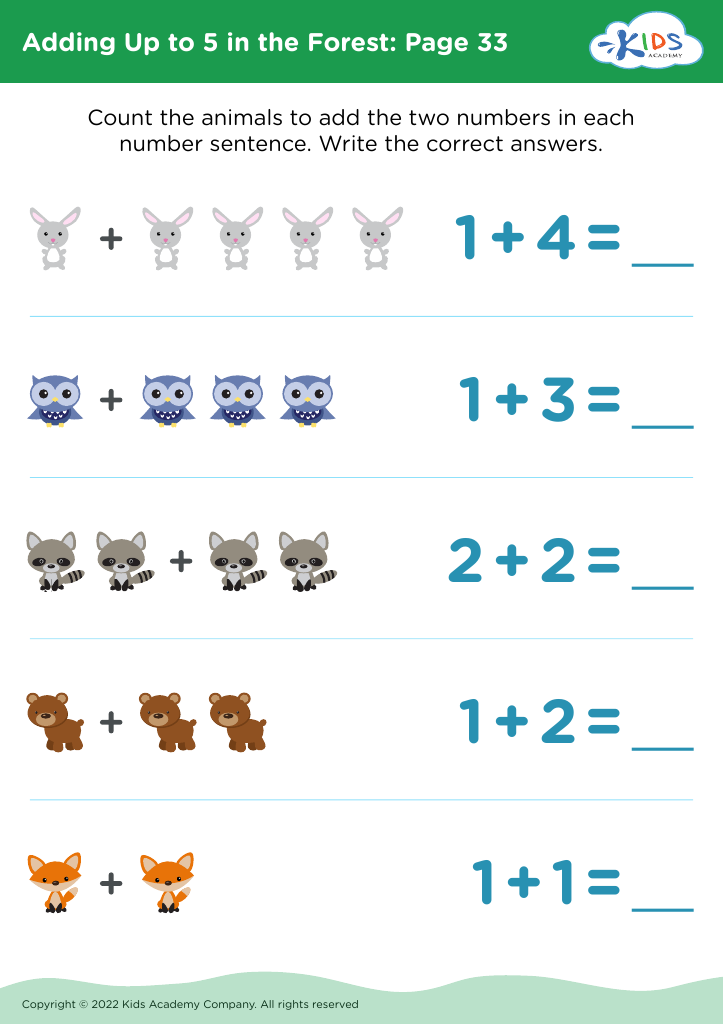
Enhance your child's mathematical journey with our "Math Problem-Solving Addition Worksheets for Ages 4-6." These expertly designed worksheets cater to young learners by incorporating engaging activities that develop essential addition skills. By focusing on problem-solving techniques, our worksheets help children understand basic mathematical concepts, setting a solid foundation for future learning. Fun, colorful designs and age-appropriate problems stimulate interest and facilitate interactive learning. Prepare your 4 to 6-year-olds for academic success and a lifelong love of math with our worksheets, thoughtfully crafted to build confidence and proficiency in addition. Click to download and start your child's math adventure today!
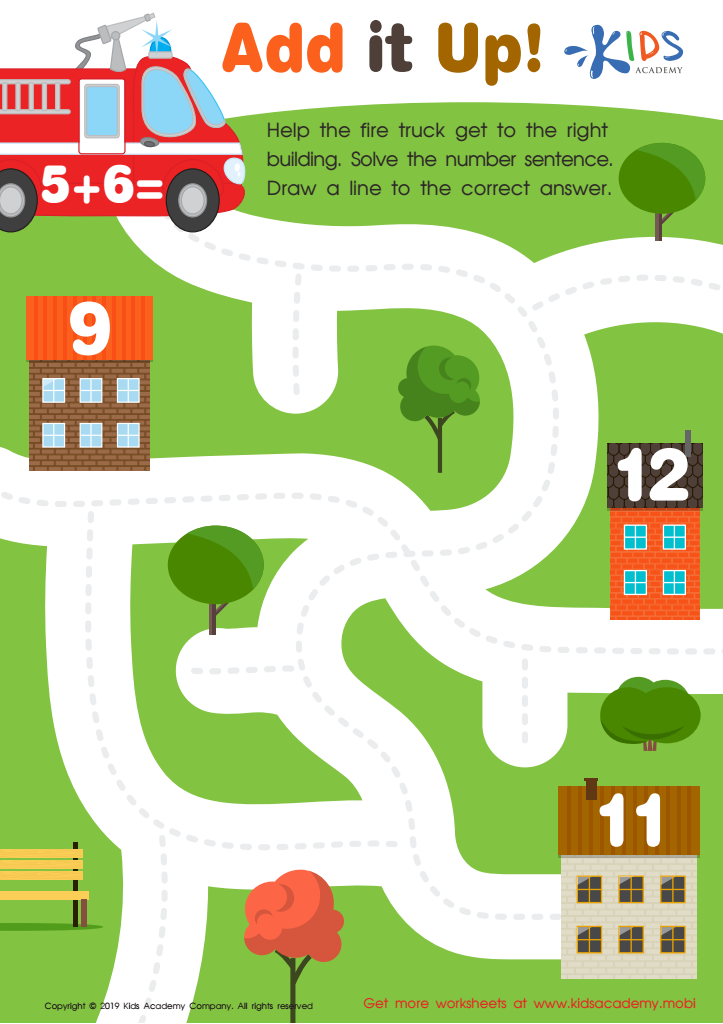
Add it Up Worksheet
 Assign to My Students








Parents and teachers should prioritize understanding and teaching math problem-solving, specifically addition, to children ages 4-6 because it's foundational to their cognitive and academic development. Early exposure to addition enhances critical thinking and logical problem-solving skills that are crucial across various subjects.
At this crucial developmental stage, young children's brains are highly receptive to new information. Introducing them to basic addition helps fortify their number sense and grasp of how numbers work together. This arithmetic foundation aids in fostering a positive attitude towards mathematics, reducing math anxiety, and promoting confidence in handling more complex math concepts later in life.
Moreover, addition is not just about learning to calculate sums; it's correlated with developing deeper life skills. Children learn to recognize patterns, make predictions, and gain a better understanding of quantity and order, which are essential for daily problem-solving and decision-making. Educators who integrate addition exercises into their curriculum help students improve their memory and concentration.
Furthermore, collaborative activities in class surrounding addition facilitate social interaction and cooperation, enhancing communication skills. Therefore, fostering early math skills like addition lays a solid groundwork for a child’s future academic success and overall intellectual development, making it a key area of focus for parents and educators.








